
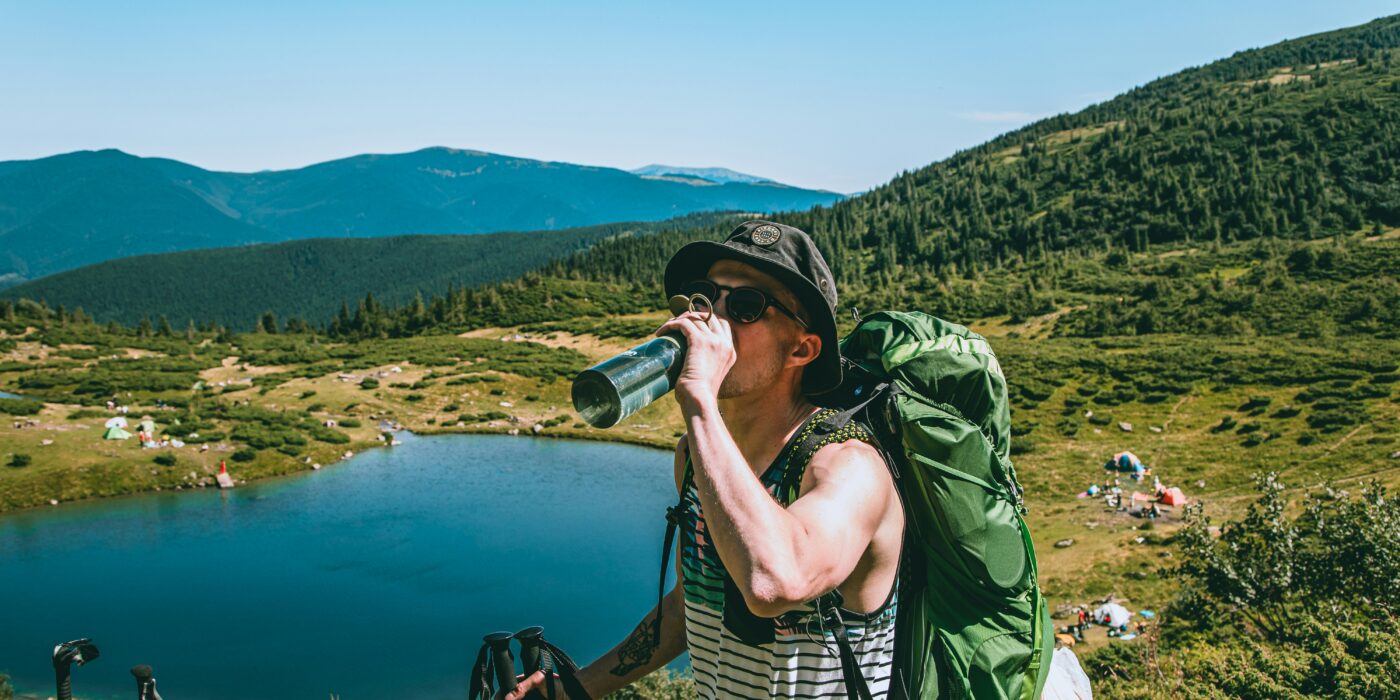
The best water filters for hiking are not optional equipment — they are safety gear that every hiker should carry on every trail, every time, without exception.
I know that sounds dramatic. It is not. Giardia is a parasite that lives in mountain streams that look completely pristine. It causes symptoms that start three to four weeks after exposure, long after you have connected them to that clear water source you drank from on the trail. Once you have had it, you understand immediately why a two-ounce filter that costs $20 is one of the most important things in your pack.
The good news is that hiking water filtration has never been better or more affordable. The products available in 2026 filter water faster, weigh less, and last longer than anything available five years ago. I researched this category thoroughly to bring you the five options that genuinely earn a place in your pack.
What to Look for in a Hiking Water Filter
Understanding the basics before you buy prevents the expensive mistake of choosing the wrong filter type for how you actually hike.
Filter versus purifier — know the difference before you buy.
A filter removes bacteria and protozoa — the pathogens you encounter in most North American backcountry water sources. A purifier goes further and also kills viruses, which matter most in international travel and regions where human waste contamination of water sources is likely. For most hiking in the US and Canada, a filter is sufficient. If you are traveling internationally or hiking in areas with heavy agricultural runoff, a purifier is worth the additional cost and weight.
Micron rating determines what gets removed.
Look for 0.1 micron or finer filtration — this removes 99.9999 percent of bacteria and 99.9 percent of protozoa. Some budget filters use 0.2 micron, which is still effective but slightly less thorough. Anything coarser than 0.2 microns is not adequate for backcountry use, regardless of how the marketing describes it.
Flow rate determines how frustrating the filter is to use.
A filter that produces clean water at 0.5 liters per minute means standing at a stream for three minutes to fill a single 1.5-liter bottle. A filter that moves at 1.5 liters per minute or faster means fill and go. After a long, hot climb, flow rate matters enormously.
Weight and packability define whether it actually makes it into your pack.
The best water filter in the world does not help you if it is too heavy or bulky and you decide to leave it at home. Filters in the 2 to 4 ounce range disappear into your pack. Anything over 10 ounces should be justified by a specific group-size or high-volume need. The same logic applies to your headlamp — the two pieces of safety gear hikers most commonly leave behind on short trips and most commonly regret. Our guide to the best headlamps for hiking covers the options that weigh under three ounces and cost under $50.
Maintenance requirements affect long-term reliability.
Filters that can be backflushed — cleaned in the field by reversing water flow through the membrane — have essentially unlimited lifespan if properly maintained. Filters that cannot be cleaned in the field will eventually clog and fail, usually at the worst possible time.
The 5 Best Water Filters for Hiking in 2026
#1 — Sawyer Squeeze Water Filter
Best Overall Hiking Water Filter | Score: 9.5/10 | Price: ~$40
The Sawyer Squeeze has been carried on more thru-hike miles than any other filter on this list — and probably more miles than all the others combined. That is not marketing. It is the result of a filter that weighs three ounces, costs $40, lasts 100,000 gallons, and consistently does exactly what it is supposed to do in conditions ranging from desert springs to glacial runoff.
The filter threads onto standard 28mm water bottles — including the Smartwater bottles available at nearly every gas station and convenience store in America, which is exactly why thru-hikers love this system. Fill a dirty water bottle from the source, thread the Squeeze onto the bottle, and squeeze water through into your clean bottle. The whole process takes about 60 seconds for a full liter.
Backflushing is simple and effective — use the included syringe or a sports cap to push clean water backward through the filter, restoring flow rate when it slows from accumulated debris. The one honest limitation is that the flow rate slows over time in silty water sources, even with regular backflushing, and the included squeeze bags are not particularly durable for long-term use. The upgrade is to pair it with a Smartwater bottle or Cnoc Vecto reservoir instead — most experienced Squeeze users make this switch quickly.
PROS:
- The three-ounce weight disappears in any pack
- 100,000-gallon rated lifespan — essentially lifetime use with proper maintenance
- Threads onto standard water bottles available everywhere
- Backflushable in the field with the included syringe
- 0.1 micron filtration removes 99.9999 percent of bacteria
- Under $40 — one of the best value purchases in outdoor gear
CONS:
- Included squeeze bags wear out relatively quickly — upgrade to Smartwater or Cnoc Vecto
- Flow rate slows in silty water without regular backflushing
- Squeeze action requires some effort — not hands-free
Best for: Day hikers, backpackers, and thru-hikers who want a proven, lightweight, affordable filter with essentially unlimited lifespan.
#2 — Platypus QuickDraw Microfilter
Best Fast-Flow Hiking Filter | Score: 9.3/10 | Price: ~$40
The Platypus QuickDraw earns its name. At three liters per minute flow rate, it is the fastest squeeze filter available, and the speed difference versus competitors is immediately apparent the first time you use it trailside when you are thirsty and impatient.
What makes the QuickDraw stand out beyond raw speed is the thoughtful design details. Both the input and output ends have caps that stay attached to the filter body — meaning you cannot lose them, which sounds trivial until you realize how often small filter caps disappear into pack pockets never to be found again. There is also an integrity test built into the filter — blow air through it before using, and if you can feel air pass through the membrane is compromised. That kind of field-testable reliability indicator is genuinely valuable when you are filling water from a questionable backcountry source.
The trade-off versus the Sawyer Squeeze is cartridge lifespan — the QuickDraw is rated to 1,000 liters compared to Sawyer’s 100,000-gallon lifetime rating. For weekend and multi-day backpacking, that lifespan is more than sufficient. For thru-hiking, you will need a replacement cartridge or a different system.
PROS:
- Three liters per minute flow rate — fastest squeeze filter available
- Attached caps on both ends — nothing to lose in the field
- Built-in integrity test allows field verification that the filter is working
- Backflushable with clean water — no syringe required
- Low weight at 2.9 ounces
CONS:
- 1,000-liter cartridge lifespan — not suitable for thru-hiking without replacement
- Does not filter viruses — standard filter, not a purifier
Best for: Weekend backpackers and multi-day hikers who prioritize speed of filtration and smart design details over maximum lifespan.
#3 — LifeStraw Personal Water Filter
Best Budget Hiking Filter | Score: 8.8/10 | Price: ~$20
The LifeStraw Personal is probably the most recognized water filter brand in the world, and at $20, it remains one of the most compelling pieces of safety gear you can put in a pack. At two ounces, it weighs nothing essentially. It filters to 0.2 microns, which removes 99.9999 percent of bacteria and 99.9 percent of protozoa. It requires no setup, no pumping, and no extra bottles — you drink directly from the source through the straw.
The honest limitation is that straw-style filtration means you can only drink directly from the source. You cannot filter water into a bottle to carry with you, which is a meaningful constraint on trails where water sources are spaced more than a mile or two apart. For day hikes near consistent water sources, this matters not at all. For multi-day backcountry travel, the inability to carry filtered water ahead makes the LifeStraw a backup tool rather than a primary system.
At $20, the risk of trying one is essentially zero. Most experienced hikers keep a LifeStraw in their emergency kit regardless of what their primary filter is — as a genuinely weightless failsafe that takes up no meaningful space.
PROS:
- The lightest filter on this list is at two ounces
- Most affordable at approximately $20
- No setup required — drink directly from the source
- Works as an excellent emergency backup in any kit
- Simple enough that even completely inexperienced hikers use it correctly
CONS:
- A straw design means you cannot filter water into a bottle to carry
- Requires you to kneel at the water source to drink — not convenient in all terrains
- Cannot be used with hydration bladders
Best for: Day hikers, emergency preparedness kits, and anyone who wants the lightest possible water safety option — not recommended as a primary system for multi-day backpacking.
#4 — Katadyn BeFree Water Filter
Best Lightweight Versatile Filter | Score: 9.1/10 | Price: ~$45
Katadyn has been making water treatment products for professional expeditions, military operations, and serious backcountry travel since 1928. The BeFree is their lightweight everyday filter, and it brings institutional expertise to a simple, intuitive product that genuinely outperforms its price point.
The BeFree uses a hollow fiber filter element inside a soft, collapsible flask. Fill the flask from the water source, shake it vigorously for a couple of minutes with the filter attached, dump the water, and the filter is cleaned and flowing again. No syringe. No backflushing equipment. Just clean water and ten seconds of shaking. That cleaning simplicity is BeFree’s defining advantage — it is the easiest filter to maintain in the field of anything on this list.
The flow rate at 2 liters per minute is fast. The 0.1 micron rating matches the Sawyer’s thoroughness. The collapsible flask doubles as a water bottle reducing the number of separate items in your pack. The limitation that Katadyn themselves are honest about — the BeFree clogs slightly easier than the Sawyer in silty water conditions. In clean mountain streams it performs beautifully.
PROS:
- Field cleaning requires only clean water and vigorous shaking — no tools
- Fast 2-liter per minute flow rate
- Collapsible flask doubles as a water bottle
- 0.1 micron filtration matches the Sawyer’s thoroughness
- Light at 2.3 ounces
- Katadyn brand reliability backed by nearly 100 years of expedition use
CONS:
- Clogs faster than Sawyer in silty or heavily sediment-loaded water
- Flask less durable than hard bottles over extended use
Best for: Hikers and backpackers who want fast tool-free field maintenance and appreciate a collapsible flask design that reduces total pack item count.
#5 — Sawyer Mini Water Filter
Best Ultralight Compact Filter | Score: 8.6/10 | Price: ~$25
The Sawyer Mini is the Sawyer Squeeze’s smaller, lighter sibling, and it makes a specific trade-off that is exactly right for a specific type of hiker — it weighs two ounces instead of three and costs $25 instead of $40, in exchange for a noticeably slower flow rate and a smaller diameter that makes squeezing more effort.
For ultralight backpackers, counting grams that trade-off is worth making. Two ounces is genuinely the lightest functional filter available that still provides inline compatibility and bottle-threading versatility. For trail runners covering big miles with minimal kit, the Mini fits in a vest pocket and disappears.
The 100,000-gallon rated lifespan matches the full-size Squeeze. The 0.1 micron filtration is identical. The honest recommendation — if you are not aggressively chasing ultralight numbers, the full Sawyer Squeeze at $40 is a better daily experience. But if every gram matters, the Mini earns its place.
PROS:
- Lightest filter at two ounces alongside the LifeStraw
- Same 0.1 micron filtration as the full-size Squeeze
- 100,000-gallon lifespan at the lowest price
- Threads onto standard bottles, including Smartwater
- Compatible with hydration bladder inline systems
CONS:
- Noticeably slower flow rate than the full Squeeze
- Included squeeze pouches are fragile — upgrade to Smartwater bottles recommended
Best for: Ultralight backpackers and trail runners who prioritize minimum weight above all other considerations.
Quick Comparison: Best Water Filters for Hiking 2026
| Filter | Price | Weight | Flow Rate | Lifespan | Score |
|---|---|---|---|---|---|
| Sawyer Squeeze | ~$40 | 3 oz | Moderate | 100,000 gal | 9.5 |
| Platypus QuickDraw | ~$40 | 2.9 oz | 3 L/min | 1,000 L | 9.3 |
| Katadyn BeFree | ~$45 | 2.3 oz | 2 L/min | 1,000 L | 9.1 |
| LifeStraw Personal | ~$20 | 2 oz | Direct | 1,000 L | 8.8 |
| Sawyer Mini | ~$25 | 2 oz | Slow | 100,000 gal | 8.6 |
Our Verdict
For most hikers, the Sawyer Squeeze is the right choice, and it is not particularly close. The combination of 0.1 micron filtration, 100,000-gallon lifespan, three-ounce weight, and $40 price creates a filter that handles everything you will encounter on North American trails for years without requiring replacement.
If filtration speed is your priority, the Platypus QuickDraw at the same price delivers meaningfully faster flow with smarter design details. For the absolute lightest option with genuine filtering capability, the Sawyer Mini at $25 earns every gram it saves you.
The LifeStraw at $20 belongs in every day hiking kit as a backup. At two ounces and $20 there is no reason not to carry one alongside whatever primary filter you choose. Whichever you buy, carry it every time — the hiker who leaves their filter at home on a short day hike is the hiker who regrets it three weeks later.
Frequently Asked Questions: Best Water Filters for Hiking
What is the best water filter for hiking in 2026? The Sawyer Squeeze is the best overall water filter for hiking in 2026. Its combination of 0.1 micron filtration, 100,000-gallon lifespan, three-ounce weight, and $40 price makes it the most capable and versatile filter available at any price in its weight class. For hikers who prioritize flow speed, the Platypus QuickDraw at the same price is the best alternative.
Do I need a water filter for hiking in the US? Yes. Even backcountry water sources that look completely clean can carry Giardia, Cryptosporidium, and other pathogens that cause serious illness. Visual clarity is not a reliable indicator of microbiological safety. A two-ounce filter that costs $25 is a straightforward investment in not getting seriously ill on or after your hike.
What is the difference between a water filter and a water purifier for hiking? A water filter physically removes bacteria and protozoa by forcing water through a membrane with pores too small for these organisms to pass through. A water purifier adds a chemical or UV treatment step that also kills viruses. For most North American backcountry hiking, a filter is sufficient. For international travel, a purifier is the responsible choice.
How long does a hiking water filter last? The Sawyer Squeeze and Mini are rated to 100,000 gallons — effectively a lifetime of personal use with proper maintenance. The Platypus QuickDraw and Katadyn BeFree are rated to approximately 1,000 liters. All lifespans assume protection from freezing temperatures, which can permanently damage hollow fiber membranes.
Can water filters freeze on the trail? Yes — and frozen hollow fiber membranes crack and fail, rendering the filter unsafe. If hiking in freezing temperatures, keep your filter in an inside pocket or sleeping bag overnight. A filter that has been frozen and appears to work normally may have invisible cracks that allow pathogens through. When in doubt, replace it or use chemical backup treatment until you can verify its integrity.

Leave a Reply