
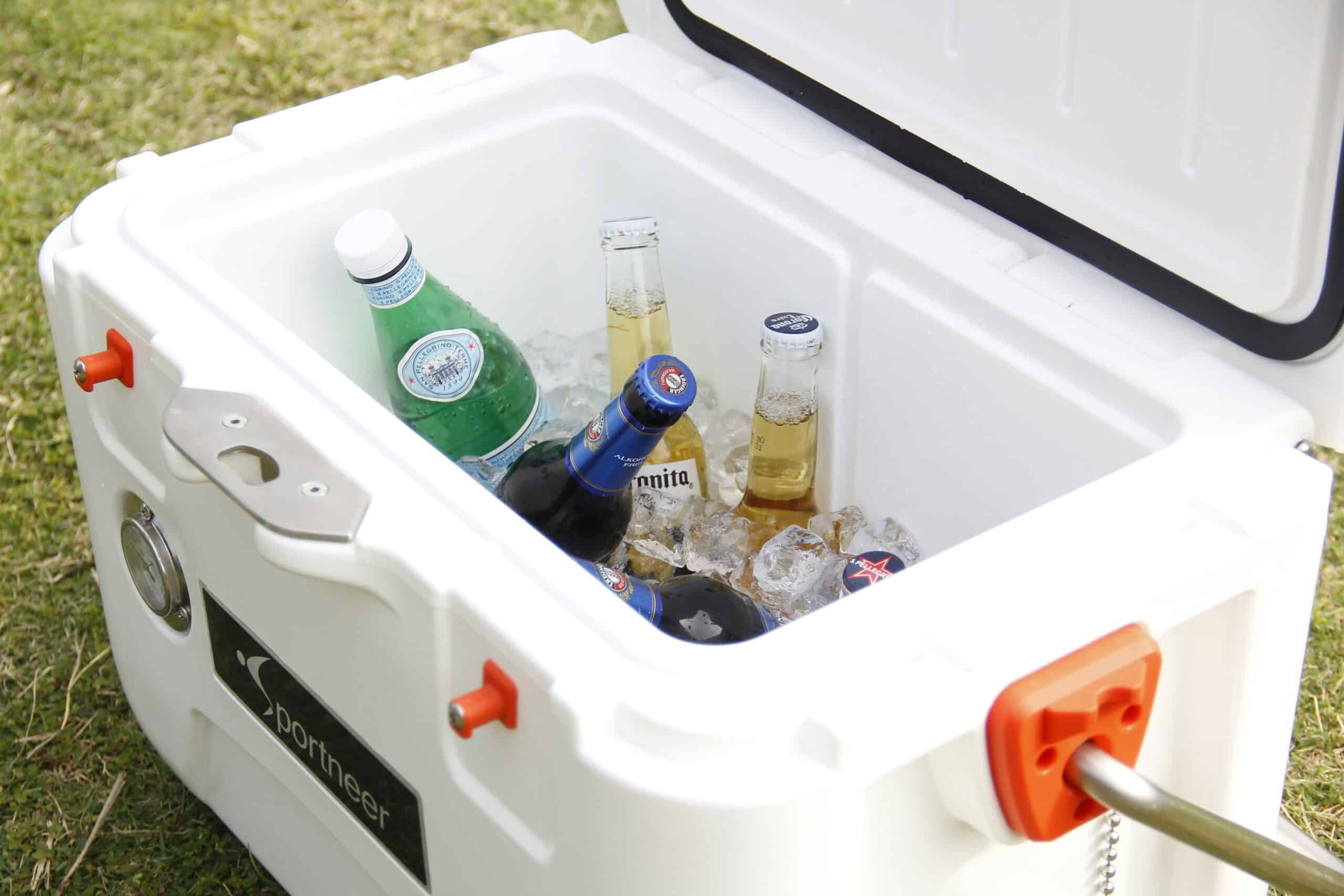
Nothing ends a camping trip’s good mood faster than warm drinks and spoiled food on day two. A cooler that actually holds ice for the length of your trip is what stands between you and that, which is why ice retention, not price or brand, is the spec that matters most. The right cooler also matches your group size and how far you carry it from the car. Below are six camping coolers worth buying, from rugged rotomolded models to light soft-sided options, with a plain guide to choosing the right one for your trips.
Disclosure: OutdoorHiking is reader-supported. As an Amazon Associate, we earn from qualifying purchases made through links on this page, at no extra cost to you.
Quick Verdict
For most car campers a quality hard-sided cooler is the best all-around pick, holding ice for days and shrugging off rough use. Soft coolers win on portability, wheeled models ease transport, rotomolded coolers hold ice longest, and electric coolers skip ice entirely with power. Match ice retention and size to your trip length and how far you carry it.
Why Trust This Guide
Independent picks, reader-supported through affiliate links at no cost to you. Selections draw on product research, insulation and durability considerations, and food-safety guidance for the outdoors. This guide covers coolers for car camping and base camps, not ultralight backpacking.
Key Takeaways
- Ice retention is the key spec: soft and budget coolers last a day or two, hard-sided several days, and rotomolded many days.
- Match the cooler size to your group and trip, and consider a separate drinks cooler to keep the food cooler shut.
- Pre-chilling, plenty of ice, a full cooler, and shade all make ice last much longer.
- Electric coolers cool without ice but need a power source, suiting road trips and base camps.
How We Picked These Camping Coolers
Each cooler was judged on ice retention, build durability, capacity options, portability, and value. Because a cooler’s real job is keeping perishable food at a safe temperature, insulation performance and a good seal were weighted heavily, alongside features that make transport and use at camp easier. Picks span hard-sided, soft, wheeled, rotomolded, electric, and budget coolers for different camping styles.
1. Hard-Sided Camping Cooler: Best Overall
A rugged hard-sided cooler is the best all-around choice for car camping, holding ice for days and standing up to rough handling. Thick insulated walls and a sealing lid keep food and drinks cold through a long weekend, and the durable build doubles as a seat or table at camp next to your camping chairs. For keeping food safe on multi-day trips, it is the dependable workhorse.
Hard coolers are heavy and bulky, so they suit car camping rather than backpacking. For trips where you drive to the site, the long ice retention and durability are exactly what you want, especially paired with proper camping cookware for real meals.
Who it is for: car campers who want multi-day ice retention and durability. Who should skip it: backpackers or anyone needing a light, packable cooler.
2. Soft-Sided Cooler: Best for Portability
A soft-sided insulated cooler is the best pick when portability matters, with a packable, lighter body and a shoulder strap for easy carrying. It holds ice well for day trips and shorter outings, fits in tight car space, and stores flat when empty. For grab-and-go trips and overflow capacity, it is the convenient choice.
Soft coolers hold ice for less time than hard-sided models, so they suit shorter trips. For day hikes to a picnic spot, paddling, or as a second cooler, the portability is the draw.
Who it is for: day trips, paddlers, and anyone wanting a light, packable cooler. Who should skip it: multi-day campers needing maximum ice retention.
3. Wheeled Cooler: Best for Easy Transport
A cooler with sturdy wheels and a tow handle is the best pick for moving a heavy load from car to campsite without lugging it. Big wheels roll over grass and gravel, sparing your back when the cooler is full. For campgrounds with a walk from the parking area, the wheels are a genuine convenience.
Wheeled coolers add weight and bulk, and small wheels struggle on rough terrain. For established campgrounds with a manageable path, the rolling transport is well worth it.
Who it is for: campers who haul a full cooler over a distance to the site. Who should skip it: those carrying coolers over rough terrain where wheels do not help.
4. High-Performance Rotomolded Cooler: Best Ice Retention
A rotomolded cooler is the best choice for the longest ice retention, with thick insulation and a tight gasketed lid that can keep ice for many days. The seamless, heavy-duty construction is nearly indestructible and bear-resistant on certain models. For long trips or hot climates, it keeps food coldest the longest.
Rotomolded coolers are expensive and very heavy, which is the trade-off for top performance. For serious campers, long trips, or hot weather, the extended ice life justifies the cost.
Who it is for: long-trip campers and hot-climate use needing maximum cold. Who should skip it: budget campers or anyone prioritizing light weight.
5. Electric or Powered Cooler: Best for Long Road Trips
A powered cooler that runs off a 12V outlet or battery is the best pick for long road trips and base camps with power, cooling without any ice at all. It keeps contents cold indefinitely while plugged in, so there is no melting ice or soggy food. For overland trips and car-based camping, it is the no-ice solution.
Electric coolers need a power source and cost more, and they cool less without power. For trips with vehicle power or a battery setup, the ice-free convenience is a big advantage.
Who it is for: road trips and base camps with vehicle or battery power. Who should skip it: off-grid camping with no power source available.
6. Budget Camping Cooler: Best Value
A basic, affordable cooler covers the essentials for occasional or weekend camping at a low price. It keeps food and drinks cold for a day or two with ice, which is plenty for shorter trips, without the cost of a premium model. For new or casual campers, it is the sensible starting point.
Budget coolers have thinner insulation and shorter ice retention, so plan on more ice for longer trips. For weekend use and getting started, the low price makes it an easy choice.
Who it is for: casual campers and weekend trips on a budget. Who should skip it: frequent or long-trip campers needing top ice retention.
Camping Coolers at a Glance
| Type | Best For | Key Feature |
|---|---|---|
| Hard-sided | Multi-day car camping | Days of ice retention |
| Soft-sided | Portability | Light and packable |
| Wheeled | Easy transport | Rolls when full |
| Rotomolded | Max ice retention | Thick insulation |
| Electric | Long road trips | Cools without ice |
| Budget | Value | Lowest price |
How to Choose a Camping Cooler
Trip length and ice retention
Match the cooler to your trip: a soft or budget cooler is fine for a day or weekend, while multi-day trips call for a hard-sided or rotomolded cooler that holds ice for days. Longer and hotter trips demand better insulation.
Size and capacity
Size the cooler to your group and trip. Too small means cramming and warm food; too large wastes space and ice. Consider a primary cooler for food and a smaller one for drinks so the main lid stays shut.
Portability and transport
Think about how far you carry it. Wheeled coolers help over a long, smooth path; soft coolers suit grab-and-go; heavy rotomolded models suit short carries from the car. Match the design to your campsite access.
Power and features
If you camp with vehicle power, an electric cooler skips ice entirely. Otherwise, look for a tight-sealing lid, good drainage, and features like cup holders or a bottle opener that add convenience at camp.
Recommended Reading
- Best Car Camping Essentials
- Best Camping Cookware
- Best Camping Chairs
- Best Camping Lanterns
- choosing a sleeping bag
Common Camping Cooler Mistakes to Avoid
Not pre-chilling the cooler
Loading a warm cooler wastes ice fast. Pre-chill it with sacrificial ice or in a cool spot, and add cold food and drinks, so your ice lasts much longer.
Opening it too often
Every time the lid opens, cold air escapes and ice melts faster. Keep a separate drinks cooler so the food cooler stays shut, and decide what you need before opening.
Using too little ice
Skimping on ice shortens cold retention. Use plenty of ice or ice packs, aim for a good ice-to-contents ratio, and keep the cooler full, since a fuller cooler holds cold better.
Storing it in direct sun
Sun heats a cooler quickly. Keep it in the shade, cover it, or set it in the coolest spot at camp to slow ice melt and keep food safe longer.
Frequently Asked Questions
How long do camping coolers keep ice?
It varies widely by type: budget and soft coolers may hold ice for a day or two, quality hard-sided coolers for several days, and rotomolded coolers for many days. Pre-chilling, plenty of ice, and keeping the cooler shut and shaded all extend retention.
What size cooler do I need for camping?
Size it to your group and trip length. A weekend for two might need a medium cooler, while a family or long trip needs a large one or two coolers. Using a separate drinks cooler keeps the food cooler shut and colder.
Are rotomolded coolers worth it?
For long trips, hot climates, or frequent camping, rotomolded coolers are worth it for their long ice retention and durability. For occasional weekend use, a quality standard cooler is usually enough and much cheaper.
Hard or soft cooler for camping?
Hard coolers hold ice longer and are more durable, ideal for multi-day car camping. Soft coolers are lighter and more portable, better for day trips, paddling, or as a second cooler. Many campers use both.
How do I make cooler ice last longer?
Pre-chill the cooler, use plenty of ice or ice packs, keep the cooler full, limit how often you open it, and store it in the shade. Block ice and frozen water bottles melt slower than cubes and add cold for longer.
Do electric coolers need ice?
No, electric or powered coolers cool using 12V power or a battery instead of ice, so there is no melting or soggy food. They cool less effectively without power, so they suit trips with vehicle or battery power available.
Can I use a camping cooler to keep food safe?
Yes, a cooler kept cold with enough ice keeps perishable food at a safe temperature. Keep the contents cold, use a thermometer for longer trips, and follow food-safety guidance. A cooler is one piece of a car-camping kit; see our car camping essentials for the rest., discarding anything that has warmed for too long.
More Camping Guides
Car camping allows heavier gear. Coffee setups for the campsite covers what fits that use.
