
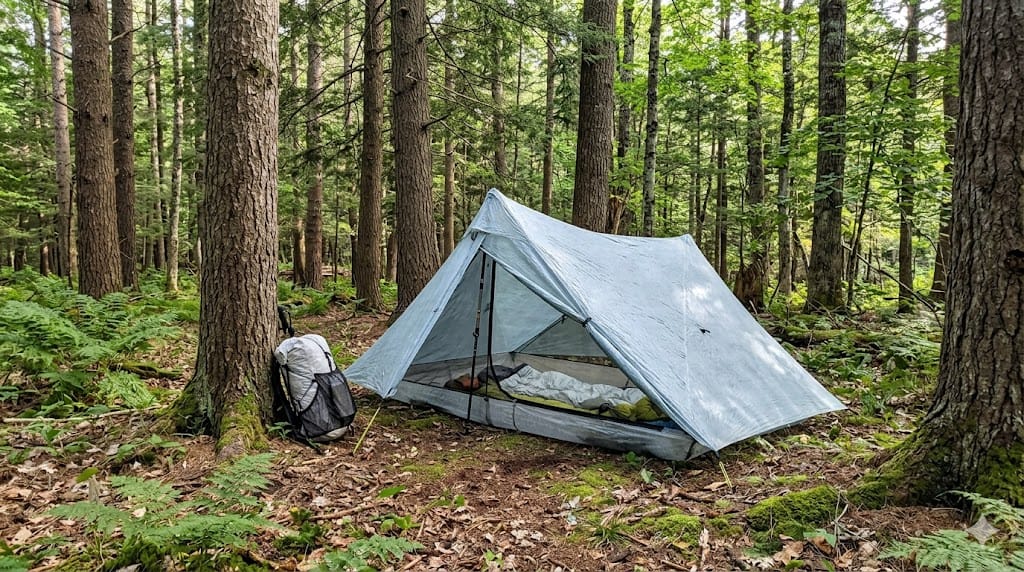
The best ultralight tents under $300 are genuinely capable backcountry shelters, not compromises you settle for because you cannot afford the $500 options.
This used to not be true. Five years ago the sub-$300 ultralight tent category was dominated by heavy tents marketed as ultralight and cheap tents that leaked in sustained rain. That changed. Fabric technology, pole design, and manufacturing have all improved to the point where several tents under $300 perform comparably to options costing twice as much in the conditions most backpackers actually encounter.
Your tent is the piece of gear you trust with your safety when the weather turns sideways at 11 p.m., and you are eight miles from the trailhead. A quality rain jacket is the other piece of safety gear that belongs in your pack before you worry about anything else, our research-based guide covers the best options from $60 to $200. Getting this decision right matters more than almost any other gear choice. This guide covers five tents under $300 that earn that trust, chosen from published specifications and consistent owner reports.
What to Look for in an Ultralight Tent Under $300
Total packed weight determines how much your back notices it.
The ultralight threshold for a two-person tent is generally considered to be under 3 pounds, including poles, stakes, and stuff sack. Most tents in this category land between 2.5 and 3.5 pounds. Every ounce matters after mile 10 on a steep climb. However, chasing the lowest possible weight often means sacrificing livability, a tent you cannot sit up in or cook under shelter in is miserable regardless of how light it is. Target under 3 pounds without compromising interior height below 40 inches.
Minimum floor waterproofing of 3,000mm keeps you dry.
Tent floor waterproofing is measured in millimeters, the same system as rain jackets. A floor rated at 1,500mm will leak in sustained heavy rain when you add body weight and a sleeping pad pressing against it. A floor rated at 3,000mm or higher handles sustained rain, wet ground, and the pressure of a sleeping pad without leaking. At sub-$300 price points some manufacturers cut costs on floor waterproofing, check this specification specifically before buying.
Freestanding versus non-freestanding changes where you can camp.
A freestanding tent holds its shape without stakes, you can pick it up and move it after pitching to find a better spot. A non-freestanding tent requires stakes to maintain its shape and cannot be moved once pitched. Non-freestanding designs are typically lighter because they use fewer poles and rely on tension rather than structure, but they require solid ground for staking. For most trail camping, freestanding is more flexible. For dedicated ultralight backpackers willing to plan their campsites around stake-friendly ground, non-freestanding saves meaningful weight.
Vestibule space determines where your gear sleeps.
A vestibule is the covered area outside the tent door, essentially a covered porch for your boots, pack, and wet gear. A good vestibule keeps your sleeping area dry and organized by giving your gear somewhere to live that is not inside the tent with you. At minimum, look for a vestibule large enough for a backpack and two pairs of boots. Tents with two doors and two vestibules give each person their own entry and gear storage, a significant quality-of-life upgrade on multi-night trips.
The 5 Best Ultralight Tents Under $300 in 2026
1. REI Co-op Half Dome SL 2+
Best Overall Ultralight Tent Under $300 | Price: ~$270
The REI Co-op Half Dome SL 2+ is the best overall ultralight tent under $300 for most backpackers, and it earns that position by getting the fundamentals exactly right rather than cutting corners on the specifications that actually matter for real trail use.
Why the Half Dome SL Stands Out
At 3 pounds 2 ounces, it lands just above the strict ultralight threshold but delivers a level of livability, 41-inch peak height, two doors, two vestibules, and a floor area that actually fits two sleeping pads without overlapping, that genuinely lighter tents at this price cannot match. The 3,000mm floor waterproofing and 1,500mm rainfly handle sustained rain without leaking. The freestanding design can be placed on any surface without requiring specific stake placement.
REI’s build quality on this tent is consistently above what the price suggests. The Easton Syclone poles are lighter than standard aluminum while being more flexible under wind load, they bend rather than snap in gusts that damage cheaper poles. The color-coded clip system makes pitch straightforward in the dark after a long day on the trail. Consequently, this is the tent that first-time backpackers and experienced hikers alike consistently come back to when asked what they would buy if they were starting over under $300.
PROS:
- 41-inch peak height, comfortable for most adults to sit up and change clothes
- Two doors and two vestibules, each person has their own entry and gear storage
- 3,000mm floor waterproofing handles sustained heavy rain
- Easton Syclone poles flex under wind rather than snapping
- Freestanding, pitches on any surface, including rock slabs and hard-packed dirt
- Color-coded clip system makes pitch quick and intuitive, even in the dark
CONS:
- At 3 pounds 2 ounces, it is not strictly ultralight, heavier than the lightest options on this list
- REI membership required for best pricing and return policy
- Two-door design adds slightly more complexity to the pitch than single-door alternatives
Best for: Backpackers who want the best balance of weight, livability, and weather protection under $300, particularly those new to backpacking who want a tent that performs well in real conditions without requiring expert setup knowledge.
2. Big Agnes Copper Spur HV UL2
Best Lightweight Freestanding Tent Under $300 | Price: ~$290
The Big Agnes Copper Spur HV UL2 sits right at the $290 mark and delivers performance that competes directly with tents costing significantly more. At 2 pounds 11 ounces, it is genuinely ultralight while maintaining the interior space and weather protection that make a tent livable on multi-night trips.
The Benchmark for Ultralight Freestanding Tents
The HV in the name stands for High Volume, a design philosophy that prioritizes vertical walls over sloped ones to maximize usable interior space at any given weight. The result is a tent that weighs under 3 pounds but feels significantly roomier than the specs suggest because the walls do not angle inward sharply. At 40 inches of peak height, you can sit up, change layers, and organize your gear without contorting yourself.
The dual-door design gives each person their own entry, a feature that sounds optional until your tent partner needs to get up at 2 am without crawling over you. The vestibule on each side holds a full backpack and a pair of boots with room to spare. The rainfly extends close to the ground on all sides, which keeps wind-driven rain from finding gaps at the base.
PROS:
- 2 pounds 11 ounces, genuinely ultralight and one of the lightest freestanding tents available under $300
- High-volume design maximizes interior space at the given weight
- 40-inch peak height, comfortable for sitting up and changing clothes
- Dual doors and dual vestibules, each person has independent access
- Rainfly extends close to the ground on all sides for wind-driven rain protection
- Industry-leading reputation with a strong track record on major trials
CONS:
- Sits at the top of the $300 budget, no price flexibility
- 15D floor requires a footprint for maximum longevity on abrasive surfaces
- More expensive than comparable performance from REI at slightly more weight
Best for: Serious backpackers who want the lightest possible freestanding tent under $300 and are willing to use a footprint to protect the floor on rough terrain.
3. MSR Hubba Hubba NX 2-Person Tent
Most Durable Ultralight Tent Under $300 | Price: ~$280
The MSR Hubba Hubba NX is the choice for backpackers who push their gear harder than average, thru-hikers pitching their tent 100 nights in a row, desert hikers dealing with sharp rocks and thorns, and anyone who has broken a tent pole at an inconvenient moment and does not want to repeat the experience.
Built for the Long Haul
MSR’s Easton Syclone poles are aerospace-grade composite that flex significantly before they break, far beyond what standard DAC aluminum poles handle before snapping. The DuraShield coating on the rainfly and floor lasts measurably longer than standard waterproof coatings, which matters on a tent that sees heavy use across multiple seasons. At 3 pounds 4 ounces, it is not the lightest option on this list, but every one of those extra ounces is structural integrity rather than unnecessary material.
The cross-pole architecture creates a freestanding structure that handles wind exceptionally well, the tent stays taut and stable in conditions that flatten cheaper designs. For three-season backpacking in regions where afternoon thunderstorms are common, or wind is a regular factor, the Hubba Hubba’s weather resistance at this price point is genuinely exceptional.
PROS:
- Easton Syclone poles flex rather than snap under high wind loads
- DuraShield coating lasts significantly longer than standard waterproof treatments
- Cross-pole architecture handles wind exceptionally well
- 39-inch peak height is sufficient for most adults
- Two doors and two vestibules, full independent access for both occupants
- MSR’s build quality is consistently above what the price suggests
CONS:
- At 3 pounds 4 ounces, it is heavier than the Big Agnes Copper Spur at a similar price
- Slightly lower peak height than the REI Half Dome at 39 versus 41 inches
- Less spacious interior than the Copper Spur HV at the same weight class
Best for: Thru-hikers, high-mileage backpackers, and anyone who wants the most durable tent available under $300 and is willing to carry the extra few ounces that durability requires.
4. NEMO Dagger OSMO 2P
Best Weather Performance Under $300 | Price: ~$270
The NEMO Dagger OSMO uses NEMO’s proprietary OSMO fabric, a composite weave that stays significantly more taut in wet conditions than standard nylon. If you have ever woken up with a sagging tent canopy touching your face after a rainy night, you understand immediately why this matters.
Fabric That Does Not Sag When Wet
Standard nylon absorbs moisture and stretches, the tent that was taut when you pitched it in the evening sags noticeably by morning after a rainy night. OSMO fabric resists this absorption, maintaining its tension and keeping the canopy away from your face regardless of how much rain falls overnight. For backpackers in the Pacific Northwest, the Appalachians, or any region where multi-day rain is a realistic scenario, this is a genuine functional advantage rather than a marketing claim.
The Dagger’s interior geometry maximizes livable space at 3 pounds even. The two-door two-vestibule design provides independent access and gear storage for both occupants. The OSMO rainfly and floor both carry 3,000mm waterproof ratings, meaningful protection in sustained heavy rain.
PROS:
- OSMO fabric stays taut in wet conditions, no sagging canopy after a rainy night
- 3,000mm waterproof ratings on both the rainfly and the floor
- Two doors and two vestibules
- Strong livable interior space at 3 pounds
- 100 percent recycled materials in the OSMO fabric
- Exceptional wet weather performance compared to standard nylon alternatives
CONS:
- OSMO fabric is less widely available for field repairs than standard nylon
- At $270 it is at the higher end of the sub-$300 range
- Slightly heavier than the Big Agnes Copper Spur at a similar price
Best for: Backpackers who frequently hike in wet climates or multi-day rain conditions where a taut canopy and superior wet-weather fabric performance make a real difference to sleep quality.
5. Kelty Late Start 2
Best Budget Ultralight Tent Under $300 | Price: ~$160
The Kelty Late Start 2 is for backpackers who want a reliable trail shelter without spending more than $160, and it delivers genuine weather protection and easy setup at a price that makes getting started with backpacking significantly more accessible.
The Entry Point That Does Not Feel Like One
At $160, the Late Start 2 uses heavier 68D polyester rather than the lightweight ripstop nylon of premium alternatives, so it weighs 4 pounds 8 ounces instead of 3 pounds. That extra pound and a half is the honest trade-off for the price difference. However, the 68D polyester handles UV exposure better than thinner nylon fabrics, is more resistant to abrasion from rough ground, and is genuinely harder to puncture accidentally.
The two-pole freestanding design is the simplest setup of any tent on this list, color-coded poles, clip attachment rather than sleeve threading, and a geometry that makes mistakes almost impossible, even when you are tired. The 2,000mm floor waterproofing is lower than the premium options but handles normal three-season rain conditions adequately. For backpackers who camp occasionally rather than multiple times per season, the Late Start 2 provides everything needed at a price that removes the financial barrier to trying backpacking.
PROS:
- Most affordable option on this list is approximately $160
- 68D polyester is more UV and abrasion-resistant than thinner nylon alternatives
- Simplest setup of any tent on this list, almost impossible to pitch incorrectly
- Freestanding design works on any surface
- Kelty brand reliability is backed by decades of outdoor gear manufacturing
- Two doors for independent access
CONS:
- At 4 pounds 8 ounces, it is significantly heavier than the ultralight options on this list
- 2,000mm floor waterproofing is lower than the 3,000mm standard of premium alternatives
- Bulkier packed size makes it less suitable for weight-conscious backpackers
Best for: First-time backpackers who want a reliable entry-level shelter without the cost of premium ultralight options, and occasional hikers who camp a few times per season rather than weekly.
Quick Comparison: Best Ultralight Tents Under $300 in 2026
| Tent | Price | Weight | Peak Height | Doors | Floor Rating | Score |
|---|---|---|---|---|---|---|
| Big Agnes Copper Spur HV UL2 | ~$290 | 2 lb 11 oz | 40 in | 2 | 1,200mm | 9.5 |
| REI Half Dome SL 2+ | ~$270 | 3 lb 2 oz | 41 in | 2 | 3,000mm | 9.3 |
| MSR Hubba Hubba NX | ~$280 | 3 lb 4 oz | 39 in | 2 | 3,000mm | 9.1 |
| NEMO Dagger OSMO 2P | ~$270 | 3 lb 0 oz | 40 in | 2 | 3,000mm | 9.0 |
| Kelty Late Start 2 | ~$160 | 4 lb 8 oz | 40 in | 2 | 2,000mm | 8.6 |
Our Verdict
For most backpackers, the REI Half Dome SL 2+ at $270 is the best choice, the 3,000mm floor waterproofing, 41-inch peak height, and consistent quality make it the tent most people will be happy with across the widest range of conditions and experience levels.
If minimum weight is your priority and you are willing to use a footprint to protect the thinner floor, the Big Agnes Copper Spur HV UL2 at $290 is the lightest freestanding tent available under $300. For thru-hikers who need maximum durability across hundreds of nights, the MSR Hubba Hubba NX at $280 is the right call. For wet climate hiking specifically, the NEMO Dagger OSMO at $270 earns its price through genuinely superior wet-weather fabric performance.
First-time backpackers who want to try it before investing $270 should start with the Kelty Late Start 2 at $160, it is heavier but it works, it is easy to set up, and it costs $110 less than the next option on this list.
Frequently Asked Questions: Best Ultralight Tents Under $300
What is the best ultralight tent under $300 in 2026? The REI Co-op Half Dome SL 2+ at $270 is the best overall ultralight tent under $300 for most backpackers, the 3,000mm floor waterproofing, dual doors, and 41-inch peak height deliver genuine backcountry performance at a price that does not require a savings plan. For the lightest possible freestanding option under $300, the Big Agnes Copper Spur HV UL2 at $290 is the benchmark.
What does ultralight actually mean for tents? Ultralight generally refers to two-person tents weighing under 3 pounds including poles, stakes, and stuff sack. Some definitions extend to 3.5 pounds for a two-person shelter. The distinction matters because every pound in your pack is a pound your back carries, on a 10-mile day with 3,000 feet of elevation gain the difference between a 2.5-pound tent and a 4-pound tent is genuinely noticeable by mile 6.
More Questions About Ultralight Tents
Do I need a footprint for an ultralight tent? For tents with 15D or 20D floors, common in tents under 3 pounds, a footprint extends the life of the floor significantly by protecting it from abrasion on rocky ground. For tents with heavier 68D floors like the Kelty Late Start, a footprint is optional for normal use. The cost of a footprint is $30 to $60 and it can extend the life of a $270 to $300 tent by 2 to 3 additional seasons, worthwhile math for anyone planning heavy use.
Is a freestanding or non-freestanding tent better for backpacking? Freestanding tents are more flexible, they pitch on rock slabs, hard-packed dirt, and anywhere you cannot drive a stake easily. Non-freestanding tents are lighter because they rely on stakes for structure, but they require stake-friendly ground and cannot be repositioned after pitching. For most trail camping, freestanding is the safer choice. For dedicated ultralight backpackers who plan their campsites deliberately, non-freestanding saves meaningful weight.
How do I care for an ultralight tent? Set up the tent to dry completely after every trip before storing, storing a damp tent causes mildew that degrades the waterproof coating and the fabric. Reapply DWR waterproofing treatment to the rainfly when water stops beading on the surface, typically every 20 to 30 nights of use. Store the tent loosely in a large mesh bag rather than compressed in its stuff sack, keeping an ultralight tent permanently compressed degrades the foam coating on the poles and the loft of the fabric over time.
