
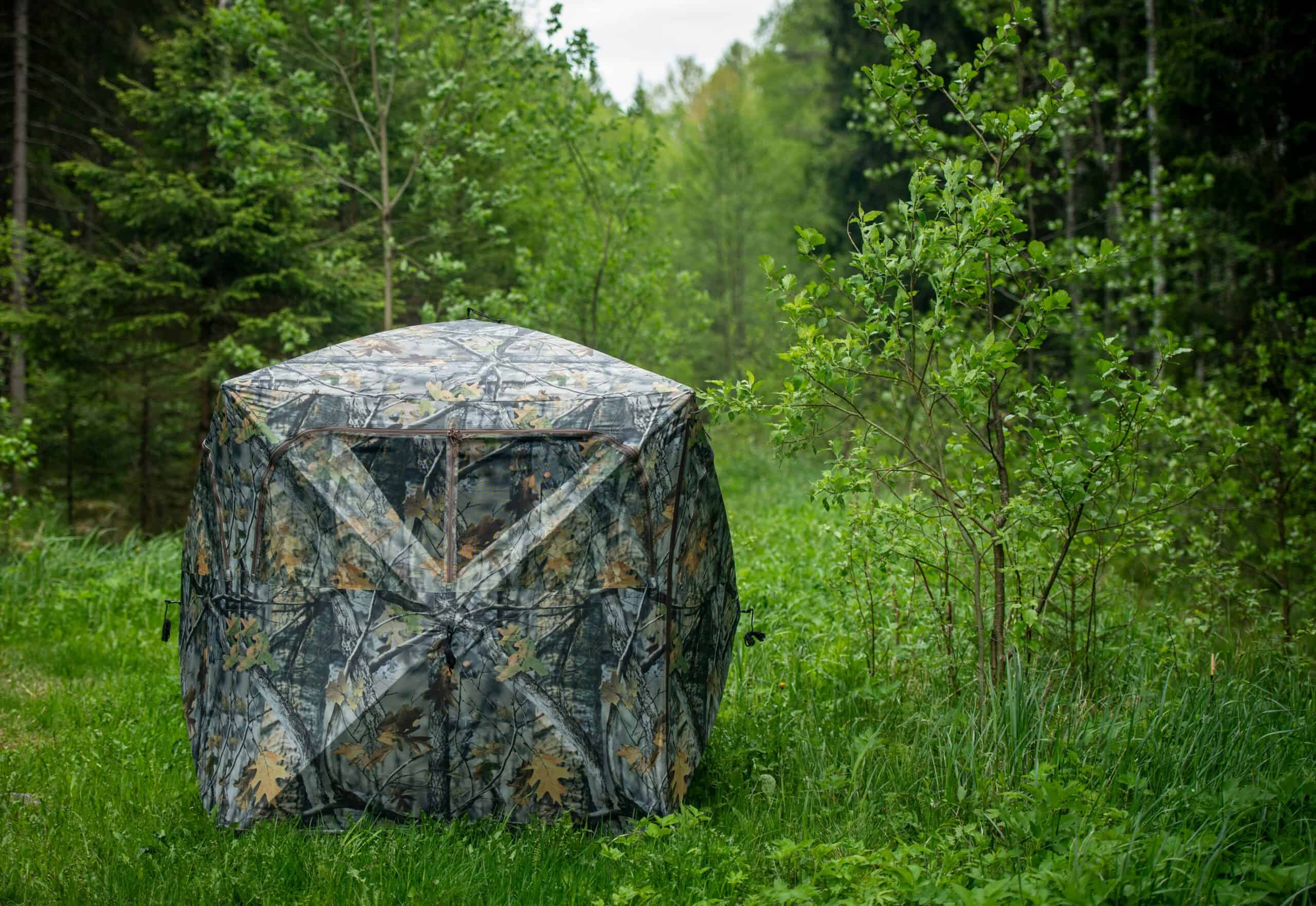
Game animals survive by spotting movement, and a hunting blind is how you disappear. It breaks up your outline, hides the small fidgets that give hunters away, and lets you raise a bow or shoulder a rifle without a wary buck ever seeing it coming. The catch is that the best blind depends heavily on how you hunt: a run-and-gun turkey hunter and a hunter settling in for an all-day sit want very different things. This guide sorts blinds by type so you can match one to your style and terrain, and it pairs well with the scouting intel from our trail cameras guide.
Quick Verdict
For most hunters, a pop-up ground blind is the versatile pick: concealing, portable, and weatherproof. Choose a lightweight chair blind for mobile hunts, a layout blind for waterfowl in fields, a natural or panel blind for minimal-gear concealment, and an elevated blind for long, comfortable sits. Concealment, quiet operation, and enough room to draw or aim are what matter.
Key Takeaways
- A blind hides movement and outline, which is what actually spooks alert game.
- Pop-up ground blinds balance concealment, portability, and weather protection for most hunters.
- Interior room matters, since you need space to draw a bow or swing a rifle.
- Brush in and set up a new blind early so game accepts it before you hunt.
- Match the blind to your style: mobile and light, or fixed and comfortable.
How We Compared Hunting Blinds
A hunting blind is judged on how well it conceals your movement and silhouette, how quietly and quickly it sets up, its weather resistance for long sits, and whether it has room to shoot comfortably. Those are the factors weighed here, grouped by type rather than ranked, since the right blind depends on whether you stay mobile or hunt one spot for the season. Good glass helps you use a blind well, so pair it with our hunting binoculars guide. Our guide to hunting decoys goes into that side of it.
1. Pop-Up Ground Blind (Best Overall)
Why It Stands Out
A pop-up hub-style ground blind is the do-everything choice: it opens fast, encloses you in camouflage on all sides, and shields you from wind and rain during long sits. The full enclosure hides fidgets and lets you draw a bow undetected, and it packs down to carry between spots. For most deer and turkey hunters, it is the versatile default.
Worth Knowing
Game can be wary of a new blind, so set it up early or brush it in so animals accept it. A dark interior and closed rear windows keep you hidden from silhouetting light.
Who it is for: most hunters who sit a spot for hours. Who should skip it: ultra-mobile hunters who relocate constantly.
2. Chair Blind (Best for Mobile Hunts)
Why It Stands Out
A chair blind combines a seat with a lightweight camouflage shroud, so you can move, sit, and conceal in one quick motion, which is ideal for run-and-gun turkey hunting or covering ground. It sets up in seconds and weighs little, letting you follow game or reposition on birds without hauling a full blind. For mobile hunters, it is freedom with concealment.
Worth Knowing
A chair blind offers less enclosure and weather protection than a full pop-up, so it trades cover for mobility. It suits shorter, active sits more than all-day stays.
Who it is for: mobile turkey and spot-and-stalk hunters. Who should skip it: hunters wanting full enclosure for long, cold sits.
3. Layout Blind (Best for Waterfowl)
Why It Stands Out
A layout blind lets you lie flat and low in a field or shoreline, hiding you in open terrain where a standing blind would stick out, which is exactly what field waterfowl hunting demands. Stubble straps let you brush it into the surroundings so ducks and geese decoy right on top of you. For open-field waterfowl, the layout blind is purpose-built.
Worth Knowing
Shooting from your back takes practice, and getting up quickly is harder than from a chair. Brushing it in properly is essential, since wary waterfowl notice anything out of place.
Who it is for: field duck and goose hunters. Who should skip it: deer and turkey hunters in wooded terrain.
4. Natural or Panel Blind (Best for Minimal Gear)
Why It Stands Out
A natural or panel blind uses lightweight camouflage panels or netting to build concealment from available cover, blending into the surroundings without a bulky structure. It is quick to deploy, packs small, and lets you customize your hide to the terrain, which many traditional hunters prefer. For a minimal, adaptable setup, panels are a smart, low-profile option.
Worth Knowing
Panel blinds offer less overhead and weather cover than an enclosed pop-up, so you are more exposed to the elements. They rely on good placement and natural cover to work.
Who it is for: hunters who want minimal, adaptable concealment. Who should skip it: those wanting full enclosure and weather protection.
5. Elevated Blind (Best for Long Sits)
Why It Stands Out
An elevated or tower blind raises you above ground level, expanding your sightlines, lifting your scent, and offering a roomy, weatherproof space for all-day sits or hunting with kids. Set on a fixed property, it becomes a comfortable, permanent vantage that game grows used to over a season. For landowners and long sitters, the comfort and visibility are unmatched.
Worth Knowing
Elevated blinds are heavy, semi-permanent, and the most expensive option, so they suit fixed hunting spots rather than mobile hunts. Safe access and a secure platform are essential.
Who it is for: landowners and hunters who sit one spot all season. Who should skip it: mobile hunters and those on public land.
6. Budget Ground Blind (Best Value)
Why It Stands Out
A budget ground blind delivers the core benefit, full-surround concealment that hides your movement, for far less than premium models. It is the easiest way to get into blind hunting or add a second setup, and a decent one conceals and blocks weather well enough for most sits. For new hunters or a spare blind, it is sensible value.
Worth Knowing
Cheaper blinds may use thinner fabric, noisier zippers, and less durable poles, so handle them gently and check the windows are quiet. Confirm the interior is dark enough to hide you.
Who it is for: new hunters and anyone wanting an affordable blind. Who should skip it: hard-core hunters wanting maximum durability and silence.
Hunting Blinds at a Glance
| Type | Best for | Standout | Watch-out |
|---|---|---|---|
| Pop-up ground | Most hunters | Full concealment, portable | Brush in early |
| Chair blind | Mobile hunts | Fast, lightweight | Less weather cover |
| Layout | Field waterfowl | Low profile in the open | Awkward to shoot |
| Natural/panel | Minimal gear | Adaptable concealment | Less overhead cover |
| Elevated | Long sits | Sightlines and comfort | Heavy, semi-permanent |
| Budget | Value | Core concealment, low price | Thinner materials |
How to Choose a Hunting Blind
Match it to your style
Decide whether you hunt mobile or sit one spot, since that drives everything. Mobile hunters want a light chair or panel blind, while long sitters want an enclosed pop-up or elevated blind with room and weather protection. Time in the blind pays off more when it lines up with when deer tend to move through the season.
Prioritize concealment and interior room
The blind must hide your outline and movement while giving you space to draw a bow or swing a rifle. Look for a dark interior, quiet windows, and enough width for your weapon and gear.
Consider setup and portability
A blind you can deploy quietly and carry to your spot gets used; a heavy, fiddly one stays home. Weigh pack size and setup speed against the concealment and comfort you need.
Plan to brush it in
Game notices a new object, so set up early and add natural vegetation so animals accept the blind before you hunt it. Pair your setup with scouting from our spotting scopes guide.
Common Hunting Blind Mistakes to Avoid
Setting up too late
Dropping a new blind the morning of a hunt can spook wary game. Set it up days ahead and brush it in so animals grow used to it.
Silhouetting yourself
Open rear windows let light frame your movement inside. Keep the back closed and the interior dark so you stay hidden.
Choosing a blind too small to shoot from
A cramped blind makes drawing a bow or aiming awkward at the worst moment. Confirm the interior fits you, your weapon, and your gear before you buy.
Being noisy
Loud zippers and rustling fabric carry to sharp-eared game. Operate windows slowly and choose a blind with quiet materials.
Recommended Reading
- Hunting rangefinders, to range your shot from the blind.
- Camping chairs, for a comfortable seat on long sits.
- Camping tarps, for extra weather cover in camp.
- tree stands for elevated setups
- choosing hunting gear
Hunting Blind FAQ
What type of hunting blind is best for beginners?
A pop-up hub-style ground blind is the most beginner-friendly, offering full concealment, weather protection, and simple setup. It hides movement well enough to forgive a new hunter’s fidgets and works for both deer and turkey, making it the versatile first blind.
Do you need to brush in a hunting blind?
Usually, yes. Game notices new objects, so adding natural vegetation to break up the blind’s outline and setting it up early helps animals accept it. Brushing in is especially important for wary deer and field waterfowl that scrutinize their surroundings.
Can you bow hunt from a ground blind?
Yes, and enclosed pop-up blinds are excellent for bow hunting because they hide the draw. Just choose a blind with enough interior height and width to draw and aim comfortably, and keep the interior dark so your movement stays concealed.
How early should I set up my blind?
Set a new blind up days to weeks before hunting when possible, so game becomes accustomed to it. If you must set up the day of, brush it in heavily and place it where natural cover helps it blend, since a fresh blind can alarm wary animals.
What is the difference between a ground blind and an elevated blind?
A ground blind sits at ground level and is usually portable, while an elevated blind raises you on a tower for better sightlines, scent control, and comfort. Ground blinds suit mobile and public-land hunting; elevated blinds suit fixed spots on your own property.
Are budget hunting blinds worth it?
For new hunters or a second setup, yes, since even inexpensive blinds provide the core concealment that matters. Premium blinds add quieter operation, tougher fabric, and better durability, so heavy users may want to spend up, but a budget blind hides you effectively.
How do I keep from being seen inside a blind?
Keep the interior dark, close the rear and side windows you are not using, and wear dark clothing so you do not silhouette against light. Move slowly, and avoid backlighting, which frames your movement for game looking in.
What size blind do I need?
Choose a blind roomy enough for you, your weapon, and your gear, with height to draw a bow if you archery hunt. One-person blinds are compact and portable, while larger blinds fit two hunters or a hunter and a child comfortably.
A blind contains scent differently from an open stand. What actually reduces your scent signature covers the routine.
