
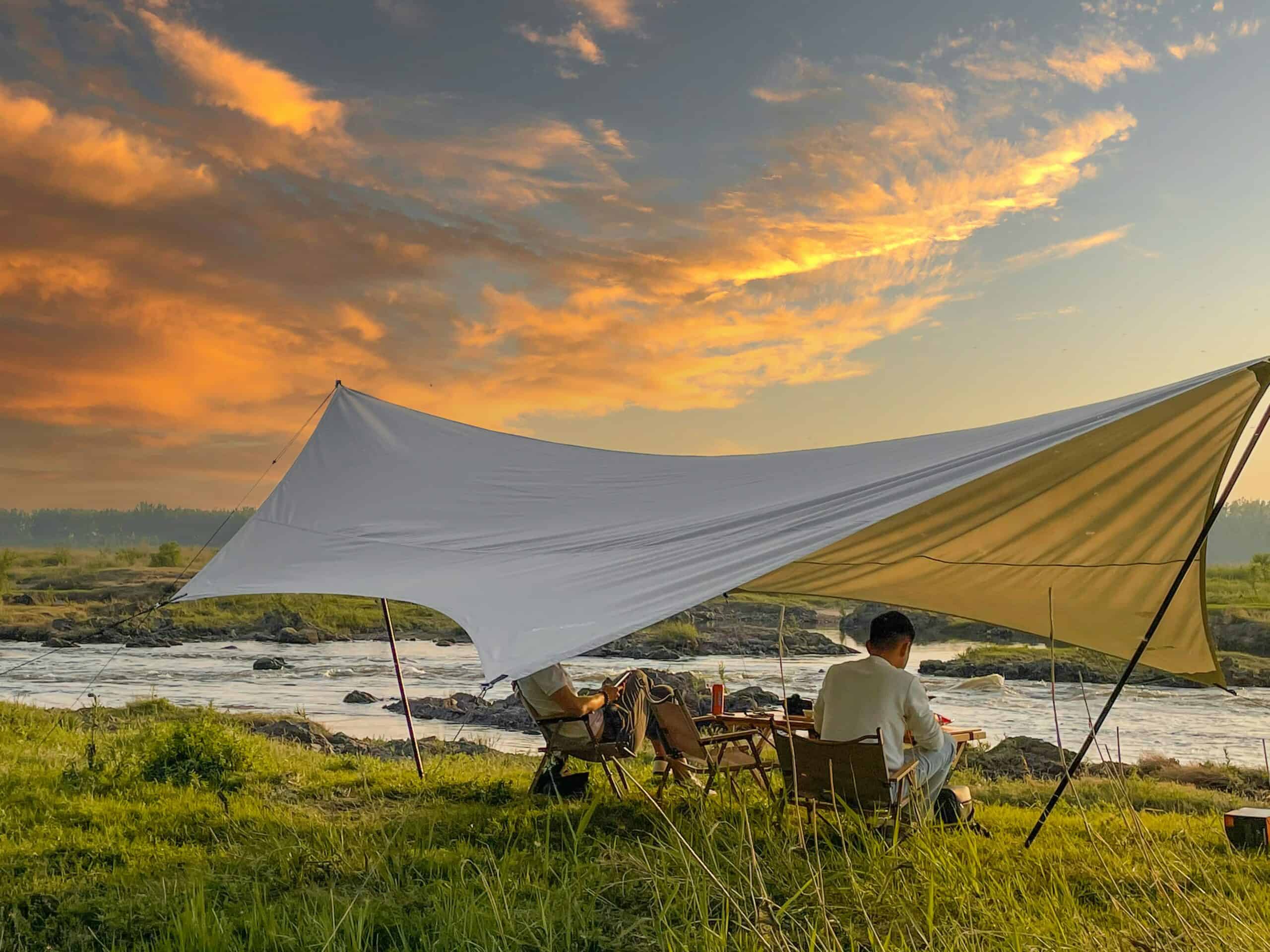
If you could carry only one extra piece of gear to a campsite, a good tarp would be a strong contender. It rigs into a rain shelter, a sunshade, a tent footprint, a hammock fly, or a windbreak, doing more jobs per ounce than almost anything else in the pack. The best ones use genuinely waterproof fabric with plenty of reinforced tie-outs for flexible pitching. Below are six camping tarps worth buying, from ultralight backpacking shelters to large group canopies, with a plain guide to choosing and pitching one.
Disclosure: OutdoorHiking is reader-supported. As an Amazon Associate, we earn from qualifying purchases made through links on this page, at no extra cost to you.
Quick Verdict
For most campers a quality waterproof tarp with plenty of tie-outs is the best all-around pick, rigging as a rain shelter, sunshade, or groundsheet. Ultralight tarps suit backpackers, heavy-duty tarps protect tent floors, large canopies shelter groups, and pole-kit tarps set up freestanding. Match the size, weight, and waterproofing to your use, and pitch with an angle so rain runs off.
Why Trust This Guide
Independent picks, reader-supported through affiliate links at no cost to you. Selections draw on product research, materials and waterproofing considerations, and practical shelter-setup knowledge. This guide covers tarps for camping shelter, ground protection, and backpacking.
Key Takeaways
- Tarps are highly versatile: rain shelter, sunshade, tent footprint, hammock fly, or windbreak.
- Genuine waterproofing and reinforced tie-outs matter most for shelter use; lighter tarps may be only water-resistant.
- Size the tarp to the job and match weight to your style, from large canopies to ultralight backpacking tarps.
- Pitch with an angle so rain runs off, use all tie-outs, and angle the low side into the wind.
How We Picked These Camping Tarps
Each tarp was judged on waterproofing, material durability, the number and quality of tie-out points, weight, and suitability for different uses. Because a tarp’s value is in versatile, reliable shelter, we weighted genuine waterproofing and flexible pitching alongside sensible weight for each intended use. Picks span waterproof shelters, ultralight tarps, ground tarps, canopies, pole-kit tarps, and budget options.
1. Waterproof Camping Tarp: Best Overall
A quality waterproof tarp is the best all-around camping shelter accessory, rigging over a tent, picnic area, or hammock to keep rain and sun off. A durable coated fabric with reinforced grommets and tie-outs lets you pitch it many ways with cord and poles or trees. For versatile weather protection at camp, it is the essential pick.
A good tarp needs cord, stakes, and a little know-how to pitch well, which is part of its flexibility. For all-purpose rain and shade coverage, it is the most useful piece of camp shelter gear. A tarp only works as well as the ground under it, so start with picking a good tent spot.
Who it is for: most campers wanting versatile rain and sun protection. Who should skip it: those who want a pop-up shelter with no rigging required.
2. Lightweight Backpacking Tarp: Best for Ultralight Use
An ultralight tarp is the best pick for backpackers who want shelter at minimal weight, often replacing a tent for experienced minimalists. Made from light, strong fabrics like silnylon or Dyneema, it packs tiny and pitches in many configurations with trekking poles. For going light on the trail, it is the shelter of choice. More on a camp stove that will not light in the guide we wrote for it.
Tarp camping offers less bug and weather enclosure than a tent, so it suits experienced users and fair conditions. For ultralight backpacking, the weight savings are significant.
Who it is for: ultralight backpackers comfortable with minimalist shelter. Who should skip it: campers who want full enclosure and bug protection.
3. Heavy-Duty Ground Tarp: Best for Tent Footprint
A tough ground tarp is the best pick for protecting the bottom of your tent from abrasion, punctures, and ground moisture. Placed under the tent, it extends the tent floor’s life and adds a moisture barrier, and it can also serve as a clean groundsheet for gear. For protecting a tent investment, it is a smart, cheap addition.
A footprint should be sized slightly smaller than the tent floor so rain does not pool on it. As tent protection, the heavy-duty material is exactly the point.
Who it is for: campers who want to protect their tent floor and block ground moisture. Who should skip it: ultralight users who skip a footprint to save weight.
4. Large Shade Canopy Tarp: Best for Group Shelter
A large canopy tarp is the best pick for sheltering a group, covering a dining area, kitchen, or gathering space from sun and rain. The big footprint keeps several people and gear dry or shaded, making it ideal for base camps and group trips. For communal coverage, the size is the whole advantage.
Big tarps need more cord, poles, and anchor points to pitch securely, and they catch wind. For group camps and large shaded areas, the coverage is well worth the extra rigging. A tarp is only as good as its anchors, and stakes and guylines covers what holds it down.
Who it is for: groups and base camps needing a large covered area. Who should skip it: solo or minimalist campers who only need personal coverage.
5. Tarp with Pole Kit: Best for Easy Setup
A tarp sold with a pole-and-stake kit is the best pick for easy, freestanding setup without relying on trees. The included poles and guylines let you pitch a standing shelter on open ground, beaches, or anywhere without anchor points. For campers who want tarp versatility with a simpler setup, the kit removes guesswork. Site preparation often needs a blade, and our shovel and trowel picks cover what to carry.
The poles add weight and bulk, so this suits car camping more than backpacking. For reliable, tree-free setup, the included hardware is genuinely convenient.
Who it is for: car campers who want easy, freestanding tarp setup anywhere. Who should skip it: backpackers counting weight or those who pitch between trees.
6. Budget Camping Tarp: Best Value
A basic waterproof tarp covers the essentials at a low price, making it the best value pick for occasional shelter, ground cover, or emergency rain protection. It rigs over a site or under a tent and packs away cheaply, which is plenty for casual use. For new campers or a backup tarp, it is the easy, low-cost choice.
Budget tarps use lighter material with fewer reinforced tie-outs, so they suit lighter duty. For occasional use, ground cover, or a spare, the low price makes it a practical buy.
Who it is for: casual campers and anyone wanting a cheap, versatile spare tarp. Who should skip it: those needing a durable, feature-rich shelter for heavy use.
Camping Tarps at a Glance
| Type | Best For | Key Feature |
|---|---|---|
| Waterproof tarp | All-around shelter | Versatile rigging |
| Ultralight tarp | Backpacking | Minimal weight |
| Heavy-duty ground tarp | Tent footprint | Floor protection |
| Large canopy | Group shelter | Big coverage |
| Tarp with pole kit | Easy setup | Freestanding poles |
| Budget | Value | Lowest price |
How to Choose a Camping Tarp
Material and waterproofing
Look for a coated, genuinely waterproof fabric with sealed or taped seams for rain protection. Heavier polyester and nylon suit general camping, while silnylon and Dyneema serve ultralight backpacking at a higher price.
Size and purpose
Size the tarp to its job: a small tarp for solo shelter or a footprint, a large canopy for group coverage. Consider how much area you need to keep dry or shaded, plus packed size for transport.
Tie-outs and reinforcement
Reinforced corners, edge loops, and grommets let you pitch a tarp many ways and stand up to wind. More quality tie-out points mean more pitching options and a more secure shelter in weather.
Setup method
Decide whether you will pitch with trees, trekking poles, or a dedicated pole kit. A pole kit makes freestanding setup easy on open ground, while ultralight users often pitch with trekking poles to save weight.
Recommended Reading
- Best 2-Person Backpacking Tents
- Best Camping Hammocks
- Best Car Camping Essentials
- Best Camping Chairs
- bushcraft axes and hatchets
- starting a fire with a ferro rod
- cord for ridgelines and guylines
- packs built for tools
- choosing a sleeping bag
Common Camping Tarp Mistakes to Avoid
Pitching it too flat
A flat tarp pools water and can sag or fail in rain. Pitch with enough angle so rain runs off, and tension the guylines well to shed water and resist wind.
Oversizing a tent footprint
A ground tarp larger than the tent floor catches rain and channels it under the tent. Size a footprint slightly smaller than the tent floor, or tuck the edges under, to keep water out.
Skimping on tie-outs and cord
Too few anchor points make a tarp flap and fail in wind. Use all the tie-outs, quality cord, and enough stakes to pitch it taut and secure, especially in exposed spots.
Ignoring wind direction
A tarp pitched broadside to the wind catches it like a sail. Angle the low side into the wind and stake it down well so gusts pass over rather than under the tarp.
Frequently Asked Questions
What is a camping tarp used for?
Camping tarps serve many roles: a rain or sun shelter over a tent or picnic area, a groundsheet under a tent, a clean surface for gear next to your cookware, a rainfly over your camping hammock, a windbreak, or emergency cover. Their versatility is the main reason campers carry one.
What size camping tarp do I need?
Size it to the job: a small tarp for solo shelter or a tent footprint, a medium one for a personal rain fly, and a large canopy for group coverage. Consider the area you need protected plus the packed size for transport.
Are camping tarps waterproof?
Quality camping tarps made for shelter are waterproof, with coated fabric and ideally sealed seams. Cheaper or lighter tarps may be water-resistant rather than fully waterproof, so check the rating if rain protection is the goal.
Can I use a tarp instead of a tent?
Yes, experienced campers use tarps as ultralight shelters, pitching them with poles or trees to save weight over a tent. The trade-off is less enclosure from bugs and weather, so tarp camping suits fair conditions and skilled users.
How do I set up a camping tarp?
Pitch it with an angle so rain runs off, using cord and stakes anchored to trees, trekking poles, or a pole kit. Tension the guylines well, use the reinforced tie-outs, and angle the low side into the wind for stability.
Should I put a tarp under my tent?
A ground tarp or footprint under a tent protects the floor from abrasion and moisture and extends its life. Size it slightly smaller than the tent floor so rain does not collect on it and run underneath the tent.
What material is best for a camping tarp?
Polyester and nylon with a waterproof coating suit general camping, balancing durability and cost. Ultralight backpackers choose silnylon or Dyneema for minimal weight at a higher price. Match the material to your use and budget.
