
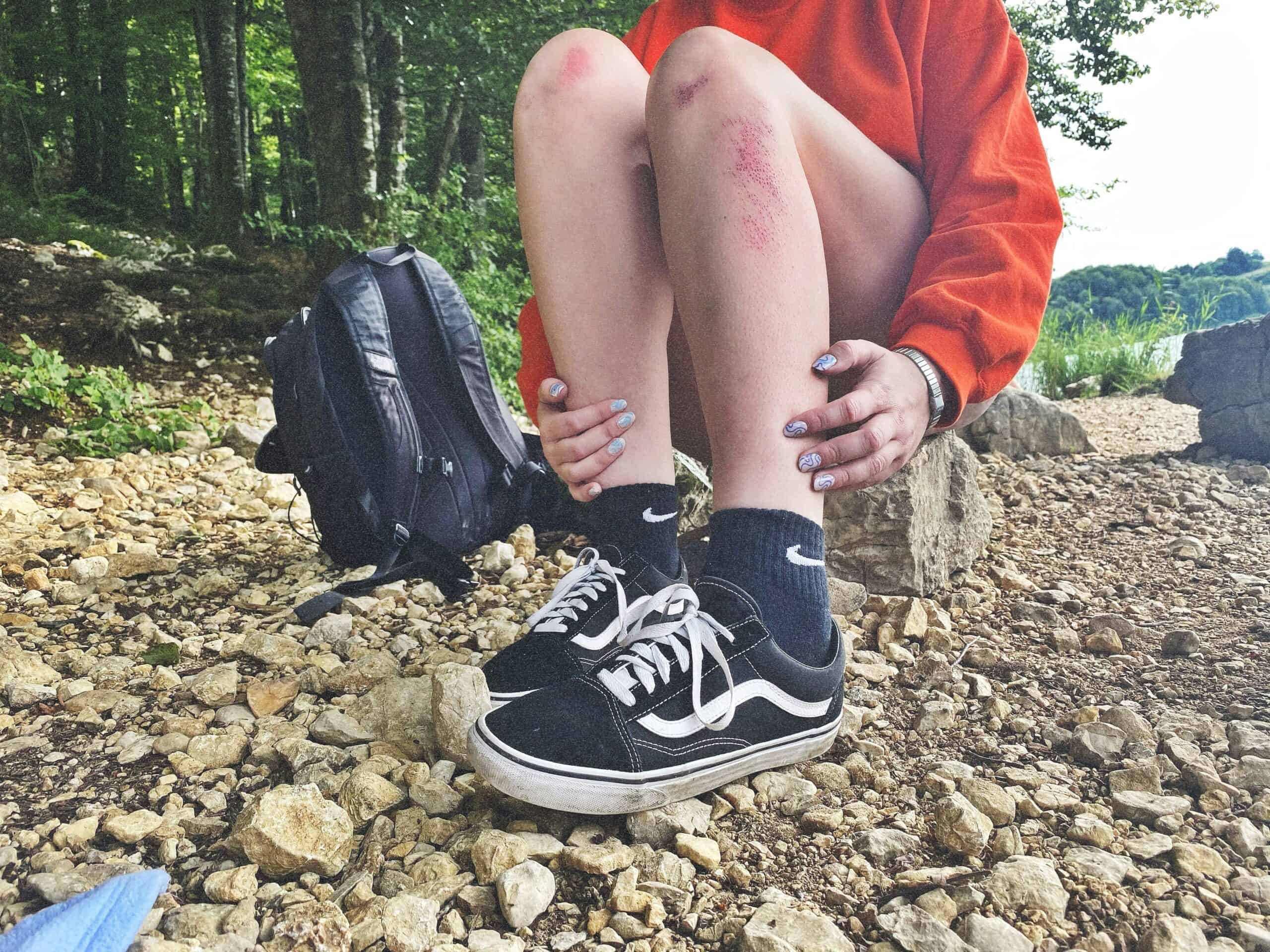
Most post-hike foot pain comes from four things: shoes that fit wrong, descending, load, and doing more than your feet are conditioned for. Where it hurts usually tells you which one.
Pain in the arch, the heel, the ball of the foot, and the toenails all have different causes and different fixes, so the location is worth paying attention to before changing anything.
A Quick Note
This covers common causes rather than medical advice. Pain that persists for more than a few days, numbness, tingling, swelling that does not settle, or pain following a specific injury all warrant seeing a doctor rather than adjusting gear.
Quick Answer
Match the location to the cause. Arch pain suggests plantar fascia strain or inadequate support. Heel pain points at the same. Ball-of-foot pain suggests load and cushioning. Black toenails mean shoes too small or laces too loose on descents.
Where It Hurts and What It Usually Means
| Location | Common cause | First thing to try |
|---|---|---|
| Arch | Plantar fascia strain, poor support | Better insole, shorter days |
| Heel | Plantar fasciitis, hard impact | Cushioning, calf stretching |
| Ball of foot | Load, thin midsole | More cushioning, lighter pack |
| Toes and toenails | Foot sliding forward on descent | Size up, heel-lock lacing |
| Top of foot | Lacing pressure | Re-lace, skip an eyelet |
| Whole foot, general ache | Distance beyond conditioning | Build up gradually |
Descending Does More Damage Than Climbing
Going downhill loads the foot quite differently from going up. Each step is a controlled impact rather than a push off, and the foot slides forward inside the shoe on every single one of them.
That repeated forward slide is exactly what bruises toenails, and across a long sustained descent it happens many thousands of times over.
Impact forces are considerably higher descending as well, since you are absorbing your bodyweight plus the pack against gravity rather than lifting it upward.
This is why a hike that felt fine on the way up produces pain afterward, and why trekking poles help more on the descent than the ascent, covered in hiking downhill without knee pain.
Fit Problems That Show Up Late
Feet swell over the course of a long day, sometimes by as much as a full size, so a shoe that fitted comfortably at the trailhead can be genuinely tight by mid-afternoon.
That is why hiking footwear is commonly sized half to a full size above street size, and why trying shoes late in the day gives a truer fit.
Width matters just as much as length and gets considerably less attention. A shoe that is long enough but too narrow produces pain along the sides of the foot and forces the toes together uncomfortably.
Lacing is the one genuinely adjustable part of the equation. Heel-lock lacing at the ankle stops the foot sliding forward on descents without having to overtighten the whole shoe, covered in choosing hiking shoes.
What Load Does
Every pound compounds
Pack weight passes through your feet on every step. A pack that feels manageable on the shoulders is still being carried by the same square inches of foot.
Cushioning has limits
Midsole foam compresses under sustained load, so a shoe that cushions well on a day hike may bottom out under a heavy multi-day pack.
Distribution matters
A badly packed load shifts weight forward or to one side, which changes gait and loads the foot unevenly, covered in packing a hiking backpack.
Terrain multiplies it
Uneven ground means the foot works constantly to stabilize, which fatigues the small muscles that support the arch.
The Conditioning Question
Feet adapt to load like any other part of the body, and the small stabilizing muscles and the connective tissue both need real time to build capacity.
A large jump in distance is by far the most common cause of pain in people whose gear is perfectly adequate, and the usual pattern is someone hiking five miles comfortably and then attempting fifteen the following weekend.
Building distance gradually, at roughly ten percent a week, gives the tissue time to adapt to the load rather than simply accumulating damage faster than it repairs.
Barefoot time around the house and simple foot strengthening exercises both help over time, though they are genuinely slow interventions rather than quick fixes, covered in why you get tired after a short hike.
Socks Do More Than People Credit
Sock choice sits between the foot and everything else, and it affects pain in ways that get attributed to the shoe.
Cotton is the clearest mistake. It absorbs moisture, holds it against the skin, loses its shape when wet, and the resulting friction produces both blisters and general soreness.
Merino wool and synthetic blends move moisture away and keep their loft when damp, which maintains the cushioning you selected them for rather than compressing into a flat damp layer.
Thickness changes the fit of the shoe, so trying footwear with the socks you actually hike in is the only way to judge sizing properly.
A worn-out sock with compressed cushioning under the heel or ball is doing considerably less than a new one, and that decline is gradual enough to go unnoticed.
Liner socks under a thicker pair move friction between the two layers rather than against skin, which suits people who blister regardless of what else they change.
What Helps Afterward
Elevation reduces swelling, and twenty minutes with your feet raised above heart level does considerably more than it sounds like it should.
Cool water or an ice pack for ten to fifteen minutes helps with inflammation on the evening of a genuinely hard hike.
Gentle calf and plantar fascia stretching addresses the tightness that contributes to both heel and arch pain, though stretching an already inflamed fascia aggressively will make things worse rather than better.
Changing out of hiking shoes into something roomier and better cushioned as soon as you reach the trailhead is a small thing that lets recovery start considerably sooner.
When It Is Not Just Soreness
Sharp heel pain on the first few steps in the morning is a classic plantar fasciitis pattern, and it is worth proper medical attention rather than managing around indefinitely.
Numbness or tingling suggests nerve involvement rather than simple muscular fatigue, and that is a genuinely different problem that needs proper assessment.
Pain that worsens across successive hikes despite adequate rest between them, or swelling that does not settle within a day or two, both warrant seeing a doctor.
And any pain following a specific incident such as a roll or a fall should be assessed rather than walked off, since fractures in the foot are easy to mistake for bruising.
Related Reading
- why you get blisters
- choosing hiking shoes
- hiking downhill
- hiking socks
- packing a backpack
- replacing hiking shoes
Frequently Asked Questions
Why do my feet hurt after hiking?
Usually fit, descending, load, or doing more than your feet are conditioned for. Where the pain sits narrows it down considerably.
Why are my toenails bruised?
The foot slides forward on descents, repeatedly hitting the front of the shoe. Sizing up and using heel-lock lacing both address it.
Why does descending hurt more than climbing?
Each downhill step is a controlled impact absorbing bodyweight plus pack, and the foot slides forward inside the shoe on every one.
Should I size up hiking shoes?
Usually half to a full size above street size, since feet swell over a long day. Trying shoes late in the day gives a more realistic fit.
Do socks make a difference?
More than people credit. Cotton holds moisture against skin and loses shape when wet. Merino or synthetic keeps its loft damp, and worn socks with compressed cushioning do far less than new ones.
Do insoles help?
Often, particularly for arch and heel pain where the stock insole provides little support. They are not a fix for shoes that fit badly.
How do I build up safely?
Increase distance gradually, around ten percent a week. A large jump is the most common cause of pain in people whose gear is fine.
When should I see a doctor?
Sharp heel pain on first morning steps, numbness or tingling, swelling that does not settle, pain worsening across hikes despite rest, or anything following a fall.
Sources
- American Academy of Orthopaedic Surgeons. Plantar Fasciitis and Heel Pain. https://orthoinfo.aaos.org/en/diseases–conditions/plantar-fasciitis-and-bone-spurs/
- Mayo Clinic. Plantar Fasciitis. https://www.mayoclinic.org/diseases-conditions/plantar-fasciitis
- National Park Service. Hiking Safety. https://www.nps.gov/subjects/hiking/safety.htm
Recommended Reading
See our note on planning a hiking route.
