
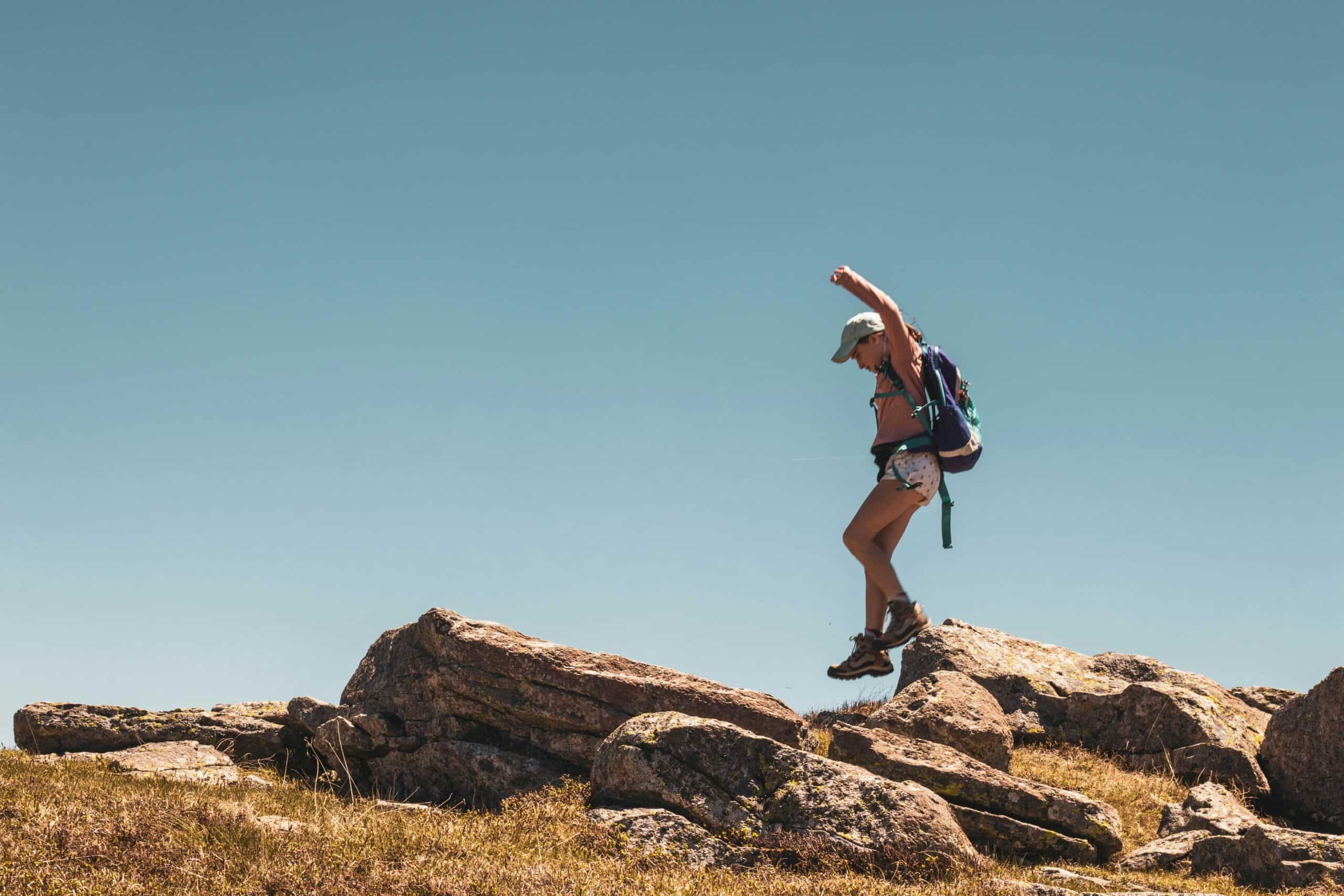
Hiking fitness is not general fitness. Someone who runs comfortably can still finish a long day on trail wrecked, because the things that break down on a hike are rarely the things running prepares.
This covers what actually needs building, how to progress without injury, and what most plans leave out. Our hiking time and pace calculator covers estimating what you are training for. Adding easy runs to a training block works best alongside picking up trail running at a sensible pace.
Quick Answer
Train by hiking, with the pack you will carry, on terrain resembling the route. Build distance before adding weight, add weight before adding speed, and increase gradually rather than in jumps. Descending capacity and foot durability matter more than cardio for most people.
Key Points
- Specificity beats general fitness for hiking.
- Descending is what causes most soreness and injury.
- Feet need conditioning as much as legs do.
- Carry the actual pack, not an approximation.
- Rest days are when adaptation happens.
What Actually Limits People
| Limiter | Why it matters |
|---|---|
| Descending capacity | Eccentric load, causes the soreness |
| Foot durability | Blisters end more hikes than fitness |
| Load tolerance | Carrying changes everything |
| Time on feet | Hours matter more than miles |
| Terrain familiarity | Uneven ground uses different muscles |
| Recovery between days | Multi-day trips compound fatigue |
Specificity Beats General Fitness
The most efficient training for hiking is hiking, and the reason is that the demands are unusual.
Trail walking involves uneven ground, constant small stabilizations, sustained low-intensity effort and a load on your back, and few other activities combine those.
Cardio training helps and is not sufficient on its own. Plenty of people with good aerobic fitness discover that their legs give out before their lungs do.
Where hiking is not available, stair climbing with a pack is the closest substitute, since it reproduces both the load and the vertical component.
Gym work has a place for building strength, and it complements time on trail rather than replacing it. Our guide on planning a hiking route covers matching training to the objective.
Build in This Order
Distance first
Time on feet before anything else.
Then elevation
Both up and down deliberately.
Then pack weight
Added gradually, not all at once.
Speed last, if at all
Most hikes do not require it.
Descending Is the Part People Skip
Going downhill is where most soreness, most knee trouble and most turned ankles come from, and it is the part training plans neglect.
The muscles work eccentrically on a descent, lengthening under load rather than shortening, and that produces considerably more muscle damage than climbing does.
Anyone who has felt fine on the way up and destroyed the next day has experienced this directly.
Training descents specifically is the answer, which means deliberately walking down rather than treating the descent as the recovery portion of a training hike.
Trekking poles reduce the load meaningfully on descent, and using them in training rather than only on the trip is worth doing. Our note on whether trekking poles actually help covers the evidence.
Feet Need Training Too
Blisters end more hikes than cardiovascular limits do, and feet adapt to repeated use in the same way muscles adapt to load.
Skin thickens gradually with mileage, which is part of why a first long hike in a new season is harder on feet than the same hike later on.
Boots need the same treatment. Footwear that has never been walked in for hours is an unknown, and finding out on the trip itself is the expensive version.
Sock choice and sock changes matter more than most people credit, and training is where you work out what your feet do over distance.
Anything that rubs at mile three will be worse at mile twelve. Our roundup of hiking socks covers the material question.
Train With the Actual Load
Carrying changes gait, balance and the muscles doing the work, so training unloaded prepares you for a different activity.
Using the pack you intend to carry matters as much as the weight, since fit and hip belt position are things your body adapts to.
Building weight gradually is the general advice, adding a small amount at a time rather than jumping to full load and hoping.
Water is a convenient way to load a pack for training, because it can be poured out if a session goes badly.
Full weight should feel manageable in training before it has to feel manageable on the trip. Our backpack weight calculator covers what that load should be.
Strength Work Has a Place
Time on trail builds most of what hiking needs, and targeted strength work addresses things it does not.
Single-leg work matters because hiking is a single-leg activity, and step-ups onto a raised surface are closer to the movement than a squat is.
Calves and ankles take a great deal of load on uneven ground, and they are commonly the limiting factor on descent for people whose legs are otherwise strong.
Core strength does more than it appears to, since a loaded pack works against your trunk with every step and a weak core shifts that load onto the lower back.
None of this replaces walking. It fills gaps that walking alone leaves, particularly for anyone with limited days available.
Training for Multi-Day Trips
A single long day and several consecutive days are different problems, and preparing for one does not prepare for the other.
Cumulative fatigue is the difference. Day three of a trip starts with legs that never fully recovered from day two, and no single-day training reproduces that.
Back-to-back weekend hikes are the practical way to rehearse it, ideally with the same pack weight you intend to carry.
Sleep and eating quality drop on trips in ways they do not in training, which compounds the fatigue further.
Anyone whose first multi-day trip follows only single-day training is likely to find the middle days harder than expected.
Progression and Rest
Adaptation happens during recovery rather than during the effort, and skipping that is the usual route to injury.
Increasing gradually is the principle behind most sensible plans, and jumping distance or load in large steps is where problems appear.
Back-to-back training days are worth including before a multi-day trip, since hiking tired is a specific skill and the second day feels nothing like the first.
A taper before the trip, easing off in the final week, means arriving fresh rather than accumulating fatigue right up to the start.
Pain that persists or worsens is a reason to see someone rather than to train through, and this is general information rather than medical advice.
Common Mistakes to Avoid
Training only on flat ground
Descent is where soreness and injury come from, and flat walking does not prepare for it at all.
Leaving the pack until the trip
Carrying changes gait and load distribution. Train with the pack you will actually use.
Jumping distance or weight
Gradual increases are what allow adaptation. Large jumps are where injuries appear.
Ignoring the feet
Blisters end more hikes than fitness limits. Boots and skin both need mileage before the trip.
Recommended Reading
See our roundup of trekking poles, our guide on choosing hiking boots, our guide on packing a backpack, and our roundup of hiking snacks.
Hiking Training FAQ
How long before a trip should I start?
Long enough to build gradually, which depends on the objective and your starting point. Rushing the build is where injuries come from.
Is running good training for hiking?
It helps aerobically and does not prepare you for load carriage, uneven ground or descending. Hiking is the more specific option.
Do I need to train with a pack?
For any trip where you carry one, yes. Carrying changes gait and the muscles involved, and unloaded training does not prepare for it.
Why does downhill hurt more?
Muscles lengthen under load on descent, which causes more damage than climbing. It is also where knee and ankle problems concentrate.
How do I train if I have no hills?
Stairs with a pack are the closest substitute, since they reproduce both the vertical component and the load.
How much should I increase each week?
Gradually rather than in jumps. The specific rate depends on your baseline, and erring conservative costs less than an injury.
Should I train back-to-back days?
Before a multi-day trip, yes. Hiking on tired legs is its own skill and the second day feels nothing like the first.
What about the week before?
Ease off. Arriving fresh matters more than one last hard session, and nothing gained in that week will have been absorbed anyway.
