
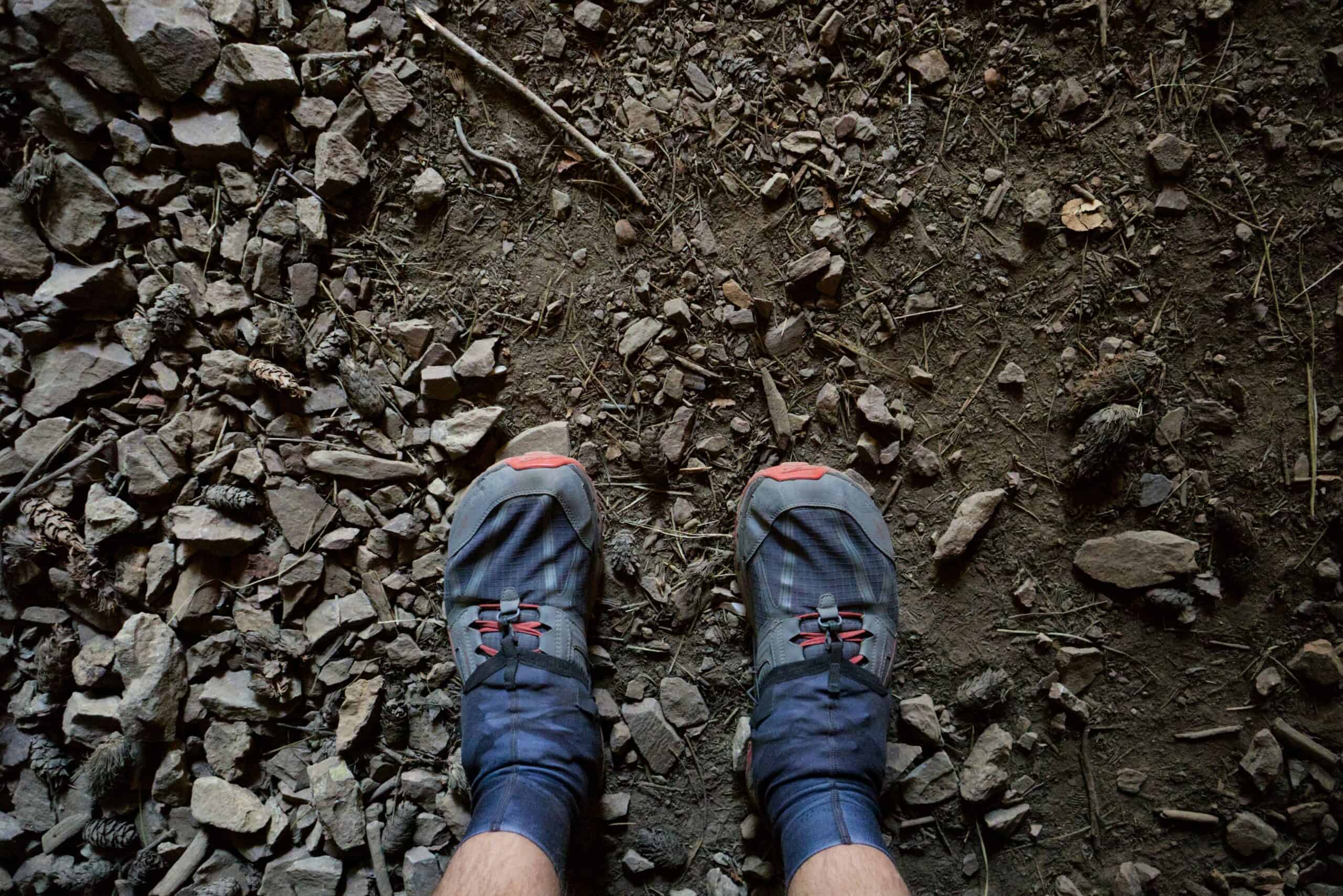
The best hiking gaiters solve a problem that most hikers do not think about until mile four, the steady accumulation of pebbles, dirt, pine needles, and water that works its way into the gap between boot and pant leg and turns an otherwise good hiking day into a grinding, blister-producing misery.
Most hikers skip gaiters entirely on their first few seasons of hiking. The footwear system feels complete with quality boots and moisture-wicking socks, and gaiters look like an accessory reserved for mountaineers and serious alpinists. Then they hike a brushy trail after overnight rain, or descend a loose scree slope, or bushwhack through undergrowth, and spend the last two miles stopping every half mile to empty their boots. Gaiters are a piece of the footwear system that eliminates that problem.
The right gaiter depends on terrain and conditions. Trail running gaiters are ultralight ankle-high shields that keep pebbles and debris out of low-cut trail runners during dry-condition trail use. Mid-height hiking gaiters provide debris and light water protection for three-season trail hiking. Full-height mountaineering gaiters provide waterproof lower-leg protection for snow travel, stream crossings, and sustained wet conditions. Matching gaiter height and waterproofing to your actual trail conditions determines whether gaiters add meaningful protection or unnecessary bulk.
For the complete footwear system, our guide to the best hiking boots for beginners covers the boot side of the equation. Hikers tackling wet conditions will also want to check our guide to the best waterproof hiking pants for complete lower-body weather protection. And for technical terrain where ankle support and traction matter as much as debris protection, our best trekking poles guide covers the stability side of the system.
What to Look for in Hiking Gaiters
Height determines the protection zone and appropriate terrain.
Ankle gaiters, sometimes called trail gaiters or low gaiters, cover the boot collar and lower ankle. They keep pebbles, dirt, and light debris out of the boot-pant gap during dry to lightly wet trail hiking. They are the right choice for established trail hiking in trail runners or low-cut boots where debris entry at the boot collar is the primary problem. Mid-height gaiters cover the ankle and lower calf, adding light water splash protection and brush contact protection above the boot collar. Full-height gaiters extend from the boot sole to below the knee, providing waterproof protection from stream crossings, snow travel, and sustained rain contact. Matching gaiter height to actual terrain prevents carrying unnecessary weight and bulk on trails that don’t require it.
Waterproofing determines performance in wet conditions.
Trail gaiters without waterproofing keep debris out but allow water penetration, fine for dry conditions and light brush contact, inadequate for stream crossings and sustained rain. Waterproof gaiters using Gore-Tex or proprietary waterproof membranes keep both debris and water out during sustained wet trail conditions. The same millimeter waterproof rating logic that applies to rain jackets applies to gaiters, 10,000mm handles moderate sustained rain, and 20,000mm handles heavy rain. Fully taped seams matter for gaiters in the same way they matter for rain pants, seam lines are the water entry point that waterproof fabric alone cannot address.
The attachment system determines secure fit and ease of use.
Gaiters attach to the boot using a combination of instep strap, boot lace hook, and upper closure. The instep strap runs under the boot sole and prevents the gaiter from riding up during sustained hiking. The lace hook attaches to a boot lace eyelet and anchors the front of the gaiter against boot movement. The upper closure, velcro, zipper, or buckle, determines how quickly gaiters can be put on and taken off mid-hike. Gaiters with no instep strap rely entirely on elastic fit for boot contact, which allows upward migration during sustained hiking that defeats the debris-exclusion purpose.
Weight determines whether you actually carry them on every hike.
The same packability logic that applies to rain pants applies to gaiters, gaiters too heavy to carry conveniently get left in the car on hikes where the trail conditions turn out to require them. Ultralight trail gaiters weigh 1 to 3 ounces per pair and pack into a jacket pocket. Full waterproof gaiters weigh 8 to 16 ounces per pair, a meaningful pack weight addition for ultralight hikers. Matching gaiter weight to your actual frequency of use determines whether the carry weight is justified.
The 5 Best Hiking Gaiters in 2026
#1, Outdoor Research Crocodile Gaiters
Best Overall Hiking Gaiters | Price: ~$110
The Outdoor Research Crocodile Gaiters are the benchmark full-height hiking gaiter, Gore-Tex waterproof fabric, reinforced lower construction, secure three-point attachment, and a 20-year reputation for durability that makes them the reference standard against which every other full-height hiking gaiter is measured.
Gore-Tex Performance Built for Sustained Wet Conditions
The Gore-Tex fabric delivers genuine waterproof protection for stream crossings, sustained rain contact, and snow travel, the conditions where full-height gaiters are the right tool. The reinforced lower section handles abrasion contact from rocks, roots, and brush without the fabric wear that thinner materials show within a season of heavy use. The three-point attachment system, instep strap, lace hook, and rand strap, locks the gaiter securely to the boot across the full range of hiking terrain and movement.
The SealSkinz instep strap is replaceable when it wears through, which it will before the gaiter shell itself wears out. That replaceability is worth noting: most gaiter failures occur at the instep strap, not the shell, and a replaceable strap extends the useful life of the gaiter significantly beyond non-replaceable alternatives.
PROS:
- Gore-Tex waterproof fabric handles sustained stream crossings, rain, and snow
- Reinforced lower construction resists abrasion from rocks and brush
- Three-point attachment system locks the gaiter securely to the boot
- Replaceable instep strap extends product lifespan past the typical failure point
- 20-year reputation for durability in demanding conditions
- Outdoor Research lifetime guarantee
CONS:
- Highest price on this list is approximately $110
- Full-height design is overkill for dry-condition trail hiking
- Heavier than mid-height and trail alternatives at approximately 12 ounces per pair
Best for: Three-season hikers and backpackers who regularly encounter stream crossings, sustained rain, and muddy trail conditions where full waterproof protection from boot to knee is the right specification.
2. Dirty Girl Gaiters
Best Trail Gaiters for Running and Hiking | Price: ~$18
The Dirty Girl Gaiters are the ultralight trail gaiter that most trail runners and fastpacking hikers use, 1 ounce per pair, velcro attachment to the boot collar, and dozens of pattern options at $18 that make them the most popular debris-exclusion gaiter in the trail running and ultralight hiking communities.
One Ounce That Eliminates the Pebble Problem
At 1 ounce per pair, Dirty Girl Gaiters add no meaningful weight to a trail running or ultralight hiking setup. The velcro attachment bonds to a velcro patch on the boot tongue, a patch that most trail runner brands now include specifically for gaiter compatibility. The stretch fabric conforms to the boot-ankle gap that pebbles and debris exploit during trail running and hiking on unpaved surfaces.
The honest limitation is obvious, these are debris exclusion gaiters, not waterproof gaiters. They keep pebbles and dry debris out of the boot collar during dry to lightly damp conditions. In sustained rain or stream crossings, they provide no meaningful water protection. For hikers who need both debris and water protection, the Outdoor Research Crocodile or Marmot PreCip alternatives are the right choice.
PROS:
- 1 ounce per pair, no meaningful weight addition to any setup
- $18 price removes all hesitation from trying the trail gaiters
- Velcro attachment compatible with most trail runner boot designs
- Dozens of pattern options, the most visually distinctive gaiters on this list
- Machine washable
- Large community of trail runners and ultralight hikers who use them
CONS:
- No waterproofing, debris exclusion only
- Velcro attachment requires a compatible boot tongue design
- Ankle height only, no calf or lower leg protection
Best for: Trail runners and ultralight hikers who want the lightest possible debris exclusion gaiter for dry to lightly damp trail conditions, anyone whose primary problem is pebbles in trail runners rather than water in boots.
3. Black Diamond Distance Gaiters
Best Midweight Hiking Gaiters | Price: ~$55
The Black Diamond Distance Gaiters hit the practical middle ground between ultralight trail gaiters and full waterproof alternatives, mid-height waterproof-treated nylon construction that handles light rain, brush contact, and debris exclusion at 4 ounces per pair and $55.
Mid-Height Protection Without Full Gaiter Bulk
The mid-height design covers the ankle and lower calf, enough protection for three-season trail hiking in variable conditions without the full-height bulk that most established trail hiking does not require. The waterproof-treated nylon handles light rain and brush contact adequately. The two-point attachment, instep strap and lace hook, provides a secure boot fit for standard hiking movement. The 4-ounce weight sits between the 1-ounce Dirty Girl and the 12-ounce Crocodile, making them the practical choice for hikers who want meaningful protection without full gaiter weight.
The waterproof treatment is DWR-based rather than Gore-Tex membrane, adequate for light rain and brush contact, but not for sustained stream crossings or heavy rain where the Crocodile’s Gore-Tex membrane is the appropriate specification.
PROS:
- Mid-height design provides ankle and lower calf protection without full gaiter bulk
- 4-ounce weight balances protection and packability effectively
- Waterproof-treated nylon handles light rain and brush contact
- Two-point attachment provides a secure fit for three-season trail hiking
- $55 price sits at a practical mid-range value
- Black Diamond’s durability reputation
CONS:
- DWR waterproofing inadequate for sustained stream crossings and heavy rain
- Less packable than ultralight trail gaiter alternatives
- Two-point attachment is less secure than a three-point attachment on steep, technical terrain
Best for: Three-season trail hikers who want meaningful debris and light water protection without the weight and bulk of full waterproof gaiters, the practical all-around choice for established trail hiking in variable conditions.
#4, REI Co-op Ridgeline Gaiters
Best Value Full-Height Hiking Gaiters | Price: ~$65
The REI Co-op Ridgeline Gaiters are the most accessible full-height waterproof gaiter option, 10,000mm waterproof fabric with fully taped seams and three-point boot attachment at $65, which is $45 less than the Outdoor Research Crocodile at comparable protection specs for three-season hiking.
Full-Height Protection at a More Accessible Price
The 10,000mm waterproof fabric handles moderate sustained rain and light stream crossings, the conditions that most three-season trail hikers encounter. The fully taped seams prevent water entry at the seam lines. The three-point attachment system matches the Outdoor Research Crocodile’s secure boot fit. REI’s satisfaction guarantee and return policy add confidence to the purchase for hikers who have not tried full-height gaiters before.
The honest comparison to the Crocodile is durability, the Ridgeline’s fabric and reinforcement are adequate for moderate use, but show wear faster than the Crocodile’s reinforced lower construction under sustained abrasion contact from technical terrain. For hikers who hike aggressively in demanding conditions multiple times per week, the Crocodile’s durability justifies the $45 premium. For most three-season hikers, the Ridgeline performs adequately.
PROS:
- Full-height waterproof protection at $65, $45 less than the Outdoor Research Crocodile
- 10,000mm waterproof fabric with fully taped seams
- Three-point attachment system provides a secure boot fit
- REI satisfaction guarantee and return policy
- Practical value for three-season hikers who don’t need Crocodile-level durability
CONS:
- Less durable than the Outdoor Research Crocodile under sustained abrasion contact
- 10,000mm waterproofing is less capable than Gore-Tex in sustained heavy rain
- REI availability limits purchase options outside the REI ecosystem
Best for: Three-season hikers who want full-height waterproof gaiter protection at the best value available, particularly REI members who receive co-op discounts that reduce the effective price further.
#5, Kahtoola NANOspikes Footwear Traction
Best Winter and Shoulder-Season Gaiter Companion | Price: ~$75
Note: For pure ankle trail gaiters on a budget, the OR Helium Trail Gaiters at approximately $40 deserve mention, 3-ounce waterproof-treated ankle gaiters with a secure three-point attachment at a price that makes them the most practical mid-priced trail gaiter option.
The Outdoor Research Helium Trail Gaiters are the best mid-priced ankle gaiter option, waterproof-treated fabric, three-point attachment including instep strap and lace hook, and 3-ounce weight at $40. They provide more secure attachment and weather protection than the Dirty Girl Gaiters while remaining far lighter and more packable than mid-height alternatives.
PROS:
- Waterproof-treated fabric handles light rain and brush contact
- Three-point attachment more secure than velcro-only trail gaiter designs
- 3-ounce weight, ultralight without sacrificing attachment security
- $40 price is practical for most hiking budgets
- OR build quality with a lifetime guarantee
- Compatible with most hiking boots and trail runner designs
CONS:
- Ankle height only, no lower calf protection
- DWR waterproofing not suitable for sustained stream crossings
- Less debris exclusion surface area than mid-height alternatives
Best for: Hikers who want more attachment security than ultralight velcro trail gaiters provide, but don’t need the full-height protection and weight of mid-height waterproof alternatives.
Quick Comparison: Best Hiking Gaiters 2026
| Gaiter | Price | Height | Waterproofing | Weight | Score |
|---|---|---|---|---|---|
| OR Crocodile | ~$110 | Full | Gore-Tex | 12 oz | 9.3 |
| Black Diamond Distance | ~$55 | Mid | DWR treated | 4 oz | 9.1 |
| Dirty Girl | ~$18 | Ankle | No | 1 oz | 9.0 |
| REI Ridgeline | ~$65 | Full | 10,000mm | 10 oz | 8.9 |
| OR Helium Trail | ~$40 | Ankle | DWR treated | 3 oz | 8.8 |
Our Verdict
For most three-season trail hikers, the Black Diamond Distance Gaiters at $55 deliver the best balance of protection and packability, mid-height DWR waterproofing handles the conditions most hikers actually encounter without the weight and bulk of full-height alternatives. Trail runners and ultralight hikers who just need pebble protection should go straight to the Dirty Girl Gaiters at $18 and 1 ounce.
Hikers who regularly encounter stream crossings, sustained rain, and muddy trail conditions should invest in the Outdoor Research Crocodile at $110, the Gore-Tex membrane and reinforced lower construction are the right specification for that use case. The REI Ridgeline at $65 is the practical alternative for hikers who want full-height protection at a lower price and shop primarily at REI.
Frequently Asked Questions: Best Hiking Gaiters
What are the best hiking gaiters in 2026?
The Outdoor Research Crocodile Gaiters are the best overall hiking gaiters for three-season hikers who regularly encounter wet conditions, Gore-Tex waterproof fabric, reinforced lower construction, and a replaceable instep strap deliver the most durable and waterproof full-height gaiter available at $110. For ultralight hikers who need debris exclusion only, the Dirty Girl Gaiters at $18 and 1 ounce are the best trail gaiter available at any price.
Do I need gaiters for day hiking?
Gaiters are most useful for hiking in conditions where debris enters the boot-pant gap, loose gravel, sandy trails, brushy overgrowth, and wet terrain where mud and water accumulate at the boot collar. On maintained trails in dry conditions with well-fitting boots and gaiters, gaiters add minimal value. On brushy, wet, or loose terrain, gaiters meaningfully improve the hiking experience by eliminating the debris accumulation that causes hot spots and blisters. If you hike regularly on varied terrain, a pair of lightweight ankle gaiters in your pack adds negligible weight and is available when conditions require them.
How do I attach gaiters to my boots?
Most hiking gaiters use a three-point attachment, an instep strap that runs under the boot sole, a lace hook that clips to a boot lace eyelet, and an upper closure that seals the top of the gaiter around the lower leg. The instep strap is the most critical attachment point, it prevents upward migration during hiking, which allows debris to enter from below. Some trail running gaiters use velcro-only attachment to a velcro patch on the boot tongue, simpler and lighter, but less secure for sustained hiking movement on technical terrain.
How do I care for waterproof hiking gaiters?
Hand wash or machine wash waterproof gaiters on cold with technical fabric cleaner rather than standard detergent, standard detergent strips the DWR coating, the same way it affects rain jackets and waterproof pants. Tumble dry on low heat to reactivate the DWR coating after washing. When water no longer beads on the outer surface, apply a wash-in DWR treatment like Nikwax TX Direct to restore waterproofing. Replace the instep strap when it shows wear, most manufacturers sell replacement straps, and a fresh instep strap on a worn gaiter shell extends the useful product life significantly.
More Hiking Guides
Snow gets into boots before it gets underfoot. Traction devices for ice covers grip once you are moving.
