
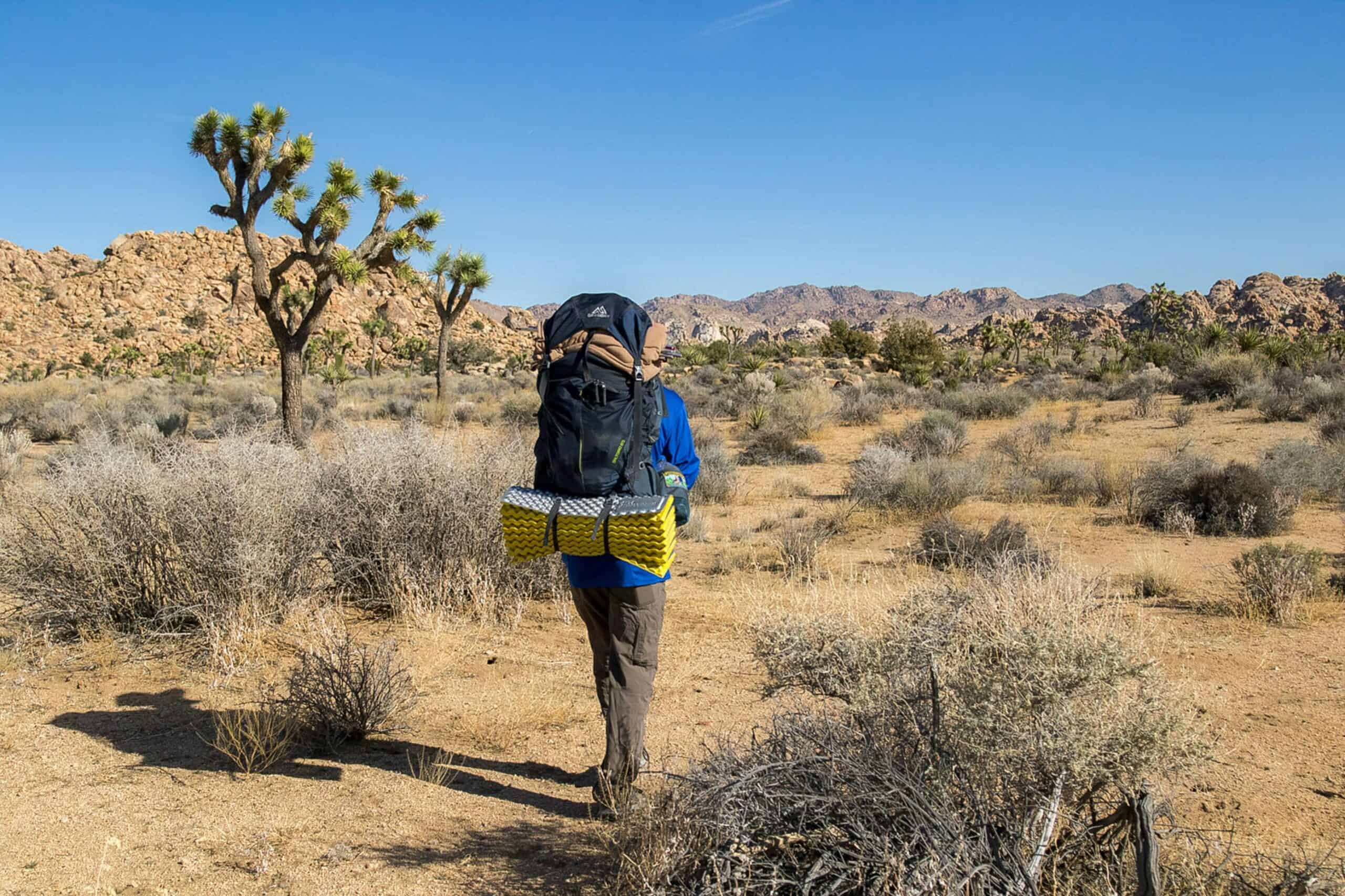
Hiking alone removes the safety net rather than adding danger to the trail itself. The same twisted ankle that is an inconvenience with a partner becomes a serious problem when nobody knows where you are.
This covers the preparation that matters, how to adjust decisions when solo, and what changes about margins. Our guide on planning a hiking route covers the groundwork.
Quick Answer
Leave a detailed plan with someone who will act if you do not check in, including your route and a specific overdue time. Carry navigation you can use without signal, build in wider margins than you would with a group, and choose routes where the consequence of a small problem stays small.
Key Points
- A trip plan left with someone is the single most important step.
- Give an overdue time, not just a rough return time.
- Minor injuries change character when you are alone.
- Build wider turnaround and daylight margins.
- Nobody is there to catch a navigation error.
What Changes When Solo
| Factor | How it differs |
|---|---|
| Injury | No one to help or go for help |
| Navigation | No second opinion on a wrong turn |
| Pace | Faster, which invites overreach |
| Decisions | No one to question a bad one |
| Water crossings | Far less margin for a slip |
| Overdue detection | Only if someone is expecting you |
The Trip Plan Is the Core
Everything else is secondary to someone knowing where you went and when to worry.
A useful plan names the trailhead, the route, the direction of travel, your vehicle and where it is parked, and a time after which you should be considered overdue.
The overdue time is the part people leave out, and it is what converts a plan into something actionable. Without it, the person holding the plan has to guess when concern becomes appropriate.
Make the overdue time later than your expected return so ordinary delays do not trigger a response, and make it early enough that a night out is not assumed to be fine.
Tell the person what to do, since a friend who does not know to call the local sheriff or ranger station may simply worry instead. Our note on what to do if you get lost covers the other side.
Choose the Route Differently
Consequence matters over difficulty
A small problem should be able to stay small.
Popular trails come with witnesses
Someone passes within a reasonable time.
Stick to known ground first
Save the unfamiliar routes for company.
Check where the exit options are
Bail-out points matter more alone.
Minor Injuries Are Not Minor
The realistic solo risk is not a dramatic accident. It is something ordinary that becomes serious because you are alone.
A rolled ankle five miles in is a slow limp back with company and a much harder problem without.
Anything affecting your ability to walk, see clearly or think straight removes your only means of self-rescue, which is why routes with easy bail-outs matter.
Carrying a means of calling for help changes the calculation considerably, particularly beyond cell coverage.
A basic first aid kit you actually know how to use is worth considerably more than a comprehensive one you have never opened. Our roundup of hiking first aid kits covers the contents.
Navigation Without a Second Opinion
Groups catch navigation errors because someone questions the turn. Alone, a mistake compounds silently.
Carrying a map and compass alongside a phone matters more solo, since a dead battery removes your only reference otherwise.
Checking position at junctions rather than only when something feels wrong catches errors while they are still small.
Noting the time at recognizable features gives you a way to backtrack, since retracing a route is easier with a rough timeline.
Turning around at the first genuine uncertainty is a better instinct alone than pressing on to see whether the trail reappears. Our roundup of compasses covers the backup. Solo hikers carry every decision themselves, which makes watching the weather change a core skill.
Telling People Where You Are Going
Who you tell matters as much as what you tell them.
The person needs to be reachable at the overdue time, which rules out someone who will be asleep, traveling or without signal.
They also need to know what action to take, since a friend who does not know which agency covers the area will lose hours finding out.
A written message is better than a spoken one, because it survives being half remembered and can be forwarded directly to searchers.
Checking in when you get back matters just as much, since an unnecessary search is a real cost to the people who run it.
Signs You Are Overreaching
Solo trips drift longer than planned more easily than group trips do, and the drift is gradual.
Passing the planned turnaround because you feel strong is the classic version, and it ignores that the return leg is the tired one.
Adding an extension mid-route means the person holding your plan now has the wrong route entirely.
Running behind schedule and speeding up rather than shortening the day is the other pattern, and it raises the chance of the injury the whole plan is designed around.
The honest check is whether you would make the same choice with a partner watching.
Wider Margins on Everything
Solo hiking works best with margins deliberately larger than they would be with a group.
Turn around earlier. A delay that a group absorbs by sharing loads or helping someone along is one you carry alone.
Carry more daylight buffer, since finishing in the dark alone on unfamiliar ground is a different proposition from doing it in company.
Carry more water and food than the day strictly needs, because the scenario where you need them is the one where you are moving slowly.
Solo pace tends to run faster than group pace, and that speed quietly invites longer routes than the margins were set to support. Our turnaround time calculator covers setting that limit in advance.
What Solo Hiking Offers
None of this argues against going alone, and the reasons people do are real.
Pace becomes entirely your own, and stopping or pushing on is nobody else’s decision.
Attention shifts outward. Without conversation, most people notice considerably more of what is around them.
Self-reliance builds in a way it does not when someone else is handling half the decisions, and that competence transfers to group trips too.
The preparation described here is what makes those benefits available repeatedly rather than once. Our roundup of satellite messengers covers staying reachable.
Common Mistakes to Avoid
Leaving behind a vague plan
A route and an overdue time make a plan actionable. Telling someone you are going hiking does not.
Relying only on a phone
A dead battery removes your only navigation reference. Map and compass are the backup.
Keeping group margins
Turn around earlier, carry more buffer, and plan more daylight than you would with company.
Choosing routes on difficulty alone
What matters solo is consequence. A small problem on a remote route stops being small.
Recommended Reading
See our roundup of headlamps for hiking, our guide on reading a topographic map, our roundup of emergency whistles, and our roundup of personal location beacons.
Solo Hiking FAQ
Is hiking alone dangerous?
It removes the safety net rather than adding danger. The same minor problem becomes harder to solve without company.
What should I tell someone before I go?
Trailhead, route, direction, vehicle and where it is parked, plus a time after which you should be considered overdue and what to do then.
What is an overdue time?
The point at which someone should raise the alarm. Later than your expected return so delays do not trigger it, early enough that a night out is not assumed to be fine.
Do I need a satellite device?
Beyond cell coverage it changes the calculation considerably, since it converts an immobilizing injury into a call for help.
Should I pick easier routes?
Pick lower-consequence ones. Difficulty matters less than whether a small problem stays small.
Are busy trails safer?
For self-rescue, generally yes. Someone passing within a reasonable time is a meaningful backup.
How much extra margin should I build?
More than feels necessary. Turn around earlier, allow more daylight, and carry more water and food than the day strictly requires.
What is the most common solo mistake?
Going further than planned because solo pace is faster, then finding the margins were set for the original route.
