
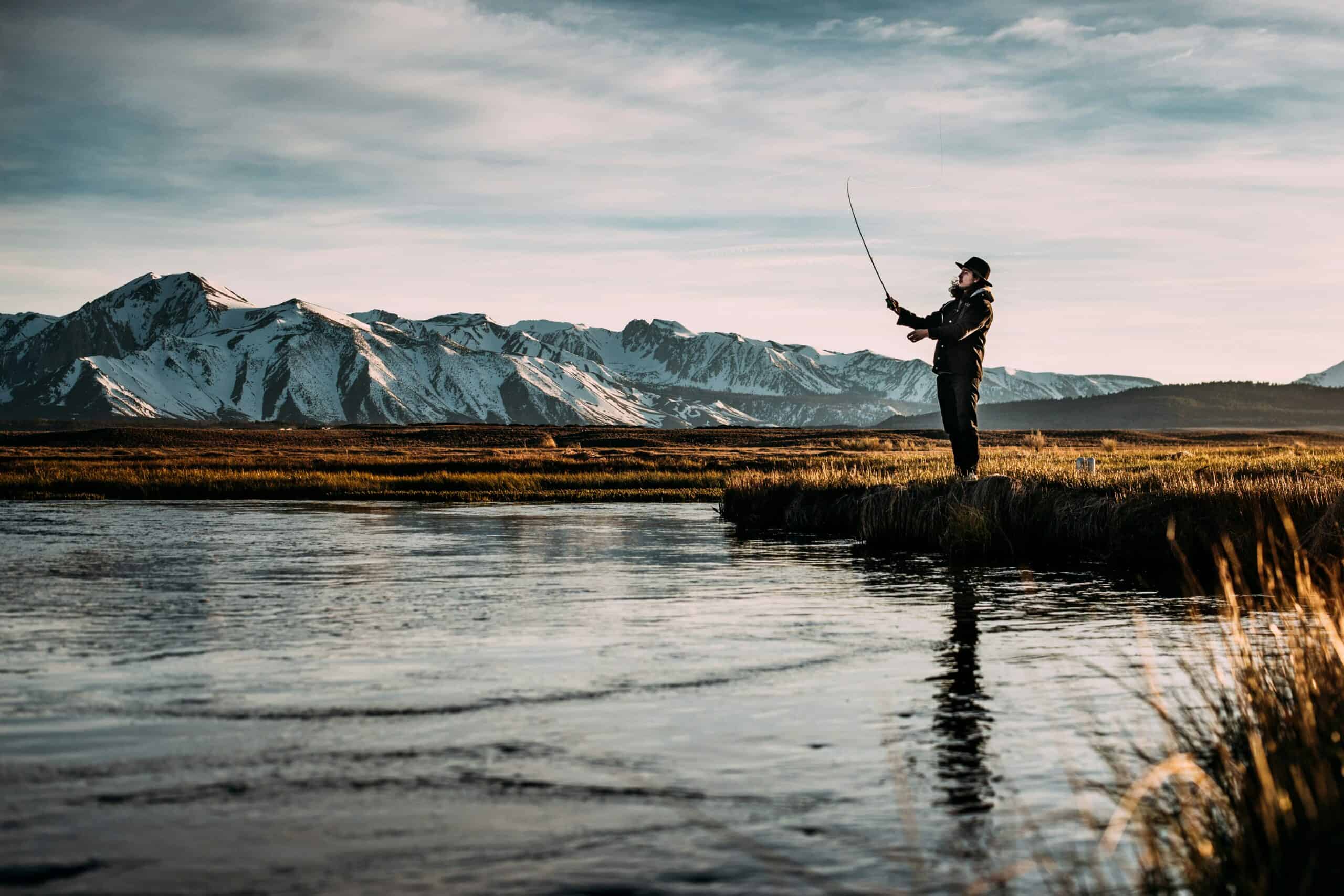
Fish don’t sit randomly. Whether you’re standing on a riverbank, drifting in a kayak, or working the shoreline of a lake, fish position themselves based on three things: where the food is, where the cover is, and how much energy they have to spend holding their position. Reading water means looking at the surface and the visible structure underneath it and translating what you see into where to cast.
Most beginners cast where it looks pretty: open pools, smooth glassy surfaces, the middle of a slow run. Those spots usually hold the fewest fish. Productive water has visible signs that experienced anglers learn to read almost subconsciously, but every sign is learnable: the seam where two currents meet, the slick downstream of a rock, the soft current on the inside of a bend, the deeper darker color of a hole or undercut bank.
This guide walks through what to look for on moving water (rivers and streams) and still water (lakes and ponds), the visual cues that signal feeding fish, the time-of-day patterns that change where fish hold, and the common mistakes that send beginners home empty-handed.
Last updated: May 30 2026
Key Takeaways
- Fish hold where they expend the least energy while having access to drifting food and overhead cover
- On rivers, productive water sits at current seams, behind structure, in slicks and tailouts, and along undercut banks
- For lakes, the productive water sits at depth changes, weed lines, points, drop-offs, and inflowing creeks
- Surface signs (rises, nervous water, bait flickers, bird activity) tell you where fish are actively feeding right now
What Fish Are Doing Underwater
Fish balance three competing needs: energy conservation, food access, and predator avoidance. A trout in a stream can swim against the main current all day, but doing so burns energy faster than the food coming down the current replaces. So a smart fish positions itself in slower water (resting position) right next to faster water (feeding lane), where it can dart out to grab food and slide back to rest. That spot is called the feeding seam, and finding it is the central skill of reading moving water.
Cover plays a role too. Fish stay near overhead cover (rocks, logs, undercut banks, deep water) to reduce visibility from predators like herons, eagles, ospreys, and otters. Cover doesn’t have to be elaborate. A foot of depth, a single rock, or a shadow from an overhanging branch is sometimes enough.
Water temperature, oxygen levels, and time of day all shift these positions. A trout that holds in the main river current at dawn might retreat to deeper, cooler water by midday and return to the shallows in the evening as the temperature drops. Reading water means reading not just where fish are now but predicting where they’ll move as conditions change.
Reading Moving Water
Current seams
A current seam is where two flows of different speeds meet. The classic example is downstream of a midstream rock: the current splits around the rock, flows past on either side, and rejoins downstream forming a slack pocket directly behind the rock plus two seams where the slack meets the faster water on each side. Trout, smallmouth bass, and many other game fish sit in the slack water and feed from the seam.
Seams also appear where a tributary joins a main river, where the inside of a bend creates slower water against faster outside flow, where a deeper channel meets a shallower flat, and anywhere the bottom topography forces water to slow down or speed up. The visual sign is usually a change in surface texture: ruffled water on one side meeting smoother water on the other.
Behind structure
Any solid object that breaks the current creates a holding lie. Rocks, fallen logs, bridge pilings, dock pilings, undercut tree roots, even small boulders barely visible from the surface. Fish sit in the eddy directly behind the structure and dart into the seams on either side to feed. Larger structure holds larger fish (because larger fish need bigger eddies to rest in), so a big rock in a big river often holds the biggest trout in that section.
Slicks and tailouts
A slick is a section of smooth surface water between two riffles or runs, where the current is moving but the surface is calm. Slicks often have insects floating on the surface (because the riffle upstream has dislodged them from rocks) and fish positioned subsurface to intercept them. Tailouts are the downstream end of pools where the water shallows and speeds up before entering the next riffle. The transition zone holds fish positioned to grab anything washing downstream.
Undercut banks and overhanging vegetation
The current erodes the outside of bends faster than the inside, creating undercut banks where the soil above hangs over the water and the bank curves inward below the surface. These are prime holding lies for larger trout, bass, and pike. Overhanging vegetation (alder, willow, low-hanging branches) creates similar cover and drops terrestrial insects directly into the water on warm summer days.
Holes and pools
Deep water means safety and stable temperature. Holes (sudden deep spots) and pools (longer stretches of deeper water) hold fish, especially during summer heat and winter cold. Look for color change in the water: shallower water reads lighter and shows the bottom; deeper water reads darker and obscures the bottom. The transition between the two is where fish often hold during the day, ready to move shallower to feed in low-light conditions.
The inside of bends
Rivers don’t flow in straight lines. On every meander, the outside of the bend has faster water (eroding) and the inside has slower water (depositing). Fish often hold on the inside of bends, especially smaller trout and panfish, because the slower water lets them rest while watching food drift past in the faster outside flow.
Reading Still Water (Lakes and Ponds)
Lake fishing requires reading underwater structure rather than surface flow, but the principles are similar: fish position themselves where food, cover, and comfort meet.
Drop-offs and depth changes
Sudden depth changes (from 5 feet to 15 feet within a short distance) attract baitfish, which attract gamefish. Largemouth bass, walleye, lake trout, and many other species patrol drop-offs at dawn and dusk. A fishfinder makes this trivial; without one, look for shoreline contour and underwater visibility patterns.
Weed lines and aquatic vegetation
The outer edge of submerged weed beds is one of the most productive zones in a lake. Weeds produce oxygen, shelter baitfish, and host insect life. Bass, pickerel, pike, and panfish all use weed edges. The clearest reading is from above (drone or topographic map); the next best is along the shoreline where you can see the weed line’s depth change.
Points
A point is a shoreline feature extending into the lake. Below the surface, points often continue as a finger of shallower water surrounded by deeper water on three sides. Fish patrol points during feeding periods because the structure funnels baitfish movement. Casting parallel to a point or working both sides catches more fish than fishing the tip directly.
Inflows and outflows
Where a creek enters a lake, food washes in, oxygen levels increase, and bait often concentrates. Fish stack at inflow zones, especially during runoff periods (after rain) when bait is more abundant. Outflows have similar dynamics but usually less concentrated bait.
Wind and wave concentration
Strong winds blow surface water (and floating food) toward the downwind shore. Algae, insects, and baitfish concentrate there. The “windy bank” is often the most productive bank on a windy day, even though it’s the least pleasant to fish from.
Surface Signs of Active Fish
Even with all the structural reading above, the highest-value signs are the active feeding signs that tell you fish are eating right now.
Rises. Concentric rings on the surface mean a fish broke the surface to eat. Splashy rises usually indicate the fish grabbed a fast-moving insect; dimpling rises (just the lips breaking) indicate slower feeding on small insects or emerger stages. Either way, that fish is feeding.
Nervous water. Faint ripples or tiny disturbances on an otherwise calm surface usually mean baitfish moving just below the surface, often with a predator beneath them. Cast to the nervous water with a streamer or topwater lure.
Bait flickers. Quick glimpses of small fish jumping or being pushed to the surface mean predators are below. Striped bass, schoolie smallmouth, and white bass push bait to the surface and feed below them.
Bird activity. Birds working the surface (terns diving, gulls hovering, kingfishers active) tell you where bait is concentrated. Where bait concentrates, predators follow.
Subsurface flashes. A silver or white flash in clear water means a fish turning to feed (showing the lighter side of its body). Polarized sunglasses are essential for reading subsurface activity; they cut surface glare and let you see what’s underneath.
Time of Day and Light Conditions
Fish move with the light. Most species feed most actively during transition periods (dawn, dusk) and during overcast conditions. Bright midday sun pushes fish to deeper water, into shaded areas, or under cover. Cloudy days let fish stay shallower for longer, extending the productive fishing window.
Specific patterns by species:
- Trout: Most active in low light. Move to deeper, cooler water by mid-morning in summer; return to shallows at dusk.
- Largemouth bass: Active at dawn and dusk; mid-day they’re under cover (lily pads, docks, fallen trees).
- Walleye: Strongly low-light feeders; dawn, dusk, and overcast days produce most fish.
- Panfish (bluegill, crappie): Active throughout the day but concentrate in different zones depending on time. Mornings near drop-offs; midday deeper; evenings back to shallower feeding zones.
- Smallmouth bass: Tolerate brighter light better than largemouth; can be caught throughout the day with adjustments to depth.
Reading Water Temperature
Water temperature drives fish behavior more than almost anything else. Most freshwater game fish have preferred temperature ranges, and they move within the available water column to stay near those ranges.
Cold water (35-50°F): Fish are sluggish. Slow presentations. Deep water during sunny periods, shallow water only in the warmest part of the day.
Cool water (50-65°F): Active feeding for trout, smallmouth, pike. Most species in their normal holding zones. Often the most productive temperature range for moving-water trout fishing.
Warm water (65-75°F): Peak activity for largemouth, panfish, catfish. Trout move to deeper, cooler water if available. Top-water fishing prime in this range.
Hot water (75°F+): Trout struggle; release them carefully or stop fishing for them entirely until temperatures drop. Bass and panfish remain active but move deeper or to shaded cover. Some states close trout streams entirely when water temperatures exceed 68-70°F to protect fish populations.
Common Mistakes Beginners Make
Casting to the middle of pools. The middle is often the slowest, lowest-oxygen, lowest-cover area. Fish hold at edges (current seams, weed lines, depth changes), not in the middle. Always work edges first.
Standing in the productive water. Wading anglers often stand directly in the spot they should be casting to. Approach the river from a position that lets you cast to the seam, the structure, or the inside of the bend without being in the water you’re trying to fish.
Casting upstream into spooked water. Fish in moving water generally face into the current, so they’re watching upstream for food. Approach from downstream, cast upstream past the fish, and let the bait drift down naturally past them. Casting from the upstream side puts your shadow and your line over the fish before the bait arrives.
Fishing the same spot too long. Productive fishing means covering water until you find active fish. Five to ten casts at a likely spot, then move. Standing in one spot for an hour usually means you’ve already caught any willing fish there.
Ignoring temperature. A pool that produced fish in May at 55°F water temperature may be empty in August at 75°F because the fish have moved to cooler water elsewhere. Adjust your spots seasonally.
Wrong-sized lure or fly. Match the size of natural prey in the water. A 6-inch streamer in a small trout stream is wrong; a size 22 midge for largemouth bass in a lake is wrong. Spend a moment looking at what’s actually in the water (insects, baitfish, crawfish) before choosing.
Practicing Catch and Release Responsibly
If you’re releasing fish, doing it correctly determines whether they survive. The International Game Fish Association catch-and-release guidelines emphasize minimizing time out of water, wetting hands before handling, supporting larger fish horizontally rather than vertically, removing hooks with proper tools (forceps or hook removers), and reviving exhausted fish by holding them in current facing upstream until they swim away under their own power. Single barbless hooks (or pinched-barb hooks) make removal faster and reduce damage. Circle hooks for bait fishing reduce gut-hooking. Avoid fishing for trout when water temperatures exceed 68°F; mortality rises sharply above that threshold.
Frequently Asked Questions
How long does it take to learn to read water well?
You can apply the basics on your first outing. Reading water at the level where you consistently catch fish takes 20-50 hours on the water, more if you fish different waters and species. The principles transfer, but each river and lake has its own particular features that take time to map mentally.
Do I need a fishfinder to fish lakes well?
No, but it helps. A basic fishfinder maps depth, bottom contour, and sometimes vegetation, which gives you the structural information that takes years to learn visually. Smaller portable units suitable for kayak or shore fishing run $80-200.
What about reading water for saltwater fishing?
The principles transfer, but the structures change. In saltwater, look for tidal current seams, rip lines, structure (rocks, jetties, wrecks, oyster bars), bait schools, and bird activity. Tides matter more than time of day for many saltwater species.
How do I find productive water on a river I’ve never fished?
Walk it first if you can. Note the structures (rocks, logs, undercut banks), the depth changes, and the seams. Online fishing reports for the river often mention specific access points and water types. Local fly shops are the most reliable source of recent information about what’s working and where.
Why do guides always seem to read water better?
Time on specific waters. A guide who fishes the same 5 miles of river 200 days a year knows where every productive lie is and how it changes with flow and temperature. The reading skill itself isn’t different from yours; the local knowledge depth is.
