
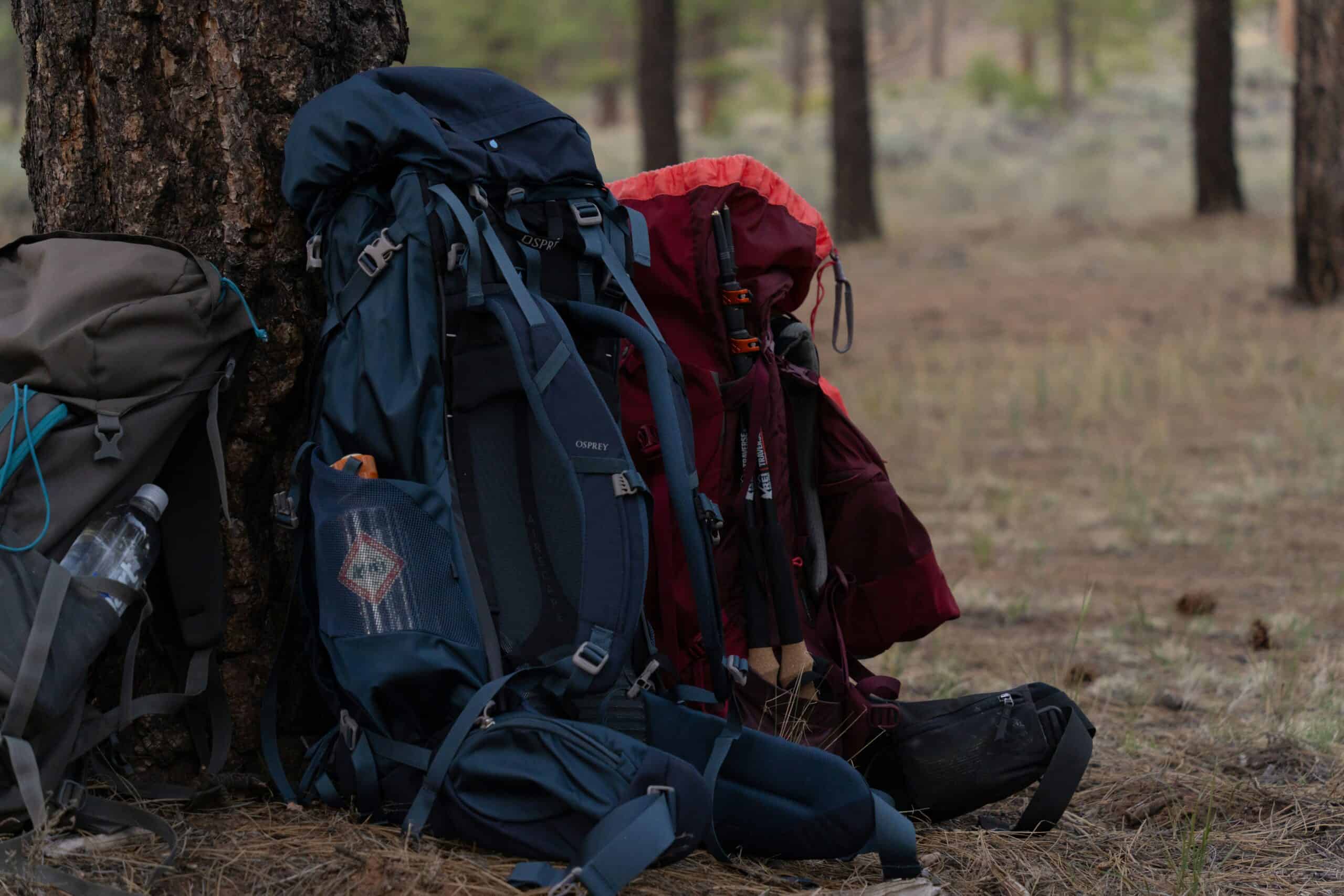
A decent daypack lasts five to ten years of regular use and a well-made backpacking pack often longer, with the hardware and the hipbelt foam failing before the fabric does. Storage conditions matter as much as trail miles.
What kills packs prematurely is rarely wear from actual hiking. It is coatings breaking down in a hot garage, zips destroyed by accumulated grit, and foam compressing into uselessness while sitting under other gear for months at a time.
Quick Answer
Expect five to ten years from a quality pack with regular use, and considerably less from budget models. Zips, buckles, and hipbelt padding go first. Storing a pack clean, dry, uncompressed, and out of heat does more for lifespan than anything else.
What Fails and When
| Component | Typical life | Repairable |
|---|---|---|
| Main zips | 3 to 8 years | Yes, by a repair service |
| Buckles | 5 to 10 years | Yes, easily |
| Hipbelt foam | 5 to 10 years | Sometimes |
| Shoulder strap padding | 5 to 10 years | Sometimes |
| Waterproof coating | 3 to 7 years | Partially |
| Main fabric | 10 years or more | Patchable |
| Frame or stays | 10 years or more | Often replaceable |
The pattern across all of those is that the expensive structural parts outlast the cheap functional ones, which is precisely why a pack that looks perfectly fine on the outside can be effectively unusable in practice.
Coating Delamination Is the Quiet Killer
Most pack fabrics carry a polyurethane coating on the inner surface that provides the water resistance. That coating hydrolyzes over time, breaking down through a chemical reaction with moisture in the surrounding air.
Heat accelerates that process dramatically. A pack stored in a hot attic or an uninsulated garage degrades far faster than one kept indoors, and this happens whether or not the pack is ever taken out and used.
The symptom is a sticky or flaky inner surface, often accompanied by a distinct chemical smell, and once the process has started it does not stop or reverse.
This is why a lightly used pack from a decade ago can be in worse condition than a heavily used one stored properly, covered in how to clean a hiking backpack.
Zips Fail From Grit, Not Age
Dust and sand work their way down into the zip teeth and then act as an abrasive compound every single time the slider passes over them.
A zip that has become stiff to operate is already wearing faster than it should, since forcing a stiff slider through deforms the very teeth it is struggling past.
Rinsing the zips with clean water after any dusty or sandy trip, then letting them dry out fully before storage, does more for zip life than anything else you can do.
Zip replacement is a repair rather than a write-off, and most reputable manufacturers or specialist repairers can do it for a fraction of a new pack, covered in hiking backpack size guide.
Foam Compression Is Gradual
Hipbelt and shoulder strap foam compresses under load, recovers between uses, and gradually loses the ability to recover fully back to its original thickness.
The result is a pack that carries less comfortably than it did without any obvious change in appearance, and people frequently attribute that to themselves rather than the pack.
Compression during storage matters a great deal here. A loaded pack sitting under other gear for months on end is compressing foam that was designed to spend the majority of its life fully uncompressed.
Hanging a pack, or storing it loosely stuffed rather than flattened, preserves the padding meaningfully, covered in fitting a hiking backpack.
What Actually Extends Life
Store cool, dry, and indoors
The single biggest factor. Heat and humidity destroy coatings regardless of how gently the pack is used.
Clean after gritty or salty trips
Rinse rather than machine wash, since agitation and detergent both attack coatings. Let it dry completely before storing.
Loosen the straps between trips
Webbing and buckles under permanent tension take a set over time, and releasing them costs nothing.
Do not overload it
Consistently exceeding the design load stresses seams, stitching at attachment points, and the frame, which are the parts that are hardest to repair.
Address damage early
A small tear patched now stays small. Left alone it propagates along the weave, covered in packing a hiking backpack.
Signs a Pack Is Actually Finished
Knowing what is terminal and what is a repair saves both money and a perfectly good pack.
Delaminating coating across the whole interior is the clearest write-off, since the fabric itself is deteriorating and there is no patch for a chemical breakdown happening everywhere at once.
Torn stitching where the shoulder straps or hipbelt meet the pack body is serious, because those attachment points carry the entire load and a failure there can happen suddenly under weight.
A cracked or permanently bent frame changes how load transfers to your hips, and a pack that no longer carries weight properly is uncomfortable regardless of what else works.
Foam that stays compressed after days of rest has lost its structure, and while some manufacturers replace hipbelts, many do not for older models.
Fabric that tears easily under light pressure has lost its strength through ultraviolet exposure, and patching one tear on a weakened pack simply moves the next tear elsewhere.
Everything else, including zips, buckles, straps, and isolated tears, is a repair rather than an ending.
Repair Against Replace
Buckles, straps, and zips are all straightforwardly replaceable, and a pack that remains structurally sound with nothing worse than a broken buckle is well worth fixing rather than retiring.
Fabric tears are patchable too, and adhesive repair tape holds up well on smaller damage while properly stitched patches suit anything that sits under real load.
Delaminated coating is the case where repair rarely makes sense, since it affects the whole interior and the fabric itself is deteriorating.
Many established manufacturers offer their own repair services or carry lifetime warranties on workmanship, which is always worth checking before assuming a pack has reached the end.
Budget Against Premium Over Time
Cheaper packs typically use lower denier fabric, plastic hardware from unbranded suppliers, and noticeably thinner foam, all of which shortens every single timeline in the table above.
The cost per year of ownership often favors the more expensive pack quite clearly, particularly for anyone hiking regularly rather than a handful of times a season.
For someone hiking only a few times a year, a budget pack stored properly may well outlive their interest in the activity entirely, and the calculation looks rather different.
Where premium clearly wins is repairability, since established manufacturers stock spare parts and offer service that budget brands do not, covered in what to pack in a daypack.
Related Reading
- backpack size guide
- fitting a backpack
- cleaning a backpack
- packing a backpack
- daypack contents
- hiking daypacks
Frequently Asked Questions
How long do hiking backpacks last?
Five to ten years of regular use for a quality pack, often longer for backpacking models. Zips, buckles, and hipbelt foam fail before the main fabric does.
What fails first?
Usually zips, then hipbelt padding, then the waterproof coating. The structural fabric and frame typically outlast all of them by years.
Why does my pack feel sticky inside?
The polyurethane coating is delaminating, which happens through reaction with moisture and accelerates dramatically in heat. It cannot be reversed.
Does storage really matter?
More than trail miles. A pack in a hot garage degrades whether used or not, and one stored cool, dry, and uncompressed lasts far longer.
Can I machine wash it?
Better not to. Agitation and detergent both attack the coating. Rinse by hand, clean spots as needed, and dry completely before storing.
Is a broken zip worth repairing?
Usually. Zip replacement costs a fraction of a new pack, and a structurally sound pack with a failed zip is a repair rather than a write-off.
When is a pack genuinely finished?
Delaminating coating throughout, torn stitching at strap or hipbelt attachment points, a cracked frame, or fabric that tears under light pressure. Everything else is a repair.
Are expensive packs worth it?
For regular hikers, generally yes on cost per year and on repairability. For someone hiking a few times a year, a budget pack stored well may be sufficient.
Sources
- National Park Service. Hiking Safety and Preparation. https://www.nps.gov/subjects/hiking/safety.htm
- Leave No Trace Center for Outdoor Ethics. Plan Ahead and Prepare. https://lnt.org/why/7-principles/
Recommended Reading
See our note on planning a hiking route.
