
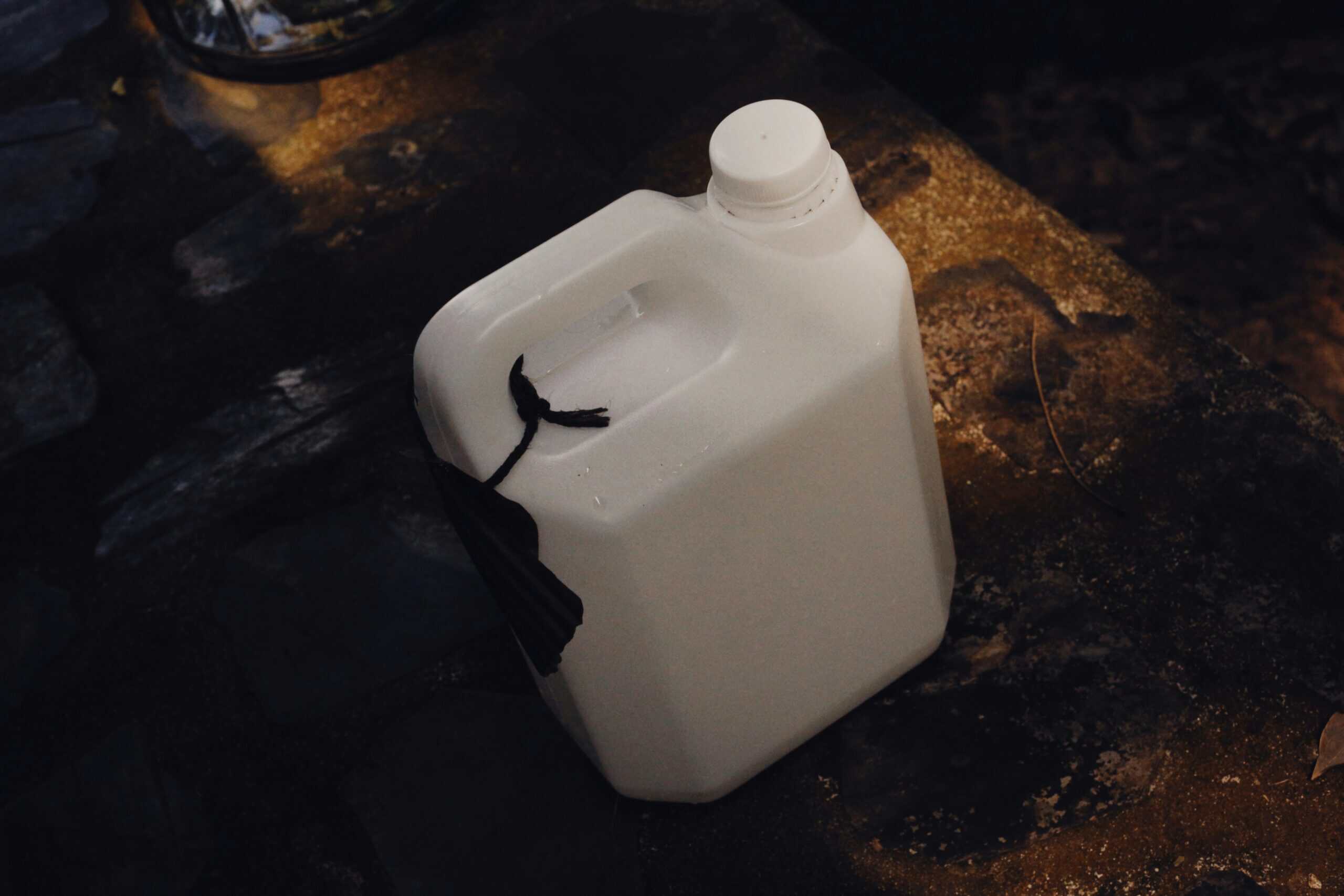
A camping water container solves a different problem from a hiking bottle: it holds enough for cooking, washing, and drinking across a whole trip, so nobody walks back to the tap every hour. Water is heavy at roughly eight pounds a gallon, which means the practical questions are how you carry it from the car and how you get it out of the container once it is there. Our roundup of water filters covers treating water rather than storing it.
Water Containers at a Glance
| Type | Typical size | Packs down | Best for |
|---|---|---|---|
| Rigid jerry-style jug | 5 to 7 gallons | No | Car camping base water |
| Collapsible container | 2 to 5 gallons | Yes, flat | Limited car space |
| Water bladder or cube | 2 to 6 gallons | Yes | Backcountry resupply |
| Insulated beverage cooler | 3 to 10 gallons | No | Hot weather, group camps |
| Gravity filter reservoir | 4 to 10 liters | Yes | Camps near a water source |
| Stackable water bricks | 3 to 4 gallons each | No, but stack | Organized vehicle loading |
The short version: a rigid jug with a spigot handles most car camping, and a collapsible container is the answer when trunk space is the constraint. If you are camping near a lake or stream, a gravity reservoir means you carry an empty bag instead of full jugs.
How We Picked
Containers are grouped by construction and by how they dispense, since those two things decide whether the water is actually usable once it reaches camp. Cleaning access is weighted heavily, because a container that cannot be scrubbed inside develops a taste that never leaves.
Selection criteria reflect how each design handles carrying, dispensing, and storage between trips. Descriptions come from product research rather than from containers used on a particular trip.
1. A Rigid Jerry-Style Jug, Best Overall
Why It Stands Out
A hard-sided jug with a molded handle and a spigot is the standard car camping answer, and it earns that position. It stands up on uneven ground, the spigot lets one person fill a pot without lifting anything, and it survives being slid around a trunk.
Rigid walls also mean it can be part-filled without collapsing, which matters when the water level drops over a few days.
Worth Knowing
Spigots are the failure point. Cheap taps drip, and a slow leak in a trunk is a genuinely bad discovery. Look for a spigot that seals with a positive click rather than friction, and carry it upright.
Narrow openings also make interior cleaning difficult, so check whether the cap is wide enough to get a brush inside. Our roundup of car camping essentials covers the rest of a base camp kit.
This suits car camping and base camps. Skip it if trunk space is tight.
2. A Collapsible Water Container, Best for Space
Why It Stands Out
Collapsible containers fold flat when empty, which turns a bulky item into something that stores in a gap. For anyone packing a full car, that difference decides whether the container comes at all.
They also weigh far less than rigid equivalents, which matters if the container has to be carried any distance from the parking spot.
Worth Knowing
Soft sides mean a partly full container slumps and becomes awkward to handle, and seams are where these eventually fail. Fold along the manufacturer’s creases rather than inventing your own, since repeated folding in the wrong place is what splits them.
They also puncture more easily than a rigid jug, so keep them away from anything sharp in a packed trunk.
This suits small cars and occasional trips. Skip it for heavy repeated use.
3. A Water Bladder or Cube, Best for Resupply
Why It Stands Out
Flexible cubes and bladders roll up to almost nothing empty, which makes them the practical way to carry water into a camp that has no source of its own.
Many have a handle and a hose, so they can hang from a branch and act as a tap for washing hands and dishes.
Worth Knowing
Bladders are harder to clean than any other design, and interior mold is the common complaint. Dry them fully open between trips, and consider a dedicated cleaning kit if you use one regularly.
They also puncture, and a bladder failure loses the whole volume at once rather than leaking slowly. Our note on how much water to bring covers working out the volume you need.
This suits camps without a nearby source. Skip it if you will not commit to drying it properly.
4. An Insulated Beverage Cooler, Best for Hot Weather
Why It Stands Out
Insulated dispensers keep water cold through a hot day, which changes how much people actually drink. In summer camping that is a real health consideration rather than a comfort one.
The wide top opening also makes them the easiest container in this list to clean thoroughly, since you can get a hand inside.
Worth Knowing
These are bulky and heavy even empty, and the insulation is dead weight if you are camping in cool conditions. They also cost considerably more per gallon of capacity.
Insulation works both ways, so water that goes in warm stays warm. Fill with cold water and add ice if the weather warrants it. Our roundup of camping coolers covers the food side of the same problem.
This suits hot weather and group camps. Skip it for cool conditions or small vehicles.
5. A Gravity Filter Reservoir, Best Near a Water Source
Why It Stands Out
If camp is near a lake or stream, a gravity system means carrying an empty bag in and filling it there rather than hauling full jugs from the car. That is the single biggest weight saving available in this category.
Hanging the reservoir gives a hands-free tap for cooking and washing, and it filters as it dispenses.
Worth Knowing
This only works where there is water to draw from, and the filter has its own maintenance requirements including backflushing and protection from freezing.
Flow rate slows as the filter loads with sediment, so a murky source means a slow fill. Our guide to water filters covers choosing the filter element itself.
This suits camps beside a source. Skip it for dry camping.
6. Stackable Water Bricks, Best for Vehicle Loading
Why It Stands Out
Rectangular stackable containers use trunk space far more efficiently than round jugs, and splitting the load across several smaller units means each one is liftable.
Smaller units are also easier to refill at a tap and easier to carry to the picnic table.
Worth Knowing
More containers means more caps, more seals, and more things to lose. They also usually lack a spigot, so pouring from a full brick takes two hands.
Check they actually interlock rather than merely sitting on each other, since a stack that shifts in transit is worse than one large jug.
This suits organized vehicle packing and longer trips. Skip it if you want one container and a tap.
What to Look For in a Water Container
How much do you actually need?
Drinking, cooking, and washing add up faster than people expect across a group and a weekend. Work out a daily figure for the party, then add margin rather than sizing exactly.
How does the water come out?
A spigot lets one person fill a pot without lifting anything. Pouring from a full five-gallon jug is a two-handed job and a good way to spill several liters.
Can you clean inside it?
Narrow openings trap smell and taste. A cap wide enough for a brush, or a design that opens fully, is what keeps a container usable across seasons.
Where does it live between trips?
Rigid jugs take up permanent garage space. Collapsible containers do not, which is often the deciding factor for people camping a handful of times a year.
Rigid or Collapsible?
The case for rigid
It stands up, survives handling, dispenses cleanly through a spigot, and cleans properly. For regular car camping this is the durable choice and the one that stays usable for years. Water for washing up counts too, as our guide to cleaning camp cookware explains.
The case for collapsible
It disappears when empty. For a small car, a full trunk, or occasional trips, that storage advantage outweighs the durability trade. Our roundup of camping tables covers another item where packed size drives the decision.
Common Water Storage Mistakes to Avoid
Storing it wet between trips
A sealed damp container grows exactly what you would expect. Dry it fully open, and store it with the cap off rather than sealed.
Underestimating weight
Water is roughly eight pounds a gallon, so a full five-gallon jug is a serious lift. Two smaller containers are often more practical than one large one.
Trusting the spigot in transit
Cheap taps drip and a slow leak in a trunk soaks everything. Carry containers upright, and check the seal before loading.
Assuming stored water stays drinkable
Water in a container in a warm car develops a taste and can grow things over time. Fill fresh for each trip rather than leaving a jug loaded between weekends. Our guide to portable water bottles covers the personal-carry side.
Worth reading next: our camping shower picks, notes on camp cookware sets, our camping lantern roundup, and a guide to insulated water bottles.
Camping Water Container FAQ
How much water do I need for camping?
More than most people plan for, since drinking, cooking, and washing all draw from the same supply. Work out a daily figure for everyone in the party and add margin, because running short means a drive back to a tap rather than a minor inconvenience.
Is a spigot worth having?
Yes, and it is the feature that most changes how usable a container is. Pouring from a full five-gallon jug takes two hands and spills easily. A spigot lets one person fill a pot, a bottle, or a washing bowl without lifting anything.
How do I stop stored water tasting stale?
Clean the container properly between trips and dry it fully with the cap off. Narrow-necked containers are the worst for this because you cannot get a brush inside. Fill fresh for each trip rather than leaving water sitting in a warm vehicle.
Are collapsible containers durable enough?
For occasional use, generally yes. Seams and fold lines are where they fail, so fold along the manufacturer’s creases and keep them away from sharp objects in a packed trunk. For heavy repeated use, a rigid jug lasts considerably longer.
What size container should I buy?
Consider two medium containers rather than one large one. Water weighs roughly eight pounds a gallon, so a full five-gallon jug is heavy to lift and awkward to pour. Splitting the volume also means a single failure does not lose your whole supply.
Can I use a container instead of filtering?
Only if you fill it from a treated supply. A container stores water; it does not make it safe. If you are drawing from a lake or stream, that water needs filtering or treating regardless of what it is stored in.
How do I clean a water bladder?
Warm water with a cleaning tablet or a mild solution, then rinse thoroughly and dry fully open, propped so air reaches the inside. Bladders are the hardest containers to dry, and trapped moisture is what causes the mold people complain about.
Should I keep a full container in the car between trips?
Better not to. Water in a warm vehicle develops a taste over time and containers can grow biofilm. Empty and dry it after each trip, and fill fresh before the next one.
Recommended Reading
See our note on choosing a sleeping bag.
