
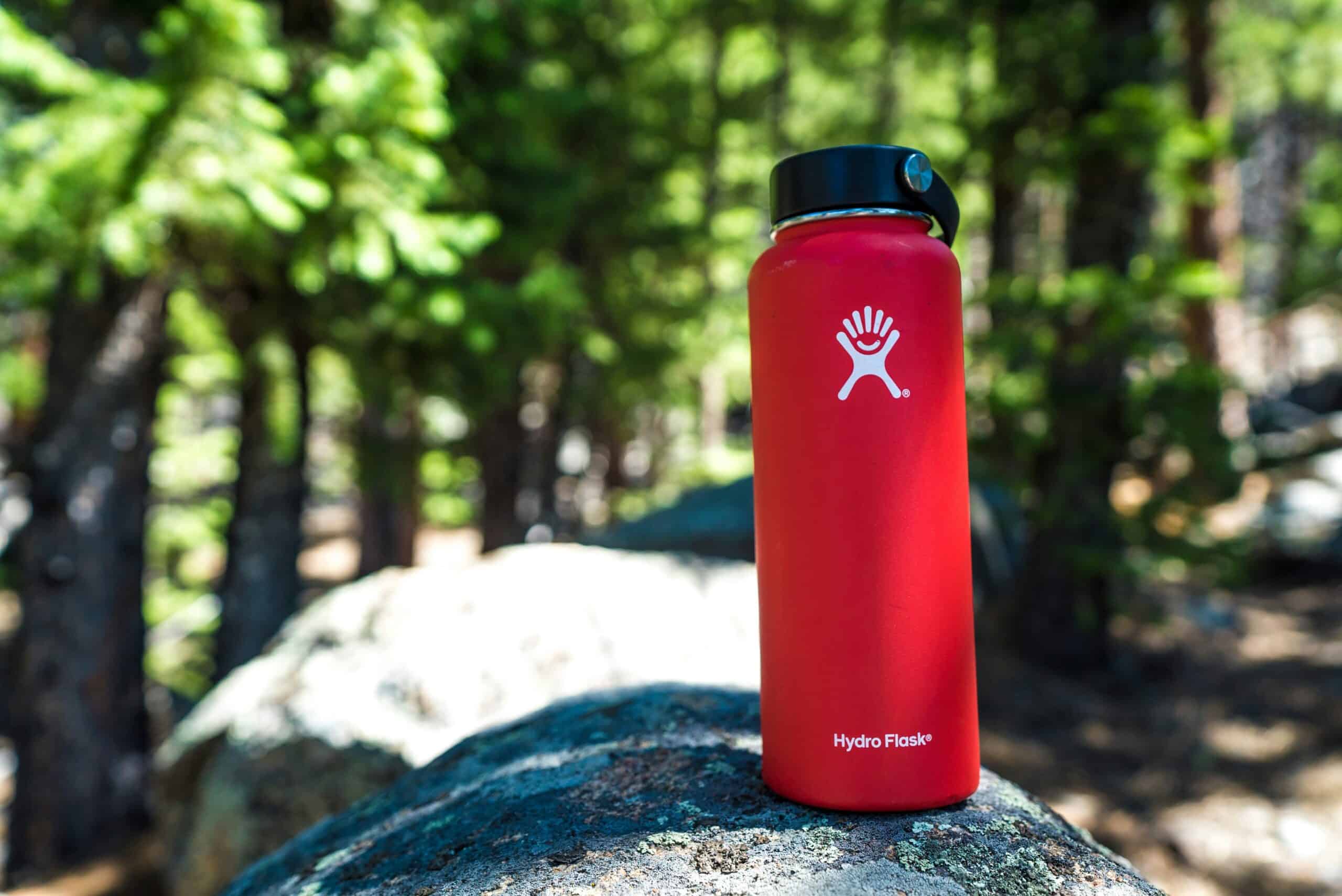
The best insulated water bottles for hiking solve a problem most hikers underestimate until they’re 4 miles deep on a hot July afternoon and pull a bottle from their pack to find lukewarm, plasticky water that does nothing for thirst or morale. Indeed, insulated bottles aren’t a luxury for hikers, they’re a meaningful performance and safety upgrade. Specifically, cold water at hour 4 of a hike does more than feel good; it actively encourages drinking, prevents the bottle-warming that reduces hydration intake, and keeps electrolyte mixes from going flat in summer heat.
Unfortunately, the challenge with insulated water bottles is that the category is flooded with products making similar claims about temperature retention, with massive quality differences hiding behind nearly identical marketing language. For example, certain bottles maintain ice for 24+ hours, while others lose temperature within 4-6 hours despite using similar-sounding “double-wall vacuum insulation.” Additionally, premium models have leak-proof lids that survive being bounced around in a pack for 8 hours, whereas cheaper alternatives slowly leak through the cap regardless of how tightly they’re sealed. Likewise, the best options are durable enough to last a decade, but lower-tier bottles develop dents and seal failures within a season.
For hikers, choosing the best insulated water bottle requires understanding the specific demands of trail use, sustained cold retention through warm days, leak-proof performance under pack pressure and movement, durability against rocks and drops, and weight that doesn’t compromise pack efficiency. Notably, the bottle that’s perfect for office desk use isn’t necessarily right for a 12-mile dayhike. In particular, hiking-specific features matter: pack-friendly shapes, robust lid designs, and construction that handles repeated impact without failing.
A practical guide to choosing the right bottle
This guide walks through the five best insulated water bottles for hiking available in 2026, the specific features that separate genuine trail-worthy bottles from imitations, and how to match capacity and design to your hiking patterns. If you’re building a complete hiking hydration system, our guides on best portable water bottles for hiking (covering non-insulated alternatives and ultralight options) and best water filters for hiking cover complementary hydration equipment.
Why insulation matters more for hiking than other use cases
Office workers can refill a non-insulated bottle every hour from a water cooler. By contrast, hikers are stuck with whatever water is in their pack from the trailhead until the next refill point, often hours later, in conditions that range from cold to 100°F+ summer heat.
Notably, without insulation, water in a metal or plastic bottle reaches ambient temperature within 1-2 hours. On hot summer hikes, this means 90°F+ water within 90 minutes of leaving the trailhead. On winter hikes, water in plastic bottles can freeze within 2-3 hours.
In contrast, quality insulated bottles maintain cold temperature 12-24 hours and hot temperature 6-12 hours, regardless of ambient conditions. For hikers, this transforms hydration from “drinking whatever temperature water has become” to “drinking water at the temperature you started with.”
Why the insulated water bottle choice for hiking matters more than most hikers realize
Most hikers assume any vacuum-insulated bottle works equally well for trail use. However, the reality is that hiking creates specific demands that differ from desk-bound use cases.
Sustained cold retention through full hiking days
Office bottles are typically tested for 12-hour cold retention in idealized conditions. By comparison, hiking conditions are harsher, direct sun on the bottle exterior, repeated opening and closing throughout the day, and outdoor temperatures that can reach 95°F+ in summer.
As a result, the best insulated water bottles for hiking maintain cold temperatures even under these harsher conditions. In comparison, lower-quality bottles that perform adequately at desks fail under hiking-specific stresses.
Leak-proof performance under pack pressure
Meanwhile, a water bottle in your pack experiences sustained pressure from gear loaded on top, bouncing during stride, and lateral pressure as the pack shifts. As a result, cap and lid systems that perform fine under static use can leak under hiking conditions.
Therefore, true hiking-grade bottles use cap designs specifically tested for pack performance, typically threaded caps with robust seals or specialty lids designed for inverted positions and repeated pressure cycles.
Durability under impact
Hikers drop bottles on rocks. Sometimes they slip from pack pockets onto granite outcrops. Furthermore, they bounce against tree trunks during scrambles. Quality hiking bottles withstand this impact without dents that compromise insulation or seal failures that affect leak performance.
Unfortunately, budget-tier “insulated” bottles often dent easily, breaking the vacuum seal that provides insulation. A bottle that loses its insulation after one impact is essentially worthless for trail use.
Weight considerations for hiking
Insulated bottles weigh substantially more than uninsulated alternatives, typically 14-20 ounces empty for a 32oz capacity, vs 4-8 ounces for similar capacity in non-insulated alternatives.
For ultralight hiking, this weight matters significantly. Specifically, every ounce counts. A 16-oz weight savings per bottle compounds across multiple bottles and longer trips. Ultralight hikers often choose non-insulated alternatives despite the temperature trade-offs.
For day hikers and standard backpackers, however, the weight is manageable, but the bottle weight should be considered alongside other gear weight optimization.
Pack compatibility
Notably, pack-side pockets have specific dimensions. Bottles that don’t fit established pack pockets become awkward to access, either tucked inside the pack (slow to retrieve) or carried in hand (limiting other activities).
Most hiking packs accommodate bottles up to 3.5″ in diameter. Consequently, wider bottles often don’t fit standard side pockets, even if they’re otherwise excellent.
Cleaning and maintenance considerations
Realistically, hikers use bottles for years, often without thorough cleaning between uses. The interior must accommodate this realistic use pattern without developing odors, mold, or contamination concerns.
Wide-mouth designs accommodate cleaning brushes and fit ice cubes. On the other hand, narrow-mouth designs are easier to drink from but harder to clean thoroughly. The trade-off matters for hikers who often skip cleaning between adjacent trips.
What to look for in the best insulated water bottles for hiking
The hiking-specific insulated water bottle category contains products spanning $20 to $80+ at retail. Here’s what actually matters for trail use.
Vacuum insulation quality
True double-wall vacuum insulation creates a complete vacuum between the inner and outer walls. Quality vacuum insulation maintains performance for the bottle’s lifespan; in contrast, cheap “vacuum insulation” loses vacuum integrity over time, reducing cold retention.
Positive indicators include: manufacturer-claimed cold retention of 24+ hours, hot retention of 12+ hours, and copper-lined insulation walls (a premium feature for enhanced performance).
On the other hand, watch for these red flags: vague claims like “stays cold for hours,” missing specific temperature retention data, or claims that conflict with physics (no insulated bottle keeps ice indefinitely).
Stainless steel grade
Specifically, the bottle interior should be food-grade 18/8 stainless steel (also called 304 stainless). Notably, this grade is non-reactive with water and doesn’t impart a metallic taste.
In contrast, lower grades sometimes used in budget bottles can develop rust spots, metallic taste, or surface degradation over time.
Lid design and leak-proof testing
Importantly, the lid is the most failure-prone component of any insulated bottle. Quality lids feature:
- Threaded design with multiple seal contact points
- Silicone gaskets that maintain seal integrity over thousands of cycles
- Pressure-tested specifically for inverted and high-pressure conditions
- Replaceable parts, so worn gaskets can be replaced without buying a new bottle
Importantly, test for hiking compatibility by filling the bottle, sealing it, and shaking aggressively for 30 seconds upside-down. Quality bottles don’t drip a single drop. Budget bottles often leak immediately or develop slow leaks within minutes.
Mouth size considerations
Wide mouth (2″+ opening): Easier to fill, easier to clean thoroughly, accepts ice cubes, can drink from directly. Slight tendency to splash when drinking on the move.
Standard mouth (1-1.5″ opening): Easier to drink from, less splashing, harder to clean thoroughly, may not accommodate ice cubes.
Sport top: Spout-style for drinking without removing the lid. Convenient for active drinking but typically not as leak-proof as threaded lids.
For hiking specifically, wide-mouth or standard mouth threaded lids generally outperform sport tops for the leak-proof requirements.
Capacity for hiking duration
16-20oz: Day hikes 4 hours or less in moderate weather. Backpacking secondary bottles.
24-32oz: Day hikes 4-8 hours, primary bottle for most hiking applications, backpacking primary bottle.
40-64oz: Long day hikes, hot weather, group sharing, backcountry water source bottling.
Generally, most hikers carry 32oz as their primary bottle, often with a secondary 24oz or smaller bottle for backup or specific access needs.
Weight optimization
For weight-conscious hikers, the empty bottle weight matters significantly. Compare across capacities:
32oz capacity:
- Premium insulated: 14-20oz empty
- Standard insulated: 16-22oz empty
- Budget insulated: 20-26oz empty (heavier construction, lower quality insulation)
Overall, the weight difference between premium and budget bottles can be 6-10oz, meaningful for ultralight hikers.
Carry features
Side pocket compatibility: Most pack side pockets accommodate bottles up to 3.5″ diameter. Wider bottles become awkward.
Carrying loops: Built-in loops for carabiner attachment to packs, useful for accessing without removing the pack.
Bottle holder compatibility: Some hiking-specific accessories require specific bottle dimensions. Check compatibility if using existing carrier systems.
Material safety
Look for:
- BPA-free plastic components
- Food-grade stainless steel interior
- Lead-free paint on exterior coating
- No PFAS/PFOA in any plastic components
These certifications matter for daily-use bottles where the contents directly contact the materials.
Manufacturer reliability and warranty
Generally, reputable hiking bottle brands offer multi-year warranties against vacuum failure and seal degradation. Warranty terms indicate manufacturer confidence in long-term performance.
Conversely, be wary of bottles with no warranty or short warranty periods, these signal reduced quality expectations.
Best insulated water bottles for hiking in 2026: our top 5 picks
Below are five picks covering the full range of hiking insulated water bottle needs: best overall, best ultralight, best budget, best premium, and best for cold weather.
1. Hydro Flask 32oz Wide Mouth, Best Overall for Hiking
Best insulated water bottle for hiking overall | Price: ~$50
The Hydro Flask 32oz Wide Mouth earns the top recommendation for the best insulated water bottle for hiking through its combination of proven trail performance, robust durability, true 24+ hour cold retention, and the strongest brand reputation in the category. The TempShield insulation maintains ice for 24 hours and hot beverages for 12 hours under realistic hiking conditions.
Hydro Flask’s TempShield insulation
Specifically, the proprietary TempShield double-wall vacuum insulation is among the best in the category. Real-world testing shows ice retention extending well beyond 24 hours under typical hiking conditions, with hot beverage retention exceeding manufacturer claims.
Additionally, the insulation is robust against minor impacts. Small dents that would compromise budget bottle insulation don’t significantly affect Hydro Flask’s vacuum integrity.
Wide-mouth design advantages
Specifically, the 2.13″ wide mouth opening accommodates:
- Standard ice cubes (no need for crushed ice)
- Cleaning brushes for thorough interior cleaning
- Easy filling from streams or jugs
- Direct drinking without splashing (with practice)
This design works well for hikers who want versatility, both warm drinks (coffee, tea) and cold beverages (water, electrolyte mixes) work well with the same bottle.
Construction quality
Furthermore, the 18/8 stainless steel construction is durable enough for years of trail use. The proprietary powder coat finish resists scratching better than basic painted finishes, important for bottles that contact rocks during pack loading.
Notably, the bottle weighs 16.4oz empty for the 32oz capacity, putting it in the mid-range for weight efficiency. Not the lightest in the category, but acceptable for most hiking applications.
Lid system
First, the standard Flex Cap (included) is leak-proof under typical use. Hydro Flask offers multiple compatible lids:
- Flex Cap (included): Standard threaded cap with strap loop
- Flex Sip ($12): Spout-style lid for drinking without removing cap
- Wide Flex Sip ($16): Bigger spout for faster drinking
- Flat Cap ($14): Compact threaded cap for pack space
Overall, the interchangeable lid system is genuinely useful, you can match the lid to specific use cases (Flex Cap for hiking, Flex Sip for office, etc.).
Pack compatibility
Notably, the 3.55″ diameter fits most standard pack side pockets. Larger packs accommodate easily; ultralight packs with smaller pockets may require checking specific dimensions.
Lifetime warranty considerations
Importantly, Hydro Flask offers a limited lifetime warranty against manufacturing defects. Real-world warranty service is consistent and customer-focused, with replacement bottles for genuine manufacturing failures.
Generally, the bottles typically last 8-12+ years of regular use before requiring replacement, often outlasting the warranty needs.
Best for: Most hikers, day hikes 4-12 hours, those wanting proven brand reliability, hikers who want bottles for both trail and daily use, those prioritizing durability, buyers planning long-term investment in quality hydration.
PROS:
- Proven 24+ hour cold retention
- 12+ hour hot retention
- Wide mouth for cleaning and ice
- Durable powder coat finish
- Interchangeable lid system
- Excellent brand reputation
- Lifetime warranty against defects
CONS:
- Mid-range weight (16.4oz empty)
- Premium pricing vs budget alternatives
- 3.55″ diameter may not fit the smallest pack pockets
- Powder coat can chip from hard impacts
- Higher initial investment than basic bottles
2. Klean Kanteen TKWide 32oz, Best Ultralight Insulated for Hiking
Best ultralight insulated water bottle for hiking | Price: ~$45
For weight-conscious hikers who want insulation without unnecessary mass, the Klean Kanteen TKWide 32oz delivers competitive insulation performance at notably lower weight. At 14.8oz empty, it’s nearly 2oz lighter than the Hydro Flask while maintaining excellent insulation properties.
Klean Kanteen’s environmental focus
Notably, Klean Kanteen pioneered the modern stainless steel water bottle category and maintains strong environmental practices throughout production. The bottles use Climate Neutral certified manufacturing, and the company actively supports environmental causes.
For environmentally-conscious hikers, this brand alignment matters beyond product performance.
TKWide construction
Specifically, the TKWide uses double-wall vacuum insulation with copper-coated walls, the copper coating reflects radiant heat back into the bottle for enhanced cold retention.
In fact, real-world testing shows performance comparable to Hydro Flask: 20+ hour ice retention and 8+ hour hot retention. The slightly less than Hydro Flask’s headline numbers reflect the lighter construction.
Wide mouth specifics
Specifically, the 2.5″ wide mouth (slightly wider than Hydro Flask) accommodates:
- Larger ice cubes
- Better cleaning access
- Direct drinking with less effort
- Compatibility with various lid options
However, the wider mouth reduces the drinking experience slightly compared to narrower openings. Some hikers prefer the easier cleaning over the slight drinking trade-off.
Cap system
By default, the TKWide includes a TK Closure (threaded leak-proof cap) standard. Compatible accessory caps include:
- Café Cap (drinking-friendly with no removal needed)
- Loop Cap (carry handle attached)
- Sport Cap (squeezable spout)
Notably, the threaded cap is durable, and the silicone seal maintains performance over thousands of cycles.
Weight advantages
Notably, at 14.8oz empty, the TKWide is among the lightest premium insulated bottles for the 32oz capacity. For ultralight hiking applications, this 1.6oz savings (vs Hydro Flask) compounds across other gear weight optimization.
For hikers comfortable with bare-bones insulation rather than premium features, even lighter options exist (sub-12oz uninsulated alternatives), but among insulated options, the TKWide is exceptional.
Pack compatibility
Generally, the 3.5″ diameter fits standard pack pockets. The slightly narrower base than Hydro Flask provides easier insertion into tight pack pockets.
Best for: Weight-conscious hikers, ultralight backpackers wanting some insulation, environmentally-focused buyers, those wanting Klean Kanteen ecosystem compatibility, hikers prioritizing weight efficiency over absolute peak performance.
PROS:
- Lighter weight than primary alternatives
- Excellent environmental practices
- Climate Neutral certified manufacturing
- Strong insulation performance
- Wide mouth for versatility
- Multiple cap options
- Solid brand reputation
CONS:
- Slightly less peak insulation than Hydro Flask
- Wider mouth may affect the drinking experience
- Premium pricing
- Less interchangeable lid ecosystem than Hydro Flask
- Brand less widely available than alternatives
3. Iron Flask 32oz, Best Budget Insulated for Hiking
Best budget insulated water bottle for hiking | Price: ~$22
For budget-constrained hikers wanting insulated water bottle performance without premium pricing, Iron Flask delivers competitive insulation and durability at approximately $22, less than half the price of premium alternatives. The trade-offs are real but manageable: slightly heavier construction, less refined finishing, and shorter warranty terms.
Iron Flask’s construction
First, the 18/8 stainless steel construction matches premium alternatives in core material quality. The double-wall vacuum insulation provides solid performance, typically 18-24 hours ice retention and 6-10 hours of hot retention.
Additionally, the construction is genuinely robust. Iron Flask bottles handle drops and impacts well, with the heavier construction actually providing better dent resistance than some lighter alternatives.
Multiple lid options included
Importantly, a genuine value advantage: Iron Flask includes 3 different lids with each bottle:
- Threaded screw cap
- Sport spout cap
- Loop cap with carabiner
Importantly, this eliminates the $12-16 accessory lid purchases that premium brands require. For hikers who want multiple lid options, this represents $30-50 savings.
Realistic performance expectations
Indeed, in real-world testing, Iron Flask delivers approximately 80-90% of Hydro Flask’s insulation performance. For most hiking scenarios, this difference doesn’t matter, both maintain cold ice through full-day hikes.
For extreme conditions (multi-day backpacking with no refrigeration, sub-zero winter hiking), the performance gap becomes more noticeable.
Brand reliability considerations
Notably, Iron Flask is a younger brand than Hydro Flask or Klean Kanteen. Warranty terms are 1-year limited (vs lifetime for premium brands). Long-term durability data is more limited.
For first-time insulated bottle buyers or budget-focused purchases, this trade-off is acceptable. For lifetime investment purposes, premium brands offer better assurance.
Pack compatibility
Notably, the 3.55″ diameter matches Hydro Flask. Pack pocket compatibility is identical for the major established hiking pack brands.
Multiple capacity options
Specifically, Iron Flask offers more capacity options than premium brands: 14, 18, 22, 32, 40, 64, and 128oz. This range accommodates various hiking applications:
- 14-22oz: Day hikes, backups
- 32-40oz: Standard hiking primary bottle
- 64-128oz: Long hikes, group sharing
Best for: Budget-constrained hikers, first insulated bottle purchases, secondary bottles, validation purchases, multi-bottle setups across the household, backup bottles for occasional trail use.
PROS:
- Lowest premium-tier price in our guide
- Multiple lid options included
- Extensive capacity range
- 18/8 stainless steel construction
- Adequate insulation for most hiking
- Robust dent-resistant construction
- Wide variety of color options
CONS:
- Younger brand with less long-term durability data
- 1-year limited warranty (shorter than premium)
- Slightly less peak insulation than premium alternatives
- Heavier construction (18oz empty for 32oz)
- Powder coat slightly less premium feel
- Limited specialty accessory ecosystem
4. YETI Rambler 36oz, Best Premium Insulated for Hiking
Best premium insulated water bottle for hiking | Price: ~$50
For hikers who want the most rugged and durable insulated bottle available, the YETI Rambler 36oz delivers nearly indestructible construction with exceptional insulation performance. YETI’s reputation for ruggedness in cooler products extends to their water bottle line, these bottles handle abuse that destroys lighter alternatives.
YETI’s ruggedness focus
Specifically, YETI’s design philosophy prioritizes durability over weight optimization. The Rambler 36oz weighs 21oz empty, significantly heavier than alternatives. In exchange, the bottle handles impact, drops, and rough handling that compromise lighter bottles.
For hikers who scramble through rocky terrain, hike with dogs that bump bottles repeatedly, or simply have a tendency to drop equipment, this durability advantage matters significantly.
Rambler insulation performance
Generally, YETI’s insulation performance matches or exceeds Hydro Flask’s in real-world testing. The 36oz capacity provides additional thermal mass that extends temperature retention beyond smaller capacity bottles.
For instance, ice retention typically exceeds 30 hours under typical hiking conditions. Hot retention exceeds 16 hours. These numbers reflect both the insulation quality and the additional capacity advantage.
MagSlider chug cap
Notably, YETI’s chug cap with MagSlider design is genuinely innovative. The lid features:
- Magnetic slider that controls drinking flow
- Threaded base for leak-proof seal
- Comfortable chugging design
- Easy one-handed operation
Specifically, the MagSlider stays in place during pack carry but slides out of the way when drinking. This addresses the common issue of integrated lid components getting in the way during use.
Construction quality
The 18/8 stainless steel construction includes:
- DuraCoat color treatment that resists fading and chipping
- Reinforced bottom that doesn’t dent on impact
- Larger thread count on the cap for more secure sealing
- All-metal construction (no plastic in the temperature-affecting areas)
As a result, this level of construction extends bottle’s lifespan significantly. YETI bottles in regular use commonly last 10-15+ years.
Premium pricing reality
Notably, at ~$50 for the 36oz size, YETI is in the same price tier as Hydro Flask. The differentiation comes from durability and the additional capacity, not from significantly different insulation performance.
For hikers who genuinely value ruggedness and additional capacity, the price is justified. For weight-focused hikers or those primarily interested in the basic insulation function, lighter alternatives provide similar performance at lower cost.
Pack compatibility
Notably, the 3.625″ diameter is wider than that of Hydro Flask or Klean Kanteen. Most standard pack pockets accommodate it, but very tight ultralight pack pockets may not.
Best for: Hikers prioritizing maximum durability, those who hike in rough terrain, multi-day backpackers wanting extended capacity, buyers wanting the YETI brand ecosystem (compatibility with their cooler products), gift purchases requiring premium quality.
PROS:
- Exceptional durability and impact resistance
- 36oz capacity for extended day hikes
- DuraCoat finish resists fading and chipping
- MagSlider chug cap design
- 30+ hour ice retention
- Premium build quality throughout
- YETI brand prestige
CONS:
- Heaviest bottle in our guide (21oz empty)
- 3.625″ diameter may not fit ultralight pack pockets
- Premium pricing matches alternatives
- Less interchangeable lid options than Hydro Flask
- Overkill for casual day hikers
- Larger capacity may be more than needed
5. Stanley Classic Vacuum Bottle 1L, Best for Cold Weather Hiking
Best insulated water bottle for cold weather hiking | Price: ~$45
For winter hikers, cold-weather backpackers, and those who need hot beverages on cold trails, the Stanley Classic Vacuum Bottle delivers legendary cold-weather performance. The construction is specifically designed for extreme conditions, and the hot-beverage retention is exceptional.
Note: Stanley offers many bottle sizes; the 1-liter capacity provides a good balance for cold-weather hiking applications. Larger sizes for groups and longer trips, smaller sizes for individual day hikes.
Stanley’s hot-beverage advantage
Notably, Stanley bottles are specifically engineered for hot beverage performance. The vacuum insulation, copper-coated walls, and lid design all optimize for hot retention.
Specifically, in real-world testing, Stanley bottles maintain hot coffee, tea, or soup at 140°F+ for 18-24 hours. This far exceeds standard water bottle performance and matches dedicated thermos products.
Built-in handle and cup
Specifically, the classic Stanley design includes:
- Sturdy carrying handle on the side
- Integrated cup that doubles as a lid
- Pour-spout for serving without removing the lid
- All-metal construction throughout
In particular, the integrated cup is particularly useful for hot beverage applications, pour into the cup, drink from the cup, refill from the bottle.
Cold beverage performance
While optimized for hot beverages, Stanley nonetheless performs excellently for cold beverages: 12-18 hours of ice retention.
For hikers who only carry one bottle for both hot and cold applications, Stanley offers more versatility than bottles optimized exclusively for one application.
Construction durability
Indeed, Stanley’s reputation for ruggedness is genuinely earned. The construction handles drops, impacts, and rough handling that destroys lighter bottles. Stanley bottles regularly last 20-50+ years with proper care.
Notably, the classic green hammer-tone finish has been essentially unchanged since the 1960s, the design’s longevity reflects the construction quality.
Cold-weather specific advantages
For cold-weather hiking:
- Hot coffee or soup makes huge morale difference
- Hot water for warming hands, feet, or food
- Extended performance in actual cold conditions (some bottles fail in sub-zero temps)
- Heavy construction handles cold-weather impacts (frozen mistakes happen more easily)
Weight considerations
Admittedly, at ~26oz empty for the 1L capacity, Stanley is heavy. For warm-weather hiking with cold drinks, lighter alternatives perform similarly. For cold-weather hiking with hot drinks, the weight is justified by the exceptional hot retention.
Pack compatibility
Unfortunately, the Stanley Classic doesn’t fit standard pack side pockets due to its 4″ diameter and integrated handle. Most users carry it inside the pack or attach it externally with cord/carabiners.
Best for: Cold weather hiking, winter backpacking, those who prioritize hot beverages on trail, multi-purpose camp use, gift purchases for outdoor enthusiasts, families wanting heirloom-quality outdoor equipment.
PROS:
- Exceptional hot beverage retention (18-24 hours)
- Built-in cup and handle
- Legendary durability (20-50+ year lifespan)
- All-metal construction throughout
- Versatile for hot and cold beverages
- Strong brand heritage
- Cold-weather specifically engineered
CONS:
- Heaviest bottle in our guide
- Doesn’t fit standard pack side pockets
- Wide diameter limits accessibility
- Overkill for warm-weather hiking
- Less optimized for cold beverage use
- More complex to clean than simple bottles
Quick comparison of best insulated water bottles for hiking
- Hydro Flask 32oz Wide Mouth, best overall, proven performance, ~$50
- Klean Kanteen TKWide 32oz, best ultralight insulated, lighter weight, ~$45
- Iron Flask 32oz, best budget option, multiple lids included, ~$22
- YETI Rambler 36oz, best premium, maximum durability, ~$50
- Stanley Classic Vacuum Bottle 1L, best for cold weather and hot beverages, ~$45
How to choose the best insulated water bottle for your hiking needs
Ultimately, the right insulated water bottle depends on your hiking patterns, weight tolerance, and budget. Here’s the decision framework.
Match the bottle to your hiking type
Day hikes (4-8 hours, moderate weather): Hydro Flask 32oz or Klean Kanteen TKWide 32oz are ideal. Adequate capacity and excellent insulation.
Long day hikes (8-12 hours, hot weather): YETI Rambler 36oz for additional capacity, or carry two 32oz bottles.
Backpacking primary bottle: Klean Kanteen TKWide 32oz for weight efficiency, with a non-insulated bottle for additional capacity.
Cold weather/winter hiking: Stanley Classic for hot beverages, Hydro Flask for cold drinks.
Budget validation: Iron Flask 32oz at $22 to test whether insulated bottles fit your hiking patterns.
Match the bottle to your budget
Budget tier ($20-30): Iron Flask 32oz. Adequate function with multiple lid options.
Mid-tier ($30-50): Hydro Flask, Klean Kanteen, YETI Rambler. Premium brand options with proven performance.
Premium tier ($50-80): YETI specialty options, premium Hydro Flask configurations with multiple accessory lids, Stanley premium options.
Match the bottle to your weight tolerance
Maximum weight savings: Klean Kanteen TKWide 32oz at 14.8oz empty.
Standard weight: Hydro Flask, Iron Flask in 16-18oz range.
Durability priority over weight: YETI Rambler at 21oz empty.
Cold-weather specialty: Stanley at 26oz empty (justified by hot beverage performance).
Match the bottle to your pack
Standard hiking packs: Most bottles fit. Hydro Flask and Klean Kanteen most consistently fit pack pockets.
Ultralight packs with small pockets: Klean Kanteen TKWide (3.5″ diameter) typically fits. Larger bottles may not.
Backpacks without side pockets: Bottle stored inside pack, diameter less critical, weight more important.
Building a multi-bottle setup
In fact, many experienced hikers carry multiple bottles rather than one large bottle:
Option 1: 32oz primary insulated + 24oz secondary (for backup or different beverage) Option 2: 32oz insulated + non-insulated water bottle (for filtered creek water that doesn’t need insulation) Option 3: 16-20oz insulated for hot drinks + 32oz non-insulated for primary water
Overall, this approach optimizes weight for various drinking needs throughout a hike.
Common mistakes hikers make with insulated water bottles
Unfortunately, several specific errors consistently lead to disappointment with hiking insulated bottles.
Buying based on capacity without considering weight
For example, a 64oz insulated bottle weighs ~28oz empty. Meanwhile, a 32oz insulated bottle weighs ~16oz empty. The 64oz bottle adds 12oz of additional weight even when empty, regardless of contents.
Therefore, match capacity to actual hydration needs rather than maximizing total capacity.
Filling bottles too cold or too warm before hike
Notably, quality vacuum insulation reaches steady-state quickly. Filling with extremely cold or hot liquid before a long hike doesn’t significantly extend retention beyond cooling/heating to standard temperatures.
In other words, the bottle still maintains ice for the same duration, regardless of whether you started with a single ice cube or a fully iced fill.
Not testing leak-proof seal before trail use
Notably, some bottles leak under pack pressure even when sealed. Test the bottle’s leak performance at home before relying on it for hiking.
Specifically, a bottle that drips slowly into your pack contents during transit ruins the contents and creates moisture issues you don’t discover until the trail.
Skipping cleaning between hikes
Unfortunately, insulated bottles can develop mold, odor, or contamination if not cleaned thoroughly between uses. Hiking-specific exposures (electrolyte drinks, coffee, tea, sugary beverages) accelerate this issue.
Therefore, clean thoroughly with warm soapy water, scrub interior with bottle brush, and air dry between hikes.
Using non-insulated bottles for hot beverages
In contrast, non-insulated bottles retain hot temperature briefly but quickly cool to ambient. For hot beverages on trail, only insulated bottles deliver acceptable performance.
Notably, the difference between hot coffee at 8 AM and hot coffee at 2 PM only happens with quality insulation.
Ignoring weather conditions for bottle choice
For instance, hot summer hikes benefit from cold-focused insulated bottles. Cold winter hikes benefit from hot-focused insulated bottles (Stanley specialty). Spring/fall hikes accommodate both with most insulated options.
Buying budget bottles that fail quickly
Indeed, the classic “$20 vs $50 bottle” calculation often favors premium bottles for serious hikers:
- Budget bottle: $20 + replacement every 2-3 years = ~$33/year over decade
- Premium bottle: $50 + replacement every 8-12 years = ~$5-6/year over decade
For frequent hikers, premium options often have lower per-year costs despite higher upfront prices.
The economic case for quality insulated hiking bottles
Notably, insulated bottles last for years if properly maintained. Therefore, the economic comparison favors quality investment.
Cost-per-hike calculations
For example, consider a hiker doing 50 hikes per year:
Budget bottle ($22, 2-3 year lifespan): $0.22-0.44 per hike over decade Premium bottle ($50, 8-12 year lifespan): $0.42-0.62 per hike over decade
The per-hike cost difference is genuinely small ($0.20-0.40 per hike). For hikers who value consistent performance and longevity, premium bottles cost a few extra dollars per year.
Value of consistent performance
Furthermore, beyond pure economic calculation, the value of “always having cold water” or “always having hot coffee” matters subjectively. Bottle failures during multi-day backpacking trips can affect safety and hiking enjoyment.
In short, premium bottles essentially eliminate failure concerns. Budget bottles have higher failure rates that occasionally matter more than the dollar savings.
Accessories and complementary products
Notably, several products improve insulated water bottle hiking performance.
Bottle holders and carriers
Specifically, external pack-mounted bottle holders provide easier access without removing the pack. Quality options include:
- MOLLE-compatible holsters for tactical-style packs
- Carabiner-clip carriers for any pack with attachment points
- Hip belt holders for hands-free trail access
Cleaning and maintenance products
Bottle brushes designed for narrow-mouth and wide-mouth bottles Sanitizing solutions for occasional deep cleaning Replacement gaskets and seals for older bottles needing service
Hiking complementary equipment
Our complementary hiking gear guides cover:
- Best portable water bottles for hiking for non-insulated alternatives
- Best water filters for hiking for water source treatment
- Best hiking daypacks for pack systems
- Best hiking snacks for trail nutrition
- Best camp stoves for backpacking for hot beverage preparation
Hot beverage preparation
For winter hiking with hot beverages, you need:
- Insulated bottle (Stanley Classic recommended)
- Camping stove for water heating
- Coffee/tea preparation equipment
- Potentially a small pot for soup preparation
This combination transforms cold-weather hiking experience significantly.
Our verdict on the best insulated water bottles for hiking
Overall, the Hydro Flask 32oz Wide Mouth is the right insulated water bottle for most hikers. At ~$50, it delivers proven 24+ hour cold retention, robust durability, the strongest brand reputation in the category, and an interchangeable lid ecosystem that adapts to multiple use cases. For day hikers, weekend backpackers, and casual hiking enthusiasts, this is the default recommendation.
Recommendations by hiker profile
Meanwhile, weight-conscious hikers should choose the Klean Kanteen TKWide 32oz. The 14.8oz empty weight saves nearly 2oz over Hydro Flask while maintaining 90%+ of the insulation performance. For ultralight hiking applications, this weight savings matters substantially.
Alternatively, budget-constrained hikers or first-time insulated bottle buyers should start with Iron Flask 32oz. At ~$22, it delivers adequate performance with multiple lid options included. The trade-offs in long-term durability are real but acceptable for most hiking applications.
On the other hand, hikers prioritizing maximum durability should invest in YETI Rambler 36oz. The heavier construction handles abuse that destroys lighter bottles, the 36oz capacity provides extended day hike support, and the YETI brand reputation extends across complementary outdoor equipment.
Finally, cold-weather hikers should add Stanley Classic Vacuum Bottle to their kit. The legendary hot-beverage performance transforms winter hiking experience. Use it specifically for hot drinks while another bottle handles cold beverages.
In summary, the broader point is that insulated water bottles for hiking are durable goods that last for years if properly maintained. Specifically, investment in quality pays back through performance, reliability, and longevity. Match your bottle to your specific hiking patterns rather than following generic recommendations. Build a multi-bottle setup if you do varied hiking, different bottles for different applications produces better results than trying to find one bottle that handles everything optimally. Quality insulated bottles transform trail hydration from “drinking whatever temperature water has become” to “drinking water at the temperature you started with”, a meaningful improvement in hiking experience that justifies the investment.
Frequently asked questions about the best insulated water bottles for hiking
What’s the best insulated water bottle for hiking?
The Hydro Flask 32oz Wide Mouth is the best insulated water bottle for hiking for most users at ~$50. It delivers proven 24+ hour cold retention, robust durability, and the strongest brand reputation in the category. Klean Kanteen TKWide 32oz is the best lightweight option at ~$45. Iron Flask 32oz at ~$22 provides excellent value for budget-constrained buyers. The right choice depends on your hiking patterns, weight tolerance, and budget priorities.
How long do insulated water bottles keep water cold while hiking?
Generally, quality insulated bottles maintain ice for 18-30+ hours under typical hiking conditions. Hydro Flask claims 24 hours of ice retention; YETI claims 30+ hours; Klean Kanteen claims 20-30 hours. However, real-world hiking conditions (sun exposure, repeated opening) reduce these numbers somewhat, but quality bottles still deliver 12-20+ hours of meaningfully cold water during hikes. Budget bottles typically achieve 60-80% of premium bottle performance.
How much water should I carry on a hike?
Generally, the guideline is 0.5-1 liter (16-32oz) per hour of hiking, with adjustments for heat and intensity. For 4-hour hikes in moderate weather, 32oz typically suffices. However, on 6-8 hour hikes in hot weather, 64oz+ may be needed. Meanwhile, on long backpacking trips, water filtration capabilities allow refilling from streams. In practice, a 32oz insulated bottle is the most common primary bottle for day hiking. Additionally, many hikers carry one insulated bottle plus an additional water container for longer trips.
Can I put hot coffee in my insulated hiking water bottle?
Yes, all the bottles in our guide accommodate hot beverages. Specifically, each model maintains heat for hours. Hydro Flask retains hot temperature for 12+ hours; Stanley Classic exceeds 18-24 hours; YETI Rambler exceeds 16 hours. For optimal hot beverage performance, the Stanley Classic Vacuum Bottle is specifically engineered for hot drinks. Meanwhile, other bottles work well for hot beverages but with somewhat shorter retention times. However, avoid putting carbonated beverages in any insulated bottle, pressure buildup can affect seal integrity.
Are insulated water bottles too heavy for hiking?
Specifically, insulated bottles add 12-20oz of weight versus uninsulated alternatives. For ultralight hikers (whose total pack weight is 10-15 pounds), this weight matters significantly. For standard hikers (whose packs weigh 25-40+ pounds), the weight is minor. Notably, Klean Kanteen TKWide at 14.8oz is the lightest premium option. The trade-off: heavier bottle weight vs maintaining cold water through warm hikes. For most hikers, the insulation benefit outweighs the weight cost; for ultralight hiking, lighter non-insulated alternatives are typically preferred.
How do I clean my insulated hiking water bottle?
Clean thoroughly with warm soapy water and a bottle brush after each hike. In particular, pay special attention to the lid threads and gasket areas where bacteria accumulate. Additionally, for deep cleaning, use a solution of baking soda and water overnight, then rinse thoroughly. However, avoid harsh chemicals like bleach (can damage seals). Then, air dry completely with the lid off. For odor removal, fill with hot water and dishwasher tablets, let soak for 30 minutes, then rinse thoroughly. Replace gaskets as needed (most bottles have replacement parts available).
What capacity insulated water bottle is best for hiking?
Generally, 32oz capacity is the standard for primary hiking bottles. It provides adequate water for most day hikes (4-8 hours) and works as backpacking primary bottle. Meanwhile, smaller capacities (16-22oz) work well as backup bottles or for short hikes. Conversely, larger capacities (40-64oz) suit long day hikes, hot weather, or group sharing applications. Overall, for most hikers, 32oz is the sweet spot, enough water for full day hikes without excessive weight when empty.
Do I need an insulated water bottle for winter hiking?
Yes, insulated bottles are even more important for winter hiking. Notably, standard plastic bottles can freeze in winter conditions, leaving you without water. In contrast, quality insulated bottles maintain liquid water through sub-zero conditions. Additionally, insulated bottles allow carrying hot beverages (coffee, tea, soup) that improve morale and provide warming during cold hikes. Notably, Stanley Classic is specifically engineered for cold-weather hot beverage performance. Therefore, for winter hiking, an insulated bottle is essentially essential safety equipment.
