
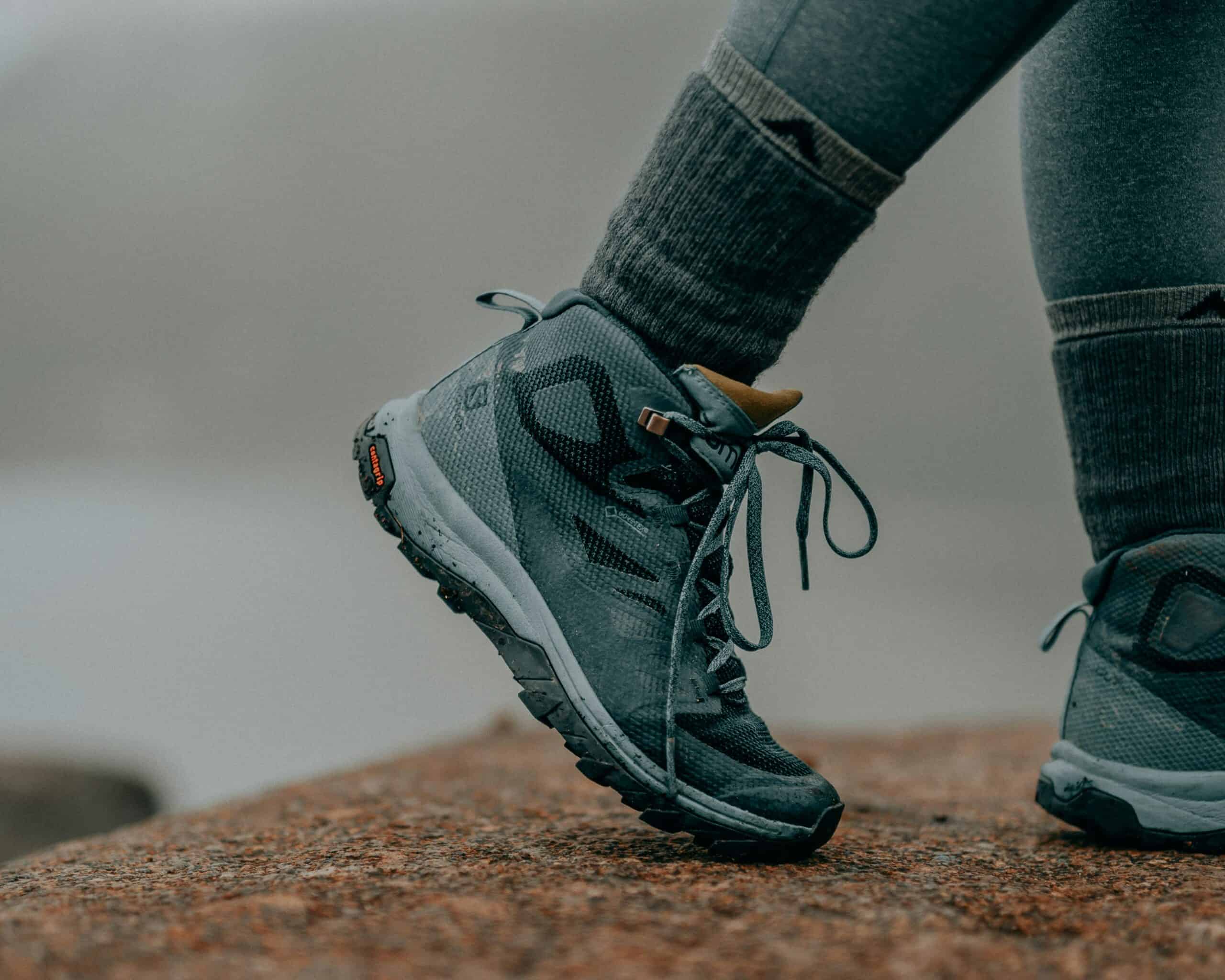
The best hiking shoes for women aren’t just smaller versions of men’s shoes, they’re built on women-specific lasts that account for narrower heels, different arch heights, and different forefoot shapes that male hikers’ feet don’t share. The hiking footwear industry took decades to recognize this, and many “women’s” models are still just downsized men’s shoes with pink or purple accents. The genuinely women-specific designs perform dramatically better for the hikers they’re built for, reducing blisters, hot spots, and fit-related fatigue that plagues women in unisex or marketing-dressed-up-as-women’s footwear.
Choosing the right hiking shoes matters more for women than most realize because women’s feet are typically narrower at the heel relative to forefoot width, more prone to arch fatigue from inadequate support, and more affected by hormonal cycles that change foot size and swelling patterns. A man’s shoe that’s been downsized doesn’t address any of these factors. A genuine women’s last (the form the shoe is built around) addresses all of them through specific shape decisions made for women’s foot anatomy.
This guide walks through the five best hiking shoes for women available in 2026, the specific features that distinguish genuinely women-specific designs from marketing-dressed men’s shoes, and how to match shoe characteristics to your hiking style. If you’re building a complete hiking footwear understanding, our guides on best hiking boots for beginners, hiking boots vs trail runners, and how to choose hiking boots cover complementary considerations.
Why women-specific hiking shoes matter more than most hikers realize
Most women hikers don’t know what they’re missing because they’ve never tried genuinely women-specific footwear. Once they do, the difference is immediate.
Heel-to-forefoot ratio differences
Women’s feet typically have:
- Narrower heels relative to the forefoot
- More pronounced arch
- Smaller average overall length
- Different metatarsal spacing
A men’s shoe downsized to women’s sizing maintains the men’s proportional design, wide heel, lower arch, broader forefoot. The fit problems this creates include heel slippage, arch fatigue, and forefoot pressure points.
Q-angle and biomechanics
Women have wider hips relative to body frame, creating different Q-angle (angle from hip to knee to foot). This affects:
- Foot strike patterns
- Pronation tendencies
- Stress distribution through the leg
- Optimal heel-to-toe drop
Quality women-specific shoes account for these biomechanical differences through cushioning placement, drop measurements, and support structures.
Hormonal foot changes
Women’s feet change size throughout the menstrual cycle and during hormonal shifts:
- Foot swelling can increase by half a size
- Arch height varies
- Toe spacing changes
- Pressure sensitivity varies
Quality hiking shoes provide enough flexibility to accommodate these changes while maintaining fit. Cheap or marketing-only women’s shoes don’t.
Pregnancy and postpartum considerations
Pregnancy permanently changes foot size for many women, increased length, width, and reduced arch height. Hiking shoes purchased pre-pregnancy may no longer fit postpartum. This is a separate consideration from typical fit issues.
Marketing-only women’s shoes
Many “women’s hiking shoes” are simply men’s shoes:
- Smaller sizing scale
- Pink, purple, or floral colorways
- Same last/form
- Same construction
- Same biomechanical assumptions
These provide no actual women-specific benefits. Genuine women-specific shoes are designed from the last up, the form the shoe is built around is specifically shaped for women’s feet.
What to look for in the best hiking shoes for women
Quality women-specific hiking shoes have specific design characteristics that distinguish them from marketing-only alternatives.
Genuinely women-specific last
The “last” is the form the shoe is built around. Women’s lasts feature:
- Narrower heel
- Higher arch
- More tapered forefoot
- Different proportional dimensions
Quality manufacturers use clearly-marked women-specific lasts. Marketing-only shoes use unisex lasts with women’s labeling.
Quality outsole material
The outsole determines traction and durability:
- Vibram MegaGrip: Best traction across surfaces (premium)
- Vibram XS Trek: Excellent for technical terrain
- Standard Vibram: Good performance, common in mid-tier
- Manufacturer proprietary: Quality varies significantly
Outsole pattern matters too, deeper lugs (4-5mm) handle muddy and loose terrain; shallower lugs (2-3mm) work better on hard-packed trails.
Gore-Tex vs non-Gore-Tex
Gore-Tex membrane:
- Waterproof in wet conditions
- Less breathable
- Heavier
- Better for wet climates
Non-Gore-Tex:
- Breathable for hot conditions
- Faster drying when wet
- Lighter weight
- Better for hot/dry climates
For most hikers, the right choice depends on typical hiking conditions. Many serious hikers own both for different conditions.
Cushioning level
Maximum cushion: Hokas-style very thick cushioning. Comfort prioritized over ground feel.
Standard cushion: Balanced cushioning. Good for most hiking.
Minimal cushion: Trail running aesthetic. Better ground feel but less comfort over distance.
For multi-day hiking with a weight on the back, more cushioning typically performs better.
Support level
Maximum support: Stability shoes for severe overpronation or high-mileage hiking.
Standard support: Most hiking shoes. Adequate for most hikers without specific issues.
Minimal support: Neutral shoes for hikers without pronation issues.
Most women without specific orthopedic needs do best with standard support.
Toe box width
Narrow toe box: Better stability, more agile feel Standard toe box: Most common, balances stability and comfort Wide toe box: Allows toe spread, less pressure on metatarsals
Many women’s hiking shoes default to narrower toe boxes than ideal. Look for adequate toe room, women with wider feet may benefit from wide-fit options. Our best hiking shoes for wide feet guide covers this consideration in detail.
Mid-cut vs low-cut
Mid-cut (over-ankle): Better ankle support, slower on-trail Low-cut (below ankle): Faster on-trail, less ankle protection
For most day hiking and casual backpacking, low-cut works fine. For technical terrain or those with ankle weakness, mid-cut provides additional protection.
Quality materials throughout
Look for:
- Real leather where leather is used
- Quality synthetic uppers (not cheap plastic)
- Reinforced toe boxes
- Quality lacing systems
- Removable insoles for replacement
Reasonable price for quality tier
Budget ($60-120): Functional basic options. Compromises on materials, fit, or longevity.
Mid-tier ($120-180): Sweet spot. Quality materials, women-specific design, durability.
Premium ($180-250): Best materials, longest lifespan, premium features.
Specialty ($250+): Mountaineering-grade or specialty applications.
For most women hikers, mid-tier provides excellent value. Premium pricing has real but incremental benefits.
Best hiking shoes for women in 2026: our top 5 picks
1. Merrell Moab 3 Women’s, Best Overall
Best hiking shoes for women overall | Price: ~$130
The Merrell Moab 3 Women’s earns the top recommendation through its combination of genuine women-specific last, proven Vibram outsole, comfortable out-of-the-box fit, available widths, and the strongest reputation in women’s hiking shoes spanning multiple generations.
Merrell’s women-specific last design
The Moab 3 uses Merrell’s women-specific last that addresses:
- Narrower heel cup
- Higher arch
- Appropriate volume throughout
- Women-specific cushioning placement
This isn’t marketing, Merrell publishes the specific last differences, and the design is consistently mentioned in fit reviews as genuinely accommodating women’s feet.
Vibram TC5+ outsole
The Vibram TC5+ outsole provides:
- Excellent traction across terrain
- 5mm lug depth for grip
- Long-wearing rubber compound
- Self-cleaning lug pattern
Out-of-the-box comfort
The Moab line is famous for “out of the box” comfort, most users wear them straight to the trail without extended break-in. The cushioning, fit, and construction work well immediately.
Available widths
The Moab 3 comes in:
- Standard width (B)
- Wide width (D)
- Some narrow availability
This range accommodates more foot shapes than most hiking shoes.
Strong reliability and longevity
The Moab line has been refined over decades. The current generation reflects years of feedback. Expected lifespan is 800-1,200 miles for typical use.
Best for: Most women hikers, day hikers, and weekend backpackers, those wanting proven reliability, multiple foot widths, and those wanting Merrell brand support.
PROS:
- Genuine women-specific last
- Out-of-the-box comfort
- Vibram outsole quality
- Multiple widths available
- Proven generational design refinement
- Strong durability track record
- Reasonable mid-tier pricing
CONS:
- Standard 3-season design
- Heavier than ultralight alternatives
- Less technical for serious mountaineering
- Aesthetic conservative for some
- Standard support may need an orthotic for some users
2. Salomon X Ultra 4 GTX Women’s, Best Premium
Best premium hiking shoes for women | Price: ~$180
For women hikers wanting premium technical performance with women-specific fit, the Salomon X Ultra 4 GTX delivers Gore-Tex waterproofing, Salomon’s Quicklace system, and Contagrip outsole at premium pricing. The technical features justify the cost for serious hikers.
Salomon’s women-specific design
The X Ultra 4 women’s version uses:
- Women-specific lasts and proportions
- Different cushioning from the men’s version
- Women-appropriate flex patterns
- Specific weight distribution
Gore-Tex membrane
The GTX waterproofing provides:
- Reliable wet weather protection
- Crossing streams without soaking
- Snow contact protection
- All-weather performance
The trade-off is reduced breathability, for hot, dry climates, non-Gore-Tex versions may be more appropriate.
Quicklace lacing system
Salomon’s Quicklace lacing:
- Single-pull tightening
- No traditional knot to retie
- Stays tightened during hikes
- Faster on/off transitions
Some users prefer traditional laces for fine-tuning fit; others love the convenience.
Contagrip outsole
Salomon’s proprietary Contagrip outsole:
- Multi-compound rubber for various terrains
- Aggressive lug pattern
- Excellent wet rock performance
- Self-cleaning design
Premium materials throughout
Construction quality matches the premium pricing:
- Quality synthetic and leather upper
- Reinforced high-stress points
- TPU heel cup for stability
- Premium aesthetics
Best for: Serious women hikers, multi-day backpackers, technical terrain hikers, wet climate hikers, and those wanting premium performance.
PROS:
- Premium technical performance
- Gore-Tex waterproofing
- Quicklace convenience
- Contagrip outsole excellence
- Quality materials throughout
- Strong Salomon brand reliability
- Genuine women-specific design
CONS:
- Premium pricing
- Quicklace is not universally loved
- Less breathable than non-Gore-Tex
- Heavier than ultralight alternatives
- Premium materials require care for longevity
3. Columbia Newton Ridge Plus II, Best Budget
Best budget hiking shoes for women | Price: ~$80
For budget-conscious women hikers wanting hiking shoes without premium pricing, Columbia Newton Ridge Plus II delivers adequate function at approximately half the price of premium alternatives. The trade-offs are real but acceptable for casual hiking.
Columbia’s value approach
Columbia has built a reputation for outdoor gear at accessible pricing. The Newton Ridge Plus II reflects this:
- Functional construction
- Adequate materials
- Standard women-specific sizing
- Reliable basic performance
Mid-cut design
The Newton Ridge Plus II is mid-cut (over-ankle), providing:
- Additional ankle support
- Better protection from rocks and debris
- Slightly slower trail speed
- More secure feeling for new hikers
OmniGrip outsole
Columbia’s OmniGrip outsole provides adequate traction:
- Standard lug pattern
- Decent grip on most terrain
- Less premium than Vibram alternatives
- Adequate for casual hiking
Mid-tier construction trade-offs
Real differences from premium alternatives:
- Less premium materials
- Shorter expected lifespan (400-600 miles)
- Less refined fit
- Less aggressive traction
- Less waterproof if not the GTX version
For occasional or casual hiking, these trade-offs make sense. For serious or frequent hiking, premium alternatives are worth the additional investment.
Wide availability
Available at:
- Department stores
- Outdoor retailers
- Online with quick shipping
- Generally easier to try on in person
Best for: Budget-conscious women hikers, beginning hikers, occasional hikers, those wanting Columbia brand support, ankle support priority.
PROS:
- Lowest price in our guide
- Mid-cut for ankle support
- Wide availability
- Adequate basic function
- Columbia brand reliability
- Good for beginners
- Reasonable starter shoe
CONS:
- Less premium materials
- Shorter expected lifespan
- Less refined fit
- Less aggressive traction
- Less suitable for serious hiking
- Heavier than premium alternatives
4. Altra Lone Peak 7 Women’s, Best Wide Toe Box
Best wide-toe-box hiking shoes for women | Price: ~$150
For women with wider feet or those wanting natural toe spread, Altra Lone Peak 7 delivers Altra’s signature FootShape toe box that lets toes spread naturally. The design is distinctive in the hiking shoe market.
Altra’s FootShape toe box
The wide toe box specifically:
- Allows natural toe spread
- Reduces metatarsal pressure
- Better balance through a wider base
- Reduces blisters from forefoot crowding
This is particularly beneficial for:
- Women with wider feet
- Those with bunions or toe issues
- Long-distance hikers prevent toe issues
- Those with foot pain in narrow shoes
Zero drop design
Altra Lone Peak uses zero drop (heel and forefoot at the same height):
- Encourages natural foot position
- Preferred by some for biomechanics
- Requires adjustment for traditional shoe wearers
- Not for everyone
For hikers used to traditional drop, the adjustment takes weeks. Once adjusted, many hikers prefer the zero drop feel.
Quality construction
Despite the alternative design philosophy, Altra builds quality shoes:
- Quality outsole rubber
- Reinforced upper materials
- Reasonable durability
- Good fit refinement
Polarizing among hikers
Lone Peak has strong adopters and skeptics. Trail runners often love them; traditional hikers sometimes find the design too unusual. The zero drop and wide toe box are acquired preferences.
Best for: Women with wider feet, those wanting natural toe spread, zero-drop preference, those who’ve found traditional shoes uncomfortable, and hikers with foot pain issues.
PROS:
- Genuine wide toe box
- Zero drop natural foot position
- Quality construction
- A distinctive feel that some prefer
- Better for hikers with foot pain
- Strong Altra brand for trail running
- Available in multiple colors
CONS:
- Zero drop requires an adjustment period
- Polarizing design
- Less common in retail (mostly online)
- Wide toe box not for narrow feet
- Aesthetic divisive
- Adjustment period for traditional shoe wearers
5. Keen Targhee III Women’s, Best Stability and Support
Best stability hiking shoes for women | Score: ~$170
For women hikers needing additional stability and support due to weight, foot conditions, or technical terrain, Keen Targhee III delivers the most supportive design in our guide. The construction prioritizes stability over lightweight performance.
Keen’s stability focus
The Targhee III construction features:
- TPU heel stabilizer
- Reinforced midsole
- Wide platform base
- Secure heel lockdown
These features specifically benefit:
- Heavier hikers
- Those with overpronation issues
- Multi-day backpacking with a weight
- Technical terrain
- Women with knee or hip issues
Premium leather upper
The leather construction provides:
- Long-lasting durability
- Better water resistance than synthetic
- Premium aesthetics
- Heavier weight (trade-off)
Wide toe box
Keen’s signature wide toe box provides natural toe spread without the zero drop adjustment Altra requires.
Quality outsole
The KEEN.GRIP outsole offers:
- Strong traction across surfaces
- Self-cleaning lug pattern
- Long-wearing rubber compound
- Adequate for technical terrain
800-1200 miles expected lifespan
Construction quality supports significant trail use. Premium leather and components handle hundreds of miles before showing significant wear.
Best for: Heavier women hikers, those with overpronation needs, multi-day backpackers, technical terrain hikers, and those wanting maximum support and stability.
PROS:
- Premium stability features
- Quality leather upper
- Wide toe box
- Strong outsole grip
- Long expected lifespan
- Excellent ankle support
- Quality construction
CONS:
- Heaviest in our guide
- Heavier than recommended for fast hiking
- Premium pricing
- Less ventilation than synthetic alternatives
- Slower break-in period for leather
- May feel bulky for smaller hikers
Quick comparison of the best hiking shoes for women
- Merrell Moab 3 Women’s, best overall, ~$130
- Salomon X Ultra 4 GTX Women’s, best premium, Gore-Tex, ~$180
- Columbia Newton Ridge Plus II, best budget, ~$80
- Altra Lone Peak 7 Women’s, best wide toe box, zero drop, ~$150
- Keen Targhee III Women’s, best stability and support, ~$170
How to choose the right hiking shoes for women
The right hiking shoes depend on your specific feet and hiking patterns.
Match the shoe to your foot shape
Standard width feet: Merrell Moab 3 or Salomon X Ultra 4.
Wide feet: Altra Lone Peak 7 or Keen Targhee III. Our best hiking shoes for wide feet guide covers more options.
Narrow feet: Salomon offers a narrower last than alternatives.
Foot pain or bunions: Altra Lone Peak 7 with a wide toe box.
Match the shoe to your hiking style
Day hiking: Merrell Moab 3 or Columbia Newton Ridge.
Multi-day backpacking: Keen Targhee III for stability.
Technical terrain: Salomon X Ultra 4 GTX.
Trail running and hiking: Altra Lone Peak 7.
Casual hiking: Columbia Newton Ridge as starter.
Match the shoe to your weather
Wet/muddy climates: Salomon X Ultra 4 GTX (Gore-Tex).
Hot/dry climates: Non-Gore-Tex versions for breathability.
Mixed conditions: Standard hiking shoes work for most situations.
Match the shoe to your budget
Budget ($80-120): Columbia Newton Ridge or Merrell Moab 3.
Mid-tier ($120-180): Merrell Moab 3, Altra Lone Peak 7, Salomon X Ultra 4 GTX.
Premium ($170+): Keen Targhee III, Salomon X Ultra 4 GTX.
Try before buying when possible
Hiking shoe fit varies significantly across brands. When possible:
- Try on multiple options
- Wear hiking socks during fitting
- Walk around the store
- Check for heel slippage and toe room
- Visit late afternoon when feet are slightly swollen
For complementary footwear decisions, our hiking boots vs trail runners and how to choose hiking boots guides provide additional decision frameworks. Our how to break in hiking boots guide covers the post-purchase process.
Common mistakes women make when buying hiking shoes
Buying men’s shoes downsized to women’s sizing
Marketing-only women’s shoes don’t address actual women’s foot anatomy. Look for genuine women-specific lasts.
Sizing too small for trail use
Hiking shoes should fit larger than street shoes:
- Half a size larger than a typical street shoe
- Toes should not touch the front when descending hills
- Foot swelling during long hikes requires extra room
Ignoring break-in time
Even out-of-the-box comfortable shoes benefit from break-in:
- Wear around the house first
- Short walks before longer hikes
- Identify any hot spots before trail use
- Allow leather shoes to soften, especially
Buying based on aesthetics
Color and aesthetic shouldn’t determine hiking shoe choice. Function matters more than appearance for footwear that will determine comfort over hundreds of trail miles.
Not replacing when worn
Hiking shoes lose function as the outsoles wear, the midsoles compress, and the uppers stretch. Signs to replace:
- Outsole lugs significantly worn
- Sole feels less cushioned
- Upper has visible damage
- Heel cup is loose and slippery
Most hiking shoes last 500-1200 miles, depending on use intensity and quality.
Skipping orthotic considerations
Some women benefit from orthotics. Quality hiking shoes accommodate orthotics through:
- Removable factory insoles
- Adequate volume for added orthotics
- Proper heel cup that holds orthotic in place
Discuss with a podiatrist or running specialist if foot pain persists.
Our verdict on the best hiking shoes for women
The Merrell Moab 3 Women’s is the right hiking shoe for most women. At ~$130, it delivers genuine women-specific last design, Vibram outsole quality, out-of-the-box comfort, multiple width options, and proven generational refinement. For most day hikers and weekend backpackers, this is the default recommendation.
Premium-focused women hikers should choose Salomon X Ultra 4 GTX. The Gore-Tex waterproofing, Quicklace system, and premium technical performance justify the higher pricing for serious hiking applications.
Budget-conscious women hikers should consider the Columbia Newton Ridge Plus II. At ~$80, an adequate basic function provides the hiking shoe experience at a minimum investment, with mid-cut ankle support for beginners.
Women with wider feet or those wanting natural toe spread should choose Altra Lone Peak 7. The FootShape toe box and zero drop design create a distinctive feel that addresses foot pain and crowding issues.
Heavier women hikers or those with stability needs should invest in the Keen Targhee III. The premium stability features and leather construction provide additional support that lighter alternatives cannot match.
Whatever you choose, prioritize fit over aesthetics, allow proper break-in time, replace shoes when they show significant wear, and match shoe characteristics to your hiking patterns rather than generic recommendations. For broader hiking footwear decisions, our best hiking boots for beginners and best trail running shoes for beginners guides cover complementary categories.
Frequently asked questions about the best hiking shoes for women
What’s the best hiking shoe for women?
The Merrell Moab 3 Women’s is the best hiking shoe for women for most users at ~$130. It delivers genuine women-specific last, Vibram outsole, out-of-the-box comfort, and multiple width availability. Salomon X Ultra 4 GTX at ~$180 is the best premium option with Gore-Tex. Columbia Newton Ridge Plus II at ~$80 is the best budget. Altra Lone Peak 7 at ~$150 is best for wide feet. Keen Targhee III at ~$170 is best for stability needs.
Are women’s hiking shoes really different from men’s?
Yes, when designed properly. Genuine women-specific shoes use different lasts (forms the shoe is built around) that account for narrower heels, higher arches, and different forefoot proportions. Marketing-only women’s shoes are just downsized men’s shoes with different colorways, these provide no actual benefits over unisex equivalents. Look for shoes from manufacturers who clearly state and design for women-specific lasts.
Should I get hiking shoes or hiking boots?
Hiking shoes work for most day hiking and casual backpacking. Hiking boots provide more ankle support and protection for technical terrain or heavier loads. Trail runners are even lighter than shoes, suitable for fast hiking. Most casual hikers do well with hiking shoes; serious backpackers often prefer mid-cut boots; ultralight hikers often prefer trail runners. Our hiking boots vs trail runners guide covers the decision framework.
How do I know what size hiking shoes to buy?
Size up half a size from your typical street shoe for hiking. Your feet swell during long hikes, and toes shouldn’t touch the front when descending hills. Try shoes on with hiking socks (thicker than street socks). Test for: adequate toe room when standing, no heel slippage when walking, secure forefoot fit, and proper arch support. Visit late afternoon for fitting when feet are naturally slightly swollen.
Do I need waterproof hiking shoes?
Depends on your typical conditions. Waterproof (Gore-Tex) shoes work well in wet climates but reduce breathability and dry slowly when soaked. Non-waterproof shoes breathe better and dry faster, but offer no protection from heavy rain or wet stream crossings. For most hikers in moderate climates, non-waterproof versions are more versatile. For wet/snowy conditions or stream-heavy hiking, Gore-Tex provides genuine benefits.
How long do hiking shoes last?
Quality hiking shoes typically last 500-1,200 miles, depending on use intensity and shoe quality. Premium shoes (Salomon, Keen) often reach 800-1,200 miles. Budget shoes (Columbia) typically reach 400-600 miles. Replace when outsole lugs are significantly worn, the sole feels less cushioned, or the heel cup feels loose. Track your hiking mileage to plan replacement before complete failure on a trail.
