
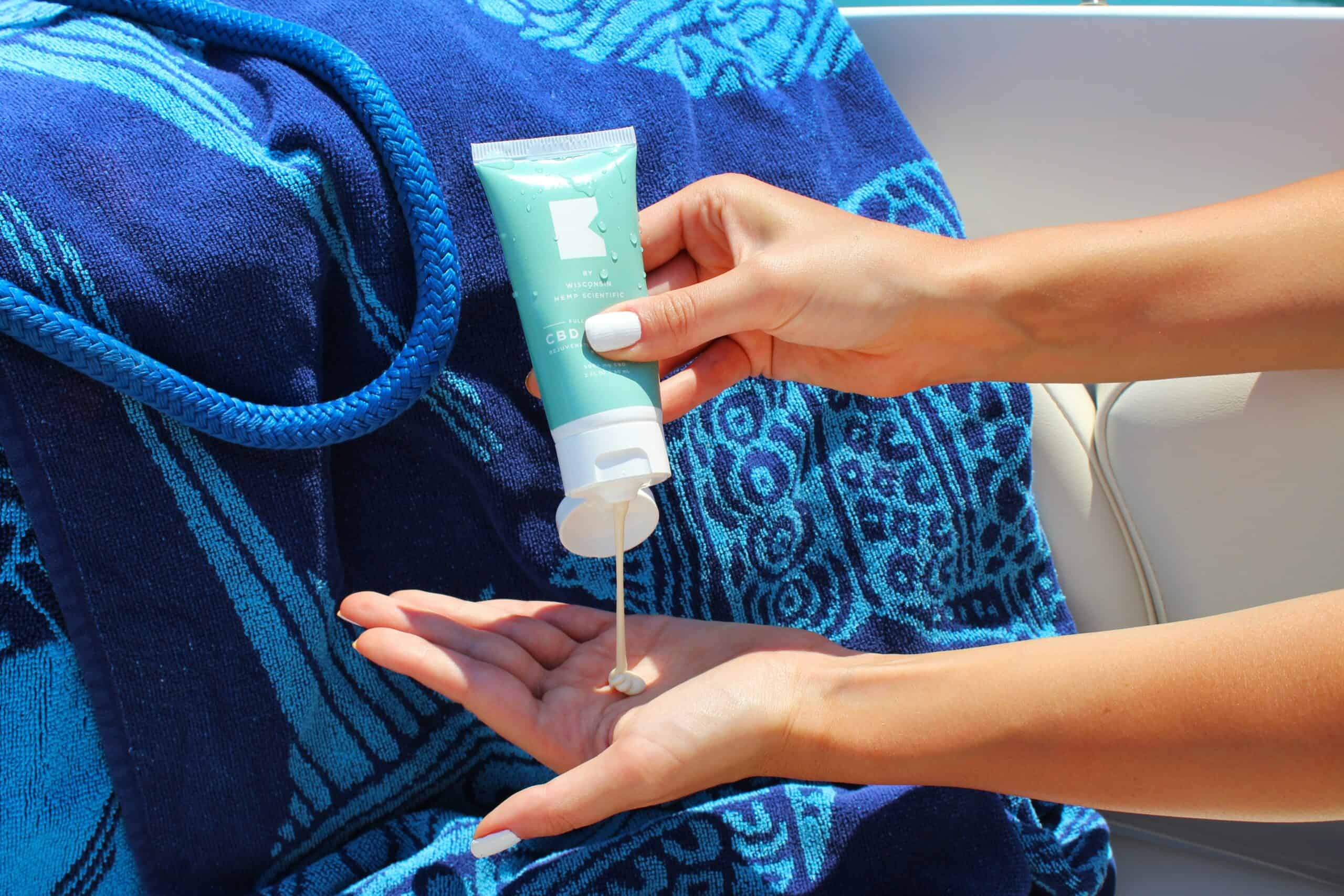
Sunscreen for hiking has to do something ordinary sunscreen never does, which is stay on a sweating face for hours while a pack strap rubs at the shoulders. Sunscreen for hiking therefore comes down to formulation and format rather than to the number on the front, since the highest rating on the shelf protects nothing once it has run into your eyes. Our roundup of hiking hats for sun protection covers the part of the system that never needs reapplying.
Below is how the six formats compare before the detail on each.
| Format | Best for | Watch for |
|---|---|---|
| Mineral lotion | Sensitive skin, faces | White cast, thicker feel |
| Chemical lotion | Large areas, fast cover | Stings eyes when sweating |
| Sport stick | Face, ears, nose | Slow over big areas |
| Spray | Legs, arms, awkward spots | Wind wastes most of it |
| Tinted mineral | Hiding the white cast | One shade suits few people |
| Lip balm with SPF | The bit everyone forgets | Wears off with drinking |
The short version is that a mineral stick for the face and a lotion for everything else covers most hiking. Sticks stay put on the spots that sweat hardest and do not run into your eyes, while a lotion is faster over arms and legs. Sprays are for reaching the backs of your own calves and little else, because wind takes most of the product before it lands.
Key Takeaways
- Staying put matters more than the number on the bottle.
- Mineral formulas sit on the skin; chemical formulas absorb into it.
- Sticks beat lotions on the face because they do not migrate into eyes.
- Water resistance is time-limited, and sweat counts as water.
- Ears, neck, lips and the backs of hands are the spots people miss.
How We Picked
This is a research-based roundup rather than a hands-on trail test. Selections rest on published specifications, stated active ingredients, manufacturer guidance and consistent user-reported feedback rather than on our own measurement.
The criteria that mattered were water and sweat resistance, whether the formula migrates when you sweat, format suited to a specific body area, and packaging that survives being crushed in a hipbelt pocket.
Feel was treated as a real criterion rather than a luxury. A sunscreen that is unpleasant enough to skip provides no protection at all, which is the most common way people end up burnt.
Skin reacts differently between people, so patch test anything new before relying on it for a long day out.
Mineral Sunscreen Lotion
Why It Stands Out
Mineral formulas sit on top of the skin as a physical barrier rather than absorbing. That is why they tend to suit sensitive skin and why they work immediately rather than needing time before exposure.
They also hold up well in heat, since there is no chemical filter to degrade.
Worth Knowing
The white cast is the honest trade, and it is more noticeable on darker skin tones. Tinted versions exist for exactly this reason.
Mineral lotions are thicker and take longer to rub in, which people rush and then leave gaps.
This suits faces and anyone whose skin reacts to chemical filters. Skip it if a visible cast bothers you enough that you would skip applying.
Sport Sunscreen Stick
Why It Stands Out
A stick is the format that solves the sweating-face problem. Because it is a solid wax rather than a lotion, it stays where you put it instead of running down into your eyes.
It also applies without getting product on your hands, which matters when you are then holding trekking poles.
Worth Knowing
Coverage is slow over large areas. A stick is for face, ears, nose and the back of the neck, not for two arms and two legs.
Sticks stiffen in cold and go soft in a hot pocket, so where you carry it changes how it applies.
This suits faces and anyone using poles. Skip it as your only sunscreen, since it is impractical over limbs.
Chemical Sunscreen Lotion for Large Areas
Why It Stands Out
Chemical formulas are thinner and spread further, so covering both arms and legs takes less time and less product. On a hot morning that speed is why people actually apply properly.
They leave no white cast, which removes the main reason people under-apply mineral products.
Worth Knowing
They need time to absorb before exposure rather than working on contact, which is easy to forget at a trailhead.
Many chemical filters sting badly once sweat carries them into the eyes, which is why they suit limbs better than faces.
This suits arms, legs and torso. Skip it on your forehead unless you are wearing a headband, and our roundup of hiking headbands and buffs covers that.
Sunscreen Spray for Awkward Spots
Why It Stands Out
Sprays reach places your hands do not, particularly the backs of your own calves and shoulders when hiking alone. That is a genuine problem they solve.
They are also fast for reapplying over sunscreen already on, without the drag of rubbing lotion onto sticky skin.
Worth Knowing
Wind takes most of it. Spraying on an exposed ridge wastes the majority of the can and leaves patchy coverage, so spray into your hand and rub if there is any breeze.
Coverage is genuinely hard to judge, since you cannot see where you missed until it burns.
This suits hard-to-reach areas and quick top-ups. Skip it as your primary application method.
Tinted Mineral Sunscreen
Why It Stands Out
Tinting cancels the white cast that stops people using mineral sunscreen properly. Iron oxides in the tint also add some protection against visible light, which plain formulas do not.
For anyone who has abandoned mineral products purely on appearance, this is the version worth revisiting.
Worth Knowing
Shade matching is the weakness. Most are sold in one or two shades, which suits a narrow range of skin tones and looks obviously wrong on the rest.
Tint transfers onto buffs, collars and hat brims, which is a laundry annoyance rather than a performance issue.
This suits faces where appearance matters. Skip it if no available shade is close to yours.
SPF Lip Balm
Why It Stands Out
Lips have no melanin to speak of and get direct sun plus reflection off rock, water and snow. They are also the one area no other product covers.
A balm in a hipbelt pocket is the cheapest gap in the whole system to close.
Worth Knowing
It wears off constantly, because you drink, eat and lick your lips. Reapplying far more often than feels necessary is the whole technique.
Plain balms without SPF give the impression of protection while providing none, which is worth checking on the tube you already carry.
This suits everyone, in every season. Skip it only if your sunscreen stick is one you are happy to use on lips.
How to Choose Sunscreen for Hiking
Match the format to the body part
Stick for the face, lotion for limbs, balm for lips, spray for what you cannot reach. Buying one product for everything is why people end up with sunscreen in their eyes.
Check the water resistance duration
Water resistance is rated for a stated period, and sweating counts. That number tells you your reapplication interval more usefully than the protection factor does.
Buy a size you will actually carry
A large bottle left in the car protects nobody. A small tube in a hipbelt pocket gets used, and our roundup of hiking daypacks covers where that pocket usually is.
Test the feel before a long day
If it stings, smells wrong or feels greasy, you will skip reapplying. Comfort is the difference between a product that works and one that sits in a drawer.
Sunscreen or Sun Clothing
When sunscreen wins
Skin you cannot cover. Face, ears, neck, the backs of hands and lips all need a product, and no amount of clothing addresses them. It is also the flexible option, since you can adjust coverage as conditions change through a day rather than committing at the trailhead.
When clothing wins
Everywhere else, honestly. A long sleeve does not wear off, does not need reapplying, does not sting when you sweat and does not run out halfway through a trip. On multi-day walks the weight of enough sunscreen to cover arms and legs repeatedly starts to rival the weight of a sun shirt. The sensible system is clothing for the large areas and sunscreen for the gaps, which is also why our roundup of hiking sunglasses belongs in the same conversation.
What Trips People Up
Applying at the trailhead
Chemical filters need time before exposure, and everyone applies in the car park then walks straight into the sun. Applying before leaving the house solves it.
Using far too little
Protection ratings are measured at an application thickness most people never come close to. A thin smear delivers a fraction of the stated protection, so more product matters more than a higher number.
Missing the same four places
Ears, the back of the neck, the tops of the feet in sandals and the parting in your hair. Those are the burns people come home with, and a hat handles two of them.
Treating shade as protection
Reflection off rock, water and snow reaches skin that never sees direct sun, which is why people burn under a brim. Our note on recognizing heat exhaustion covers the other half of a hot exposed day.
Worth reading next: our roundup of hiking sandals for summer trails, our roundup of hiking umbrellas, which are more useful for sun than for rain in open country, our roundup of hiking towels, and our roundup of hiking pants for the clothing side of sun cover.
Sunscreen for Hiking FAQ
What sunscreen for hiking works best on a sweaty face?
A mineral stick, because it is a solid rather than a lotion and does not migrate into your eyes as you sweat. Lotions with chemical filters are the ones that sting, which is why people stop reapplying them exactly when they need to.
How often should I reapply on the trail?
Follow the water resistance period stated on the bottle, and treat heavy sweating as water. In practice that means reapplying more often than the two-hour rule of thumb on a hot exposed day.
Is mineral or chemical sunscreen better for hiking?
Mineral suits faces and sensitive skin because it sits on the surface, works immediately and does not sting. Chemical spreads further and faster, which suits arms and legs. Most people are best served carrying one of each rather than choosing.
Does a higher protection factor mean I can apply less?
No, and this is the most costly misunderstanding in the category. Ratings assume a generous application thickness. A thin layer of a high-rated product protects less than a proper layer of a moderate one.
Do I still need sunscreen on a cloudy day?
Yes. Cloud reduces the sensation of heat far more than it reduces the exposure, which is why overcast days catch people out, especially at altitude where exposure rises regardless of cloud.
What about my lips and ears?
Both burn readily and both are routinely skipped. Lips need a balm with SPF reapplied often since eating and drinking removes it, and ears need whatever you are using on your face, including the back edge.
Can I use the same sunscreen for face and body?
You can, though the face is where formulation matters most because of sweat and eyes. Many people find a body lotion perfectly good on limbs and unbearable on the forehead, which is the reason sticks exist.
Does sunscreen expire?
It does, and the date matters more than people assume because filters degrade over time and faster if the tube has been cooking in a car. A bottle that has lived through a summer in a glovebox is worth replacing rather than trusting on a long exposed day.
Should I put sunscreen on before or after insect repellent?
Sunscreen first, then let it settle before applying repellent over the top. Applying them in the other order dilutes the sunscreen layer, and combined products tend to compromise the reapplication schedule since the two need topping up at different intervals.
