
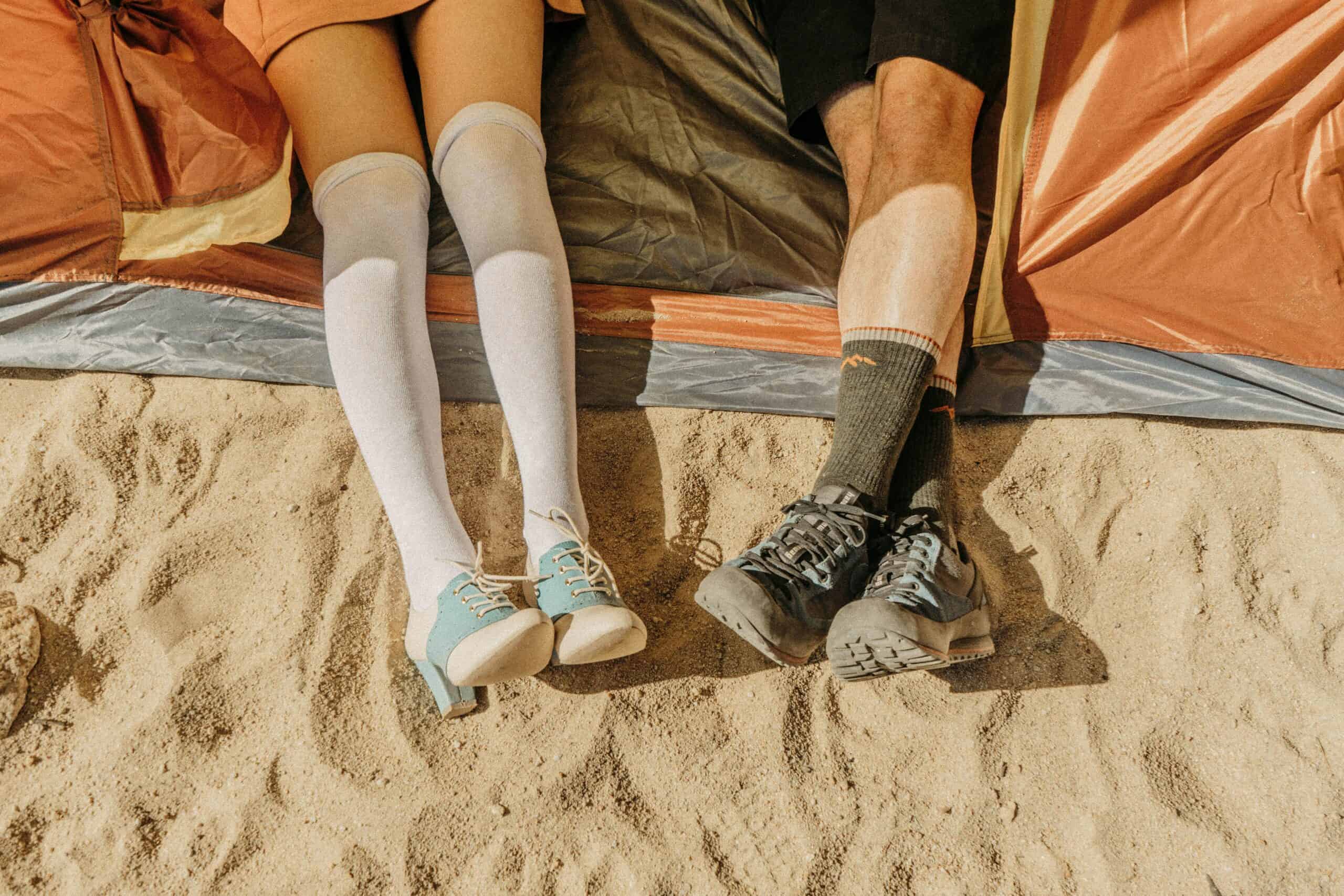
You finish a 12-mile day hike, and your calves are burning. Not sore in the good way that says you pushed hard, actually painful, with a tightness that makes every step downhill feel worse than it should. By the time you hit camp, your lower legs are visibly puffy, your ankles feel thick, and the idea of hiking tomorrow seems genuinely unappealing, even though you’re here for a four-day trip. Your hiking buddy, meanwhile, is sitting by the fire in a totally different shape. Same miles, same elevation, same pack weight. The only visible difference is the tall socks she’s been wearing all day.
Compression socks have migrated from medical and post-surgical contexts into athletic and outdoor use over the past decade, and hiking is where they produce some of the most noticeable benefits. The basic mechanism, graduated pressure tighter at the ankle, looser at the calf, improves venous return (blood flowing back to the heart from the legs) and reduces the fluid pooling that causes the end-of-day puffy-leg feeling most hikers recognize. On multi-day trips, where leg fatigue compounds day over day, the difference between hiking with and without compression socks can determine whether you finish strong or hobble through the final day.
The market for compression socks spans medical-grade products requiring prescriptions, down to cheap athletic socks with marginal compression. Hiking-specific compression socks occupy a specific niche, typically 20-30 mmHg graduated compression (strong enough to matter, not so strong that they require medical fitting), merino wool or synthetic blends that handle multi-day wear, and construction designed for hiking boot use specifically rather than road running or indoor sitting.
This guide walks through the five best compression socks for hiking available in 2026, the specific criteria that separate genuinely useful compression from marketing claims, and how to match compression socks to your hiking style. If you’re building out your broader hiking sock collection, our guide on best hiking socks covers standard (non-compression) options for shorter hikes where full compression isn’t needed.
The difference between regular hiking socks and compression socks
Regular hiking socks focus on cushioning, moisture management, and fit. A good pair of merino hiking socks handles day hikes and 1-2 night backpacking trips well without needing compression features.
Compression socks add a specific function on top of the hiking sock basics, graduated pressure that improves circulation. This comes at the cost of a higher price (typically 2-3x regular hiking sock cost), more difficult donning (harder to put on), and specific sizing requirements.
For hikers doing short day hikes or easy terrain, regular hiking socks are usually adequate. For hikers tackling long days, multi-day trips, or terrain with significant elevation, compression socks genuinely help.
Why hiking-specific compression matters
Compression socks designed for hiking differ meaningfully from compression socks designed for other contexts. Understanding these differences explains why specific products work for trails and others don’t.
Graduated compression targets venous return
The key function of compression socks is graduated pressure, tightest at the ankle (typically 20-30 mmHg) and progressively looser up the calf. This gradient assists the venous system in returning blood to the heart, counteracting the gravity that makes lower-leg fluid pool during extended standing or walking.
For hikers specifically, this pooling is what causes the end-of-day puffy-leg feeling, calf tightness, and general lower-leg fatigue. Graduated compression prevents the pooling before it starts, which is more effective than trying to address it after the fact.
Hiking boot-compatible cushioning
Regular athletic compression socks often have minimal cushioning because they’re designed for indoor or road running use. Hiking-specific compression socks add cushioning at specific zones, heel, toe, and across the instep, where hiking boots create pressure points.
Without this additional cushioning, compression socks in hiking boots produce hot spots and eventually blisters within a few hours.
Moisture management for multi-day wear
Multi-day hiking means wearing socks for 10-14 hours at a stretch in environments ranging from cool morning conditions to humid afternoon exertion. Compression socks for hiking prioritize merino wool or technical synthetic blends that manage moisture effectively across this variation.
Cotton compression socks (common in medical contexts) are the wrong choice for hiking, they absorb moisture and don’t release it, causing blister-forming wet conditions during multi-day wear.
Durability for trail conditions
Hiking puts more stress on socks than most other activities. Rock scrambling, stream crossings, mud, and the constant flex of uneven terrain all wear socks faster than road walking or gym use.
Hiking-specific compression socks use reinforced construction at high-wear zones (heel, toe, arch) that maintains graduated compression function over 100-200 wash cycles rather than degrading within 20-30 washes like budget alternatives.
Proper sizing for compression efficacy
Compression socks only work at their rated compression level when properly sized. A sock rated at 20-30 mmHg that’s too large delivers closer to 10-15 mmHg. One that’s too small delivers over 35 mmHg, which can actually restrict circulation rather than improving it.
Sizing by shoe size alone is insufficient, calf circumference matters more than foot size for proper fit. Quality compression socks publish detailed sizing charts including both foot length and calf circumference at the mid-calf point.
What to look for in compression socks for hiking
The compression sock category contains products spanning wildly different quality levels. Here’s what separates genuinely useful hiking compression from marketing claims.
20-30 mmHg graduated compression
This is the target compression range for hiking use. Lower compression (15-20 mmHg) provides minimal benefit during sustained activity. Higher compression (30-40 mmHg) requires medical fitting and causes issues during the long-duration wear that hiking involves.
Some manufacturers publish only a single compression number (like “25 mmHg”) without specifying the gradient. True graduated compression specifies two numbers, the ankle pressure and the calf pressure. Look for products that clearly state both.
Merino wool or wool-blend construction
Merino wool is the best material for hiking compression socks. It wicks moisture effectively, resists odor through natural antimicrobial properties, provides thermal regulation across temperature variations, and maintains its compression properties through hundreds of wash cycles.
100% merino wool socks are impractical, they lack the elasticity needed for compression and the durability needed for trails. Look for 40-70% merino wool blends with synthetic fibers (nylon, polyester, elastane) providing the structure.
Pure synthetic compression socks work but don’t match merino’s comfort across temperature ranges. They’re generally less expensive but produce more odor and moisture management issues during multi-day use.
Appropriate sock height
Compression socks come in three primary heights:
Ankle-high (below calf): Minimal compression benefit. Don’t buy ankle-high socks for compression purposes.
Mid-calf: Appropriate for most day hiking. Provides full graduated compression without the additional cost of taller alternatives.
Knee-high: Best compression benefit, appropriate for serious multi-day trips or for hikers with existing circulation issues. Also provides additional protection from trail debris.
For most hikers, mid-calf compression socks are the right first purchase. Upgrade to knee-high only for specific needs.
Cushioning at high-impact zones
Look for cushioning at: the heel strike zone (where your foot hits the ground), the ball of the foot (where you push off), and across the instep (where boots apply pressure). This targeted cushioning prevents hot spots during long hikes.
Uniform cushioning across the entire sock adds bulk that makes fitting boots difficult without providing commensurate comfort benefits. Zone-specific cushioning is the better design approach.
Flat or seamless toe construction
Internal toe seams cause blisters. Quality hiking compression socks use either flat toe seams (very low-profile) or fully seamless construction. Either approach eliminates the blister-forming friction that standard toe seams create over long hiking distances.
Reinforced high-wear zones
Heel and toe areas wear fastest in any sock. Quality hiking compression socks reinforce these zones with additional fibers or double-layered construction. This dramatically extends the functional lifespan of the socks relative to uniform-construction alternatives.
Proper sizing options
Better compression sock manufacturers offer 4-6 size options based on both shoe size and calf circumference. Budget alternatives often offer only 2-3 sizes (S-M-L), which produces a poor fit for bodies outside the middle of the distribution.
Measure your calf circumference at the widest point before purchasing. Don’t guess, proper fit is essential for compression efficacy.
Best compression socks for hiking in 2026: our top 5 picks
Five picks covering the full range of hiking compression needs: best overall for most hikers, best for multi-day backpacking, best budget option, best for warm-weather hiking, and best premium option.
1. Swiftwick VIBE Zero Tall, Best Overall
Best for most hikers | Price: ~$30/pair
Swiftwick’s VIBE Zero Tall compression socks combine 20-30 mmHg graduated compression, merino-synthetic blend construction, and hiking-specific cushioning to deliver the best overall performance for typical hiking use. The socks have become the default recommendation among thru-hikers and long-distance trail runners for their reliability across conditions.
The mid-calf height provides full graduated compression benefit without the additional cost of knee-high alternatives.
Swiftwick’s Compression Engineering
Swiftwick has specialized in athletic compression socks for over a decade. The VIBE Zero design reflects this focused experience, the compression gradient, construction materials, and specific zone treatments all target athletic use specifically rather than medical or general compression applications.
The 20-30 mmHg compression range is validated by independent testing labs. The graduated profile, tightest at the ankle, progressively looser up the calf, matches the research-backed pattern that maximizes venous return during sustained activity.
Material Composition
The sock uses a 45% merino wool, 42% nylon, 10% polyester, 3% elastane blend. This composition balances Merino’s moisture management with synthetic fibers, providing the structural integrity that compression socks require.
The elastane content specifically provides the elastic recovery needed to maintain compression properties through extended wear and multiple wash cycles.
Cushioning and Construction
The VIBE Zero incorporates targeted cushioning at the heel and toe zones, enough to prevent hot spots during long hikes without the bulk that makes hiking boots fit poorly. The instep is unsupplemented to maintain the flat profile that boot lacing systems require.
Flat toe seams eliminate the blister-forming friction common in cheaper socks. The heel cup is shaped to match typical foot anatomy, preventing the heel slippage that causes blisters in loose socks.
Best for: Most day hikers, weekend backpackers, hikers who do regular long hikes, buyers seeking reliable compression for general hiking use.
PROS:
- 20-30 mmHg graduated compression
- Merino wool blend for temperature and moisture management
- Targeted heel and toe cushioning
- Flat toe seams prevent blisters
- Mid-calf height appropriate for most hiking
- Proven performance among thru-hikers
- Reasonable price for premium quality
CONS:
- Premium pricing versus budget alternatives
- Limited color options
- Sizing requires attention to calf circumference
- Merino content requires specific washing (don’t use fabric softener)
- Tall height may feel warm in hot weather
2. CEP Hiking Compression Socks, Best for Multi-Day Backpacking
Best for extended trail use | Price: ~$55/pair
For multi-day backpackers, thru-hikers, and anyone doing trips of 3+ consecutive days, CEP’s hiking-specific compression socks deliver the durability and advanced moisture management that extended use demands. The knee-high design maximizes compression benefit, and the construction is specifically engineered for the demands of sustained outdoor use.
CEP operates in the medical-grade compression space and brings that engineering discipline to their outdoor line.
CEP’s Medical-Grade Engineering
CEP (a subsidiary of Medi, a major medical compression manufacturer) applies medical compression principles to athletic use. The graduated compression gradient is more precisely engineered than most athletic compression socks, with specific pressure profiles documented at ankle, mid-calf, and top-of-calf measurement points.
The 20-30 mmHg range matches most athletic compression, but CEP’s profile is more consistent from sock to sock and maintains its characteristics through more wash cycles than competitors.
Advanced Material Composition
CEP uses a proprietary polyamide-elastane blend that prioritizes durability and compression retention over merino wool’s temperature regulation advantages. The trade-off: less comfort across temperature ranges, but significantly longer functional lifespan (300+ wash cycles maintained compression versus 100-150 for merino blends).
The inner fabric treatment includes silver-ion antimicrobial processing that prevents odor accumulation during multi-day wear without showering. This matters for thru-hiking specifically, where socks may be worn 2-3 consecutive days before laundry access.
Knee-High Design Benefits
The knee-high height provides three benefits that mid-calf socks don’t: maximum graduated compression benefit (the longer gradient supports venous return more completely), protection from trail debris (sticks, brush, small branches), and calf muscle support during steep ascents.
The trade-off is warmer wear in hot conditions. For thru-hikers in the Pacific Crest or Appalachian Trail contexts, this warmth is offset by the compression benefits. For warm-weather day hiking, mid-calf alternatives are more comfortable.
Best for: Thru-hikers, multi-day backpackers, long-distance trail runners, hikers with existing circulation issues, buyers prioritizing maximum compression benefit.
PROS:
- Medical-grade engineering precision
- Knee-high height maximizes compression benefit
- 300+ wash cycle compression retention
- Silver-ion antimicrobial processing
- Reinforced construction for extended use
- Specific outdoor/hiking product line
- Proven in competitive athletic contexts
CONS:
- Premium pricing (highest in our guide)
- Synthetic construction less comfortable than merino in temperature extremes
- Knee-high height warm in hot weather
- Learning curve for donning properly
- Sizing requires careful measurement
3. SB SOX Compression Socks, Best Budget Option
Best budget compression socks | Price: ~$18/pair (multi-pack available)
For budget-constrained buyers wanting to try compression socks before investing in premium alternatives, SB SOX delivers functional 20-30 mmHg graduated compression at approximately $18 per pair (with multi-packs available at further discount). The construction uses standard synthetic materials and basic hiking cushioning, adequate for occasional use but shorter-lived than premium alternatives.
The compromises are predictable: less sophisticated materials, shorter lifespan, and less precise compression gradient consistency.
Budget-Tier Design
SB SOX uses a 70% nylon, 30% polyester construction with elastane added for compression. The material choice prioritizes cost over Merino’s comfort advantages.
The compression is rated at 20-30 mmHg, which matches premium alternatives’ ratings. Independent testing shows the actual compression profile is less precisely graduated than medical-grade options, the gradient may be slightly flatter than optimal.
For occasional use or buyers testing whether compression socks fit their hiking style, this imprecision is acceptable. For hikers making compression socks part of their standard kit, premium options provide better consistency meaningfully.
Adequate Hiking-Specific Features
The socks include basic cushioning at the heel and toe, enough to prevent hot spots during moderate-length day hikes. The toe seam is low-profile, though not fully flat-stitched.
Mid-calf height provides the baseline compression benefit at the appropriate zone. The sock top uses elastic banding that keeps the sock in place without the digging-in that poor-quality socks produce.
Expected Lifespan
Expected functional lifespan is 20-40 wash cycles before compression properties noticeably degrade, significantly shorter than premium alternatives, but adequate for 1-2 years of regular use. Multi-pack purchases make replacement costs manageable.
Best for: First-time compression sock buyers, budget-constrained hikers, testing the category before investing in premium alternatives, backup pairs for regular users.
PROS:
- Lowest price in our guide
- Multi-pack options further reduce per-pair cost
- 20-30 mmHg compression rating
- Adequate basic hiking cushioning
- Mid-calf appropriate height
- Low-risk trial purchase
- Multiple color options
CONS:
- Synthetic-only construction (no merino)
- Less precise graduated compression
- Shorter lifespan (20-40 washes)
- Odor builds up faster during multi-day wear
- Less comfortable in temperature extremes
4. Darn Tough Hiker Boot Sock Cushion, Best for Warm-Weather Hiking
Best for summer trail use | Price: ~$26/pair
Wait, Darn Tough doesn’t technically make compression socks in the traditional 20-30 mmHg sense. However, their Hiker Boot Sock Cushion with light compression provides the most effective summer-hiking solution for buyers who need some circulation support without the warmth penalty of full compression socks. This is a specific recommendation for specific conditions.
For cold-weather hiking or multi-day backpacking, the dedicated compression socks from our other picks perform better. For summer day hiking, this is the right trade-off.
Darn Tough’s Construction Approach
Darn Tough’s merino wool content (up to 61% in this model) provides excellent temperature regulation across hot hiking conditions. The socks stay cooler in hot weather than dedicated compression socks, which matters for summer hikers who would otherwise skip compression entirely due to warmth.
The “compression” in this model is more accurately described as “snug fit with mild graduated pressure”, closer to 15-20 mmHg than full 20-30 mmHg. The lighter compression provides some circulation benefit while maintaining the breathability that warm-weather hiking demands.
Lifetime Warranty Advantage
Darn Tough’s unconditional lifetime warranty is genuinely unique in the sock category. If the socks develop holes, show wear, or lose their function at any point, Darn Tough replaces them free. This warranty effectively eliminates long-term cost considerations, a $26 pair of socks is essentially a lifetime purchase.
For hikers who would otherwise buy 3-4 pairs of budget compression socks over a decade, Darn Tough’s single-purchase-for-life model produces lower lifetime cost.
Specific Use Case Match
These socks occupy a specific niche: hikers who want compression benefits but hike primarily in warm weather. They’re not appropriate for cold-weather use (where their lighter construction provides less insulation than fuller compression socks) and are not appropriate for hikers with significant circulation issues needing true 20-30 mmHg compression.
But for summer day hikers wanting reduced end-of-day leg fatigue without the warmth penalty of full compression, they’re exactly right.
Best for: Summer day hikers, warm-weather trail users, hikers prioritizing breathability, buyers wanting lifetime warranty benefits, and mild compression needs.
PROS:
- Exceptional warm-weather breathability
- 61% merino wool content
- Unconditional lifetime warranty
- Targeted cushioning at impact zones
- Made in USA (Vermont)
- Lower cost over the lifetime due to warranty
- Excellent trail durability
CONS:
- Lighter compression than dedicated compression socks (15-20 mmHg)
- Not appropriate for cold-weather hiking
- Doesn’t match the true compression sock benefits for circulation issues
- Limited compression gradient control
- Some users don’t consider it “real” compression
5. Sockwell Incline Firm Graduated Compression, Best Premium
Best premium compression socks | Price: ~$35/pair
For hikers wanting premium compression sock features, medical-grade compression precision, high merino wool content, and specific hiking optimization, Sockwell’s Incline Firm Graduated Compression delivers the highest comfort-to-performance ratio in the category. The socks cost more than most alternatives but provide better material quality and compression consistency.
Sockwell operates as a specialty compression sock maker with medical compression products alongside their athletic line.
Sockwell’s Material Advantage
The Incline Firm uses a 40% merino wool, 30% bamboo, 25% nylon, 5% spandex blend. The bamboo addition is unusual in compression socks and provides additional moisture management plus natural antimicrobial properties that supplement merino’s similar benefits.
This blend produces socks that feel more luxurious than standard merino blends, maintain odor-resistance longer, and handle temperature variations better than single-fiber alternatives.
Compression Precision
Sockwell’s Firm compression rating corresponds to 20-30 mmHg graduated compression, matching premium athletic standards. The gradient is engineered with more precision than budget alternatives, the transition from ankle to calf compression is smoother and more consistent across the sock’s lifespan.
Independent testing confirms Sockwell maintains its rated compression through approximately 150-200 wash cycles, longer than most merino-based alternatives.
Hiking-Optimized Features
Beyond compression, the socks include hiking-specific features: cushioning at heel and toe strike zones, flat toe seams, reinforced arch support, and a wider cuff that doesn’t dig into the calf during extended wear.
Multiple color and pattern options (beyond the utilitarian black/gray of most athletic compression socks) make them appropriate for both trail and casual wear.
Best for: Serious hikers prioritizing premium materials, buyers valuing compression precision, users wanting versatile socks for trail and casual use, and those sensitive to synthetic materials.
PROS:
- Merino + bamboo blend for superior comfort
- Medical-grade compression precision
- 150-200 wash cycle durability
- Multiple color and pattern options
- Flat toe seams and hiking-specific cushioning
- Made in USA (Vermont)
- Premium construction throughout
CONS:
- Higher price than most alternatives
- Bamboo content slightly less durable than pure merino
- Requires specific washing care
- Limited availability outside specialty retailers
- Not as well-known as Swiftwick or CEP
Quick comparison
- Swiftwick VIBE Zero Tall, best overall, proven performance, ~$30/pair
- CEP Hiking Compression, best for multi-day backpacking, knee-high, ~$55/pair
- SB SOX Compression, best budget option, ~$18/pair
- Darn Tough Hiker Boot Sock Cushion, best for warm-weather hiking, ~$26/pair
- Sockwell Incline Firm Graduated, best premium, merino-bamboo blend, ~$35/pair
How to choose the right compression socks for your hiking
The right compression socks depend on your hiking style, conditions, and budget. Here’s the decision framework.
Match the compression level to your needs
If you do moderate day hikes (5-10 miles, modest elevation): Light to moderate compression (15-25 mmHg) is sufficient. Darn Tough’s lighter compression or Swiftwick’s standard grade work well.
If you do long day hikes (10-15+ miles, significant elevation): Standard 20-30 mmHg compression. Swiftwick or Sockwell.
If you do multi-day backpacking or ultra-distance hiking: Maximum compression with knee-high design. CEP’s dedicated hiking line.
If you have documented circulation issues: Consult a doctor for appropriate medical-grade compression. Athletic compression socks supplement but don’t replace medical fitting.
Match the materials to your climate
Cold weather (winter hiking, high elevation): Higher merino content (50%+). Keeps feet warmer while providing compression benefits.
Hot weather (summer hiking, desert conditions): Lower overall sock weight, more synthetic content for quick drying. Darn Tough or lightweight Swiftwick models.
Variable conditions (multi-day trips crossing climate zones): Merino-synthetic blends that handle variation. Sockwell’s blend or CEP’s multi-fiber construction.
Match the height to your terrain
Standard terrain: Mid-calf compression is appropriate. Full graduated compression without the warmth penalty of knee-high.
Rough or brushy terrain: Knee-high compression adds protection from scratches and debris. CEP’s dedicated hiking line.
Trail running or fast hiking: Mid-calf with specific cushioning. Swiftwick’s athletic focus.
Budget considerations
Testing compression socks for the first time: SB SOX budget option. Validate whether compression works for your hiking style before investing in premium alternatives.
Regular hiking 1-2x monthly: Standard tier (Swiftwick, Darn Tough, Sockwell). Premium materials, moderate price, appropriate lifespan.
Weekly or more frequent hiking: Premium tier (CEP, Sockwell). Maximum durability and compression consistency justify the premium pricing for heavy users.
How to wear compression socks correctly
Compression socks only work when worn properly. Here’s the protocol.
Put socks on before the activity
Compression socks work best when worn before leg swelling occurs. Put them on in the morning before hiking, not after your legs are already fatigued.
Most effective: put them on within 30 minutes of getting out of bed. The leg muscles haven’t yet produced the fluid pooling that compression socks prevent.
Proper donning technique
Bunch the sock down to the toe area, slip your toes in, then roll the sock up your leg rather than trying to pull it on directly. Quality compression socks are tight enough that direct pulling can damage the fabric or feel uncomfortable.
Make sure the sock is completely flat against your leg, no twists, folds, or bunched areas. Twisted compression socks can restrict circulation at specific points rather than providing smooth graduated pressure.
Smooth out any wrinkles
After donning, run your hands up the sock to smooth out any wrinkles. Wrinkles create pressure points that cause blisters and can locally compress blood vessels instead of the gradient that compression socks should provide.
Wear for hiking sessions
Wear compression socks during the entire hike and for 30-60 minutes after finishing. The post-hike wear helps the circulation system recover by preventing the rebound fluid accumulation that happens when compression suddenly releases.
Don’t wear compression socks continuously for 24+ hours. The skin needs time to breathe, and continuous wear can cause skin irritation or maceration.
Wash regularly
Wash compression socks after every use. Sweat and oils degrade the elastic fibers that provide compression, and regular washing extends the functional lifespan.
Most compression socks require gentle washing (cold water, mild detergent, no fabric softener) and air drying. Machine drying on high heat destroys the elastic fibers rapidly.
Common compression sock mistakes to avoid
Several mistakes reduce compression sock effectiveness or cause problems.
Wearing them too loosely
If you can easily pull compression socks several inches away from your leg, they’re too large. Loose compression socks don’t deliver their rated compression and provide minimal benefit.
Re-measure and order a smaller size if the current pair feels loose.
Wearing them too tightly
Conversely, socks that feel genuinely painful or cause numbness are too small. Proper compression should feel “firmly supportive,” not “painful.”
If your toes go numb, your legs tingle excessively, or you develop visible skin markings beyond standard sock impressions, the compression is too high.
Mixing compression types for different legs
If you have one leg with documented circulation issues requiring higher compression, don’t wear different compression levels on each leg. This imbalance can cause more problems than it solves. Consult a medical professional for asymmetric compression needs.
Using them for conditions they can’t address
Compression socks help with venous return and fluid pooling. They don’t address arterial circulation issues, neuropathy, or other circulatory conditions.
If you have unexplained leg pain, numbness, or circulation symptoms, see a doctor rather than relying on compression socks alone.
Wearing damaged compression socks
Compression socks with holes, visible stretching, or damaged elastic bands don’t deliver their rated compression. Replace them when visible wear appears rather than trying to squeeze more miles from damaged pairs.
The annualized cost math
Compression sock costs per year vary based on quality tier and usage frequency.
Budget tier ($18 SB SOX, 20-40 wash cycles): With weekly use, approximately $20-35/year. Adequate for occasional use.
Standard tier ($30 Swiftwick, 100-150 wash cycles): With weekly use, approximately $15-20/year. Best value for most hikers.
Premium tier ($35 Sockwell, 150-200 wash cycles): With weekly use, approximately $10-15/year. Justified by material comfort and durability.
Multi-day specialty ($55 CEP, 300+ wash cycles): With weekly use, approximately $8-12/year. Lowest per-use cost for frequent hikers.
Lifetime warranty (Darn Tough $26): Effectively $0 after initial purchase due to warranty replacement. Infinite value for long-term users.
The counterintuitive finding: More expensive compression socks often have lower per-year costs due to longer lifespans. Don’t assume cheapest is most economical, the math usually favors quality for regular users.
Accessories worth pairing with compression socks
Several companions improve compression sock use and hiking comfort.
Proper hiking footwear
Compression socks work best with properly-fitted hiking boots. Our best hiking boots for beginners guide covers boot selection, and best trail running shoes for beginners covers lighter footwear options.
Other hiking sock options
For hikes where compression isn’t needed, standard hiking socks work well. Our best hiking socks guide covers options for shorter trips.
Foot care tools
Blister prevention tape (like Leukotape) for high-risk friction zones when trying new sock combinations. Apply before hiking, not after blisters develop.
Foot powder or anti-chafe balm for moisture management in humid conditions or when your feet sweat more than usual.
Recovery equipment
Foam rollers for post-hike calf massage. The compression-sock benefits plus targeted recovery work reduce next-day leg stiffness significantly.
Elevated leg rest after long hikes. Propping legs up above heart level for 15-30 minutes accelerates the recovery that compression socks initiate.
Our verdict
The Swiftwick VIBE Zero Tall is the right compression sock for most hikers. At $30 per pair, it delivers 20-30 mmHg graduated compression, merino wool blend construction, hiking-specific cushioning, and the reliability that thru-hikers rely on for long trips. For buyers new to compression socks or seeking a single reliable pair, this is the default recommendation.
Multi-day backpackers and thru-hikers should invest in CEP’s dedicated hiking line. The knee-high design, medical-grade compression precision, and 300+ wash cycle durability justify the premium pricing for serious long-distance hiking use.
Budget-constrained buyers can start with SB SOX to validate whether compression socks fit their hiking style. The trade-offs (shorter lifespan, less precise compression) are real, but the basic function works adequately for moderate use.
Summer hikers should consider Darn Tough’s Hiker Boot Sock Cushion with light compression. The warm-weather breathability advantage over dedicated compression socks offsets the lighter compression rating for seasonal conditions, and the lifetime warranty eliminates long-term cost concerns.
Hikers prioritizing premium materials and compression precision should choose Sockwell’s Incline Firm. The merino-bamboo blend, precision compression, and versatile styling provide the best overall quality in the category.
The broader point: compression socks transform the end-of-day hiking experience for most hikers who try them. The reduction in leg fatigue, calf tightness, and ankle swelling is immediately noticeable, and the cumulative benefit over multi-day trips is substantial. Don’t dismiss compression socks as medical products, hiking-specific compression is genuinely performance equipment for any hiker doing long days or multi-day trips. Start with a standard-tier pair like Swiftwick, wear them for a few hikes, and experience the difference before investing in specialty alternatives.
Frequently asked questions
Do compression socks really help with hiking?
Yes, for most hikers. Graduated compression (20-30 mmHg) improves venous return, blood flowing back to the heart from the legs, which reduces the fluid pooling and muscle fatigue that typically develops during long hikes. The benefit is most noticeable after hikes of 10+ miles or multi-day trips where leg fatigue compounds. For short, easy day hikes, the benefit is real but smaller.
What compression level do I need for hiking?
20-30 mmHg graduated compression is the standard for athletic and hiking use. This provides meaningful circulatory benefit during sustained activity without the discomfort or medical fitting requirements of higher compression levels. Lower compression (15-20 mmHg) provides minimal benefit during active use; higher compression (30-40 mmHg) is medical-grade and requires professional fitting.
Should compression socks be tight or comfortable?
They should feel firmly supportive, tighter than regular socks but not painful. If they cause genuine pain, toe numbness, or significant skin marking beyond standard sock impressions, they’re too tight. If you can easily pull them several inches away from your leg, they’re too loose. Proper fit feels substantial without being uncomfortable.
When should I put on compression socks?
Before your hike, ideally within 30 minutes of getting out of bed. Compression socks work best when worn before leg swelling occurs. Putting them on after your legs are already fatigued provides some benefit, but less than prevention-oriented wear. Wear them during the entire hike and for 30-60 minutes afterward.
Can I wear compression socks every day?
Yes, for active hiking or athletic use, but don’t wear the same pair continuously for 24+ hours. Rotate pairs, wash them after each use, and let your legs breathe between uses. For medical-grade compression (higher than 30 mmHg), follow specific guidance from the prescribing healthcare provider.
Do I need knee-high or mid-calf compression socks?
Mid-calf is sufficient for most hiking, it provides full graduated compression at the appropriate zone. Knee-high socks provide maximum compression benefit and additional protection from trail debris, appropriate for multi-day backpacking or thru-hiking. For day hiking in standard conditions, mid-calf is the right choice.
How long do compression socks last?
Lifespan depends on material and construction. Budget synthetic socks lose their compression after 20-40 wash cycles. Quality merino-blend athletic socks maintain compression for 100-200 wash cycles. Premium medical-grade synthetic constructions last 300+ wash cycles. With weekly hiking use, expect 1-3 years of functional life from most compression socks before replacement.
Can compression socks cause any problems?
Generally safe for most people, but potential issues include: skin irritation from elastic bands, circulation restriction if sizing is wrong (too tight), exacerbation of arterial circulation problems (rare, if you have peripheral arterial disease, consult a doctor before using compression), and pressure points from wrinkled socks. For most hikers, proper fit eliminates these concerns.
