
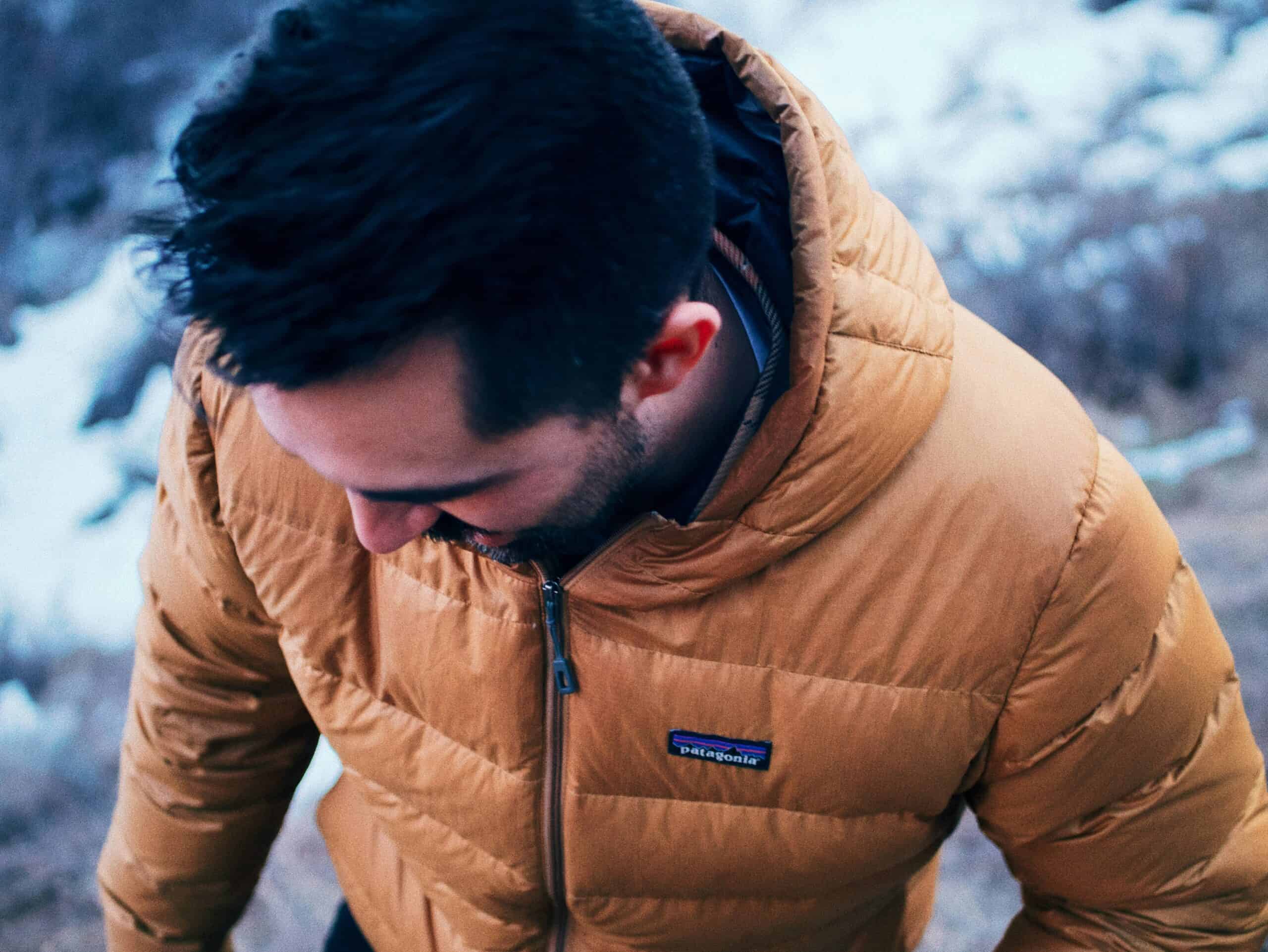
The Layering Piece That Changes Everything About Trail Comfort
Experienced hikers understand something beginners consistently learn the hard way, the temperature difference between a sun-exposed ridgeline and a shaded north-facing slope can exceed 20 degrees Fahrenheit within a five-minute walk. The wind that appears on the summit does not appear in the approach valley. A stop for lunch or a rest break drops body temperature faster than most casual hikers anticipate. A packable down jacket addresses all of these variables through one layering piece that weighs less than a pound, packs smaller than a water bottle, and produces immediate warmth that fleece cannot match at equivalent weight.
The physics are straightforward. Down’s warmth-to-weight ratio, the amount of insulation provided per ounce of material, is unmatched by any synthetic alternative. A 10-ounce down jacket provides warmth equivalent to a 16-ounce fleece in calm, dry conditions. The trade-off is moisture sensitivity, down loses its insulating loft when wet, and wet down loses warmth faster than wet synthetic insulation. This trade-off determines when down is the right choice and when synthetic alternatives serve better.
Down is the right choice for most three-season hiking in conditions where precipitation is not the primary risk, the dry cold of high altitude, the temperature swings of desert morning-to-afternoon hiking, and the cool fall temperatures that require insulation without full winter gear. For hiking in consistently wet environments where the jacket may get rained on rather than merely serving as a warmth layer under a rain jacket, synthetic insulation’s wet-weather performance makes it the more appropriate choice. Our guide to the best rain jackets for hiking covers the shell layer that goes over a down midlayer in mixed weather.
What to Look for in Packable Down Jackets
Fill power is the most widely cited down specification, and the most widely misunderstood. Fill power measures the loft of one ounce of down in cubic inches. 600-fill down lofts to 600 cubic inches per ounce. 900-fill down lofts to 900 cubic inches per ounce. Higher fill power produces more insulation per weight of down, but total warmth depends on both fill power and fill weight. A 900-fill jacket with 2 ounces of down may be warmer or cooler than an 800-fill jacket with 3 ounces of down, depending on the total fill weight. Always evaluate fill power and fill weight together.
DWR treatment, durable water repellent finish applied to the down itself, addresses the wet-weather limitation in dry conditions where the jacket experiences light moisture exposure. DWR-treated down maintains a meaningful percentage of its loft when the jacket surface gets damp from light rain or high humidity, rather than collapsing immediately. It does not make a down jacket waterproof, sustained rain penetrates any down jacket without a waterproof shell over it. However, for the light moisture exposure that most three-season hikers encounter, DWR down significantly extends the conditions where a down jacket performs adequately.
Packability is determined by down fill power, outer fabric weight, and whether the jacket stuffs into its own pocket. Jackets that stuff into their own chest or hand pocket eliminate the need for a separate stuff sack and pack to compact size quickly at trailside stops. The outer fabric weight, measured in denier, trades packability against durability: lower denier fabrics pack smaller but snag and abrade more easily against pack straps and rocky surfaces.
Best Packable Down Jackets for Hiking in 2026: Our Top 5 Picks
1. Patagonia Down Sweater Hoody, Best Overall
Best Overall | Price: ~$279
The Patagonia Down Sweater Hoody earns the top spot through 800-fill responsibly sourced down, an integrated hood that adds meaningful warmth at high elevation wind exposure without the bulk of a separate beanie, and Patagonia’s repair program and lifetime warranty that make the $279 price an investment in a jacket likely to last a decade with reasonable care. The 1.1-ounce ripstop nylon outer fabric is light enough to pack to grapefruit size while being durable enough for regular pack use without the snag sensitivity that ultra-thin shell fabrics produce.
Patagonia Down Sweater Hoody, The Hood That Changes High-Altitude Performance
The integrated hood is what separates the Down Sweater Hoody from Patagonia’s non-hooded Down Sweater for high-altitude hiking specifically. At elevation, wind chill from exposed ridgeline and summit wind creates a temperature differential that a hooded jacket addresses without requiring a beanie addition, keeping the pack weight lower and the layering system simpler. The Traceable Down certification provides ethical sourcing documentation that matters to buyers who factor supply chain responsibility into purchasing decisions. At approximately $279, it is the premium investment on this list, justified by the performance, durability, and lifetime repair commitment that Patagonia’s program provides.
Best for: Serious three-season hikers who hike at elevation where wind and temperature exposure justifies the hood and premium construction, anyone who will use the jacket regularly enough for the decade-long lifespan to make the investment worthwhile.
PROS:
- 800-fill responsibly sourced down for exceptional warmth-to-weight
- Integrated hood for wind and temperature protection at elevation
- Patagonia lifetime repair program for long-term investment protection
- 1.1-ounce ripstop nylon, packable without extreme snag sensitivity
- Stuffs into its own chest pocket
CONS:
- Premium price at approximately $279
- Hood adds bulk when not needed for lower-elevation use
- Not DWR-treated down, standard down wet weather limitation applies
2. Arc’teryx Cerium Hoody, Best Ultralight Premium
Best Ultralight Premium | Price: ~$375
The Arc’teryx Cerium uses 850-fill Coreloft Compact synthetic insulation at underarm and shoulder zones alongside 850-fill down in the body, a zoned insulation approach that places moisture-resistant synthetic insulation at the perspiration-heavy zones where down collapses most readily during high-output activities. This design maintains thermal efficiency during the activity-to-rest transitions, where all-down jackets lose effectiveness as accumulated perspiration collapses the down loft in exactly the zones where the hiker is generating the most sweat.
Arc’teryx Cerium, Zoned Insulation That Addresses Down’s Primary Performance Weakness
The zoned approach represents the technical advancement in down jacket design that makes Arc’teryx worth the premium for hikers who use down jackets during active hiking rather than only at rest. At approximately $375, the Cerium is the most expensive option on this list, justified for hikers who need thermal efficiency during sustained aerobic output rather than only at stops.
Best for: Active hikers who wear insulation while hiking rather than only at rest stops, anyone who generates significant perspiration during active hiking and has experienced down jacket failure at the underarm and shoulder zones from sweat-collapsed loft.
PROS:
- Zoned insulation addresses down’s primary perspiration weakness
- 850-fill down with synthetic reinforcement at high-sweat zones
- Premium construction with Arc’teryx lifetime warranty
- Ultralight at approximately 10 ounces
- Best-in-class thermal efficiency during active output
CONS:
- Highest price on this list is approximately $375
- Premium price requires hiking frequency and technical application to justify
- Arc’teryx fit runs slim, try before purchasing when possible
3. REI Co-op 650 Down Jacket, Best Value
Best Value | Price: ~$100
REI’s house-brand 650-fill down jacket delivers the core packable down jacket function, warmth, packability, and stuffs-into-own-pocket convenience, at approximately $100. The 650-fill down provides less warmth per ounce than the Patagonia or Arc’teryx premium alternatives, but adequate warmth for three-season hiking in conditions that do not require the extreme warmth efficiency of 800-fill and above. The DWR-treated outer fabric provides light moisture resistance. The stuff-into-own-pocket design eliminates the separate stuff sack.
Best for: Casual to regular hikers who want a capable packable down jacket at below-premium pricing, anyone whose hiking frequency and conditions do not require the performance ceiling of Patagonia and Arc’teryx alternatives.
PROS:
- Capable 650-fill down for three-season hiking conditions
- Stuffs into own pocket for self-contained packability
- DWR-treated outer fabric for light moisture resistance
- Accessible price at approximately $100
- REI return policy for quality confidence
CONS:
- 650-fill provides less warmth-to-weight than 800-fill premium alternatives
- Less durable outer fabric than Patagonia’s 1.1-ounce ripstop
- No hood, head insulation requires a separate beanie addition
4. Columbia Powder Lite Jacket, Best Budget
Best Budget | Price: ~$65
Columbia’s Powder Lite uses synthetic insulation rather than down, making it the only non-down jacket on this list and the right choice specifically for hiking in wet environments where the moisture resistance that synthetic insulation maintains provides a meaningful performance advantage over down. At approximately $65, it delivers warmth, packability, and wet-weather performance at a price that makes it the right entry-level insulation piece for hikers in the Pacific Northwest, coastal environments, and any terrain where rain contact is probable rather than possible.
Columbia Powder Lite, Synthetic Insulation That Stays Warm When Down Fails
The honest comparison to the down jackets on this list is straightforward, synthetic insulation is warmer-when-wet and less warm-when-dry per equivalent weight than down. In dry conditions, a down jacket of equivalent weight is warmer. In wet conditions, the synthetic jacket maintains a meaningful percentage of its warmth that a wet down jacket loses. For hikers whose primary environment is wet, this trade-off favors synthetic decisively at a price significantly below the down alternatives.
Best for: Hikers in consistently wet environments, Pacific Northwest, coastal, and high-precipitation areas where the jacket is likely to experience direct rain contact regularly enough to make synthetic’s wet-weather performance advantage consistently relevant.
PROS:
- Synthetic insulation maintains warmth when wet
- Lowest price on this list is approximately $65
- Packable design for a daypack or pack attachment
- DWR-treated outer fabric
- Right choice for wet environment hiking where down fails
CONS:
- Less warmth-to-weight than down in dry conditions
- Heavier than equivalent-warmth down jackets
- Less compressible than down alternatives
5. Montbell Plasma 1000 Down Jacket, Best Extreme Ultralight
Best Extreme Ultralight | Price: ~$350
Montbell’s Plasma 1000 uses 1000-fill down, the highest fill power available in commercial down production, in an ultra-thin 7-denier outer shell that achieves a total jacket weight of approximately 4.7 ounces. This is the specific tool for ultralight backpackers whose base weight discipline makes every ounce of carried gear a deliberate decision. The extreme packability, smaller than most water bottles at compression, allows carrying it as an emergency warmth layer on any hike, regardless of pack size.
Best for: Ultralight backpackers for whom jacket weight is a significant base weight variable, hikers whose pack weight discipline makes the 4.7-ounce weight figure meaningful for overall trip sustainability.
PROS:
- 1000-fill down, highest fill power available commercially
- 4.7-ounce total weight, extreme ultralight achievement
- Packs smaller than most water bottles
- Genuine emergency warmth backup for any hiking kit
- Long-term ultralight investment
CONS:
- Premium price at approximately $350
- 7-denier shell is extremely snag and abrasion-sensitive
- Limited durability under regular heavy pack use
Quick Comparison: Best Packable Down Jackets for Hiking 2026
| Jacket | Price | Fill Power | Weight | Best For | Score |
|---|---|---|---|---|---|
| Patagonia Down Sweater Hoody | ~$279 | 800-fill | ~13 oz | Best overall | 9.3 |
| Arc’teryx Cerium Hoody | ~$375 | 850-fill zoned | ~10 oz | Active hiking | 9.2 |
| Montbell Plasma 1000 | ~$350 | 1000-fill | ~4.7 oz | Extreme ultralight | 9.0 |
| REI Co-op 650 Down | ~$100 | 650-fill | ~15 oz | Best value | 8.9 |
| Columbia Powder Lite | ~$65 | Synthetic | ~18 oz | Wet environments | 8.7 |
Our Verdict on the Best Packable Down Jackets for Hiking
Patagonia Down Sweater Hoody at $279 is the recommendation for most serious three-season hikers, the 800-fill warmth efficiency, integrated hood for elevation use, and Patagonia’s lifetime repair program make it the most complete hiking-specific packable down jacket on this list. Active hikers who wear insulation during sustained output rather than only at rest stops should evaluate Arc’teryx Cerium at $375 for the zoned insulation advantage that makes it uniquely effective during aerobic hiking activity.
REI Co-op at $100 serves regular hikers whose conditions and frequency do not justify the premium construction of Patagonia or Arc’teryx. Columbia Powder Lite at $65 is the specific answer for wet-environment hikers, the synthetic insulation advantage in wet conditions is decisive enough that the dry-condition warmth trade-off is irrelevant for that use profile. And Montbell Plasma 1000 at $350 serves ultralight backpackers whose base weight discipline makes 4.7 ounces meaningful, it is a specialized tool for that specific application rather than a general hiking jacket recommendation.
Frequently Asked Questions: Best Packable Down Jackets for Hiking
What fill power is best for hiking?
750 to 850-fill is the range that balances warmth-to-weight, packability, and durability for most three-season hiking applications. 600-fill provides adequate warmth for mild conditions at a lower cost and higher durability. 900-fill and above is appropriate for ultralight applications where maximum warmth per weight is the primary concern and cost is secondary. Fill power above 850 produces diminishing warmth returns for most hiking applications, the weight savings between 850 and 1000-fill are real but require a significant price premium to achieve.
Can I wear a down jacket as my only cold-weather layer for hiking?
A down jacket functions as a midlayer, worn over a moisture-wicking base layer and under a wind or rain shell during active hiking. Wearing it as an outer layer in dry, calm conditions is appropriate for rest stops and low-activity segments. During sustained aerobic hiking output, body heat and perspiration make down’s loft retention less reliable, the layering system with a breathable shell over the down performs more predictably across varying activity levels.
How do I care for a packable down jacket?
Wash in a front-load washer on delicate cycle with down-specific soap, never regular detergent, which strips the natural oils from down and damages loft. Tumble dry on low heat with two or three clean tennis balls that break up clumped down during drying, the most important step for maintaining loft after washing. Air dry fully before storing. Never compress the jacket in its stuff sack for long-term storage, hanging or loosely folding maintains down loft better than sustained compression.
Is down or synthetic insulation better for hiking?
Down provides better warmth-to-weight and packability in dry conditions. Synthetic insulation maintains warmth when wet and dries faster after moisture exposure. For most three-season hiking in moderate climates, down’s warmth efficiency makes it the right choice when worn under a rain shell that prevents direct moisture contact. For hiking in consistently wet environments where direct jacket moisture exposure is frequent, Pacific Northwest, coastal areas, consistently rainy seasons, synthetic insulation’s wet-weather resilience produces more reliable performance.
When should I put on my down jacket during hiking?
At rest stops, any time you stop moving for more than two to three minutes, body heat generation drops. At exposed ridgelines and summits, where wind chill significantly drops the apparent temperature. Morning starts before body heat builds from hiking exertion. During descent, when the pace slows, wind exposure increases. The practice of anticipating heat loss rather than reacting to it, putting the jacket on before you feel cold rather than after, keeps the core warm and avoids the inefficient process of warming a cooled core rather than maintaining a warm one.
