
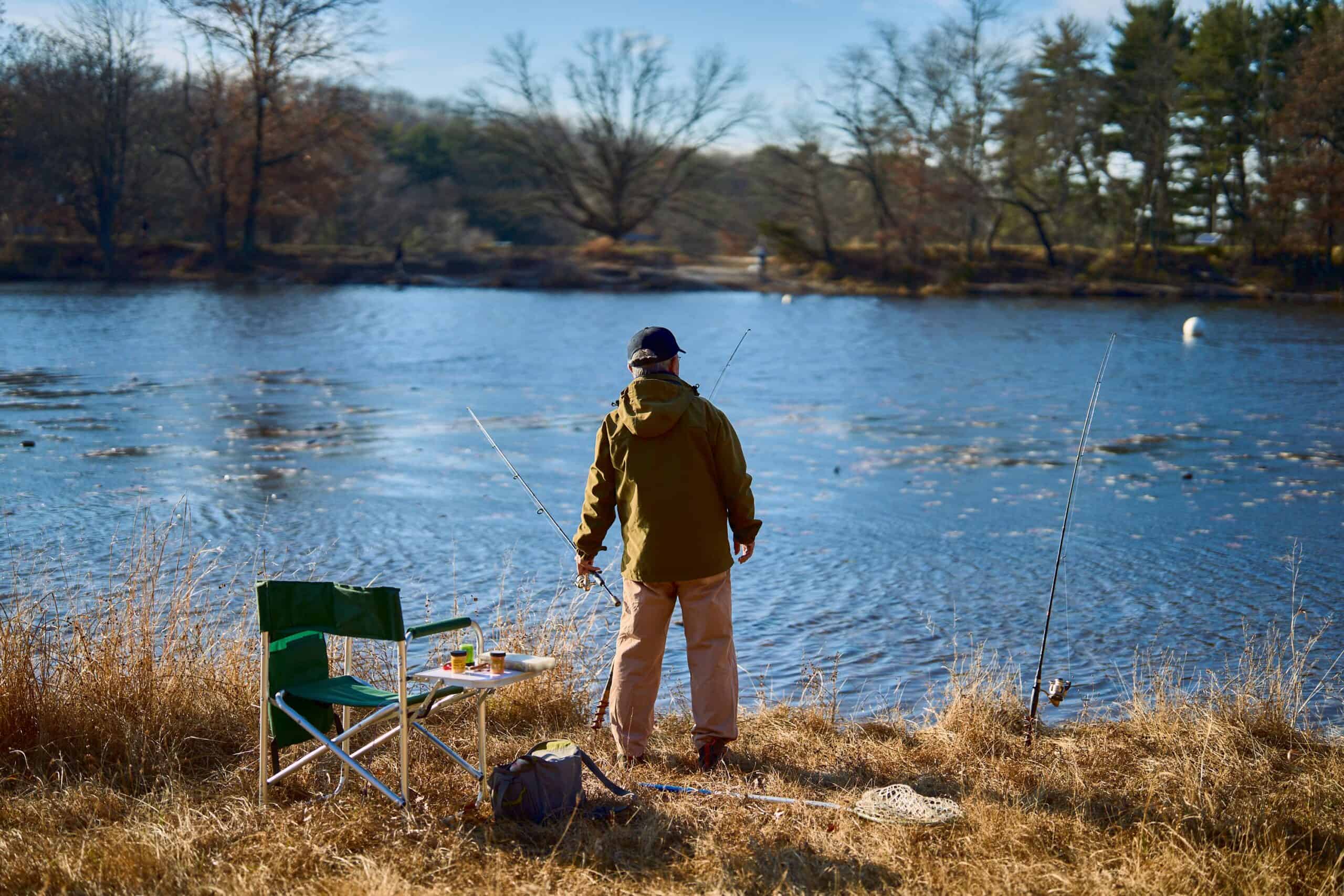
Walk up to an unfamiliar lake with no fish-finder, no local knowledge, and a few hours to figure it out, and the question becomes simple but hard: where are the fish? The lake might look like a uniform sheet of water from shore, but it’s actually a layered habitat with specific locations that hold fish and vast areas that don’t. The difference between productive angling and frustrating wading is mostly about knowing where to cast.
This guide walks through the principles for finding fish in any lake. The specifics vary by lake type, season, and target species, but the underlying logic stays consistent: fish hold where food, cover, and conditions all converge. Once you understand the framework, an unfamiliar lake becomes much less intimidating.
Key Takeaways
- Fish concentrate around structure (rock, wood, vegetation, depth changes), edges (where habitats meet), and conditions favoring their species (temperature, oxygen, light)
- Spring and fall fish are typically shallower; summer and winter fish are often deeper
- Reading the visible surface for clues (wind, current, vegetation, baitfish activity) reveals more than most beginning anglers realize
- Most lakes have a small percentage of “high-percentage” spots that hold most of the catchable fish; finding those spots matters more than fishing intensity in unproductive water
Where Fish Actually Spend Their Time
Fish don’t distribute evenly across a lake. They concentrate in specific areas that offer the things they need: food, cover from predators (or in the case of large predators, ambush positions), appropriate water temperature, dissolved oxygen, and the right depth for their species and the conditions.
The general principles:
Food drives location. Game fish go where prey concentrates. Prey concentrates around structure, edges of vegetation, and where water characteristics shift. Knowing where the food is tells you where the fish will be.
Structure attracts. Anything that breaks up uniform water (rocks, sunken logs, weed beds, depth changes, docks, points, humps) attracts fish. Structure provides ambush points for predators and hiding places for prey, and the combination concentrates fish.
Edges concentrate. Where two different habitats meet (shallow flat meeting deep drop, weed bed ending at open water, river current meeting still lake water), fish often concentrate. Edges have characteristics of both adjacent areas plus the activity of transitions.
Conditions filter species. Different species prefer different temperature ranges, oxygen levels, depths, and bottom types. Cold-water species hold in cooler depths in summer; warm-water species spread shallower. Knowing your target species’ preferences narrows the search.
The combination of these factors means that on most lakes, a relatively small percentage of the total area holds most of the catchable fish at any given time. Finding those areas is the core skill.
What to Look For: Visible Clues
Standing at the shore or in a boat looking at the water, several visible features tell you where fish are likely to be:
Vegetation. Weed beds, lily pads, reeds, and aquatic plants in general hold prey and provide cover. Edges of weed beds are typically more productive than the inside of dense beds. Sparse vegetation often outperforms dense vegetation because fish can move through it more easily.
Wood. Fallen trees, brush piles, stumps, and any submerged wood attract fish. Large fallen trees with branches and complexity are particularly attractive. Even isolated stumps or branches can hold fish.
Rock and structure. Boulder fields, rocky points, ledges, and rock piles attract many species. Rock provides crevices for prey and ambush spots for predators. Rocky areas also often hold crayfish, a major prey item for many game fish.
Points and humps. A point of land extending into the water usually continues underwater as a structural feature. Underwater humps (high spots surrounded by deeper water) often hold fish, especially during low-light periods.
Inlets and outlets. Where streams enter or leave the lake, water characteristics differ from the main body. Current, temperature differences, and concentrated baitfish all attract game fish.
Bay versus main lake. Bays warm faster in spring, hold weed growth, and often hold spawning fish in season. Main lake areas hold fish that prefer cooler water or open structure. Different bays often have different productive characteristics worth learning.
Drop-offs and ledges. Where shallow water meets a sudden depth change is one of the most productive structure types. Fish use these as travel routes and feeding stations.
Surface Clues
Even without electronic fish finding, the surface tells you a lot:
Baitfish activity. Schools of baitfish (often visible as small surface disturbances or “nervous water”) attract predators. Large birds (gulls, herons, kingfishers) feeding on bait often signal predator activity below.
Surface feeding. Swirls, splashes, jumping baitfish, or visible predator strikes show where active feeding is happening. Cast to active fish whenever you see them.
Surface scum lines and current breaks. Wind-driven scum lines often mark current boundaries that concentrate plankton, baitfish, and predators. Casting along these lines often produces strikes.
Wind blowing onto a bank. Wind pushes surface water (and the plankton, baitfish, and lighter detritus on it) toward downwind shores. Predators follow the prey. Windy banks often outproduce sheltered ones for this reason.
Surface color changes. Lighter water often means shallower or sandy bottom; darker water often means deeper or muddier. Color transitions often correspond to depth or substrate changes that hold fish.
Floating debris and weed lines. Floating mats of weeds or debris attract bait and provide cover. Cast under and around these features.
For more on reading visible water features, see our companion article on how to read water when fishing.
Depth and Season
Where fish hold by depth varies dramatically by season and species. The general patterns:
Spring. As water warms, fish move shallow. Many species spawn in shallow water in spring; even non-spawning fish often feed in shallows during warming conditions. Sunny shallow bays and warming shorelines are productive. The pattern shifts over the season as the spawn progresses.
Summer. Warmer surface water and brighter light push many species deeper during midday. Early and late, fish move shallow to feed. Mid-depth fish (around the thermocline in deeper lakes) are often the most accessible. Shallow shaded cover holds fish during high-light hours.
Fall. Cooling water often draws fish shallow again. Bass and similar predators often feed actively in fall, putting on weight before winter. Shallow flats can be productive throughout the day in stable autumn conditions.
Winter. Cold water slows metabolism. Fish hold deeper, feed less, and concentrate in specific zones. Ice fishing pursues fish in their winter holding patterns. Open-water winter fishing requires slow presentations to fish that are essentially dormant.
For the related effects of water temperature on fish behavior, see how water temperature affects fishing.
Reading the Bottom
What’s on the bottom of the lake often matters as much as what’s at the surface.
Hard bottom (rock, sand, gravel). Holds different species than soft bottom. Bass, walleye, and smallmouth often prefer harder bottoms. Crayfish populations on rocky bottoms attract predators.
Soft bottom (mud, silt). Holds catfish, panfish, and certain other species. Vegetation often grows on soft bottoms. Wormy bottoms are productive for certain forage.
Transitions. Where bottom type changes (rock to sand, hard to soft, vegetated to bare), fish often concentrate. These transitions create edge effects that draw both prey and predators.
Slope. The angle of the bottom matters. Steep drops hold fish differently than gradual slopes. Fish often hold on the breakline between shallow flat and deeper drop-off.
Submerged structure. Old roadbeds, fence lines, stumps, sunken trees. Anything that breaks up the bottom creates structure. Maps and locals often know about these features even when they’re not visible from the surface.
Without electronics, you can sometimes feel bottom changes by dragging a lure across the bottom. Different substrates feel different through the rod tip. Snags and changes in retrieval feel often correspond to structure worth fishing more carefully.
📑 Recommended Read: Electronics dramatically reduce the time it takes to find fish on an unfamiliar lake. A fish finder reveals what’s below the surface in ways no amount of surface reading can match. Check out our tested breakdown of the Best Fish Finders for Beginners for options that show structure, depth, and fish location at angler-friendly price points.
Different Lake Types
Different lakes have different productive patterns based on their basic characteristics.
Natural deep lakes. Often clearer water, fewer weeds, more rock structure, and significant depth variation. Fish tend to follow defined patterns related to depth and structure. Electronics help substantially.
Reservoir lakes. Created by dams. Often have old creek channels, flooded timber, and varied bottom types. Major structure features are often related to the original pre-flood terrain. Old maps showing pre-flood roads, towns, and creek channels are valuable.
Natural shallow lakes. Less depth variation, more weed growth, more uniform conditions. Subtler structure differences matter more. Weed bed patterns, slight depth changes, and inlet/outlet areas are key.
Farm ponds and small lakes. Limited structure, often very fishable because fish concentrate in the few available holding spots. Reading even small features (a single sunken log, a small point) produces results.
Mountain lakes. Often clear, cold, with sparse vegetation. Trout-dominated. Different rules apply. Productive water is often defined by inlet streams, drop-offs, and specific cover types.
Specific Patterns Worth Knowing
Wind-blown banks. Wind pushing into a shoreline concentrates plankton, baitfish, and predators. A wind-blown bank often outproduces the sheltered side of the same lake on the same day.
Mid-lake humps. Underwater high spots surrounded by deeper water are classic productive structure. Often hold fish during summer midday when shoreline fish are inactive.
Creek channels in reservoirs. The original stream channels that were flooded when the lake was created remain as underwater highways. Fish use these as travel routes and feeding stations.
Points. A point of land continues underwater. The combination of structure, depth change, and current break often holds fish. Both ends of points (shallow tip, deeper transition) can be productive.
Boat docks. Permanent docks provide shade, structure, and ambush points. Often productive throughout the day, especially during high-sun summer hours.
Inlets and incoming streams. Fresh water, lower temperature, and concentrated bait often draw fish. Particularly productive in summer when stream water is cooler than the lake.
Outlets and dam areas. Current breaks, depth, and concentrated baitfish often make these productive. Fish often hold just above the actual outflow.
Standing timber. Trees left standing when a reservoir was flooded provide vertical structure that attracts fish. The vertical dimension lets fish hold at various depths.
How to Find Fish When Nothing’s Obvious
Sometimes you arrive at a lake with no obvious structure visible from the shore. Several approaches help:
Cover water efficiently. Don’t anchor in one spot. Move and probe different depths, different structure, different banks. Mark productive areas mentally for return visits.
Use search lures. Lures that cover water (spinnerbaits, crankbaits, jerkbaits) help locate active fish. Once you find biters, you can slow down and work the area thoroughly.
Read lake maps. Most lakes have published depth maps. Many fishing apps include detailed maps. Even without electronics, knowing where the deep water is, where the channels run, and where the structural features are dramatically narrows the search.
Ask locals. Bait shops, fishing forums, and local anglers know more about specific lakes than any general guide can teach. A brief conversation with a local often saves hours of search time.
Watch other anglers. If other anglers are catching fish, observe what they’re doing and where. Position yourself in similar conditions when respectful spacing allows.
Follow the birds. Diving birds, herons, and other fish-eating birds locate baitfish that attract predators. Where they’re working, fish are usually below.
Common Mistakes and How to Avoid Them
Casting in random spots. The biggest beginner mistake. Even on a featureless-looking lake, some spots are productive and others aren’t. Pick water with reasons to expect fish.
Staying in one spot too long. Most productive spots produce relatively quickly when fish are active. If thirty minutes of careful fishing produces nothing, the spot probably isn’t holding fish today.
Ignoring depth. Fishing surface-level lures over twenty-foot water in midsummer often misses all the active fish. Knowing what depth fish are using is essential.
Treating all structure as equal. Some types of structure (drop-offs, points, weed edges) consistently outproduce others (uniform flat sand bottom). Prioritize high-percentage structure when time is limited.
Skipping the windy bank. Wind looks like a problem but often signals where fish are. Fish productive wind-blown shores rather than sheltering on the calm side.
Not adjusting for time of day. Productive spots change with light conditions. The dawn spot may not produce at noon. Move with the conditions.
Ignoring small features in featureless water. A single sunken stump in a flat shallow bay may be the only structure in significant area. Such features often concentrate disproportionate fish.
Not learning the lake. Returning to the same lakes repeatedly and learning their patterns produces much better results than constantly fishing new water. Local knowledge compounds.
Frequently Asked Questions
What’s the most productive structure type? Varies by lake and species. For bass, weed edges and drop-offs are reliable. For walleye, hard bottom transitions and depth breaks. For trout, inlets and rocky points in cold water. The “most productive” depends on what you’re after.
How do I find fish without electronics? Read surface features, study lake maps, ask locals, and learn to recognize productive structure from shore. Many anglers caught fish for centuries before fish finders existed.
Should I fish shallow or deep? Depends on season, time of day, weather, and species. Spring and fall often favor shallow. Summer midday often favors deep. Dawn and dusk often favor shallow regardless of season. Match the variables to find the productive zone.
Why is fishing better near vegetation? Vegetation holds prey (insects, small fish, crayfish), provides cover for both predators and prey, oxygenates water, and creates edges where productive fishing happens. Most lake ecosystems concentrate activity around vegetation.
How much area holds fish on a typical lake? Often a small fraction. Many lakes have most of the catchable fish concentrated in maybe 10-20% of the total water area. Finding that smaller area is most of the challenge.
Does the moon phase affect where fish hold? Less than time of day, season, and structure. Solunar theory suggests certain moon phases produce more active feeding; evidence is mixed. The fundamental location factors (food, cover, conditions) generally outweigh lunar considerations.
How quickly can I learn an unfamiliar lake? A few productive trips usually teach the basic structure of a lake. Becoming truly skilled at a specific lake often takes a season or more of consistent fishing. Local anglers who’ve fished a lake for years know things that take a long time to figure out independently.
