
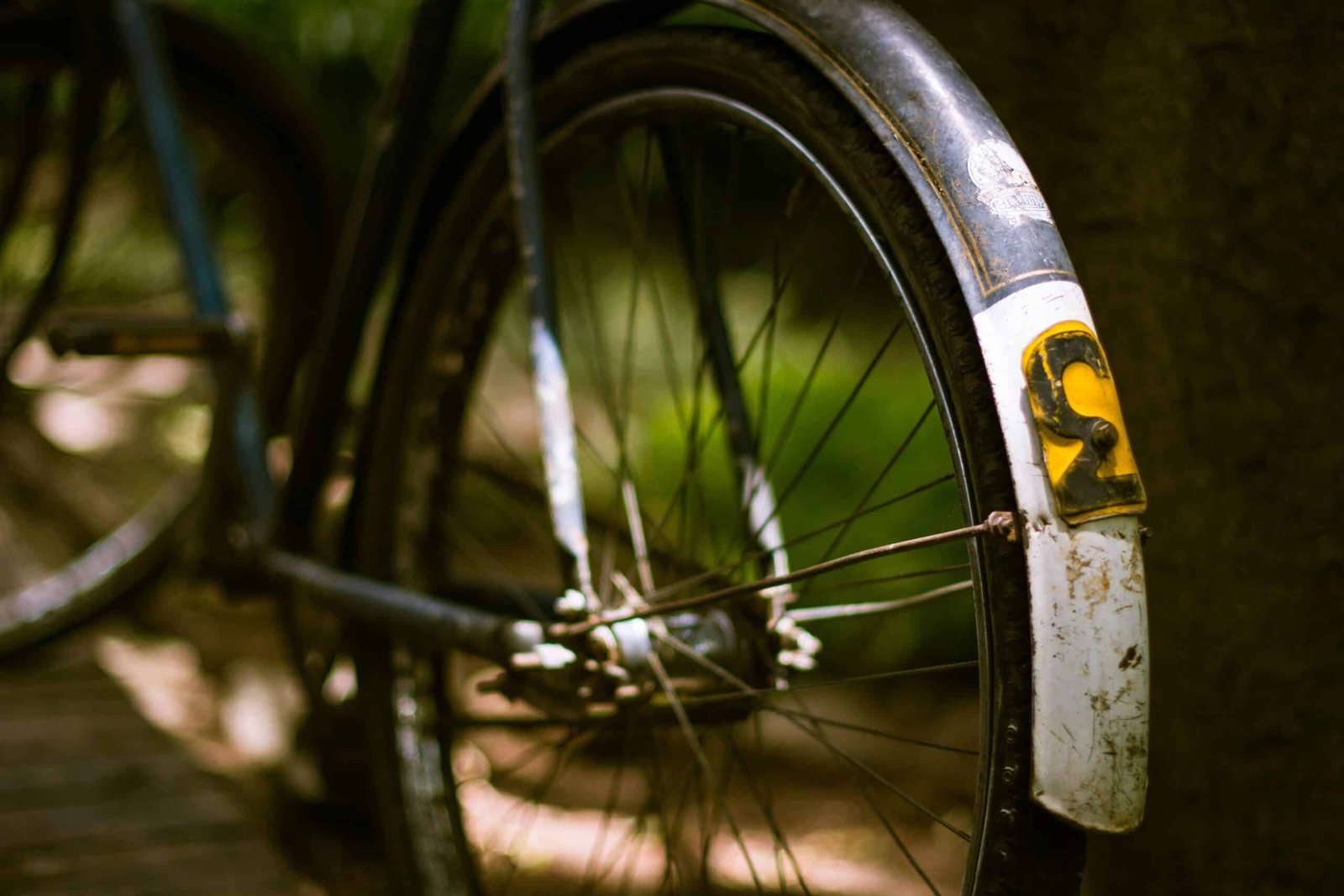
The best bike fenders and mudguards are the ones you leave fitted, because the set that comes off every dry weekend ends up in a drawer by March. Most riders buy for the worst day of the year and then live with the compromise on every other one.
Our pick for commuting is a full-coverage pair with stays, since nothing else keeps a spray stripe off your back. Trail riders want the opposite: a fork-crown guard and a seatpost mudguard that clip on in seconds and weigh almost nothing. If your frame has no eyelets, the clip-on route is the only route, and it works better than its reputation suggests.
The thing that decides most of this is not the fender at all. It is whether your frame has mounting points and how much tire clearance is left once a wide tread is in there.
| Option | Coverage | Needs Eyelets | Fit Time | Best Situation |
|---|---|---|---|---|
| Full-coverage with stays | Most | Yes | Slow | Commuting, touring |
| Clip-on quick-release | Moderate | No | Seconds | No mounting points |
| Fork-crown guard | Face and shock | No | Minutes | Mountain biking |
| Seatpost mudguard | Back only | No | Seconds | Trail and gravel |
| Downtube guard | Frame and drivetrain | No | Minutes | Wet, gritty trails |
| Mounting hardware | Not applicable | No | Varies | Awkward frames |
How We Picked
We sorted by what the fender attaches to, because that is the constraint riders hit first and the one no amount of money solves. Eyelets, no eyelets and suspension forks are three different problems.
Then we weighted rattle and rub, since those are the reasons a fitted mudguard gets removed again rather than any failure of coverage.
We have not ridden these through a winter, so nothing here reflects durability we observed. Clearance varies so much between frames and tire widths that the measurement on your own bike is the one that counts.
1. Full-Coverage Fenders With Stays, Best Overall
Why It Stands Out
A proper mudguard that wraps most of the wheel and bolts to eyelets keeps water off your back, your feet and the person behind you. Nothing partial comes close, because spray leaves the tire well before the point a short guard starts.
Fitted once and left alone, it also stops grit reaching the drivetrain, which quietly saves money.
Worth Knowing
These need frame eyelets, decent tire clearance and patience with the stays. Fitting is a half hour job the first time and worth doing slowly.
A stay touching a tire will wear through it, so check clearance at full inflation with the tread you actually run. Mountain bike tires vary enormously in width for the same stated size.
This suits commuters, tourers and anyone riding in the wet regularly. Skip it on a frame with no mounts. Best for: actually staying dry.
2. Clip-On Quick-Release Fenders, Best Without Eyelets
Why It Stands Out
Strap or clamp mounted fenders fit frames with no provision at all, and come off in seconds when the forecast changes. For a bike that is a commuter on Monday and something else at the weekend, that matters more than coverage.
Modern designs cover far more of the wheel than the flimsy clip-ons people remember.
Worth Knowing
Straps loosen and plastic flexes, so these rattle more than a bolted set. Check the fixings every few rides.
Coverage is still shorter at both ends, which means wet feet in heavy rain.
This suits frames without eyelets and bikes with two jobs. Skip it if you ride in the wet daily. Best for: fenders on a bike that was not designed for them.
3. A Fork-Crown Guard, Best for Mountain Biking
Why It Stands Out
A short guard zip-tied or bolted to the fork crown catches the spray that would otherwise arrive in your eyes and all over the fork seals. It weighs next to nothing and does not interfere with suspension travel.
Keeping grit off the stanchions is the part that pays for itself in fork servicing.
Worth Knowing
Coverage is deliberately minimal, so this is about your face and your fork rather than staying dry. Fit is fork specific, and a universal one often needs trimming.
Some designs block airflow to the brake, which matters on long descents.
This suits trail and enduro riding in wet conditions. Skip it on a rigid commuter. Best for: keeping mud out of your eyes and your fork seals.
4. A Seatpost Mudguard, Best Quick Fix
Why It Stands Out
A clamp-on rear guard goes on any seatpost in under a minute and stops the stripe up your back, which is the single most noticeable thing a fender does. For gravel and trail bikes it is the whole solution most riders want.
It also packs into a bag when the trail dries out.
Worth Knowing
It covers only the rear, so your feet and drivetrain stay exposed. On a dropper post it also has to clear the full travel.
Check that before fitting, since a guard that fouls at full drop is a problem mid-descent. Dropper posts differ in how much post is left exposed.
This suits trail, gravel and anyone wanting one fender only. Skip it as rain protection. Best for: the cheapest fix for the most obvious problem.
5. A Downtube Guard, Best Drivetrain Protection
Why It Stands Out
A guard strapped under the downtube blocks the rooster tail the front wheel throws back at your bottom bracket, chain and shock. That is where grit does expensive damage rather than merely making a mess.
It also protects paint from stone chips, which is a side benefit riders notice later.
Worth Knowing
Mud packs behind a poorly fitted guard and stays there, holding moisture against the frame. Choose one that sheds rather than traps.
Keeping the drivetrain clean still takes work, and chain lube and cleaning covers that side.
This suits wet, gritty trail riding. Skip it on a road commuter. Best for: protecting the parts that cost money.
6. Mounting Hardware and P-Clips, Best Problem Solver
Why It Stands Out
P-clips, spacers, longer stays and rubber-lined brackets let a proper fender onto a frame the manufacturer never intended to take one. A few pounds of hardware turns an impossible fit into a tidy one.
It is also what stops rattles, since most noise comes from a stay with nothing damping it.
Worth Knowing
Clamping anything to a carbon frame needs care and a torque figure rather than enthusiasm. Rubber lining is not optional there.
Doing this properly is bench work rather than a roadside job, and a bike repair stand makes the difference.
This suits awkward frames and anyone chasing a rattle. Skip it if your bike has proper eyelets. Best for: making a good fender fit a difficult bike.
What to Look For in Bike Fenders and Mudguards
Clearance measured with your tires on
Stated frame clearance assumes a tire that may be narrower than the one you run, and fender width has to fit inside what is left. Measure at the tightest point rather than trusting a size chart.
Mounting that matches your frame
Eyelets mean you can run a full set; no eyelets means clip-on or P-clips. Working this out before ordering saves a return.
Something that damps the stays
Rattle is the main reason mudguards come back off, and rubber grommets or lined clamps fix most of it. A silent fender stays fitted.
Coverage honest about the conditions
A seatpost guard in a downpour will not keep your feet dry and was never going to. Decide whether you want to stay clean or stay dry, because they ask for different hardware, in the same way mountain bike shorts and a rain layer solve different halves of the same ride.
Full Fenders Against Minimal Guards
Full fenders keep you dry
Wrapping most of the wheel is the only way to stop spray at the source, and for daily riding in wet weather there is no substitute. The costs are weight, fitting time and a frame that has to accept them.
Minimal guards keep the bike working
Fork crown and downtube guards protect seals, bearings and your eyes while leaving the bike feeling unchanged, which is why trail riders fit them and nothing else. Most people with two bikes end up running full fenders on one and clip-ons on the other, the same way they keep separate gloves for summer and winter.
Common Misconceptions
That clip-ons are all useless
The reputation comes from thin plastic strap-ons of twenty years ago. Current designs cover a good deal of the wheel and stay put when fitted properly.
That a rear guard is enough
The front wheel throws water at your feet, your drivetrain and your face, and the rear only protects your back. One guard solves the visible half of the problem.
That fenders slow you down meaningfully
The weight is small and the aerodynamic penalty is irrelevant at commuting speeds. Arriving dry is worth more than any of it.
That they replace cleaning the bike
Guards reduce how much grit reaches the drivetrain, not how often it needs attention. Wet-weather riding still means regular maintenance, and trailside tools cover what goes wrong between services.
Fitting Them Without Regret
Spin the wheel and listen
Any contact between a stay and a tire will wear a groove in the casing, and the sound gives it away immediately. Do this before the first ride rather than after.
Check clearance under compression
A guard that clears at rest can foul when the suspension or a dropper is at full travel. Push the bike through its range with the fender fitted.
Mind what else lives on the frame
Bags, lights, pumps and bottle cages all compete for the same tubes and eyelets. Frame bags and storage and mountain bike lights often need rearranging once a fender goes on, and a frame-mounted pump is usually the first casualty.
Remember the car rack
Fenders foul some clamp-style carriers and get bent by others. Bike racks for cars vary a lot in how they hold a bike, and a quick-release guard is the easy answer if yours clamps the frame.
Worth reading next are waterproof phone cases and pouches, since the thing a fender cannot protect is whatever is mounted on your bars in the rain.
Bike Fender FAQ
What are the best bike fenders and mudguards
Full-coverage fenders with stays are the best choice for commuting if your frame has eyelets, because nothing else keeps you dry. Mountain bikers are better served by a fork-crown guard plus a seatpost mudguard, and frames without eyelets want clip-on quick-release fenders.
Can I fit fenders without mounting eyelets
Yes, with clip-on designs or by using P-clips to create mounting points on the frame tubes. Rubber-lined clips are essential on carbon.
Will a fender rub my tire
It can if clearance is tight or a stay is misaligned, and that will wear through the casing over time. Spin the wheel after fitting and listen for contact.
Do I need front and rear
For staying dry, yes, because the front wheel is what soaks your feet and drivetrain. A rear-only guard handles the stripe up your back and little else.
Why do mudguards rattle
Almost always because a stay or clamp has nothing damping it against the frame. Rubber grommets, lined clips and a proper torque setting fix most cases.
Are fenders worth it on a mountain bike
A fork-crown guard is, because keeping grit off the stanchions reduces fork servicing. Full fenders rarely suit trail bikes, where clearance and mud shedding matter more.
Will they clear a dropper post at full travel
Not always, and a seatpost guard that fouls at full drop is worth catching before a descent. Cycle the post through its range with the guard fitted.
How much coverage do I actually need
That depends on whether the goal is clean clothes or dry ones. Staying clean needs a rear guard; staying dry needs full coverage front and back.
