
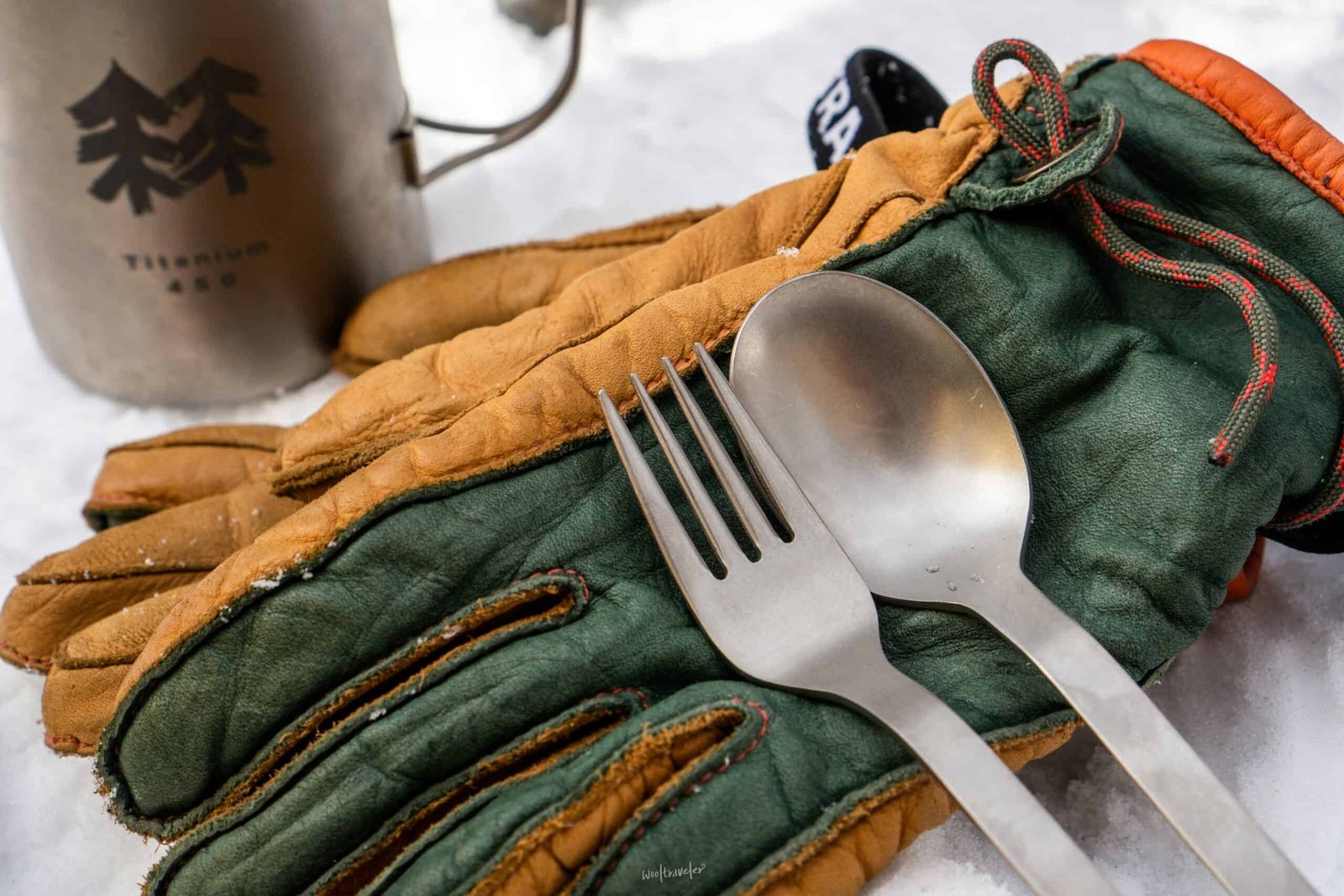
The best camping utensils and sporks are the ones that match how you cook, because a backpacker and a car camper want almost nothing in common here. One needs a single titanium spoon. The other needs plates that survive a cooler lid.
Cookware roundups usually gloss over this. A pot set with a plastic spork in the box covers neither case properly.
Our guides to camp cookware sets and camping cookware cover what you cook in, and this covers what you eat with.
Quick Verdict
A titanium long-handled spoon is the single best buy for anyone eating from a pouch or a pot. For car camping, a cased cutlery set plus enamel plates covers a family without plastic breaking in the bin. Skip the all-in-one gadget utensils, because the folding ones bend and the multi-tools do none of the jobs well.
Key Takeaways
- Handle length matters more than the spoon end for freeze-dried pouches.
- Titanium resists bending and does not transfer heat into your mouth.
- Folding utensils have a hinge that is the first thing to fail.
- Nylon or silicone tools are needed for nonstick pots, not metal ones.
- Collapsible bowls pack flat but hold heat poorly.
- One utensil per person goes missing, so count spares into the kit.
How We Picked
We split the list by how you travel, because weight is everything on foot and nothing from a car. A titanium spoon and a four-person enamel set belong in the same guide but never in the same pack.
Then we weighted what survives being washed badly in cold water, since that is the real durability test for anything you eat with outdoors.
We have not used these over a season, so nothing here reports on wear we measured. Material behavior is predictable enough that this is mostly a matter of matching the item to the trip.
1. A Long-Handled Titanium Spoon, Best Overall
Why It Stands Out
A long handle reaches the bottom corner of a freeze-dried pouch without putting your knuckles in the food, which is the whole problem this solves. Titanium weighs almost nothing and will not bend when you dig at a frozen corner of a meal.
It also stays cool enough to use straight out of a boiling pot, unlike a short steel spoon.
Worth Knowing
Titanium is thin and the edges can feel sharp against the lip on cheaper pieces. Check for a rolled or polished rim.
The handle length that reaches a pouch bottom is awkward in a small mug, which is the honest trade. Freeze-dried backpacking meals are what make it worth it.
This suits backpacking and anyone eating from pouches. Skip it if you always eat from a plate. Best for: reaching the bottom of the bag.
2. A Titanium Spork, Best Minimalist
Why It Stands Out
One piece of metal, a few grams, and it handles everything a solo cook eats on a trip. Nothing to lose, nothing to break and no hinge to seize up.
For ultralight walkers this is the whole cutlery kit and has been for years.
Worth Knowing
A spork is a compromise at both ends, with shallow tines and a shallow bowl. Soup is slow going and anything needing a fork is awkward.
Short sporks also put your hand inside a pouch, which is why the long spoon exists.
This suits solo ultralight trips and day packs. Skip it for family meals. Best for: the lightest single piece of cutlery that works.
3. A Cased Cutlery Set, Best for Groups
Why It Stands Out
Four sets of knife, fork and spoon in a zip case means nobody eats with a tent peg and nothing rattles loose in a crate. The case is the actual feature, because loose cutlery in a bin is how pieces disappear.
Stainless sets wash properly and last for years of weekends.
Worth Knowing
Weight rules these out for backpacking entirely. Thin stainless in budget sets also flexes more than kitchen cutlery does.
Storage is the recurring problem rather than the cutlery itself, and camp kitchen organizers and chuck boxes cover where it all lives.
This suits car camping and families. Skip it on foot. Best for: feeding four people without losing the forks.
4. Collapsible Bowls, Best for Packing Small
Why It Stands Out
Silicone bowls flatten to the thickness of a coaster and weigh very little, so two or three fit where one rigid bowl would go. They also wipe clean easily and do not scratch.
For anyone packing for several people on foot, this is the format that fits.
Worth Knowing
Silicone holds heat poorly, so food cools fast in cold weather. The flexible sides also make eating with one hand while standing awkward.
Thin ones split along the fold line eventually.
This suits groups walking in and tight packs. Skip it for winter meals. Best for: bowls that take up almost no space.
5. Enamel Plates and Bowls, Best for Car Camping
Why It Stands Out
Enamel over steel takes abuse that plastic does not, goes near a fire without warping and looks the same after five seasons. A stack of four weighs more than it looks but survives being thrown in a crate.
It also holds heat far better than silicone or thin plastic.
Worth Knowing
Chipped enamel exposes steel underneath and will rust from that point. Hot enamel also burns fingers, since the rim conducts.
They do not nest as tightly as plastic, so they take real space in the kit.
This suits car camping and base camps. Skip it for backpacking. Best for: plates that last years rather than seasons.
6. A Cooking Utensil Set, Best for Actual Cooking
Why It Stands Out
A spatula, a ladle and tongs sized for camp cooking do jobs that no spork attempts, and a nylon or silicone set protects nonstick surfaces. Anyone actually frying or serving at camp needs these rather than more cutlery.
Longer handles also keep your hands away from a fire or a windscreened stove.
Worth Knowing
Nylon softens and warps against a hot cast iron edge, so check the stated heat rating. Metal tools will strip a nonstick pot in one trip.
Washing them properly is the chore, and cleaning camp cookware covers doing it without a sink.
This suits anyone cooking rather than rehydrating. Skip it for pouch meals. Best for: cooking tools rather than eating tools.
Camp Eating Kit at a Glance
| Item | Weight | Suits | Lasts |
|---|---|---|---|
| Long titanium spoon | Very light | Pouch meals | Years |
| Titanium spork | Lightest | Solo ultralight | Years |
| Cased cutlery set | Heavy | Car camping, groups | Years |
| Collapsible bowls | Light | Groups on foot | Seasons |
| Enamel plates and bowls | Heaviest | Base camps | Years |
| Cooking utensil set | Moderate | Real cooking | Seasons |
What to Look For in Camping Utensils and Sporks
Handle length over clever ends
If you eat from pouches, length is the specification that changes the experience, not whether the end is a spoon or a spork. Anything under about seven inches puts your fingers in the food.
Material matched to your pot
Nonstick needs nylon or silicone, and titanium or stainless pots take metal without complaint. Getting this wrong ruins the pot rather than the utensil.
No hinges you depend on
Folding cutlery is appealing in a shop and loose within a season. A solid piece of metal has no failure mode worth worrying about.
Rims you can drink from
Thin titanium and stamped stainless both leave edges that press uncomfortably against the lip, and you notice it on every mouthful. A rolled or polished rim costs nothing extra and makes the difference between a piece you keep and one you replace.
Check the same thing on bowls, where a sharp rim is worse. Running a finger around the edge in the shop tells you immediately.
A plan for where it lives
Loose utensils migrate to the bottom of a crate or the bottom of a pack, which is how trips end up one spoon short. A case, a roll or a dedicated pocket solves it, and a table with storage gives the whole kitchen somewhere to sit.
Backpacking Against Car Camping
On foot you want one item
A single long titanium spoon eaten straight from the pot or pouch means no plates, no washing up and nothing else to carry. Everything else in this list is weight you would rather spend on food, and camp stoves for backpacking are built around that same logic.
From a car you want a kitchen
Plates, proper cutlery and cooking tools make camp food feel like cooking rather than refuelling, and weight stops mattering the moment the boot closes. Most people own both kits and pack whichever the trip calls for, the same way they treat car camping essentials generally.
Common Mistakes to Avoid
Buying metal tools for a nonstick pot
One trip with a steel spatula strips the coating and the pot is finished. Match the tool to the surface before anything else.
Relying on a folding spork
The hinge wobbles, collects food and eventually gives way mid-meal. Rigid is the whole point of carrying metal.
Forgetting something to drink from
Cutlery lists get written and mugs get forgotten, and a pot of coffee needs somewhere to go. Camping coffee makers and camping water containers cover the drinking side.
Packing exactly enough
Something gets dropped in the dirt or left on a log every trip. One spare spoon costs almost nothing and saves a meal.
Keeping It Clean in the Field
Wipe before you wash
Getting the bulk off with a scrap of paper or a slice of bread means less water and less greywater to deal with. It also stops food drying onto titanium, which it does quickly.
Keep washing water away from camp
Food scraps near a tent invite animals, which is a bigger problem than a dirty spoon. Storing food at a campsite covers that, and camping coolers matter for what you have not cooked yet.
Dry everything before packing
Damp cutlery in a closed case grows something unpleasant by the next weekend, and chipped enamel rusts from any moisture it holds. A minute in the air beats scrubbing later.
Recommended Reading
Worth reading next: hiking snacks and trail food, which is most of what you eat without needing any of this.
Camping Utensil FAQ
What are the best camping utensils and sporks
A long-handled titanium spoon is the best single purchase for backpacking, and a titanium spork is the lightest option if you want one piece of cutlery and nothing else. Car campers are better served by a cased stainless set with enamel plates.
Is titanium worth the price over plastic
For anyone going out regularly, yes, because it will not bend, melt or snap and it lasts for years. A plastic spork is fine for occasional use and weighs about the same.
Why does handle length matter
Freeze-dried meal pouches are tall and narrow, so a short utensil means your fingers go in with the food. A longer handle reaches the corners without the mess.
Do I need plates and bowls at all
Not for backpacking, where eating from the pot or pouch saves weight and washing up. They matter once you are cooking for several people and serving from a pan.
Are collapsible bowls any good
They pack brilliantly and hold heat badly, which is the trade. In cold weather food cools noticeably faster than in a rigid bowl.
What utensils will not damage a nonstick pot
Nylon and silicone, with a heat rating high enough for your stove. Metal of any kind will mark a coated surface eventually.
How do I stop losing spoons
Keep them in a case or roll rather than loose in a crate, and give them a bright color or a strip of tape. A spare costs less than going without.
Can I just use kitchen cutlery
You can, and plenty of car campers do, with the main cost being weight and the odds of losing something you care about. Handles are also shorter than camp use wants.
