
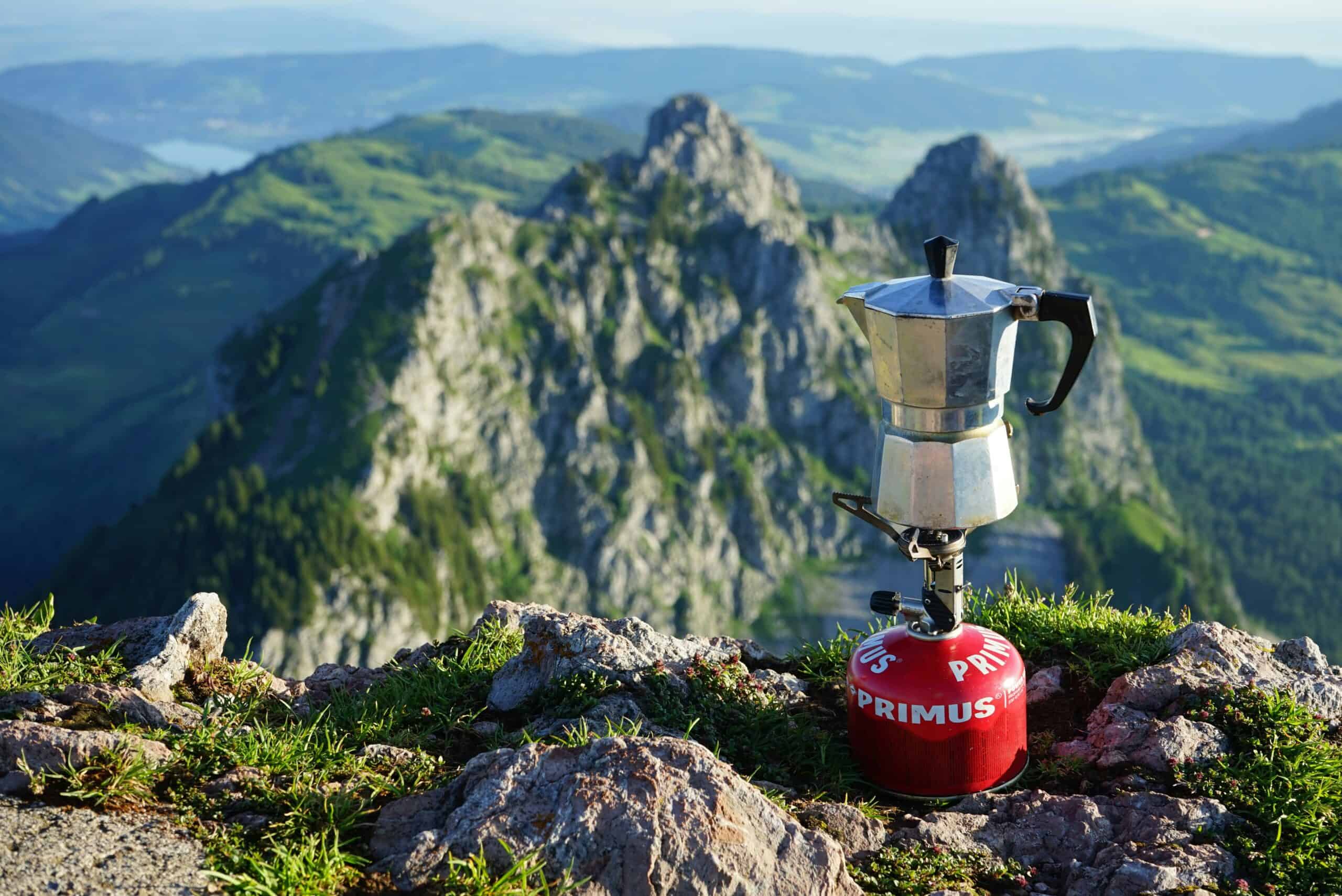
Camp coffee methods trade against each other on three things: how much they weigh, how much mess they leave, and how good the result is. Instant coffee wins on all of the first two and loses on the third. A french press reverses that. Everything in between picks a point on the same line.
The method that suits you follows from the trip rather than from taste. Car camping carries anything, so the question is what you enjoy. Backpacking counts grams and hates wet grounds in a pack, which is why pour-over and instant dominate on the trail regardless of what people drink at home.
Quick Verdict
Take a collapsible pour-over cone for backpacking, since it weighs almost nothing and the grounds go straight into a bag. Take a french press or percolator for car camping where cleanup is easy. Choose an aeropress-style press if you want the best cup you can reasonably carry.
Key Takeaways
- Grounds disposal matters more on the trail than brewing quality does
- Pour-over cones weigh least and need a filter you must not forget
- French press gives strong coffee and leaves wet grounds to deal with
- Percolators suit fires and groups, and they over-extract easily
- Instant has improved and remains the lightest option by a wide margin
- Integrated stove and press systems save space and lock you to one brand
How We Picked
Cleanup came first, since it is the part people underestimate. Wet grounds are heavy, they smell, they attract animals, and on a backpacking trip they travel out with you. Methods that produce contained, drainable grounds ranked above those that leave a slurry.
Packed weight and volume came second, weighted toward volume. A press that packs inside your cook pot costs no extra space, and a rigid cone that packs beside it costs real room in a full bag.
Water discipline settled the rest. Camp brewing uses water you carried or filtered, and methods needing a rinse between cups consume more of it. That matters on a dry trail and matters not at all at a campsite with a tap.
1. The Collapsible Pour-Over Cone
Why It Stands Out
A silicone cone folds flat, weighs almost nothing, and sits on top of any mug. Grounds go into a paper filter, and the whole filter lifts out and drops into a rubbish bag with no rinsing. For backpacking, this is the cleanest arrangement available.
Worth Knowing
You need filters, and forgetting them turns the cone into a useless piece of silicone. Reusable metal filters solve that and reintroduce the rinsing problem. Pour-over also needs a slow controlled pour, which a wide-mouth pot makes awkward.
Right for backpacking and anyone who values clean disposal. Skip it if you will not carry filters reliably.
2. The Camping French Press
Why It Stands Out
Full immersion brewing gives a stronger, heavier cup than pour-over, and camp versions use plastic or steel bodies rather than glass. Many double as the mug you drink from, which removes a piece from the kit.
Worth Knowing
Wet grounds at the bottom are the price. At a campsite you knock them into a bin. On a trail you scrape them into a bag and carry a wet mess. The plunger and screen also need rinsing, which costs water.
Right for car camping and basecamps with easy disposal. Skip it for minimal-water trips.
3. The Pressure Press System
Why It Stands Out
Pressing coffee through a filter under pressure produces a concentrated cup closer to espresso than to drip, and it does it in under a minute. For people who care about the coffee itself, this is the method that travels best without a machine.
Worth Knowing
More parts than a cone, and the plunger and chamber both need cleaning. The spent puck ejects as a compact disc rather than a slurry, which is genuinely better for disposal than a french press. Bulk is the main cost, since the chamber does not collapse.
Right for coffee-focused campers with room in the pack. Skip it if pack volume is tight.
4. The Stovetop Percolator
Why It Stands Out
A percolator sits on a fire or a stove and brews for a group in one vessel. Nothing to plunge, no filters to carry, and the enamel or stainless body handles being dropped and heated over flames for years.
Worth Knowing
Percolators recirculate water through the grounds repeatedly, which over-extracts and turns bitter if you leave it too long. Watching it is part of using it. They are also heavy and bulky, and the basket holds wet grounds that need emptying.
Right for groups, fires, and car camping. Skip it for solo trips or anything carried far.
5. Instant Coffee and Single-Serve Packets
Why It Stands Out
No equipment, no cleanup, no waiting. Pour hot water into a mug and drink. Modern specialty instant has closed much of the quality gap, and single-serve pour-over packets sit between instant and a full cone with no cone required.
Worth Knowing
Quality varies enormously by brand, and the cheap supermarket tins are what gave instant its reputation. Cost per cup on specialty instant runs high compared with ground coffee. The packaging is also waste you carry out.
Right for ultralight trips, fast mornings, and cold starts. Skip it if the ritual is part of why you camp.
6. The Integrated Stove and Brew System
Why It Stands Out
Systems combining a canister stove, a pot, and a press plunger boil and brew in one vessel. Pack space drops to a single unit, and boil times are fast because the pot and burner are matched. Morning coffee is often the deciding factor in whether to carry a stove.
Worth Knowing
You are buying into one manufacturer’s ecosystem, and the press attachment usually fits only their pots. The combined unit also means a failure takes out both cooking and coffee. Stove options generally sit in stove selection.
Right for people already committed to that stove system. Skip it if you own a stove you like.
Camping Coffee Methods at a Glance
| Method | Weight | Cleanup | Best for |
|---|---|---|---|
| Collapsible pour-over | Lightest with filters | Cleanest | Backpacking |
| French press | Moderate | Wet grounds | Car camping |
| Pressure press | Moderate, bulky | Compact puck | Coffee quality |
| Percolator | Heavy | Wet basket | Groups and fires |
| Instant | Almost nothing | None | Ultralight, fast starts |
| Integrated system | One unit | Moderate | Matched stove owners |
Matching the Method to the Trip
Backpacking multiple days
Weight and waste both compound. Pour-over with paper filters or specialty instant covers this, and both leave you carrying dry waste rather than wet grounds.
Car camping
Anything works, so pick on taste. French press, percolator, and pressure press all become reasonable when a car carries them and a bin takes the grounds.
Cooking for a group
A percolator brews several cups at once, where single-cup methods mean brewing repeatedly while the first person’s coffee goes cold. Volume matters more than refinement here.
Cold and early starts
Anything requiring a slow careful pour is unpleasant with numb hands before dawn. Instant, or a press you can operate wearing gloves, suits alpine starts better than a technique-dependent method.
Pour-Over Versus Press at Camp
Why pour-over wins on the trail
Grounds stay in a filter you lift out and bag. Nothing needs rinsing, the cone folds flat, and the whole system weighs less than a press. On a trip where you pack out everything, that disposal advantage decides it.
Why press wins at a campsite
A stronger cup, no filters to forget, and no pouring technique to get right while half awake. When a bin and a tap are nearby, the cleanup objection disappears and the press is simply better coffee.
Common Camp Coffee Mistakes to Avoid
Forgetting the filters
A pour-over cone without filters brews nothing. Keep a spare stack in the cook kit rather than the food bag, so they travel with the cone.
Burying grounds at camp
Coffee grounds attract animals and do not break down as quickly as people assume. Pack them out with the rest of your waste, which is easier with methods that produce a dry puck or a lifted filter.
Using boiling water straight off the stove
Water at a full boil scorches coffee and makes it bitter. Waiting thirty seconds off the flame is free and noticeably improves the cup.
Grinding too fine for the method
Fine grounds pass through a press screen and end up in the cup. Coarse grounds under-extract in a pour-over. Grind at home to suit whichever method you are carrying, and store it sealed, as covered in packing food and kit.
Related Reading
- stoves for boiling water
- keeping a drink hot after brewing
- coolers for milk and fresh food
- shelter for a slow morning
- light for pre-dawn starts
- winter camp kit generally
- where the cook kit sits in a pack
Related: insulated thermos flasks for hiking.
Frequently Asked Questions
What is the lightest way to make coffee camping?
Specialty instant, with nothing to carry beyond the packets. After that, a collapsible silicone pour-over cone with paper filters weighs very little and produces a noticeably better cup.
How do I dispose of coffee grounds outdoors?
Pack them out. Grounds attract animals and break down slowly, so burying them is not a solution. Pour-over filters and pressure press pucks are far easier to carry out than a french press slurry.
Does instant coffee taste acceptable now?
Specialty instant has improved substantially and bears little resemblance to supermarket tins. It costs considerably more per cup, and for many campers the weight saving justifies it.
Can I use a regular french press camping?
A glass one breaks. Camp versions use plastic or stainless bodies for exactly that reason, and many double as the mug, which removes an item from the kit.
What water temperature should I use?
Just off the boil rather than at it. Water at a rolling boil extracts harshly and tastes bitter, and waiting around thirty seconds after the stove goes off makes a clear difference.
Which method works best for a group?
A percolator, since it brews several cups in one vessel rather than one at a time. Watch it, because percolators recirculate and turn bitter if left running too long.
Recommended Reading
See our note on choosing a sleeping bag.
