
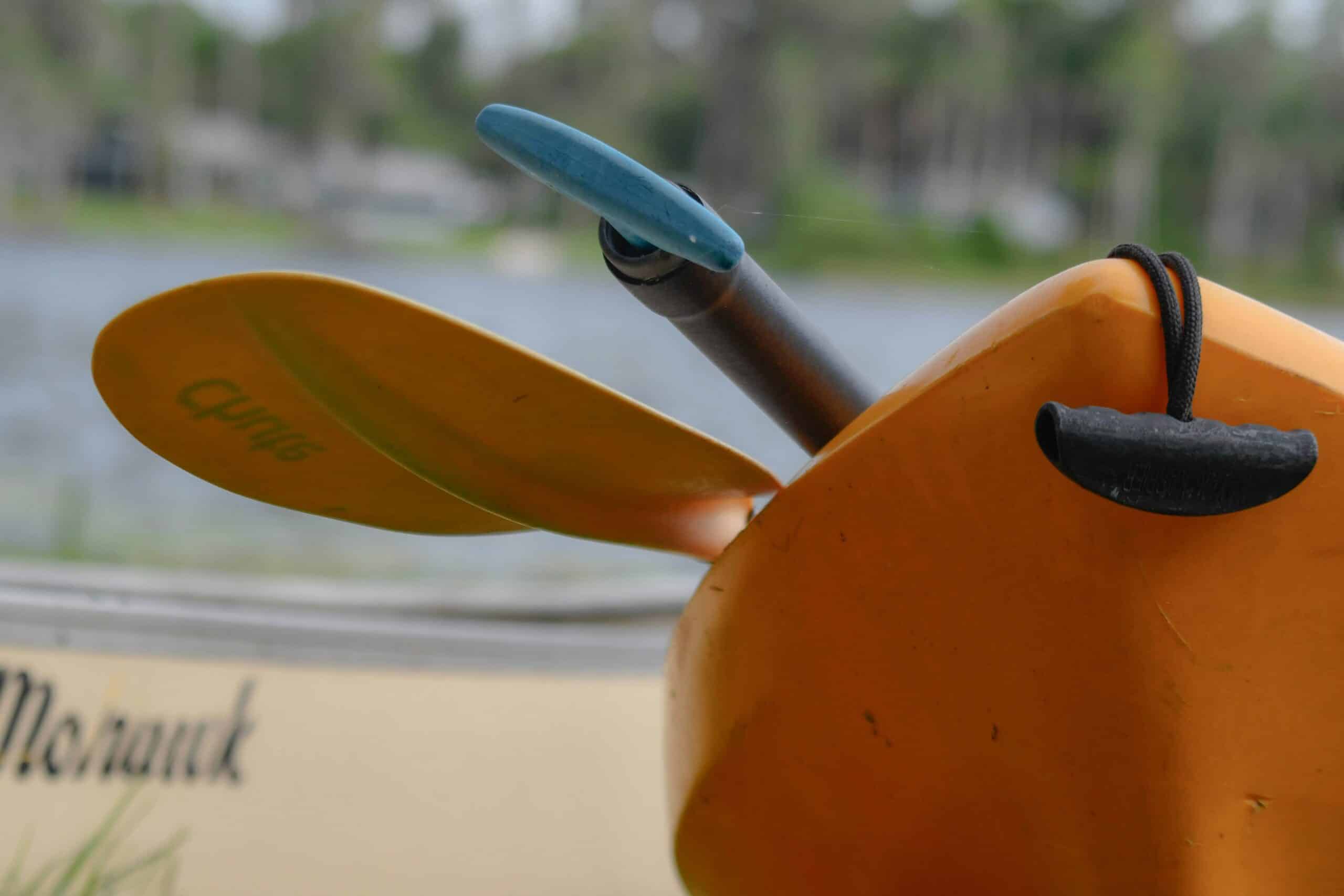
The best kayak paddles for beginners matter more than most new paddlers realize. While the kayak itself gets all the attention during initial purchase, the paddle determines stroke efficiency for every minute of every trip. Beginners with poor paddles work twice as hard for the same distance, develop shoulder fatigue faster, and often blame their kayak when the actual problem is the cheap paddle that came bundled with the kayak.
Most beginner kayak setups include a basic paddle that works adequately for first trips but reveals limitations within the first season. The included paddle is typically too heavy, sized incorrectly for the paddler’s height, or made from materials that flex inefficiently with each stroke. Upgrading to a quality paddle within the first season produces a noticeable improvement in trip distance, fatigue level, and overall enjoyment.
Quality beginner paddles solve three problems simultaneously. Proper length for your height and kayak width prevents the awkward stroke mechanics that cause shoulder pain. Lightweight construction reduces fatigue across longer trips, so you can paddle further before needing rest. Durable blade and shaft materials handle the inevitable scrapes against rocks, docks, and shorelines without cracking. Get those three traits right, and the paddle becomes invisible during use rather than a constant source of frustration.
If you’re building a beginner kayak setup more broadly, our best dry bags for kayaking and best fishing rods for beginners guides cover gear that pairs well with paddle selection.
What to Look for in a Beginner Kayak Paddle
Length must match your height and kayak width.
Paddle length depends on two factors that combine to determine the right size. Your height determines how far you can comfortably reach into the water. Your kayak’s width at the cockpit determines how much horizontal distance the paddle must cover to reach the water properly.
For recreational kayaks (28-32 inch beam) and average-height paddlers (5’5″ to 6’0″), a 220-230cm paddle works well. Taller paddlers need 230-240cm. Shorter paddlers need 210-220cm. Wider kayaks (touring, fishing, or tandem) require 230-250cm regardless of paddler height.
Going too short forces you to lean further forward and rotate harder to reach the water, which creates shoulder strain across longer trips. Going too long produces inefficient strokes that waste energy. Match length carefully, paddle sizing is the single most important specification for beginner comfort.
Weight matters more than beginners realize.
Paddle weight ranges from 26 ounces (premium carbon fiber) to 40+ ounces (basic aluminum). The 14-ounce difference seems small until you consider that beginners lift the paddle 1,000+ times per hour during active paddling. Across a 3-hour trip, the lighter paddle saves you from lifting the equivalent of 50 pounds of additional weight.
For first-time paddlers, weight differences become noticeable around the 1-hour mark of any trip. Lighter paddles let you paddle longer before fatigue forces breaks. Heavier paddles cap your practical trip distance even when other factors would let you continue.
Mid-range fiberglass paddles (30-34 ounces) balance weight and price for most beginners. Premium carbon paddles (26-30 ounces) provide noticeable benefits for longer trips but cost significantly more. Basic aluminum paddles (36-42 ounces) work for short trips under 2 hours, but limit longer outings.
Blade material affects efficiency and durability.
Paddle blades use three primary materials. Each balances cost, weight, and durability differently.
Plastic blades (polypropylene, nylon) handle abuse well but flex during each stroke, reducing efficiency. The flex means your paddling effort partially distorts the blade rather than moving the kayak forward. For beginners on short trips, the efficiency loss matters less than the durability advantage. Plastic blades survive scrapes against rocks and docks that crack fiberglass alternatives.
Fiberglass blades provide better stroke efficiency without the flex of plastic. The lighter weight reduces fatigue, and the stiffer construction transfers more energy to the water with each stroke. However, fiberglass cracks more easily than plastic when slammed against hard objects.
Carbon fiber blades offer the best efficiency and lightest weight, but cost dramatically more than alternatives. For dedicated paddlers planning to upgrade kayaks within the next few years, carbon investment makes sense. For typical beginners, fiberglass provides better value.
Shaft design affects daily comfort.
Paddle shafts come in straight or bent configurations. Straight shafts are simpler, cheaper, and work fine for most beginners. Bent shafts include ergonomic curves at the hand positions that align wrists naturally during paddle strokes.
For beginners experiencing wrist pain or planning long trips, bent shafts justify the price premium. For casual paddlers on shorter trips, straight shafts work adequately.
Beyond shaft shape, look for adjustable feathering, the ability to rotate one blade relative to the other. Feathering reduces wind resistance during the recovery stroke when the wind blows against the lifted blade. Most quality paddles include 0, 30, 45, 60, and 90-degree feathering options. Beginners typically use 0-degree (matched) or 60-degree feathering until they develop personal preferences.
The 5 Best Kayak Paddles for Beginners in 2026
#1, Werner Skagit FG IM Paddle
Best Overall Beginner Paddle | Price: ~$200
The Werner Skagit FG IM is the paddle that most kayak instructors recommend as the foundational beginner upgrade. It earns the top spot through fiberglass blade efficiency, lightweight construction at 32 ounces, durable build quality, and the price-to-performance ratio that makes it the standard recommendation for new paddlers ready to move past bundled paddles.
Why Werner Skagit Sets the Standard
Werner has built kayak paddles for decades, and the Skagit represents their entry into beginner-friendly pricing while maintaining the brand’s quality reputation. The fiberglass blades transfer power efficiently with each stroke, eliminating the energy loss that plastic blades produce through flex.
At 32 ounces, the Skagit sits in the lightweight range that most beginners can appreciate immediately. Compared to the 38-42 ounce paddles bundled with most beginner kayaks, the weight reduction translates to noticeably less fatigue during 2-3 hour trips. New paddlers should also read our guide to getting back aboard after a spill before heading out alone.
The aluminum shaft handles years of regular use without bending or developing weak points. While carbon shafts would shave additional ounces, the aluminum construction holds up better against the inevitable bangs against docks and boat ramps that beginners experience regularly.
Length options range from 210cm to 240cm in 10cm increments, covering all practical beginner sizing needs. The adjustable feathering provides 0, 60-degree left, and 60-degree right options, enough variety to develop preferences without overwhelming new paddlers with too many settings.
The trade-off compared to premium options is the aluminum shaft weight. Carbon shaft alternatives shave 4-6 ounces but double the price. For most beginners, the Skagit’s balance of weight, durability, and price provides better value than premium alternatives.
PROS:
- Fiberglass blades for efficient strokes
- 32-ounce weight reduces fatigue
- Werner’s brand reliability across decades
- Multiple length options for proper sizing
- Adjustable feathering settings
- Good balance of price and performance
CONS:
- Aluminum shaft heavier than carbon
- Limited feathering range
- Premium pricing versus budget alternatives
- Single-blade color per length
Best for: Most beginner kayakers, particularly buyers ready to upgrade from bundled paddles and committed to kayaking as a sustained hobby.
#2, Bending Branches Whisper Paddle
Best Mid-Premium Beginner Paddle | Price: ~$160
The Bending Branches Whisper is the established alternative to Werner that delivers comparable quality at slightly lower pricing. Fiberglass-reinforced nylon blades, a lightweight aluminum shaft, and Bending Branches brand reliability make it the right choice for buyers who want quality without paying the full Werner premium.
Quality Construction at Mid-Premium Pricing
The fiberglass-reinforced nylon blades blend the durability advantages of nylon with the efficiency benefits of fiberglass reinforcement. While not as efficient as pure fiberglass, the hybrid material handles rocky shorelines and dock impacts better than fiberglass alone.
At 35 ounces, the Whisper sits slightly heavier than the Werner Skagit but still meaningfully lighter than basic aluminum paddles. The weight difference becomes more noticeable on longer trips beyond 3 hours, where the Skagit’s lighter weight becomes preferable.
Bending Branches builds paddles in Wisconsin with a strong brand reputation across decades of kayak industry presence. Quality control matches Werner standards, and warranty support handles defects reliably.
Length options run from 220cm to 250cm in 10cm increments. The 220cm minimum makes the Whisper better suited to average-height and taller paddlers. Shorter paddlers (under 5’5″) may find the Werner Skagit’s 210cm option fits better.
The adjustable ferrule provides 0, 30, 45, and 60-degree feathering options, slightly more variety than the Skagit. The additional settings let intermediate paddlers fine-tune feathering once they develop preferences.
PROS:
- Fiberglass-reinforced nylon for durability
- Bending Branches brand reliability
- More feathering options than Skagit
- US-built quality control
- Slightly lower price than the Werner Skagit
- Good warranty support
CONS:
- Slightly heavier than Skagit
- 220cm minimum length excludes shorter paddlers
- Hybrid blades less efficient than pure fiberglass
- Less variety than the premium Werner line
Best for: Average-to-tall beginner paddlers who want quality construction at slightly lower pricing than Werner alternatives.
#3, Carlisle Magic Plus Paddle
Best Budget Beginner Paddle | Price: ~$80
The Carlisle Magic Plus is the budget paddle that delivers acceptable beginner function at the lowest practical pricing. Polypropylene blades, aluminum shaft, basic feathering options, and entry-level pricing make it the right choice for budget-conscious beginners or buyers testing kayaking before committing to premium gear.
Adequate Function at Entry-Level Pricing
The polypropylene blades handle abuse without cracking, but flex noticeably during each stroke. While the efficiency loss matters for serious paddlers, beginners on short trips often don’t notice the difference. The durability advantage means new paddlers can drag the paddle through rocky shallows and bang it against docks without immediate damage.
At 38 ounces, the Magic Plus weighs more than premium alternatives but stays manageable for trips under 2 hours. Beyond the 2-hour mark, beginners notice the weight difference compared to lighter paddles. For typical beginner outings, the weight stays acceptable.
Pricing at approximately $80 makes the Magic Plus accessible for budget-conscious kayakers or hobby-testing buyers. The investment limits financial risk if kayaking turns out to be a one-season interest. Should the hobby stick, upgrading to Werner or Bending Branches makes sense within the first year.
Length options range from 220cm to 240cm. While the range works for most beginners, the 10cm increments provide less precise sizing than premium alternatives offering 5cm increments.
The 0 and 60-degree feathering settings cover the most common configurations. More advanced feathering options aren’t included, but beginners rarely need them anyway.
PROS:
- Lowest price among quality beginner paddles
- Durable polypropylene blades
- Adequate for short trips
- Good for hobby-testing kayakers
- Aluminum shaft handles abuse
- Available at most outdoor retailers
CONS:
- 38-ounce weight causes fatigue on longer trips
- Polypropylene blades flex during strokes
- 10cm sizing increments are less precise
- Limited feathering options
- Lower brand prestige than Werner or Bending Branches
Best for: Budget-conscious beginners, hobby-testing kayakers, and short-trip paddlers who don’t anticipate long outings.
#4, Aqua Bound Sting Ray Hybrid Paddle
Best Carbon Hybrid Beginner Paddle | Price: ~$220
The Aqua Bound Sting Ray Hybrid combines a carbon fiber shaft with fiberglass blades to deliver near-premium performance without full carbon pricing. Lightweight 28-ounce construction, efficient blade design, and Aqua Bound brand reliability make it the right choice for serious beginners who want premium performance at moderate cost.
Premium Performance at Hybrid Pricing
The carbon fiber shaft saves 4-6 ounces compared to aluminum-shafted competitors. While carbon costs more than aluminum, the hybrid approach (carbon shaft + fiberglass blades) costs less than full carbon construction while providing most of the weight benefits.
At 28 ounces, the Sting Ray Hybrid sits firmly in the premium weight range. The 4-ounce reduction versus the Werner Skagit becomes noticeable across longer trips, allowing paddlers to maintain stronger strokes deeper into 4+ hour outings.
Fiberglass blades deliver efficient strokes without the flex of plastic alternatives. Aqua Bound’s blade shaping reduces wind resistance during recovery strokes, providing modest efficiency gains over basic blade designs.
Length options run from 210cm to 240cm in 10cm increments. The full range accommodates all practical beginner sizing.
Where the Werner Skagit serves most beginners well, the Sting Ray Hybrid serves committed beginners who anticipate paddling growth into longer trips and more frequent use. The investment makes sense when kayaking becomes a sustained hobby rather than occasional recreation.
PROS:
- 28-ounce weight reduces fatigue significantly
- Carbon shaft with fiberglass blades, a hybrid approach
- Aqua Bound brand reliability
- Efficient blade design
- Multiple length options
- Good for committed beginners
CONS:
- Premium pricing approaches the Werner premium tier
- The carbon shaft is more brittle than aluminum in a hard impact
- Limited color options
- Overkill for casual short-trip paddlers
Best for: Committed beginners planning sustained kayaking, longer-trip paddlers, and buyers who anticipate growing into more frequent use.
#5, Pelican Poseidon Kayak Paddle
Best Casual Beginner Paddle | Price: ~$60
The Pelican Poseidon is the casual recreational paddle for very budget-conscious beginners. Aluminum shaft, polypropylene blades, fixed length, and lowest pricing make it the right choice for occasional paddlers who don’t need premium features and want minimum investment.
Casual Recreation at Minimum Investment
Pelican manufactures both kayaks and paddles, and the Poseidon represents their basic recreational paddle for buyers who want functional gear without a premium investment. The aluminum shaft and polypropylene blade construction provides core paddle function at the lowest practical cost.
The fixed-length design (typically 220cm) eliminates sizing flexibility but reduces complexity for buyers who don’t want to research length specifications. While the fixed length works for average-height paddlers in average-width kayaks, it doesn’t fit shorter or taller paddlers as well as adjustable alternatives.
Beyond the 40-ounce weight, the polypropylene blades flex significantly during strokes, reducing efficiency further. For casual paddlers on calm water for short trips, the limitations matter less. For any serious paddling beyond occasional recreation, Poseidon’s limitations quickly become apparent.
The pricing at approximately $60 makes the Poseidon accessible for absolute budget-minimum paddler setups. Where the Carlisle Magic Plus represents the entry point of quality beginner paddles, the Pelican Poseidon sits below quality paddles in pure recreational territory.
Should the kayaking hobby stick, upgrading to Werner Skagit or Bending Branches Whisper within the first season makes a meaningful difference. The Pelican Poseidon serves as a starter paddle for testing the hobby without significant investment.
PROS:
- Lowest practical pricing
- Available at most retailers
- Adequate for occasional short trips
- Pelican brand reliability for the budget tier
- Simple fixed-length design
- Low-risk hobby testing
CONS:
- 40-ounce weight produces fatigue quickly
- Polypropylene blades flex significantly
- Fixed length limits sizing options
- Limited feathering settings
- Minimal upgrade path beyond initial use
Best for: Absolute budget-minimum buyers, very occasional paddlers, and hobby-testing kayakers who want the lowest possible investment.
Quick Comparison: Best Kayak Paddles for Beginners in 2026
| Paddle | Price | Weight | Blade Material | Best For | Score |
|---|---|---|---|---|---|
| Werner Skagit FG IM | ~$200 | 32 oz | Fiberglass | Most beginners | 9.5 |
| Aqua Bound Sting Ray Hybrid | ~$220 | 28 oz | Fiberglass + carbon shaft | Committed beginners | 9.3 |
| Bending Branches Whisper | ~$160 | 35 oz | FG-reinforced nylon | Average-tall paddlers | 9.2 |
| Carlisle Magic Plus | ~$80 | 38 oz | Polypropylene | Budget/testing | 8.8 |
| Pelican Poseidon | ~$60 | 40 oz | Polypropylene | Minimum investment | 8.5 |
How to Choose the Right Beginner Paddle
The decision depends on commitment level, paddler height, and trip length anticipation.
Match the length to your height and kayak.
Measure your kayak’s beam (width at the widest point) and consider your height. Recreational kayaks (28-32 inch beam) with paddlers 5’5″ to 6’0″ need 220-230cm paddles. Wider kayaks or taller paddlers need 230-240cm. Shorter paddlers or narrower kayaks need 210-220cm.
Most paddle manufacturers publish sizing charts that combine kayak width and paddler height into specific length recommendations. Reference these charts before purchasing rather than guessing.
Match weight to anticipated trip length.
For trips under 2 hours, paddles up to 38 ounces work acceptably. Beyond 2 hours, weight differences become meaningful. For 3-4 hour trips, paddles under 35 ounces help maintain stroke quality. For trips beyond 4 hours, paddles under 30 ounces (Werner Skagit, Aqua Bound Sting Ray Hybrid) prevent the late-trip fatigue that limits distance.
Match investment to commitment level.
Hobby-testing beginners should choose the Pelican Poseidon or Carlisle Magic Plus to limit financial risk. Committed beginners planning sustained kayaking should choose the Werner Skagit or Bending Branches Whisper for years of reliable use. Serious beginners anticipating frequent long trips should consider the Aqua Bound Sting Ray Hybrid for premium performance benefits.
For broader kayaking setup decisions, our best dry bags for kayaking and best fishing rods for beginners guides cover gear that complements paddle selection.
Our Verdict
For most beginner kayakers, the Werner Skagit FG IM at approximately $200 is the right paddle. The fiberglass blades provide efficient strokes, the 32-ounce weight reduces fatigue noticeably compared to bundled paddles, and the Werner brand reputation ensures years of reliable use. While not the cheapest option, the Skagit’s price-to-performance ratio makes it the standard recommendation across kayak instructors and shop staff.
Average-to-tall paddlers who want quality at slightly lower cost should choose the Bending Branches Whisper at approximately $160. The fiberglass-reinforced nylon construction handles abuse well, and the Bending Branches brand provides comparable reliability to Werner.
Committed beginners planning sustained kayaking should consider the Aqua Bound Sting Ray Hybrid at approximately $220 for the lighter 28-ounce weight that matters across longer trips. The carbon shaft investment pays back through reduced fatigue on outings beyond 3 hours.
Budget-conscious beginners should choose the Carlisle Magic Plus at approximately $80 for adequate function at a minimum investment. While the polypropylene blades and 38-ounce weight limit perform, the price point allows hobby-testing without major financial commitment.
The bigger principle is that paddle quality affects every minute of kayaking time more than any other gear factor besides the kayak itself. Where premium kayaks improve specific situations (rough water handling, tracking efficiency), the right paddle improves the basic stroke mechanics that constitute every minute of every trip. Investing in a quality paddle within the first season produces noticeable benefits that compound across years of paddling.
For complete beginner kayaking setups, our best dry bags for kayaking and best fishing rods for beginners guides cover the water protection and fishing-specific considerations that pair with paddle selection.
Frequently Asked Questions
What is the best kayak paddle for beginners in 2026?
The Werner Skagit FG IM at approximately $200 is the best overall kayak paddle for most beginners. Fiberglass blades provide efficient strokes, 32-ounce weight reduces fatigue compared to bundled paddles, and the Werner brand reputation ensures reliable years of use. For committed beginners anticipating longer trips, the Aqua Bound Sting Ray Hybrid at $220 provides lighter 28-ounce construction that matters on outings beyond 3 hours. Budget-conscious beginners should choose the Carlisle Magic Plus at $80 for adequate function at a minimum investment.
How long should my kayak paddle be?
Paddle length depends on the paddler’s height and the kayak’s width combined. For recreational kayaks with a 28-32 inch beam and paddlers 5’5″ to 6’0″, a 220-230cm paddle works well. Taller paddlers (6’0″+) need 230-240cm. Shorter paddlers (under 5’5″) need 210-220cm. Wider kayaks (touring, fishing, or tandem with 32+ inch beam) require 230-250cm regardless of paddler height. Reference manufacturer sizing charts that combine your kayak width with your height for specific recommendations. Back fatigue ends a long day sooner than arm strength does, and our kayak seat picks address that.
Why are kayak paddles so expensive?
Quality kayak paddles cost $150-250 because of materials and engineering. Fiberglass and carbon fiber materials cost dramatically more than basic plastic and aluminum. The blade shaping requires precise engineering to balance efficiency with durability. Adjustable ferrules add complexity. Premium paddles also undergo longer testing and quality control processes. While a $60-80 budget paddle works for occasional use, the materials and engineering differences become apparent quickly during sustained paddling. The investment pays back through improved efficiency, reduced fatigue, and longer paddle lifespan.
Are 2-piece kayak paddles worth it?
Yes, 2-piece paddles work well for beginners and offer practical advantages. The breakdown design allows easier transportation and storage, fitting in most car trunks rather than requiring roof racks. The connection ferrule (where the two pieces join) allows feathering adjustments that match your paddling preferences. Quality 2-piece paddles maintain virtually identical performance to 1-piece alternatives while offering superior practicality. The Werner Skagit, Bending Branches Whisper, and Aqua Bound Sting Ray Hybrid all use 2-piece designs.
How heavy should a kayak paddle be?
Paddle weight ranges from 26 ounces (premium carbon) to 42 ounces (basic aluminum). For beginners, paddles in the 30-35 ounce range provide good balance between cost and performance. Lighter paddles (under 30 ounces) reduce fatigue meaningfully on trips beyond 2-3 hours, but cost significantly more. Heavier paddles (over 38 ounces) work for short trips under 2 hours,s but limit longer paddling sessions. Most quality beginner paddles target the 32-36 ounce range that delivers acceptable weight without premium pricing.
More Paddling Guides
Paddle craft share the same water skills. Inflatable boards and pressure ratings covers the alternative platform.
Canoe paddles size differently from kayak paddles. canoe paddles compared covers length and blade shape.
