
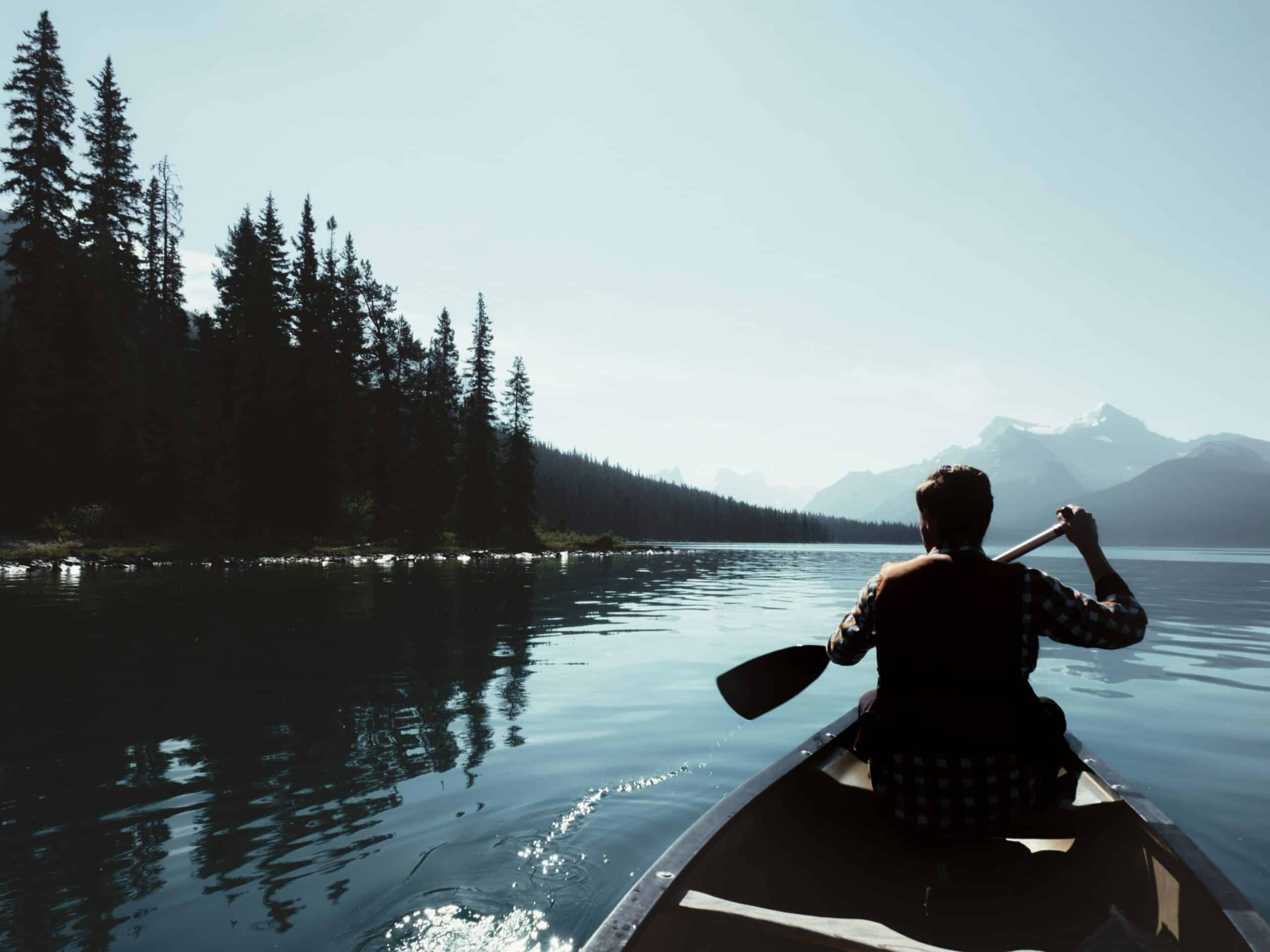
A kayak sits low with a double paddle and slips fast across the water, while a canoe rides high with an open hull and hauls far more gear. The kayak vs canoe choice trades speed and weather protection for space and easy loading, and the right boat depends on the water you paddle and what you bring along. One is built to move; the other is built to carry.
A kayak is faster, lower, and easier to handle solo, while a canoe holds more people and gear and is simpler to load and exit. Your water, your crew, and your cargo point to the better boat.
Quick verdict: Choose a kayak for speed, solo paddling, rougher or windy water, and a drier ride. Choose a canoe for hauling gear, paddling with family, and easy loading on calm lakes and slow rivers. Speed and weather protection lean kayak; capacity and stability lean canoe.
| Factor | Kayak | Canoe |
|---|---|---|
| Speed | Faster | Slower |
| Capacity | Limited | High |
| Stability for loading | Trickier entry | Easy entry |
| Rough or windy water | Better | Harder |
| Stays dry | Drier | More exposed |
| Paddlers | Often solo | Two or more |
How We Compared Kayak vs Canoe
We weighed what shapes a day on the water: speed and handling, gear and passenger capacity, how easy each is to load and exit, performance in wind and chop, and use cases. The American Canoe Association points to matching the craft to the water and the load you plan to carry. The goal is to fit the boat to your paddling rather than crown one winner. For boats built to fish from, see our fishing kayak picks.
Kayak: Strengths and Trade-offs
A kayak sits low to the water and uses a double-bladed paddle for quick, efficient strokes. It moves fast, handles wind and chop well, and keeps you drier behind a closed or shaped deck. The trade is limited cargo room and a trickier entry.
Where the Kayak Wins
It is fast, easy to paddle solo, and steadier in wind and rough water than an open canoe. It keeps you drier and tracks well, with the right paddle making a big difference, as our kayak paddle guide shows. Seating differs considerably between the two, and our kayak seat picks cover upgrading one.
Where the Kayak Struggles
It carries far less gear and seats fewer people, so it suits solo or small trips. Getting in and out sits lower and feels tippier at first, which takes practice for new paddlers.
Canoe: Strengths and Trade-offs
A canoe rides higher with an open hull and a single-bladed paddle. It carries more people, gear, and even a dog, and it is easy to step into and out of. The trade is a slower, more exposed ride that struggles in wind.
Where the Canoe Wins
It hauls plenty of gear and seats two or more, which suits family trips and gear-heavy paddles. The high, open hull makes loading and exiting easy, and you stow a cooler or dry bag with room to spare.
Where the Canoe Struggles
It moves slower and catches the wind, so open or choppy water makes it harder to control. The open hull also leaves you and your gear more exposed to spray and rain than a kayak. Anyone leaning toward a kayak should also review entering and exiting a kayak before the first outing.
Speed and Handling Compared
How each boat moves shapes the choice.
Speed and Efficiency
The kayak wins on speed, since its low profile and double paddle drive it forward with less effort. The canoe moves slower, trading pace for the room and stability of its open hull.
Wind and Rough Water
The kayak handles wind and chop better, sitting low and tracking through waves. The canoe rides high and catches the breeze, so open or windy water demands more skill to keep it on course.
Capacity and Ease Compared
Cargo, crew, and entry round out the choice.
Capacity and Passengers
The canoe wins on capacity, carrying more people and gear for a camping paddle or a family day. The kayak holds less and usually seats one, which keeps it nimble but limits what you bring.
Loading and Entry
The canoe wins on easy loading, since its high, open hull lets you step in and stow gear with room. The kayak sits lower and feels tippier to enter, so a stable life vest and practice help newcomers.
Kayak vs Canoe: Which Should You Choose
Match the boat to your water and crew.
Choose a Kayak If
Go with a kayak if you want speed, paddle solo, face wind or chop, or want to stay drier. It is the nimble, efficient choice for one paddler who values pace and control on open water.
Choose a Canoe If
Go with a canoe if you haul gear, paddle with family, or stick to calm lakes and slow rivers. It is the roomy, stable choice for carrying more and loading easily on gentle water.
How to Decide Fast
Solo, fast, and windy water? Pick the kayak. Carrying people and gear on calm water? Pick the canoe. For a gear-heavy overnight paddle, a canoe carries the camp, including a sleeping bag and more.
Common Mistakes to Avoid
The right boat still fails with the wrong choices. Skip these.
Skipping the Life Vest
Paddling without a properly fitted life vest is a serious risk in either boat. Wear a vest sized for you every time on the water, since conditions and balance can change fast on open lakes and rivers.
Taking a Canoe Into Heavy Wind
A canoe’s high, open hull catches gusts and becomes hard to control on choppy, windy water. Save the canoe for calm lakes and slow rivers, and reach for a kayak when wind and chop are likely.
Overloading the Boat
Packing either boat past its rated capacity makes it unstable and slow to handle. Check the weight limit, balance the load low and centered, and leave margin so the boat stays steady and responsive.
Frequently Asked Questions
Is a kayak or canoe better?
Neither is better overall. A kayak is better for speed, solo paddling, and windy water, while a canoe is better for carrying gear and people on calm water. Your water and crew decide the right boat.
Which is more stable?
It depends on the use. A canoe feels more stable for loading and stepping in thanks to its open hull, while a kayak tracks more steadily in wind and chop once you are seated and moving.
Which is easier for beginners?
Both are beginner-friendly on calm water. A canoe is easy to enter and forgiving for casual paddling, while a kayak is simple to power solo once you get used to sitting lower and the double paddle.
Which holds more gear?
A canoe holds more gear and passengers, which suits family outings and camping paddles. A kayak carries less, though touring kayaks add storage hatches for longer solo trips.
Which is better for fishing?
Both work for fishing, and the choice depends on your water and style. Fishing kayaks are popular for solo anglers and stealth, while canoes offer more room for gear and a second person.
Which stays drier?
A kayak keeps you drier, since its lower, shaped deck sheds spray. A canoe’s open hull leaves you and your gear more exposed to splashes and rain, so a dry bag helps protect your kit.
Do I need a different paddle for each?
Yes, a kayak uses a double-bladed paddle while a canoe uses a single-bladed one. Choosing the right paddle length and style for your boat and height makes paddling far more efficient.
More Paddling Guides
Choosing canoe means a different paddle entirely. picking a canoe paddle covers sizing from seated torso height.
