
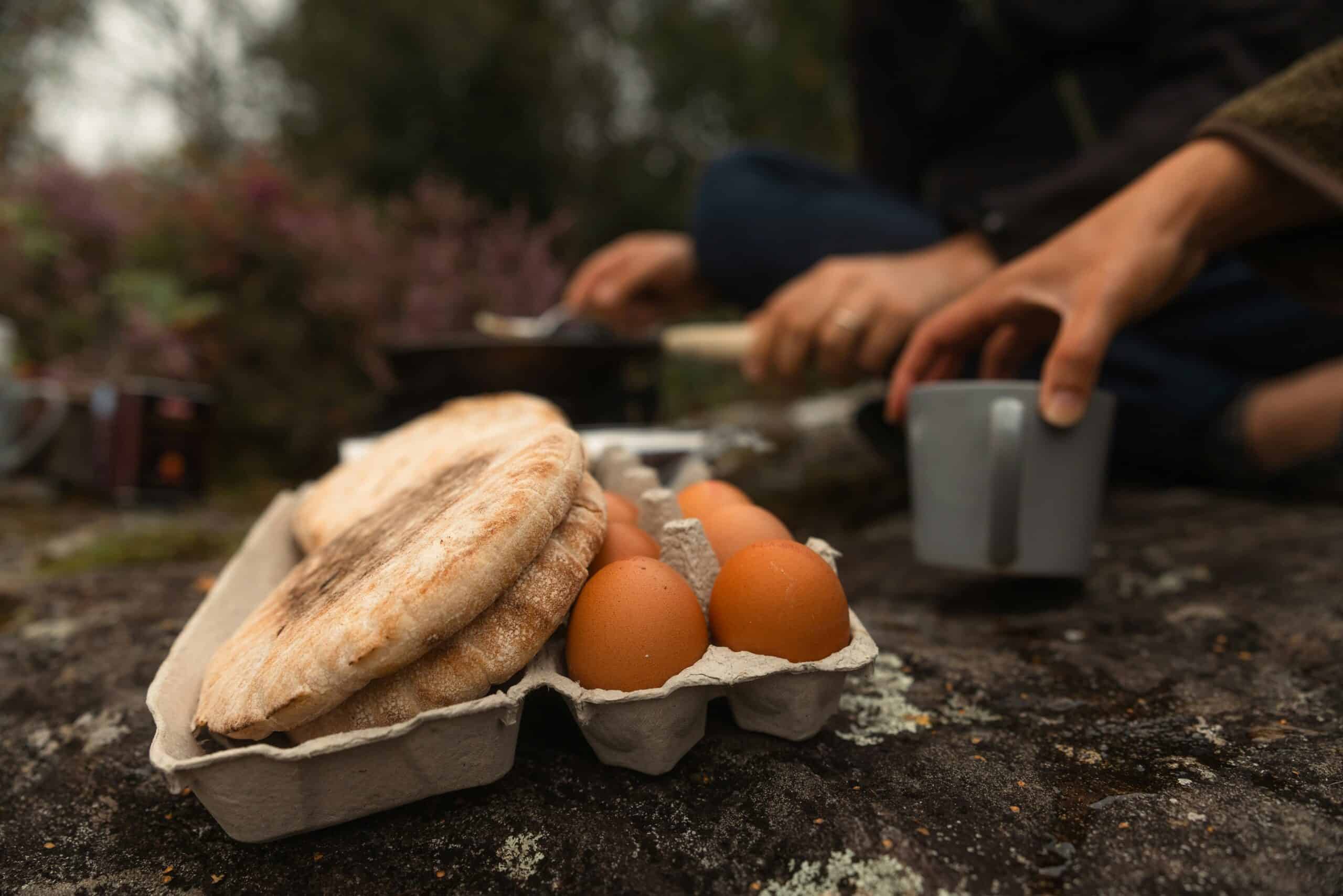
A day hike lets you carry real food instead of dehydrated meals, so the only useful question is whether a food survives a warm pack and still gets eaten without a production. Knowing what to eat on a day hike comes down to three filters: heat tolerance, crush resistance, and mess. Calories per ounce, the number that rules long trips, barely registers across four or five hours.
That single difference reshapes the entire list. Anyone stretching food across several days and a resupply stop needs the arithmetic in this multi-day meal planning guide instead. For one trip out and back, a sandwich beats a freeze-dried pouch on every count that matters.
Quick Answer
Pack a real sandwich or wrap, hard cheese, cured meat, nuts, one piece of fresh fruit, a bar, and something sweet for the final climb. Eat small amounts every hour rather than one long lunch, and add salty food on hot days. Skip anything that needs assembly, refrigeration, or a knife.
Key Takeaways
- Weight barely matters over a few hours, so real bread, cheese, and fruit are all fair game.
- Steady snacking keeps energy flatter than one large lunch stop.
- Salt leaves the body through sweat, and plain water alone does not replace it.
- Heat and crushing decide more day hike food than taste does.
- Save something sweet and genuinely appealing for the last climb.
Day hike food at a glance
| Food | How it holds up in a pack | When to eat it |
|---|---|---|
| Sandwich | Fine for a day, though bread flattens under anything heavy. Mayonnaise and soft fillings go warm fast. | One real break, ideally at a view rather than in the first hour. |
| Hard cheese | Excellent. It sweats a little in heat but keeps its shape without refrigeration. | Mid hike with crackers, when a snack needs some substance. |
| Cured meat | Very durable. Salt and drying do the preserving, so a warm pack does almost nothing to it. | Any time, and especially on hot days for the salt it carries. |
| Nuts and trail mix | Nearly bulletproof unless chocolate is mixed in. Chocolate pieces soften and coat everything else. | Small handfuls every hour, taken while walking. |
| Fresh fruit | Apples and oranges travel well because the skin protects them. Peaches, bananas, and berries bruise or leak. | Early to mid hike, before the pack bakes in the sun. |
| Bar | Reliable and compact. Chewy types stay edible when warm, while coated types get sticky. | The gap filler between real snacks, or a backup left in a pocket. |
| Tortillas or a wrap | Better than bread under pressure because they flex instead of crushing. Fillings still need to be dry. | Lunch when the pack is full and bread would not survive. |
| Something sweet | Varies. Cookies crumble, dried fruit is durable, and chocolate needs shade. | The last climb, when appetite is low and motivation is lower. |
Durability, mess, and timing matter more than nutrition labels on a single day out.
How day hike food differs from backpacking food
Day hike food answers to different rules because the trip ends before dinner. Weight matters far less than most hikers assume across a few hours. An extra pound of bread and cheese costs almost nothing in fatigue and buys a much better lunch.
Multi-day hikers count calories per ounce because every ounce rides along for days. On a day hike the pack comes off in the afternoon. Nothing has to keep overnight, so perishable food is suddenly allowed.
That permission changes the whole list. Real bread, hard cheese, fresh fruit, and a boiled egg all work fine. The only genuine limits are pack heat and the shape the food arrives in.
Why steady snacking beats one big lunch
Eating small amounts steadily keeps energy flatter than one large stop does. A long sit-down lunch tends to make restarting harder. Digestion pulls resources inward, muscles cool off, and the first ten minutes back feel worse than they should.
A workable rhythm looks like a few bites every hour. Handfuls of nuts, half a bar, a wedge of cheese with a cracker. Keep the sandwich for a real break at a good spot rather than the entire event.
Then save something sweet for the last climb. Most routes hide a hill or a long grind near the end, exactly when appetite drops and motivation matters most. A cookie, a few squares of chocolate, or dried mango gives tired legs an argument for continuing.
Choose food you actually want to eat. Something merely tolerated in the kitchen becomes something refused late in the day. Options worth shortlisting appear in this roundup of snacks that hold up on the trail.
Salt matters more on a hot day hike than most hikers expect
Salt does more work on a hot hike than the nutrition label suggests. Sweat carries it out steadily, and plain water alone does not put it back. Hikers who drink well and still feel wrung out are often short on salt rather than fluid.
Salty snacks solve this with no special product. Pretzels, salted nuts, olives, cured meat, and chips all qualify. Pairing them with regular drinking works better than either habit alone.
Heat pushes the problem harder. Headache, nausea, and a sudden loss of appetite on a hot climb deserve attention rather than another mile, and the warning signs appear in this piece on spotting heat exhaustion early. Salty food and shade both belong in that response.
What melts, crushes or leaks, and how to pack around it
Heat, pressure, and mess decide more day hike food than taste does. A pack sitting in the sun behaves like a warm cupboard. Chocolate softens, soft cheese sweats, and thin wrappers end up flattened at the bottom.
Hard cheese handles warmth far better than soft cheese, and cured meat beats deli slices. Fruit with its own skin travels better than fruit without one. That is why apples and oranges outlast peaches and raspberries.
Crushing is the other quiet problem. Bread rides on top or inside something rigid, never under a rain shell and a full bottle. Chips and crackers only survive in a container with walls.
Leaks are worth ruling out at home, because yogurt cups and screw-top jars find a way out eventually. Anything needing assembly, a cutting board, or a knife belongs at a picnic table. Soup and cereal add a stove problem a day hike does not need.
Pack for reach rather than tidiness. Put the next two hours of food in a hip belt pocket or a lid pocket so nothing requires unpacking. A snack buried under a jacket simply does not get eaten.
Everything comes home, including the parts that look natural. Orange peels, apple cores, and banana skins last far longer outdoors than most hikers expect, and they teach animals to beg. One bag for wrappers and one for scraps handles it.
What to eat on a day hike with kids or a dog
Food logistics change completely when a child or a dog comes along. Kids run out of energy faster and warn nobody in advance. Snacks need to be frequent, familiar, and handed over before the meltdown rather than after it.
Variety helps more than volume with children. Several small things offered often beats one large sandwich they refuse on sight. Pacing and snack timing get more attention in this guide to hiking with children.
Dogs need their own food and their own bowl. Human trail food is often too salty or too rich for them, and grapes, chocolate, and onion are genuinely dangerous. Feeding and pacing for dogs appear in this guide to taking a dog on the trail.
What a day hike food list cannot decide
No list predicts an individual appetite. Altitude flattens hunger for some hikers and leaves others ravenous. Heat does something similar, turning a favorite sandwich into food that becomes hard to swallow.
Personal tolerance varies just as much. Dairy, heavy fat, and very sweet snacks sit badly with some people and suit others perfectly. The only real way to learn is a few short hikes with different combinations.
Treat any list as a starting point. Note what came home uneaten and drop it next time. Preferences on a trail rarely match preferences at a kitchen table.
Recommended Reading
Water planning pairs directly with food planning, and the practical side sits in this look at how much water a day hike needs. Longer days and steeper ground get easier with a decent pair of trekking poles. Anyone who eventually wants a hot lunch out there can start with compact cookware that packs small.
Frequently asked questions about what to eat on a day hike
What to eat on a day hike if you only pack one thing?
A wrap with hard cheese and cured meat covers the most ground in a single item. It resists crushing better than a bread sandwich, needs no refrigeration, and carries useful salt. For anything longer than a half day, pair it with nuts so there is something to eat while walking.
Do you need a hot meal on a day hike?
No, because a stove, fuel, and a pot add weight and a chore to a trip that ends the same afternoon. Hot food is pleasant in cold weather and nothing more than that. Anyone who enjoys the ritual should treat it as a luxury and pack cold food as the backup.
How often should you eat on a day hike?
Roughly every hour works well for most hikers. Small amounts taken while walking keep energy steadier than one large lunch, and they avoid the sluggish restart that follows a long stop. Appetite drops in heat and at altitude, so eating a little before hunger arrives usually beats waiting for it.
Is fresh fruit practical on a day hike?
Yes, as long as the fruit brings its own protection. Apples and oranges handle a full pack and a warm afternoon without complaint, while peaches, bananas, and berries bruise or turn to pulp. Dried fruit solves durability entirely, though it loses the water content that makes fresh fruit refreshing.
What snacks survive a hot pack best?
Cured meat, hard cheese, nuts, pretzels, crackers in a rigid container, and dried fruit all handle warmth well. Chewy bars stay edible while coated bars get sticky, and chocolate needs shade or a cool inner pocket. Anything soft and dairy based, including yogurt and cream cheese, is better left at home.
Should you bring salty food or sweet food?
Both, in different roles. Salty food replaces what sweating removes and stays appealing when heat kills appetite for everything else, while sweet food is the motivational tool for the last climb. A pack carrying only sweet snacks often comes home half full on a hot day.
What food should never go in a day pack?
Anything requiring assembly, a knife, or a cutting board creates work on a trail with no flat surface. Screw-top jars, yogurt tubs, and hummus containers leak, and mayonnaise-heavy fillings turn unpleasant in a warm pack. Leafy salads wilt into something nobody wants, and glass has no business in a pack.
