
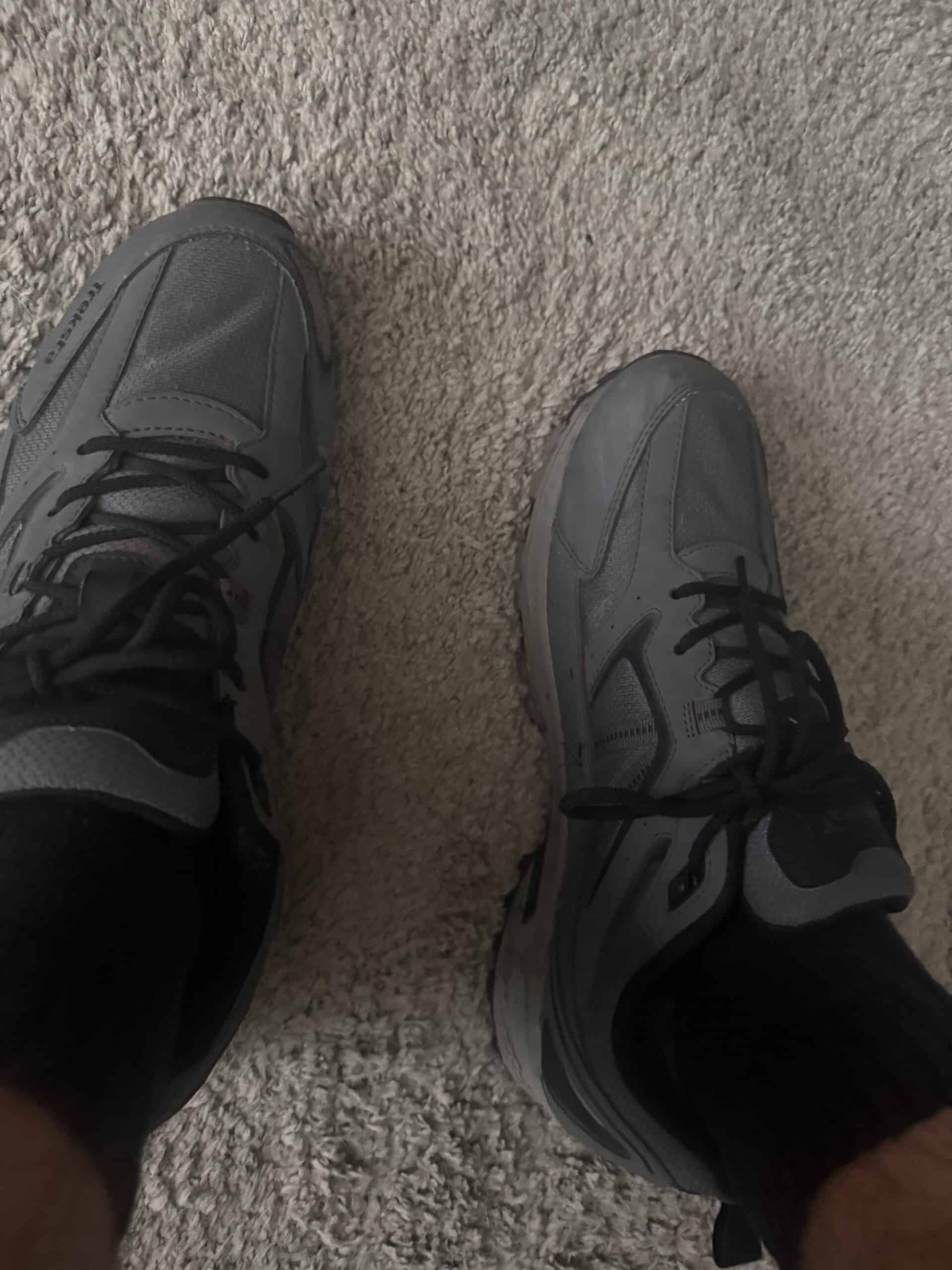
Feet swell during sustained walking. It is normal physiology rather than a sign of a problem, and it explains why a shoe that fits perfectly at the trailhead can feel wrong hours later.
It shows up for me as tightness across the sides that builds over a hike. Loosening the laces helps a bit and it still feels a little tight after a while, which is the shape of the problem in one sentence. Our note on why hiking shoes rub covers the pressure side.
Quick Answer
Blood pools in the feet during prolonged activity while heat dilates blood vessels, so tissue takes on fluid. Buying with headroom and relaxing laces partway through are the practical responses.
What Drives It
| Factor | Effect |
|---|---|
| Gravity and prolonged standing | Blood and fluid pool in the lower legs |
| Heat | Blood vessels dilate, increasing volume |
| Repetitive impact | Inflammatory response in tissue |
| Sodium and hydration balance | Affects fluid retention |
| Pack weight | More load through the feet |
| Descent | Foot slides forward into a smaller space |
The Basic Mechanism
Walking for hours means your feet are below your heart continuously, and gravity moves fluid downward faster than the return circulation clears it.
The calf muscles act as a pump on that return, which is why movement helps and why standing still is worse than walking.
Heat compounds it. Blood vessels dilate to shed heat through the skin, which increases the volume of blood in the extremities.
Impact adds a third element, since repeated loading produces a mild inflammatory response in the tissue. All three run at once on a long hike in warm weather. Our note on how much water you need covers hydration.
Why It Feels Like the Shoe Shrank
The change is small in absolute terms and the space available in a shoe is smaller still.
A shoe fitted with no spare width has nothing to give, so a modest increase in foot volume becomes noticeable pressure.
Width is where it shows first, because the sides of a shoe are structural rather than adjustable. The upper can flex over the top of the foot and the sides cannot spread.
That is why the sensation is a constricted or squeezed feeling rather than a hot spot, and why it arrives partway through rather than at the start.
Why Laces Only Get You Partway
Laces control volume over the instep, pulling the upper down onto the foot or releasing it.
Loosening them genuinely helps, because it removes downward pressure and lets the foot sit higher in the shoe where there is slightly more room.
What laces cannot do is make the shoe wider. The sides are fixed, so a foot that has run out of width sideways is still against the same material however loose the laces are.
That distinction is diagnostic. Full relief from loosening means volume was the problem; partial relief means width is. Our note on choosing hiking shoes covers fitting for it.
How Much Feet Actually Change
The change is smaller than the discomfort suggests, which is worth knowing because it sets expectations for what a fix needs to achieve.
Feet vary in size through an ordinary day without any hiking, which is why shoe fitters have always recommended trying footwear in the afternoon.
Sustained walking in heat pushes that further, and the effect accumulates over hours rather than appearing at a threshold.
Because the change is gradual, most people notice it as a shoe becoming uncomfortable rather than as a foot becoming larger, and they blame the shoe.
It also means a small amount of extra room goes a long way, which is the argument for buying with headroom rather than for buying a size larger than makes sense. Our note on breaking in hiking shoes covers fit over time.
Buying With Headroom
Fit at the end of the day
Feet are larger in the evening, which is closer to hiking conditions than a morning fitting.
Half a size up is common advice
Hiking shoes are frequently bought larger than street shoes specifically to allow for this.
Try wide fittings
Where side pressure is the issue, a wide version of the same shoe addresses it directly.
Wear your hiking socks to try them
Trying shoes in thin socks and hiking in thick ones removes the headroom you were checking for. Our roundup of hiking socks covers the layer.
Managing It On the Trail
Relacing partway through is the most useful habit, and doing it before discomfort starts is easier than after.
Taking shoes off during a longer break lets some fluid redistribute, and elevating the feet even briefly accelerates that.
Moving rather than standing keeps the calf pump working, so a slow walking break does more for the feet than standing still at a viewpoint does.
Loosening the forefoot while keeping the ankle snug gives width relief without introducing heel slip, which is the trade people usually miss. Our note on preventing blisters covers the consequence of getting it wrong.
Terrain and Pack Weight
Two hikes of the same distance can produce very different swelling depending on what else is going on.
Pack weight adds load through the feet on every step, so a heavy overnight pack does more than a light daypack over identical ground.
Hard surfaces transmit more impact than soft ones, which is why road walking and slickrock feel harder on the feet than trail.
Heat is the largest single variable, since vessel dilation is a direct response to it. The same hike in October and in June produces noticeably different results.
Elevation gain matters less than people expect for swelling specifically, though descent changes where the pressure lands rather than how much fluid is present. Our roundup of hiking daypacks covers carrying less.
Hydration and Sodium
The relationship is not straightforward, and both extremes cause problems.
Dehydration prompts the body to retain fluid, so drinking too little can contribute rather than help.
Drinking large volumes of plain water while sweating heavily dilutes sodium, which is its own concern on long efforts in heat.
Sodium balance affects fluid distribution, which is part of why electrolyte replacement gets discussed for longer hikes.
None of that makes swelling avoidable. It is a normal response to prolonged activity rather than a hydration failure. Our note on whether you need electrolytes covers that debate.
Treating swelling as something to accommodate rather than something to prevent is the more productive framing here, because it is a normal physiological response rather than a failure of preparation or fitness.
When Swelling Is Worth Attention
Swelling that resolves within hours of finishing is the normal pattern.
Swelling persisting into the next day, or affecting one foot markedly more than the other, is different and worth mentioning to a doctor.
Numbness, tingling, or discoloration that does not clear once shoes are off should not be attributed to normal swelling.
Anyone with a known circulatory or heart condition should treat exercise-related swelling as a medical question rather than a footwear one.
Foot Swelling FAQ
Why do my feet swell on long hikes?
Fluid pools in the feet during prolonged activity, heat dilates blood vessels, and repeated impact produces mild inflammation. All three run at once.
Is it normal?
Yes, for sustained walking. Swelling that resolves within hours of finishing is the expected pattern rather than a problem.
Why does loosening laces only help a bit?
Laces control volume over the instep, not the width of the shoe. Partial relief means width is the constraint rather than lacing.
Should I buy larger shoes?
Hiking shoes are commonly bought with more room than street shoes for this reason. Trying them at the end of the day, in hiking socks, is the standard advice.
Does hydration prevent it?
Not really. Dehydration can make it worse, and drinking more does not prevent a normal response to hours of walking.
What helps during a hike?
Relacing before discomfort starts, taking shoes off at a longer break, elevating the feet briefly, and walking rather than standing during stops.
Why is it worse on descents?
Your foot slides forward into the narrower front of the shoe, so the same swelling meets less available space.
When should I see a doctor?
Swelling persisting into the next day, one foot markedly worse than the other, or numbness and discoloration that does not clear once shoes are off.
