
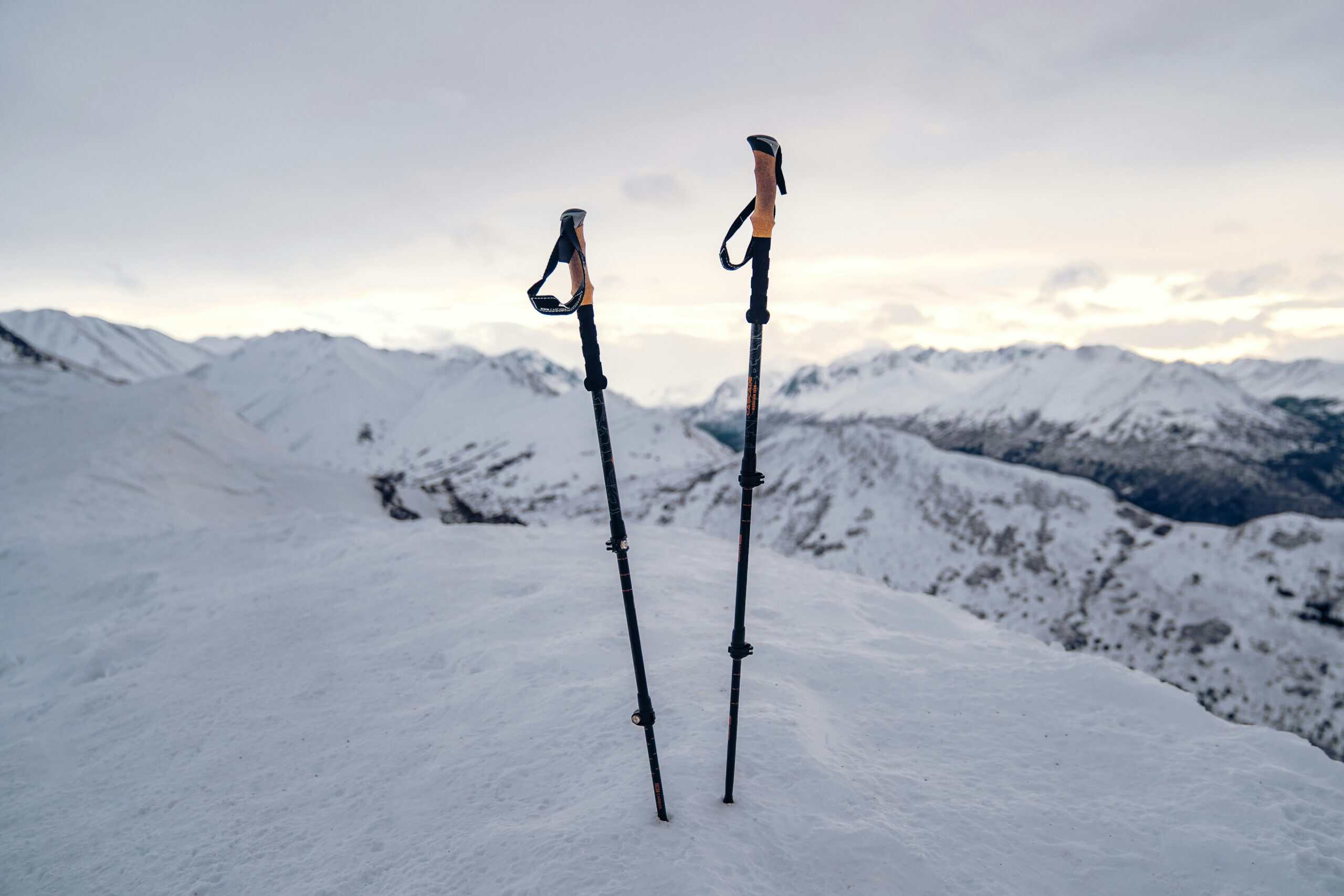
A pole that slips under load is doing the opposite of its job, and it usually happens at the worst moment, which is mid-descent with weight already committed.
The cause is almost always the lock mechanism rather than the pole itself, and the fix depends on which type you have. Our roundup of trekking poles covers the designs.
Quick Answer
Twist locks slip when grit or moisture contaminates the internal expander. Flick locks slip when the clamp tension has loosened. Both are adjustable, and tightening harder is the wrong response to the first.
How Each Lock Fails
| Lock type | Failure | Fix |
|---|---|---|
| Twist lock | Expander cannot grip contaminated shaft | Disassemble and clean |
| Twist lock | Expander worn or cracked | Replace the part |
| Flick lock | Clamp tension loosened | Tighten the adjustment screw |
| Flick lock | Lever or bracket cracked | Replace the lever assembly |
| Either | Extended past the limit mark | Shorten to within the line |
| Either | Shaft dented or bent | Replace the section |
How Twist Locks Actually Work
Inside the shaft sits a plastic expander on a threaded stem. Rotating the upper section turns the stem, which pushes the expander outward against the inner wall of the lower section.
Friction between that expander and the shaft wall is the entire mechanism, and there is nothing mechanical holding the sections beyond it.
Anything reducing friction defeats it. Grit prevents full contact, water lubricates the surface, and a worn expander no longer expands enough to press firmly.
That is why twist locks slip progressively rather than failing suddenly, and why they get worse over a season of dusty or wet hiking. Our note on adjusting pole height covers using them.
Why Tightening Harder Makes It Worse
The instinct when a twist lock slips is to crank it harder, and that is the response most likely to cause real damage.
Over-tightening splits the plastic expander, which is a cheap part behaving as designed until it is forced.
It can also swell the lower section slightly, which then grips inconsistently along its length.
And a seized over-tightened lock is considerably harder to open than a slipping one, which turns a field-fixable problem into a bench job.
Cleaning a Twist Lock
Separate the sections fully
Unscrew until the upper section pulls free, which exposes the expander on its stem.
Wipe the expander and the stem
Dry cloth only. Any residue left behind is what caused the problem.
Clean inside the lower section
A cloth on a stick or a bottle brush reaches the inner wall where the expander grips.
Never lubricate it
Oil is the opposite of what a friction lock needs, and it is a common and understandable mistake. Our roundup of pole accessories covers replacement parts.
Flick Locks Fail Differently
An external lever clamps the outer section around the inner one, so the grip is mechanical rather than dependent on internal friction.
They are far less sensitive to grit and water, which is the main reason they have largely displaced twist locks on newer poles.
When they do slip it is because the clamp tension has loosened, usually a small screw or bolt on the lever assembly that has backed off over time.
Tightening that screw a quarter turn at a time until the lever closes firmly but can still be operated by hand is the standard adjustment, and it is a genuine field repair. Our roundup of hiking daypacks covers carrying a multi-tool for it.
Testing a Lock Before You Trust It
Finding out a pole slips halfway down a descent is the worst way to discover it, and a check at the trailhead takes seconds.
Set the pole to your intended length, plant the tip on firm ground, and lean a meaningful portion of your weight through it while standing still.
A lock that holds under static weight but slips when walking is usually marginal rather than sound, since walking applies sudden loads rather than steady ones.
Testing both poles matters, because they wear at different rates depending on which hand takes more weight.
Doing this at the start of a season rather than the start of a hike is better still, since a failed test at the trailhead leaves you with no time to fix anything. Our note on whether trekking poles help covers what they are for.
The Limit Mark Matters
Every adjustable pole has a maximum extension line printed on the shaft, and it exists because sections need overlap to be stable.
Past that line there is too little shared length for the lock to hold reliably, regardless of how well the mechanism works.
Poles extended beyond it also bend more readily, since the unsupported span is longer than the design assumes.
Anyone whose poles slip at full extension and hold at shorter lengths has found the answer without needing to touch the mechanism.
When It Is the Shaft Rather Than the Lock
A dent in the lower section prevents the expander or clamp making even contact, which produces slipping at one specific length only.
Aluminum poles dent from impacts and being trapped between rocks. Carbon poles do not dent, and they crack, which is more serious and less visible.
Corrosion inside an aluminum shaft roughens the inner wall over years, particularly if poles were stored wet.
Any of those calls for replacing the section rather than adjusting anything, and most manufacturers sell individual sections. Our note on trekking poles vs hiking staff covers whether to replace or move on.
Carbon and Aluminum Behave Differently
Shaft material changes both how poles fail and what a slip means.
Aluminum bends before it breaks, which gives warning and frequently leaves a pole usable enough to finish a hike with.
Carbon is stiffer and lighter and it does not bend. It cracks, and a cracked carbon shaft can fail completely under load with little warning beforehand.
That difference matters for slipping specifically, because a carbon pole slipping repeatedly under load is worth inspecting closely rather than simply adjusting.
Hairline cracks in carbon are hard to see, and running a fingernail along the shaft near the lock area catches edges that the eye misses. Our roundup of hiking poles for women covers the material choice.
Preventing It
Separate the sections and dry them after any wet hike rather than collapsing them damp, which is the single most effective habit.
Rinse and dry after beach, desert, or dusty trail use, since fine grit is worse than mud for a twist lock.
Store poles loosely extended rather than fully collapsed and locked, which relieves pressure on the expander.
Check flick lock screws at the start of a season, because they loosen gradually and the first sign is usually a slip on a descent.
Common Mistakes to Avoid
Tightening a slipping twist lock harder
Splits the expander and can seize the mechanism. Clean it instead.
Lubricating the internals
A friction lock needs friction. Oil guarantees slipping.
Extending past the limit line
No mechanism holds reliably without sufficient section overlap.
Storing them wet and collapsed
Corrosion and seized locks both start here, and both are avoidable in a minute.
Trekking Pole Slipping FAQ
Why do my trekking poles collapse when I lean on them?
Usually the lock. Twist locks slip when grit or water contaminates the internal expander; flick locks slip when clamp tension has loosened.
Should I tighten a twist lock harder?
No. That splits the plastic expander and can seize the mechanism. Disassemble and clean the expander and shaft interior instead.
Can I lubricate the mechanism?
No. A twist lock works by friction, so oil defeats it entirely. This is a common and understandable mistake.
How do I fix a slipping flick lock?
Tighten the small screw on the lever assembly a quarter turn at a time until the lever closes firmly but can still be operated by hand.
Why do they only slip at full length?
You are probably past the maximum extension line. Sections need overlap to be stable, and no lock compensates for too little.
Could it be the pole rather than the lock?
Yes. A dent in the lower section causes slipping at one specific length. Corrosion inside an aluminum shaft does the same over years.
Are flick locks more reliable?
Generally, since they clamp mechanically rather than relying on internal friction, which makes them far less sensitive to grit and water.
How do I prevent it?
Separate and dry the sections after wet hikes, rinse after dusty ones, store loosely extended, and check flick lock screws each season.
