
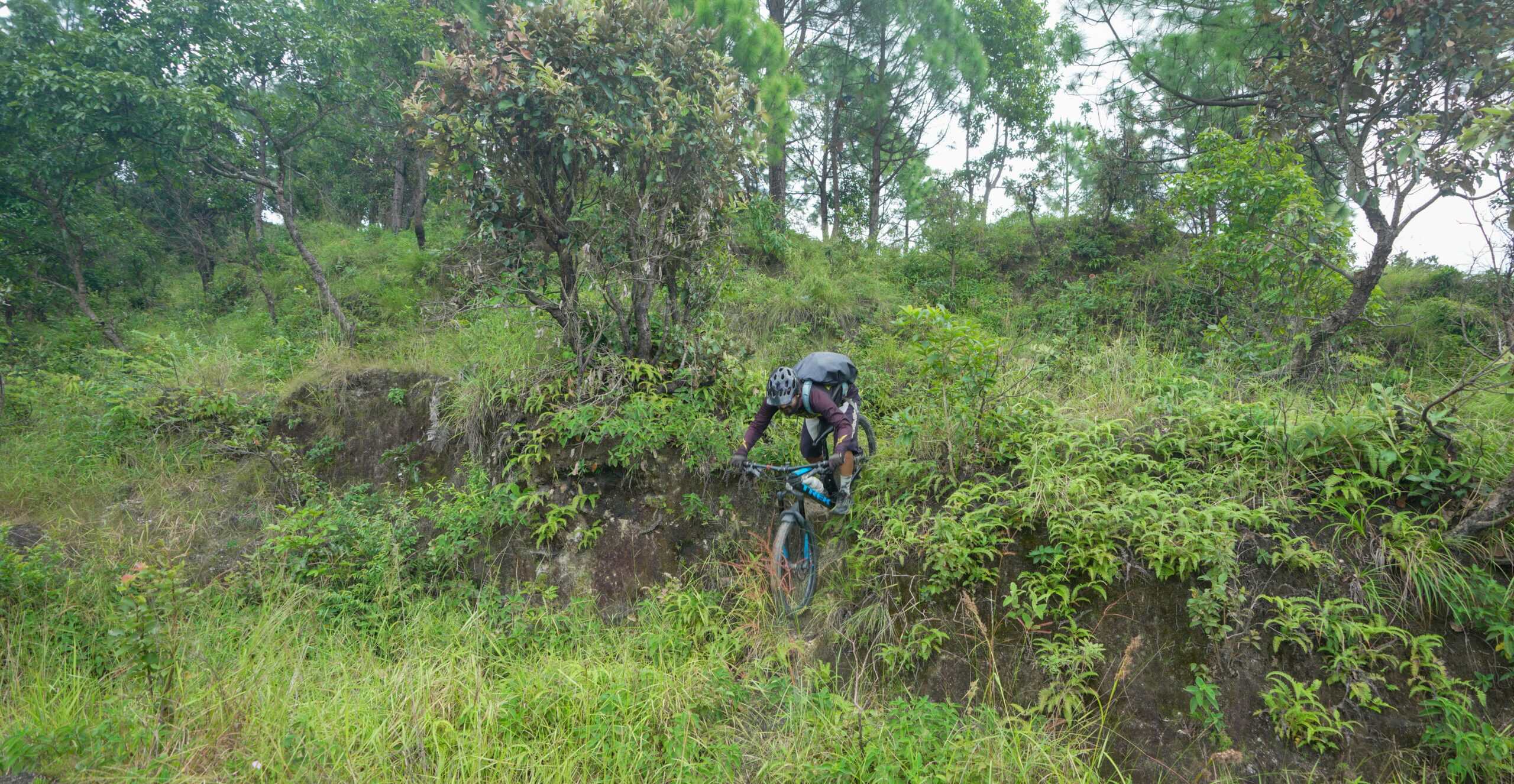
Descending is harder on toes than climbing, and the reason is simple: gravity pushes your foot forward into the front of the shoe on every step.
That produces jamming at the ends of the toes and pressure on the nails, which is a different problem from the rubbing that happens on flat ground. Our note on why hiking shoes rub covers the flat-ground version.
Quick Answer
Your foot is sliding forward and hitting the toe box. Heel lock lacing, shorter toenails, and shoes with more length in front are the three fixes that matter.
What Causes It
| Cause | Sign | Fix |
|---|---|---|
| Foot sliding forward | Pain at toe ends on descent only | Heel lock lacing |
| Long toenails | Nail pain, later bruising | Trim straight across |
| Shoe too short | Toes touch even standing | Size up |
| Shallow toe box | Pressure on tops of toes | Different last |
| Swelling | Builds through the hike | Relace partway |
| Steep sustained descent | Cumulative, both feet | Technique and poles |
Why Descending Is Different
Going uphill, your foot presses back into the heel of the shoe, which is the part designed to hold it.
Going downhill, every step drives the foot forward against the toe box, and the toe box is not a structural stop in the way the heel cup is.
The forces are also higher. Descending loads the legs eccentrically, meaning muscles absorb impact while lengthening, and the impact travels through the foot.
Sustained descent repeats that thousands of times, which is why a problem that never appears on a flat walk shows up an hour into a descent. Our roundup of trekking poles covers reducing the load.
The Thumb-Width Rule
The standard fitting check is roughly a thumb’s width between your longest toe and the end of the shoe, with the foot pushed fully forward.
That space exists specifically for descending. It is not slack, it is the room your foot needs when gravity moves it forward.
People fit shoes standing still on a flat shop floor, where that gap feels excessive, and buy shorter as a result.
Note that the longest toe is not always the big toe. A second toe longer than the first is common and changes where the measurement should be taken. Our note on choosing hiking shoes covers fitting properly.
Why It Builds Rather Than Starting
Descending pain rarely arrives at the top of a descent, which tells you something about the cause.
Each step delivers a small impact, and none of them individually is a problem. The damage is cumulative, which is why a short descent is fine and a long one is not.
Swelling compounds it. Feet take on fluid over hours of walking, so a descent late in a hike meets a foot that already fills the shoe more completely than it did at the start.
Fatigue plays a part too. Tired legs absorb less impact, so more of it travels through to the foot on each step.
That combination explains why the same descent feels different at the start and end of a day, and why the fix is partly about managing the whole hike rather than the descent alone. Our note on why feet swell on long hikes covers the swelling half.
Toenails Are the Overlooked Half
Length matters more than people think
A nail a couple of millimeters too long is the first thing to contact the shoe on every descending step.
Trim straight across rather than curved, since curved edges encourage ingrown nails under repeated pressure.
Cut them a few days before a big hike rather than the night before, so any tenderness from cutting has settled.
Black toenails are the end result
Bruising under the nail from repeated impact. It is common among hikers and runners, generally harmless, and the nail may eventually be lost.
Heel Lock Lacing
The single most effective fix, because it addresses the cause rather than the symptom.
Most hiking shoes have an extra eyelet at the top, set slightly back. Threading the lace through it creates a loop on each side, and passing the opposite lace through each loop before tying pulls the ankle back.
That holds the heel in the heel cup, so the foot cannot travel forward on a descent.
It takes about thirty seconds and costs nothing, which makes it worth trying before considering new shoes. Our note on breaking in hiking shoes covers the wider fit question.
Technique Reduces the Load
Shorter steps on descent reduce the impact each foot absorbs, compared with long strides that land hard.
Keeping some bend in the knees lets the legs absorb rather than transmitting shock straight through.
Trekking poles take a meaningful share of the load off the legs on descent, which is where most hikers find them most useful.
Traversing rather than descending straight down a steep section reduces the forward angle, which reduces how hard the foot is pushed into the toe box.
Treating It Afterward
Some damage is done by the time you finish, and how you handle it affects the next hike.
Blood under a nail is common and usually resolves on its own as the nail grows out, which takes months rather than weeks.
A nail that lifts is best left alone and protected rather than pulled, since the nail bed underneath is sensitive and exposed.
Severe pressure and pain under a nail immediately after a hike is worth having looked at, since draining it is a medical procedure rather than a home one.
Persistent numbness in the toes after shoes come off is different from soreness and should not be dismissed as normal post-hike discomfort. Our note on preventing and treating blisters covers foot care generally.
When It Points at the Shoe
Pain on every descent regardless of lacing and nail length suggests the shoe is too short or the toe box too shallow.
Numbness or tingling in the toes is nerve compression rather than impact, and that is a fit problem rather than a technique one.
Pain concentrated on one foot suggests a difference between feet, which is common, and fitting to the larger foot is standard.
Recurrent black toenails on hikes of ordinary length indicate the foot is moving further than it should. Our note on when to replace hiking shoes covers the decision.
What Socks Contribute
Socks affect volume rather than length, so a thicker sock fills the shoe and reduces sliding without adding room at the front.
That helps a shoe with adequate length and slightly too much volume, and it makes a shoe that is already short worse.
Moisture matters independently. Damp skin is more vulnerable to friction damage, so a sock that moves moisture away helps at the toes as much as at the heel.
Toe socks separate the toes and prevent rubbing between them, which suits some people and irritates others. Our roundup of hiking socks covers the options.
Between lacing, nail length, and technique, most descending toe pain resolves without buying anything at all.
Downhill Toe Pain FAQ
Why do my toes hurt going downhill?
Gravity pushes your foot forward into the toe box on every step. Uphill, your foot presses back into the heel cup, which is built to hold it.
What is the first thing to try?
Heel lock lacing. It uses the extra top eyelet to hold the ankle back so the foot cannot slide forward, and it takes about thirty seconds.
How much room should I have at the front?
Roughly a thumb’s width between the longest toe and the end of the shoe, with the foot pushed fully forward. That space is for descending.
Why do I get black toenails?
Bruising from repeated impact against the shoe. Common among hikers, generally harmless, and the nail is sometimes lost afterward.
Does nail length matter?
Considerably. A nail slightly too long is the first thing to contact the shoe on every descending step. Trim straight across, a few days ahead.
Will thicker socks help?
Only if the shoe has enough length. Thicker socks reduce sliding by filling volume, and they make a short shoe worse.
Do trekking poles help?
Yes. They take a share of the load off the legs on descent, which is where most hikers find them most valuable.
When should I change shoes?
Pain on every descent despite correct lacing and short nails, numbness in the toes, or recurrent black toenails on ordinary hikes.
