
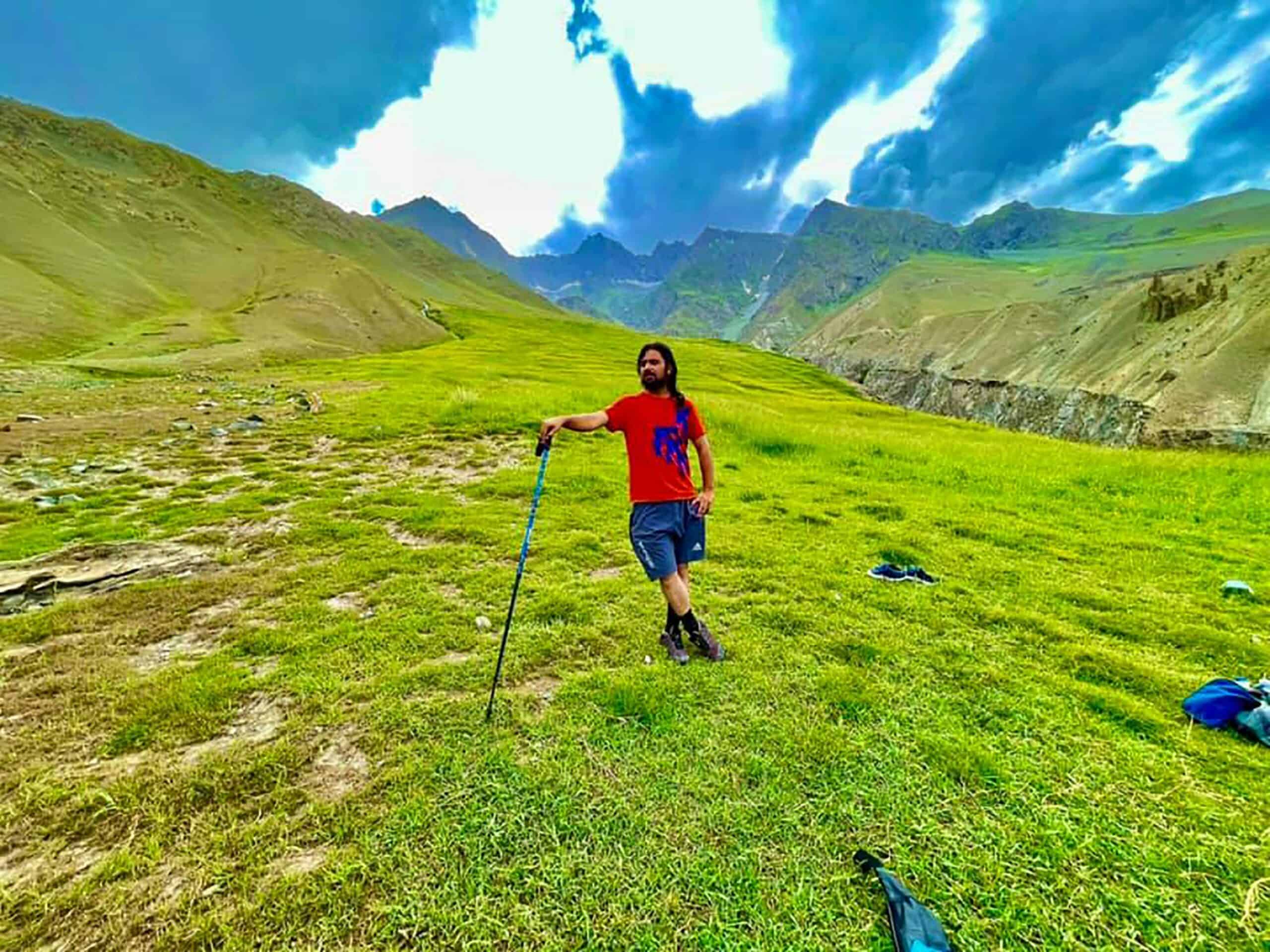
One height does not cover a whole hike. The setting that works on flat ground is too long going down and too short going up, and most of the complaints about poles come from leaving them at one length.
The baseline is a ninety degree elbow on level ground, then shorter for climbs and longer for descents. Our roundup of trekking poles covers the hardware.
Quick Answer
Set them so your forearm is horizontal with the tip on the ground. Shorten by roughly five to ten centimeters for sustained climbs, lengthen by the same for descents.
Settings by Terrain
| Terrain | Height | Why |
|---|---|---|
| Flat ground | Elbow at 90 degrees | Neutral baseline |
| Sustained climb | 5 to 10 cm shorter | Ground is closer ahead of you |
| Sustained descent | 5 to 10 cm longer | Ground is further below |
| Traversing a slope | Uphill pole shorter | Slope is asymmetric |
| Deep snow | Slightly longer | Tip sinks before contact |
| Scrambling | Collapsed and stowed | Hands needed |
Finding the Baseline
Stand on level ground with the pole tip beside your foot and hold the grip normally.
Your upper arm should hang at your side with the forearm parallel to the ground, which puts the elbow at roughly ninety degrees.
An elbow noticeably above that angle means the poles are too long, and the arm ends up doing work that never reaches the ground.
Below it means too short, and you lean forward to reach, which puts strain on the lower back over hours. Our note on whether trekking poles actually help covers the mechanism.
Why Climbs Want Shorter Poles
Going uphill, the ground ahead of you is higher than the ground you are standing on, so a pole planted forward meets a surface closer to your hand.
At the baseline length that forces the arm up and out, which is a weak position for pushing.
Shortening brings the plant back into the range where the arm can generate force downward, which is what actually assists the climb.
Many people skip this and simply choke down on the grip, holding lower on the shaft. That works for a short pitch and is uncomfortable over a long one, which is what the adjustment exists to avoid.
Why Descents Want Longer Poles
The ground is further away
Planting downhill means reaching further before contact, and baseline length leaves you stooping.
You want to plant ahead
Poles ahead of you on descent catch weight before your legs take it, which is the whole point.
Posture stays upright
Longer poles let you stay tall rather than hunching forward, which is better for balance.
More load transfers
A pole at the right length takes real weight. One that is too short takes almost none. Our note on why feet swell on long hikes covers another descent consideration.
Height and Body Proportion
The ninety degree rule assumes average proportions, and it is a starting point rather than a fixed answer.
People with longer arms relative to their height frequently find the calculated length slightly short, since the elbow angle is what matters rather than the number.
Shoulder width plays a part too. Broader shoulders plant poles further from the body, which effectively shortens the reach and calls for marginally longer poles.
Pack weight subtly changes it as well, because a heavy pack shifts posture forward and alters where a comfortable plant lands.
The practical approach is to set by elbow angle rather than by any height chart, then adjust once after twenty minutes of walking when posture has settled into its natural position. Our roundup of hiking poles for women covers shorter-range options.
Traversing a Slope
Walking across a hillside rather than up or down it means one pole is on higher ground than the other.
Setting the uphill pole shorter and the downhill pole longer keeps both arms at a comfortable angle.
Most people do not bother for short traverses, and the difference matters on long ones where the asymmetry accumulates.
Flick-lock designs make this practical because the adjustment takes seconds. Twist locks discourage it by being slower. Our roundup of trekking pole accessories covers the hardware differences.
Getting into the habit of adjusting at the top and bottom of a sustained slope takes a few hikes to become automatic, and after that it stops feeling like a chore worth skipping.
Lock Types and How Often You Adjust
Flick locks use an external lever clamping the shaft, and they open and close in a second with gloves on.
Twist locks use an internal expander that grips when the sections are rotated, which is slower and more prone to slipping as it wears.
The practical consequence is behavioral rather than technical. People with flick locks adjust for terrain; people with twist locks tend to set one length and leave it.
Fixed-length poles remove the question entirely and are lighter, at the cost of a single compromise setting. Our note on why poles collapse under weight covers lock failure.
Using the Straps Correctly
The strap carries the load, not the grip, and this is the part most people get wrong.
Bring your hand up through the loop from underneath, then down onto the grip, so the strap passes across the back of the wrist and between thumb and forefinger.
Done that way, you can push down through the strap with a relaxed hand rather than gripping tightly, which is what prevents forearm fatigue over a long day.
Strap length matters as much as pole height, and a strap adjusted so the wrist carries weight comfortably is worth setting once at the start. Our roundup of hiking socks covers another fit detail worth getting right early.
Three-Section Versus Two-Section Poles
How a pole divides affects both the adjustment range and how it packs.
Three-section telescoping poles collapse shorter, which matters for strapping them to a pack or fitting them in luggage.
Two-section poles have fewer joints, which means fewer places to slip and slightly more rigidity under load.
Folding poles use a cord through several short segments and pack shortest of all, at the cost of a narrower adjustment range once assembled.
For anyone adjusting frequently by terrain, a telescoping design with a wide range suits better than a folding one, which is built primarily for packability rather than for constant length changes. Our roundup of trekking poles versus a hiking staff covers the alternatives.
Marks, Limits, and Maintenance
Respect the maximum extension line
Printed on the shaft for a reason. Beyond it there is too little overlap between sections and the pole becomes prone to bending.
Note your numbers
Most poles have centimeter markings. Recording your flat, climb, and descent settings turns adjustment into seconds.
Keep the sections clean
Grit inside the shaft is the main cause of locks slipping, particularly on twist locks.
Dry them apart after wet hikes
Water trapped inside corrodes internals and seizes the mechanism over a season.
Common Mistakes to Avoid
Setting one length for the whole hike
The single largest source of discomfort, and the easiest thing to fix.
Poles too long on descent
Counterintuitive but common, since it feels stable and prevents the arm from pushing downward.
Gripping instead of using the straps
Tires the forearms and reduces how much weight actually transfers.
Extending past the limit mark
Reduces section overlap and is how poles bend rather than slip.
Trekking Pole Height FAQ
How high should trekking poles be?
On flat ground, set so your forearm is horizontal with the tip on the ground, which puts the elbow at roughly ninety degrees.
Should I change them for climbs?
Yes, shorter by roughly five to ten centimeters. The ground ahead is higher, so baseline length forces the arm into a weak position.
What about descents?
Longer by a similar amount. The ground is further below, and longer poles let you plant ahead while staying upright.
Do I adjust both poles the same?
On climbs and descents yes. Traversing a slope, the uphill pole should be shorter than the downhill one.
How should the straps be used?
Hand up through the loop from underneath, then down onto the grip. The strap carries the weight so you can hold the grip loosely.
Why do my forearms get tired?
Usually gripping instead of letting the straps take the load, or poles set too long so the arm works without transferring weight.
Can I extend past the limit mark?
No. It marks where section overlap becomes insufficient, and beyond it poles bend rather than simply slipping.
Do fixed-length poles work?
They are lighter and simpler, at the cost of one compromise setting for all terrain. Adjustable poles suit varied ground better.
