
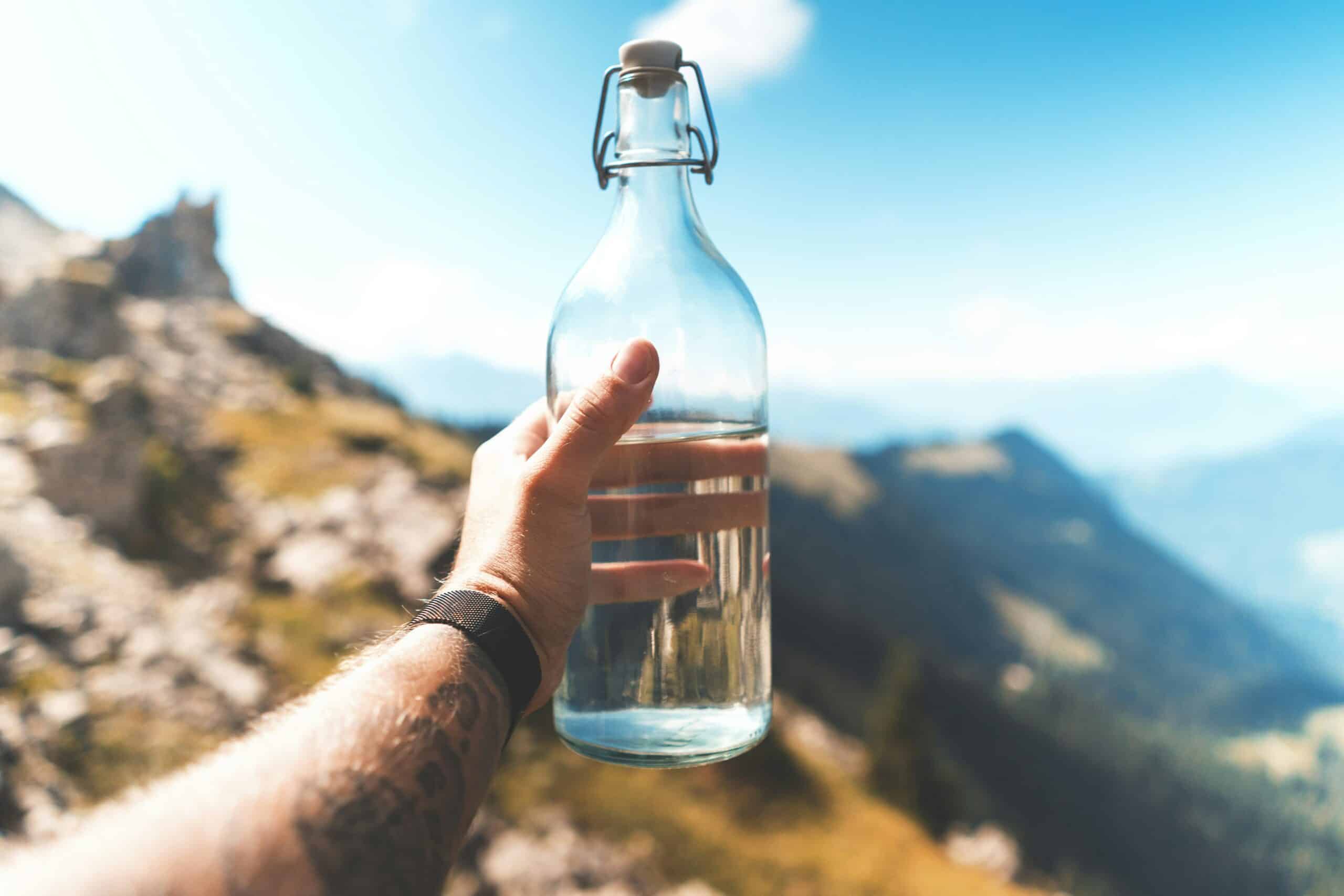
Half a liter per hour of moderate hiking is the working figure most people start from, rising toward a liter per hour in heat or on sustained climbs. A four hour hike in mild conditions needs around two liters. The same hike in Arizona in July can need double that, and the difference between those two numbers is four and a half pounds on your back.
Water weighs about 2.2 pounds per liter, which makes it the heaviest thing most day hikers carry. Bringing too little is dangerous and bringing too much is a real load, so the useful skill is estimating rather than guessing high.
Quick Answer
Plan half a liter per hour in mild conditions, three quarters in warm weather, and a full liter per hour in heat or on hard climbs. Add a reserve for delays. Check whether reliable water exists on the route, because a filter weighs far less than the water it replaces.
Key Points
- Water weighs about 2.2 pounds per liter, so estimates matter
- Heat and elevation gain both raise consumption
- Carry a reserve beyond your estimate for delays and wrong turns
- A filter turns a stream into water you do not have to carry uphill
- Thirst lags behind need, so drink on a schedule
- Sweating heavily calls for electrolytes alongside plain water
Start From Hours Rather Than Miles
Distance tells you little about how long you will be out. Three miles of steep rocky trail takes longer than five miles of flat path, and your body spends the time rather than the distance.
Estimate your hiking time from the distance plus the elevation gain, then apply an hourly rate. Most people move around two miles per hour on trail, slower with climbing and a loaded pack.
Then round up. A hike you expect to take three hours takes four often enough that planning water for three leaves you short on the day it matters.
Adjust for Heat
Temperature changes consumption more than any other variable. In mild weather half a liter an hour covers most people. Above about 85 degrees that climbs toward a liter, and in genuine desert heat it can exceed that.
Humidity compounds it. Sweat evaporating cools you, and in humid air it evaporates poorly, so you sweat more for less cooling and lose fluid faster.
Desert hiking deserves separate planning. Shade is absent, temperatures climb through the middle of the day, and water sources shown on maps are often dry. Starting early and being off the trail by midday reduces both the risk and the amount you need to carry.
Adjust for Effort
Climbing raises your heart rate and your body temperature, and both increase fluid loss. A route with 2,000 feet of gain costs more water than a flat route of the same length even at the same air temperature.
Pack weight does the same thing. Carrying a heavy load makes you work harder, which makes you sweat more, which means carrying more water, which makes the pack heavier. That loop is why keeping other gear light matters.
Altitude adds another layer. You breathe faster and drier air at elevation, losing moisture through respiration in a way you never notice at sea level.
Check the Route for Water Sources
This is where the weight saving lives. A filter or purifier weighs a few ounces and turns any stream, lake, or spring into drinking water, which means carrying one liter uphill instead of four.
Verify sources before relying on them. Seasonal streams marked on maps run dry in late summer, and a spring that flowed in April may be nothing in September. Recent trail reports are more reliable than the map.
Carry enough to reach the next confirmed source with margin. Treating a source as certain and finding it dry is the situation that turns a long day into a serious one, and filter options sit in water filter choices.
How to Carry It
Hydration bladder
A reservoir in the pack with a hose over your shoulder means drinking without stopping, which raises how much people actually drink. Harder to monitor, since you cannot see the level, and awkward to refill without unpacking.
Bottles
Easy to fill, easy to see how much remains, and easy to share or treat with tablets. You have to stop and reach for them, which means people drink less. Options are compared in bottle choices.
Both together
Common on longer days. A bladder for steady drinking and a bottle for mixing electrolytes or for measuring what is left.
Insulated bottles
Keep water cold in heat, which makes people drink more, and add weight. Worth it in summer for at least one of your containers, as covered in insulated bottle options.
Drink on a Schedule
Thirst arrives after you already need fluid, and on a cool day or at altitude it can be quiet enough to ignore entirely. By the time you feel thirsty you are behind.
You can put numbers to your own route and conditions before deciding.
Take a few mouthfuls every fifteen or twenty minutes rather than a large drink each hour. Steady intake absorbs better and keeps you from arriving at a rest stop already depleted.
Urine color is the practical check. Pale straw suggests you are keeping up, and dark yellow suggests you are not. It is imperfect and it is available without any equipment.
Electrolytes on Long Hot Days
Sweat carries salt as well as water, and replacing only water on a long hot day dilutes what remains. That produces headache, cramping, nausea, and fatigue even while you are drinking steadily.
For hikes beyond a couple of hours in heat, an electrolyte tablet or powder in one bottle addresses it. Salty snacks do a similar job and are cheaper.
Most people do not need this on a mild two hour walk. It matters when you sweat hard for hours, which is the situation where drinking a lot of plain water can leave you feeling worse rather than better.
What Tends to Help
Plan by hours and conditions rather than by miles. Use half a liter per hour as a baseline and raise it for heat, climbing, and altitude. Carry a reserve for delays.
Check for water on the route and carry a filter where sources are reliable. Drink small amounts often. Add electrolytes on long hot days. Start hydrated, since arriving at the trailhead already behind costs you the whole hike.
Too Little Versus Too Much
Running short is the dangerous direction. Dehydration builds through headache, fatigue, and dizziness, and in heat it escalates into a genuine emergency that gets worse as you keep walking.
Carrying too much costs effort rather than safety. Four extra liters is nearly ten pounds, which turns a comfortable hike into a slog and makes you sweat more, which uses more water. Both errors have a cost, and only one of them can end badly.
Related Reading
- filters that let you carry less
- bottles and reservoirs
- what else belongs in the pack
- carrying weight comfortably
- altitude and fluid loss
- food that replaces salt
- planning food for longer trips
Related: is too hot to hike.
Frequently Asked Questions
How much water per hour of hiking?
Around half a liter per hour in mild conditions, three quarters in warm weather, and up to a liter per hour in heat or on sustained climbs. Adjust upward for altitude and heavy packs.
How much water for a four hour hike?
Roughly two liters in mild weather and closer to four in heat. Add a reserve beyond your estimate, since hikes run long and the extra half liter costs about a pound.
Is a bladder better than bottles?
Bladders raise how much you drink because you never stop, and they hide how much is left. Bottles are easier to fill, monitor, and treat. Many hikers carry both on longer days.
Can I drink from streams?
Not untreated. A filter or purifier handles it and weighs a few ounces, which is far less than the water it saves you carrying. Verify the source exists before planning around it.
Do I need electrolytes?
On long hot days where you sweat hard for hours, yes. Replacing only water dilutes the salt you have lost, which causes headache and cramping. Salty snacks work as well as tablets.
How do I know if I am drinking enough?
Urine color is the practical check, with pale straw suggesting you are keeping up. Thirst arrives after you need fluid, so drinking on a schedule beats waiting to feel thirsty.
When should I be worried about dehydration?
Headache, dizziness, unusual fatigue, cramping, or confusion in heat all warrant stopping, resting in shade, and drinking. Confusion, a rapid pulse, or stopping sweating in heat need emergency help rather than more water.
Recommended Reading
See our note on planning a hiking route.
