
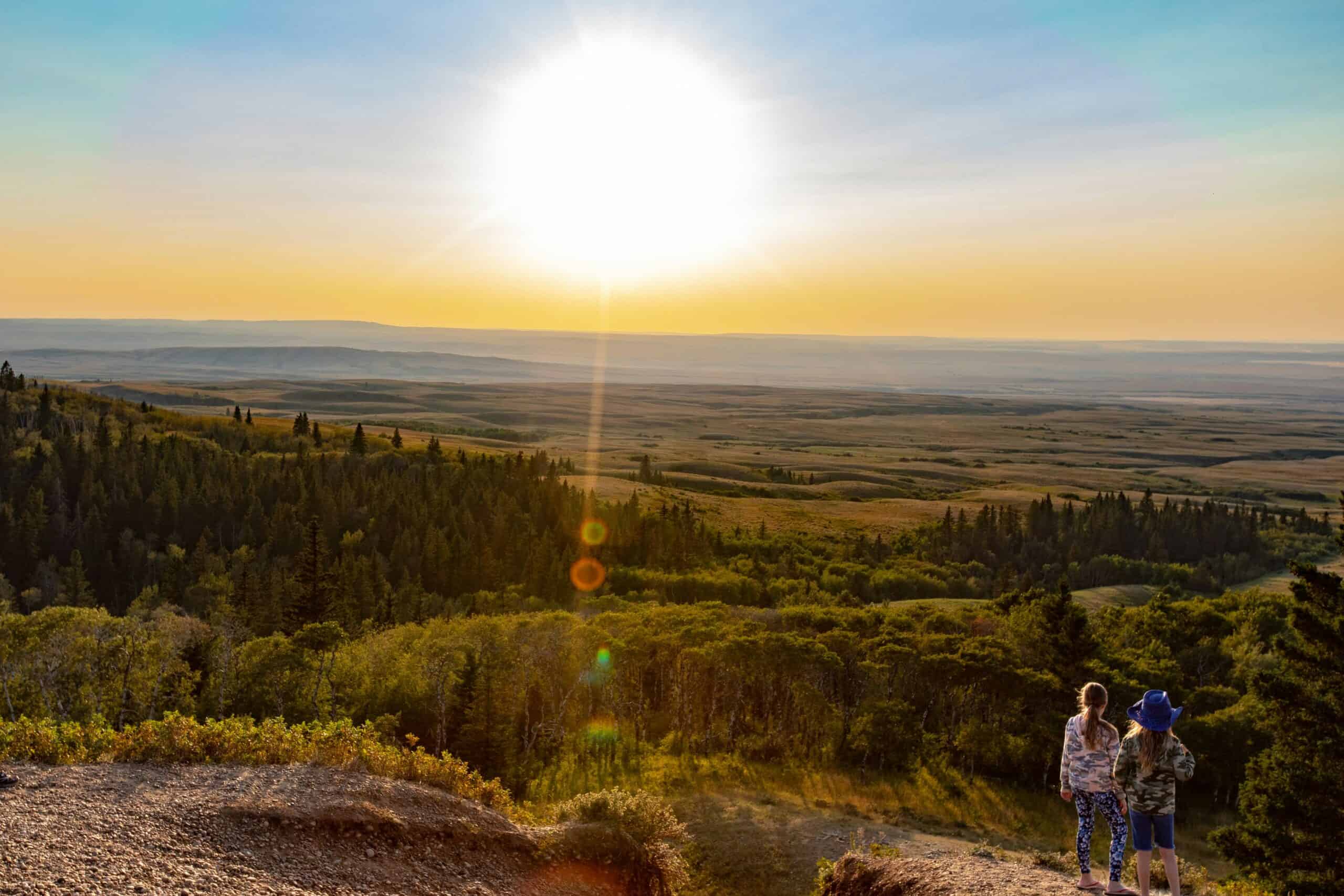
Above about 90F, heat illness risk rises sharply, and humidity matters as much as the temperature itself. The heat index is the number to check rather than the thermometer, since sweat cannot cool you when the air is already saturated.
The practical threshold most people use is starting before dawn in summer and being off exposed trail by mid-morning, which sidesteps the question rather than answering it.
A Quick Note
This covers general precautions rather than medical advice. Confusion, stopping sweating, a rapid pulse, or fainting in heat are signs of heat stroke, which is a medical emergency requiring immediate help rather than rest and water. Heat tolerance is lower for animals, and taking a dog along covers what that changes about the plan.
Quick Answer
Check the heat index rather than the temperature. Caution begins around 80F index, extreme caution around 90F, and danger above 103F. Exposed desert trail, elevation gain, and midday sun all lower those thresholds considerably.
Heat Index Thresholds
| Heat index | Risk level | What it means for hiking |
|---|---|---|
| 80 to 90F | Caution | Fatigue with prolonged exertion |
| 90 to 103F | Extreme caution | Cramps and exhaustion possible |
| 103 to 124F | Danger | Heat exhaustion likely, stroke possible |
| Above 124F | Extreme danger | Heat stroke highly likely |
The National Weather Service publishes these bands, and they assume shade and light wind. Direct sun exposure adds as much as 15F to the effective index, which pushes an 88F reading straight into the danger band on open exposed trail.
Why Humidity Changes Everything
Your body sheds heat mainly by evaporating sweat, and evaporation slows as the air approaches saturation.
At 95F and 20 percent humidity, sweat evaporates readily and cooling works. At 95F and 70 percent humidity, it does not, and core temperature climbs while you feel like you are working no harder.
That is why a dry 100F day in the desert can be more manageable than a humid 88F day in the Southeast, which surprises people moving between regions.
Dry heat carries its own trap though, since sweat evaporates so fast you underestimate fluid loss, covered in how much water to bring hiking.
What Raises Your Personal Threshold
Acclimatization is real and it takes one to two weeks of regular exposure to develop. Someone who has spent an entire summer working outdoors tolerates heat that would flatten a visitor arriving from a cooler region.
Fitness helps considerably, since a fitter person generates less metabolic heat at the same pace, and greater cardiovascular capacity supports the blood flow to the skin that all cooling depends on.
Age matters in both directions, with children and older adults regulating temperature less effectively than adults in between.
Medication, alcohol, illness, and poor sleep all reduce tolerance, and several common prescriptions affect sweating or blood pressure directly, which is a conversation for a doctor.
Reading the Trail Rather Than the Forecast
Exposure
Shaded forest trail at 90F is a different proposition from open desert at 85F. Canopy cover changes the effective temperature more than a few degrees on the forecast.
Surface
Rock and sand radiate heat upward, so the air at knee height on a slickrock trail is considerably hotter than the reported figure.
Elevation gain
Climbing generates more metabolic heat, so the same temperature is harder on a steep ascent than on flat ground.
Time of day
The same trail at six in the morning and one in the afternoon are different hikes. Ground temperature and solar load both peak hours after the air temperature starts climbing.
Water availability
A trail with no resupply caps how far you can safely go regardless of the temperature, covered in portable water bottles for hiking.
Recognizing Heat Illness
Heat cramps come first for a lot of people, showing up as painful muscle spasms in the legs or abdomen, and they respond well to rest, shade, and fluids containing electrolytes.
Heat exhaustion brings heavy sweating, weakness, nausea, headache, dizziness, and cool clammy skin. That means stopping, cooling actively, and not continuing.
Heat stroke is the emergency. Confusion, slurred speech, a lack of sweating despite the heat, a rapid strong pulse, and body temperature above 103F all point to it. Feet overheat before the rest of the body complains, and breathable shoes for hot weather covers what vents properly.
Heat stroke requires emergency services rather than self-treatment, and cooling should begin immediately while help is on the way. The CDC’s guidance treats it as life-threatening.
Practical Ways to Hike Hot Weather Safely
Start before sunrise. On exposed desert trail through summer this is close to non-negotiable, and being back at the trailhead before ten in the morning changes the risk profile entirely.
Carry more water than the calculation suggests, and include electrolytes, since sweating loses sodium as well as fluid and plain water alone can make things worse over long efforts.
Wear light loose long sleeves rather than less clothing, which sounds wrong and reduces solar load while allowing evaporation.
Plan a turnaround based on water and time rather than on distance, and treat it as fixed, covered in hiking hats for sun protection.
How the Body Loses the Fight
Understanding the sequence explains why the warning signs matter and why heat stroke arrives faster than people expect.
Cooling starts with blood flow to the skin, moving heat from the core outward. That diverts blood away from working muscles, which is why the same pace feels harder in heat before anything is wrong.
Sweating handles the rest, and it only works when the sweat evaporates. Sweat dripping off you is fluid lost with no cooling gained, which is exactly what happens in high humidity.
As dehydration progresses, blood volume falls. There is less fluid available both for sweating and for the circulation that carries heat to the skin, so both cooling mechanisms weaken together.
That is the point where the curve steepens. Core temperature rises faster, which increases demand on a system already compromised, and the process accelerates rather than plateauing.
Stopping sweating is the signal that the system has failed rather than a sign of adaptation, which is why it appears on every heat stroke checklist and why it warrants emergency help immediately.
When to Simply Not Go
Heat advisories and excessive heat warnings are issued for good reason, and choosing to hike through one is a decision rather than an oversight.
Any trail without shade or water above about 95F index, particularly with elevation gain and no bail-out points partway.
When anyone in the group is unacclimatized, unwell, on medication affecting heat tolerance, or significantly less fit than the rest.
And when the alternative is available. Most hot-weather incidents happen on trails that could have been done at dawn or in a different season, covered in hiking sandals for summer trails.
Related Reading
- how much water to bring
- summer trail sandals
- sun protection hats
- insulated water bottles
- tired after a short hike
- layering for hiking
Frequently Asked Questions
How hot is too hot to hike?
Risk rises sharply above a heat index of about 90F, and danger begins around 103F. Direct sun adds up to 15F to the effective index on exposed trail.
Why does humidity matter so much?
Cooling depends on sweat evaporating, and saturated air slows that dramatically. A humid 88F day can be harder on your body than a dry 100F one.
What are the warning signs?
Cramps first, then heavy sweating with weakness, nausea, and dizziness for heat exhaustion. Confusion, slurred speech, and stopping sweating indicate heat stroke.
What should I do if someone shows heat stroke signs?
Call emergency services immediately and begin cooling while waiting. Heat stroke is life-threatening and is not something to manage with rest and water.
Does acclimatization help?
Considerably, and it takes one to two weeks of regular exposure. A visitor to a hot region tolerates far less than a local doing the same trail.
Should I wear less clothing in heat?
Light loose long sleeves usually beat bare skin, since they reduce solar load while still allowing sweat to evaporate.
Why does heat stroke come on so fast?
Dehydration reduces blood volume, which weakens both sweating and the circulation carrying heat to the skin. Both cooling mechanisms fail together, so the process accelerates rather than plateauing.
Is water enough on a long hot hike?
Not on its own for extended efforts. Sweating loses sodium as well as fluid, and plain water alone over many hours can dilute electrolytes further.
Sources
- Centers for Disease Control and Prevention. Heat Stress and Heat Related Illness. https://www.cdc.gov/niosh/topics/heatstress/
- National Weather Service. Heat Index. https://www.weather.gov/safety/heat-index
- Mayo Clinic. Heat Exhaustion. https://www.mayoclinic.org/diseases-conditions/heat-exhaustion
Recommended Reading
See our note on planning a hiking route.
