
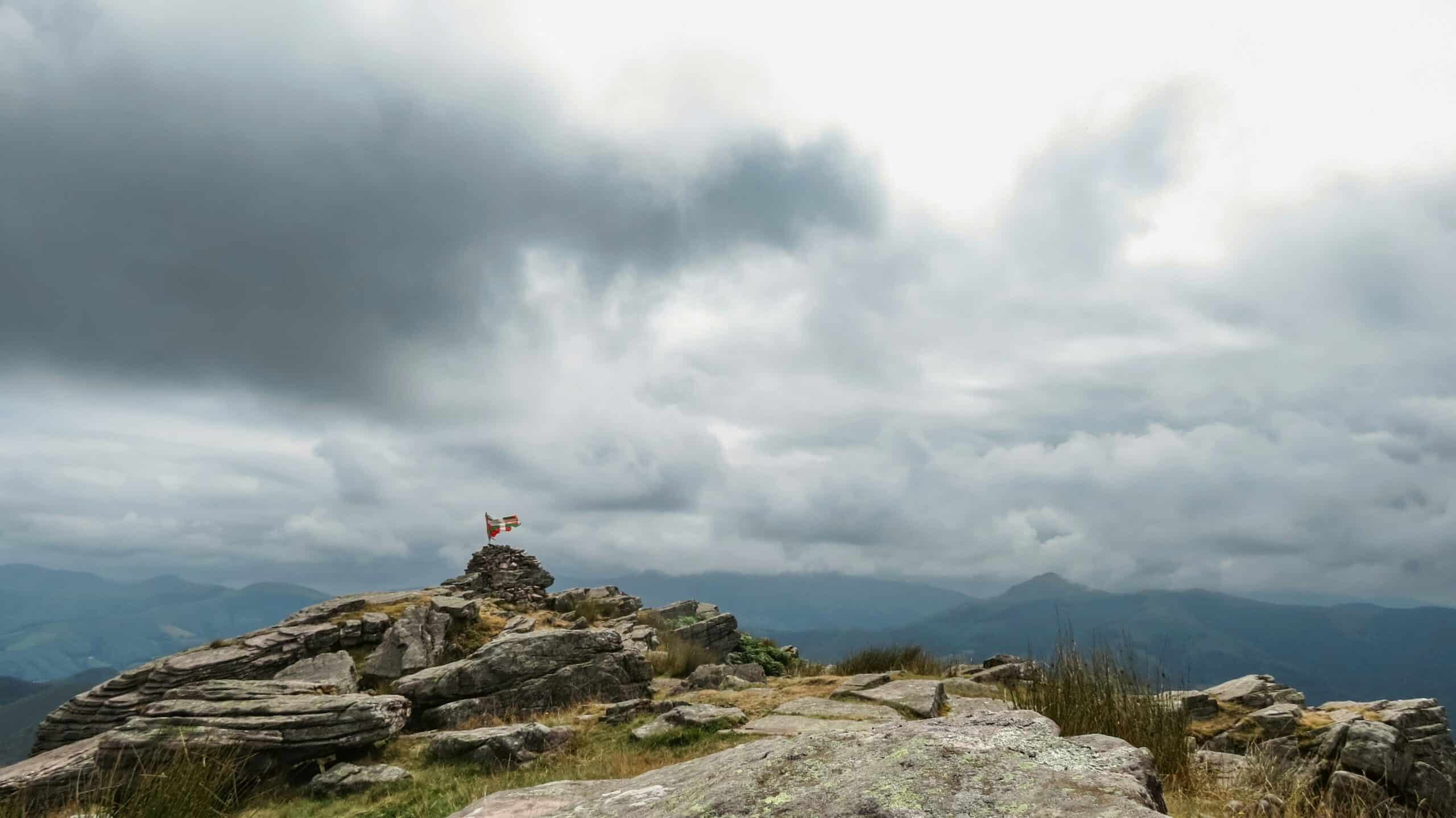
The decisions that matter in a storm are mostly made before it arrives. Once weather is on you, the options narrow to where you are standing and how quickly you can get somewhere better.
This covers recognizing a storm building, what to do about lightning, and how to handle the cold that follows. Our guide on planning a hiking route covers checking forecasts beforehand. Avoiding the situation entirely starts with spotting a storm early well before the first thunder.
Quick Answer
Get off ridges, summits and exposed ground immediately. Move below treeline into uniform forest if you can. Spread a group out, avoid isolated tall trees and open water, and treat getting wet as the longer-term danger once the lightning passes.
Key Points
- Descending from exposed ground is the single most useful action.
- Uniform forest is safer than an isolated tall tree.
- Group members should spread out during lightning.
- Hypothermia is the more common outcome than a strike.
- Afternoon storms are predictable enough to plan around.
Warning Signs
| Sign | What it means |
|---|---|
| Towering vertical clouds | Storm building, possibly fast |
| Sudden temperature drop | Downdraft ahead of the storm |
| Wind shifting or gusting | The system is arriving |
| Hair standing on end | Immediate strike risk |
| Buzzing from rock or gear | Immediate strike risk |
| Darkening base of cloud | Rain and possible hail |
Get Lower and Less Exposed
Almost every good decision in a storm reduces to losing elevation and exposure.
Ridges, summits and open slopes are the worst places to be, and moving off them matters more than anything else you do.
Getting below treeline is the goal where it exists, since uniform forest is considerably safer than open ground or a lone prominent tree.
Avoid being the tallest thing around, and avoid standing next to the tallest thing around, since current can jump from a struck object to a nearby person.
Open water, wet rock faces and shallow caves are all worse than they look. Our note on what to do if you get lost covers navigating in poor visibility.
If Lightning Is Close
Spread the whole group out
So a single strike cannot affect everyone at once.
Crouch down, do not lie flat
Keep contact with the ground to a minimum.
Get off metal and away from the packs
Frames and poles set nearby, not carried on you.
Wait the whole thing out properly
Well after the last thunder, not immediately.
The Cold Is the Bigger Risk
Lightning gets the attention and wet cold causes far more problems.
Rain, wind and a temperature drop combine to strip heat quickly, and it happens fastest to someone who has stopped moving.
Cotton layers hold water against the skin and lose their insulating value entirely, which is the reason the material is discouraged.
Getting a waterproof layer on before you are soaked is far more effective than putting one on afterward, so the decision has to come early.
Eating something matters more than most people expect, since the body needs fuel to generate any heat at all. Our roundup of rain jackets covers staying dry.
Estimating Distance and Direction
Counting between the flash and the thunder gives a rough distance, since sound travels roughly a mile every five seconds.
The useful part is not the number but the trend. Gaps shortening means the storm is closing, and gaps lengthening means it is moving away.
A count under about thirty seconds is generally treated as close enough to take shelter, since strikes can reach well ahead of the rain.
Watching which way the cloud base is moving tells you whether it will pass over you or beside you, which is worth a moment before committing to a plan.
Storms in mountain terrain can move against the wind at ground level, so what you feel on your face is not a reliable guide.
Hail Is a Separate Problem
Hail arrives with little warning and turns an uncomfortable situation into a painful one quickly.
A pack held over the head and shoulders is effective and immediate, and it is the reason not to shed a pack the moment you stop.
Hail also makes rock and trail surfaces treacherous, since it accumulates like ball bearings on hard ground.
Descending on fresh hail is genuinely slippery, and slowing down matters more than covering distance.
Deciding Whether to Move
Moving and sheltering are both defensible, and the choice depends on specifics.
Moving makes sense when it takes you off exposed ground, when the route is known, and when you can do it without navigating badly in poor visibility.
Sheltering makes sense when you are already in a reasonable spot, when moving means crossing exposed terrain, or when visibility has dropped enough that route finding becomes the bigger risk.
A common error is continuing toward a goal because the storm might pass, which combines the risks of both options.
Turning back is frequently the answer, and it is easier if a turnaround time was already set. Our turnaround time calculator covers making that call in advance.
Afternoon Storms Are Predictable
In mountain terrain, particularly in summer, storms build on a fairly reliable daily schedule.
Morning heating drives convection through the day, and storms commonly develop in the early afternoon rather than arriving randomly.
This is why alpine starts exist. Being off exposed ground by early afternoon avoids the problem rather than managing it.
Local patterns vary considerably, and asking at a ranger station or checking recent trip reports tells you more than a general forecast does.
A forecast written for a valley may not describe at all what happens two thousand feet above it, where the weather is made. Our roundup of offline map apps covers tools that work without signal.
What to Carry
Storm preparation is mostly about a few items that are useless until they are essential.
A waterproof shell and an insulating layer that works when damp are the core, since staying warm is the actual problem.
An emergency shelter or bivvy weighs little and changes what sheltering in place looks like, particularly for a group.
A headlamp matters because storms bring darkness early and a delay can push a return into dusk.
A whistle carries further than a voice and costs nothing to carry, which matters if a group gets separated in poor visibility.
A means of calling for help where there is no signal is worth considering for remote routes. Our roundup of emergency bivvies and shelters covers the shelter side.
Common Mistakes to Avoid
Continuing on toward the goal anyway
Pushing on because the storm might pass combines the risks of moving and sheltering with the benefits of neither.
Sheltering underneath a lone tall tree
Current can jump from a struck object to someone nearby. Uniform forest is safer than any prominent tree.
Waiting until you are already wet
A waterproof layer put on before the rain works. Put on afterward, it traps a soaked base layer.
Moving off again far too early
Strikes still happen after the rain stops. Wait well beyond the last thunder before returning to exposed ground.
Recommended Reading
See our roundup of headlamps for hiking, our roundup of satellite messengers, our guide on reading a topographic map, and our roundup of rain ponchos.
Storms on Trail FAQ
What should I do first?
Get off ridges, summits and exposed slopes. Losing elevation and exposure matters more than anything else.
Is a tree safe shelter?
Uniform forest is reasonable. A lone tall tree is among the worst places to stand, since current can jump to someone nearby.
Should the group stay together?
Spread out during active lightning so one strike cannot affect everyone, then regroup once it passes.
What does hair standing on end mean?
A strike may be imminent. Get lower immediately, crouch with minimal ground contact, and move away from metal.
When is it safe to move again?
Well after the last thunder rather than as soon as rain stops. Strikes occur after the visible storm has passed.
What is actually the biggest danger here?
Getting cold and wet. Hypothermia affects far more people than lightning does, especially anyone who has stopped moving.
Why do storms come in the afternoon?
Daytime heating drives convection, so mountain storms commonly build early afternoon. Starting early avoids the window.
Should I shelter or keep walking?
Move if it gets you off exposed ground on a known route. Shelter if moving means crossing exposure or navigating in poor visibility.
