
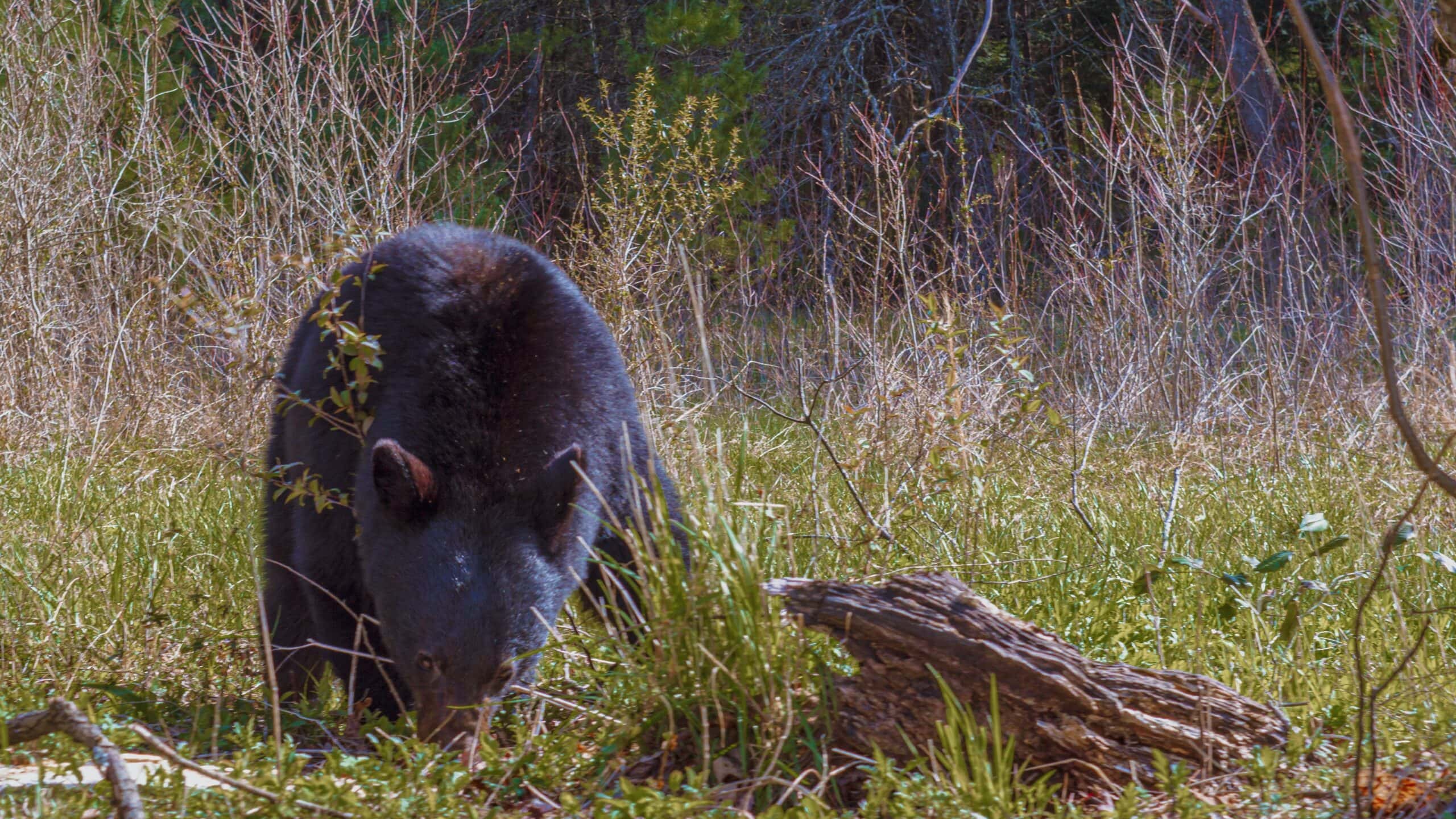
The bear sighting is rarely what hikers imagine. Most encounters are quiet: a bear catches your scent, decides you’re not worth the trouble, and disappears into the brush before you’ve registered what you’re looking at. The minority of encounters that don’t go this way still usually end without injury, but they require specific responses that depend on the bear species, the bear’s behavior, and the immediate context. Knowing what to do in those 30 seconds can be the difference between a memorable hike and a serious medical emergency.
The good news is that bear attacks are extremely rare. In North America, fatal bear attacks average fewer than 3 per year across the entire continent, far less than fatalities from drowning, falling, or even bee stings. The bad news is that the rarity makes people complacent, and a complacent hiker who surprises a sow with cubs or stumbles into a bear’s food cache is at higher risk than the statistics alone suggest.
This article covers the differences between black bear and grizzly behavior, how to recognize warning signs in bear body language, what to do when you spot a bear at a distance versus close range, when to play dead versus when to fight back, prevention strategies that work, and the specific gear recommendations for bear country.
This article is for educational purposes only. Bear behavior varies and outcomes depend on context; consult local agency guidance for your specific area. Last updated: May 30 2026 | By Austin Murphy
Key Takeaways
- Black bears and grizzlies require different responses; species identification matters more than people often realize1
- Most encounters end peacefully when you give the bear space; surprise encounters at close range carry the highest risk
- Bear spray is the most consistently effective deterrent across species, more reliable than firearms in studied outcomes
- Play dead for a grizzly attack; fight back for a black bear attack; the rules differ deliberately based on species behavior2
Black Bear vs. Grizzly: How to Tell the Difference
Behavior differences between black bears and grizzlies are significant enough that the response to an encounter depends on identification. Knowing the differences before you’re in the moment matters because identification time is short.
Physical features
Color is unreliable. Black bears come in black, brown, cinnamon, blonde, and even white (the Kermode subspecies). Grizzlies range from blonde to dark brown. Don’t identify by color.
Reliable identifiers: grizzlies have a prominent shoulder hump (a muscle mass for digging), a dished or concave face profile (forehead rises sharply from the nose), short rounded ears, and longer claws (2-4 inches, visible in tracks). Black bears have no shoulder hump, a straight face profile, taller pointed ears, and shorter curved claws (1-2 inches).
Track differences: grizzly front tracks show claws clearly separated from the toe pads; black bear tracks show claws close to or merging with toe pads.
Range
Black bears are widespread across North America, occurring in most US states and Canadian provinces. If you’re in a forested area in the lower 48 except for the Rocky Mountains, Cascades, and a small portion of the northern plains, the bear you see is almost certainly black. Grizzlies in the lower 48 are mostly found in Montana, Wyoming, Idaho, and Washington, plus more widely in Alaska and western Canada.
Behavior tendencies
Black bears are generally more cautious around humans and more likely to flee. Most “aggressive” black bear behavior is bluff (false charges, huffing) intended to make you leave. Predatory attacks by black bears are rare but possible.
Grizzlies are more confident and defensive. They’re more likely to stand their ground, more likely to charge if surprised at close range, and more likely to attack if they perceive a threat to themselves or their cubs.
Reading Bear Body Language
The bear’s posture and behavior tells you a lot about its intent.
Standing on hind legs. Counter-intuitively, this is usually not an aggressive sign. The bear is trying to see, hear, and smell better. A standing bear is gathering information about you, not threatening.
Huffing, jaw popping, swatting the ground. These are stress signals. The bear is uncomfortable and warning you to leave. Take this very seriously.
Lowered head, ears back, focused stare. Defensive aggression. The bear feels threatened and is preparing to charge.
Bluff charge. A bear runs toward you, then stops, veers off, or returns to its starting position. Common with black bears especially. Hold your ground, look large, and speak in a calm firm voice.
Stalking or following. Predatory behavior. A bear that follows you, especially silently, especially with intent eye contact, is treating you as prey. This is uncommon but very serious. Stand your ground, look large, prepare bear spray.
Cubs visible. Maximum caution. A sow defending cubs is among the most dangerous bear encounters in North America. Don’t move closer, don’t move between the sow and the cubs, and don’t run.
What to Do When You See a Bear at a Distance
If you see a bear that hasn’t seen you, the best response is often to leave the area quietly without alerting the bear. Back away in the direction you came, keeping the bear in sight, moving smoothly without running.
If you see a bear that has noticed you but is at a distance (100+ yards), several actions help:
- Stop moving toward the bear. Give it the option to leave on its own.
- Make yourself recognizable as human. Wave your arms slowly. Speak in a calm, low voice (“hey bear, just passing through, no trouble here”).
- Don’t yell or make sudden movements that could startle the bear.
- Back away slowly. Don’t turn your back; move sideways while still facing the bear when possible.
- Give the bear an exit route. Don’t corner it or block its access to obvious paths away from you.
- Stay with your group; bears are less likely to approach multiple people.
- Take a wide detour if you can’t go back the way you came. Add 50+ yards of distance whenever possible.
Most distant sightings end with the bear simply moving on. Your job is to avoid giving it any reason to do anything else.
What to Do at Close Range
Close-range encounters (within 50 yards, especially within 25 yards) require more specific responses. The bear hasn’t had the chance to leave, may feel threatened, and may charge.
Initial response
Stop. Don’t run. Running triggers predatory chase responses in bears, who can run faster than humans (35 mph for grizzlies in short bursts). Standing still gives you the best chance of de-escalation.
Speak in a calm, firm voice. The goal is to identify yourself as a non-prey human, not to threaten. “Hey bear, we’re moving away, no problem here.”
Make yourself look large. Spread your arms. If you have a jacket, hold it open above your head. If you’re with others, group together to appear like a bigger entity.
Don’t make direct eye contact for prolonged periods. Bears can interpret direct stares as aggression. Track the bear’s position without staring it down.
Slowly retrieve bear spray (if you have it) and prepare to deploy. Don’t point it at the bear yet; have it ready in your dominant hand with the safety off.
If the bear charges
Most charges are bluff charges. The bear runs toward you with apparent aggression, then stops 20-30 feet away, returns to its starting position, or veers off. Holding your ground during a bluff charge is the appropriate response. Running converts a bluff charge into a real attack.
If the charge appears to be continuing past where a bluff would stop, deploy bear spray when the bear is 15-25 feet away. Aim at the bear’s face (target the eyes and nose area), spray in 2-3 second bursts, creating a barrier between you and the bear. The spray’s effective range is typically 25-30 feet, and the capsaicin causes intense temporary pain and respiratory irritation that almost always stops the charge2.
When to Play Dead vs. When to Fight Back
This is the rule that depends most strongly on species identification.
Defensive grizzly attack: play dead
If a grizzly attacks you in a defensive context (you surprised it, you got too close to cubs, you stumbled onto its food cache), play dead. The grizzly’s goal is to neutralize the threat you represent, not to eat you. Once it perceives you as no longer a threat, it usually leaves.
How to play dead: drop to the ground face-down. Spread your legs to make it harder for the bear to flip you over. Clasp your hands behind your neck to protect the back of your skull. Keep your pack on (it provides additional back protection). Remain completely still and quiet, even if the bear bites, swats, or rolls you. Stay in this position until you’re certain the bear has left the area.
Defensive black bear attack: fight back
Black bears very rarely attack defensively in the way grizzlies do, but when they do attack, they’re typically not deterred by playing dead. Fight back hard. Punch, kick, hit with rocks or sticks, use whatever you have. Target the bear’s face and muzzle. Black bears in attack mode often respond to aggressive resistance by backing off.
Predatory attack from either species: fight back
Predatory attacks are rare but they look different from defensive ones. The bear approached you, stalked you, may have followed you for time before attacking, and is treating you as food. Playing dead in a predatory situation results in being eaten. Fight back as hard as you can, target the face and eyes, make as much noise as possible, use whatever weapons are available. Predatory bears (whether black or grizzly) sometimes give up if the prey proves too costly to subdue.
Signs an attack is predatory rather than defensive
Predatory attacks: bear approached you quietly without warning signs, may have followed you for time, no cubs or food cache nearby, attack happens at night or in low light, the bear continues attacking despite resistance.
Defensive attacks: bear was surprised, cubs or carcass nearby, attack happened suddenly at close range, bear gave warning signs (huffing, bluff charging) first.
Bear Spray: The Single Most Important Item
Bear spray (a high-concentration capsaicin aerosol designed for bear deterrence) is widely considered the single most effective tool for bear encounters across both species. Field data from Yellowstone National Park and Alaskan agencies shows bear spray stops aggressive bear encounters more reliably than firearms in studied incidents2.
Purchasing and use guidelines:
- Buy EPA-registered bear spray (different from personal defense pepper spray; bear spray is higher concentration and longer range).
- Carry it in an accessible holster on your hip or pack chest strap, not buried in your pack.
- Practice deploying the safety so the motion is automatic; in a real encounter you’ll have seconds.
- Spray at 15-25 feet, not earlier (wastes spray, reduces effectiveness) and not later (too close to react).
- Aim at the bear’s face and slightly downward; the cloud rises naturally.
- Don’t spray on yourself or downwind into your own face; in real-world incidents, accidental self-exposure has been a complication.
- Check expiration dates; bear spray loses pressure and potency over time.
- Don’t spray on tents or gear as a deterrent; the residue can actually attract bears (a documented behavioral finding).
- Don’t transport bear spray on aircraft; it’s prohibited in luggage, both checked and carry-on. Purchase locally at the destination.
Prevention: Avoid the Encounter in the First Place
The best bear encounter is the one that doesn’t happen. Several practices reduce risk substantially.
Make noise while hiking
Talk, sing, clap occasionally, especially at blind curves, on windy days when scent and sound travel poorly, and near streams that mask noise. The goal is to give bears advance warning of your presence so they can leave the area before you arrive. Bear bells are widely sold but human voices are generally considered more effective in bear-country guidance from agencies like the National Park Service.
Hike in groups
Larger groups produce more sound, more visual presence, and are less likely to be approached by bears. Statistical analysis of bear encounters suggests groups of 4+ have substantially lower attack rates than solo or paired hikers.
Hike during daylight
Most bear activity peaks at dawn, dusk, and night. Hiking through known bear areas during high-activity periods increases encounter risk.
Store food and scented items properly
In bear country campsites, use bear-resistant food containers, bear hangs (food suspended 10+ feet up and 4+ feet from the tree trunk), or established food storage lockers. Cook at least 100 yards from sleeping areas. Don’t sleep with food, scented hygiene items, or recently-worn clothing in your tent. Prevention starts at camp, which is why how food is stored overnight matters so much.
Food storage works better when your daypack is sized appropriately. Our guide to the best hiking daypacks covers bear-canister-compatible options for backcountry trips.
Stay on trail and aware
Most attacks happen when hikers surprise bears in dense brush or at blind corners. Stay on established trails. Look ahead. Pay attention to environmental signs (fresh scat, claw marks on trees, day beds, food sources like berries or salmon streams) that indicate active bear use.
Don’t approach for photographs
Many serious bear encounters in National Parks involve tourists trying to photograph bears at close range. Use a long lens. Maintain at least 100 yards distance (the NPS recommended minimum for bears and wolves)1. No photograph is worth the risk.
When to Get Help
Several situations require contacting wildlife agencies or emergency services. For any backcountry trip in bear country, carrying the right hiking first aid kit for non-bear injuries is part of a complete safety plan:
- A bear that approaches you without apparent fear
- A bear that’s been habituated to humans (approaches campsites, picnic areas, vehicles)
- A bear that’s defending a kill (food source) you’ve stumbled across
- Any injury, even minor, sustained during a bear encounter
- A bear that’s exhibiting unusual behavior (disorientation, daytime activity in normally nocturnal regions, illness signs)
- Sightings of injured cubs without a sow
- Bears in unexpected areas (developed neighborhoods, near schools or playgrounds)
- Bear damage to your camp or vehicle
- Any bear encounter you believe poses risk to other hikers in the area
Contact the local park ranger station, state wildlife agency, or appropriate emergency services. Many areas have specific bear-incident hotlines. These adjustments support general bear country safety and reduce encounter risk; they do not replace professional emergency response for active attacks or serious injuries.
Frequently Asked Questions
What if I see cubs but no mother?
Leave the area immediately, the way you came. The sow is almost certainly nearby and watching. Coming between a sow and her cubs is one of the most dangerous bear situations possible. Don’t approach the cubs, don’t photograph them at close range, and don’t linger.
Should I climb a tree?
No. Black bears are excellent climbers and can outclimb a human easily. Grizzlies can climb trees with sufficiently sturdy branches, though less agile than blacks. The time you spend climbing puts you at greater risk than holding your ground with bear spray. Tree-climbing is not a viable escape strategy.
Will my dog protect me from a bear?
Dogs in bear country are usually a complication rather than protection. They often run from a bear back to their owner, drawing the bear toward you. Dogs off-leash in bear country significantly increase encounter risk. If you bring a dog, keep it leashed at all times.
What about firearms?
Bear spray has higher documented success rates than firearms in studied incidents. Firearms require accurate shooting under extreme stress at a moving target capable of causing severe injury after being shot. If you do carry a firearm in addition to bear spray, choose a caliber adequate for large dangerous game and practice extensively. Bear spray is more practical for most hikers.
Do all national parks have bears?
Many do, particularly western parks like Yellowstone, Glacier, Grand Teton, Yosemite (black bears), and Alaskan parks (grizzlies). Park rangers brief visitors at entrances and visitor centers. Check the specific park’s current bear advisories before hiking, as bear activity changes seasonally and by location.
More Hiking Guides
Sources
- National Park Service. Bear Safety. https://www.nps.gov/subjects/bears/safety.htm
- BearWise. Bear Spray Information and Statistics. https://bearwise.org/
