
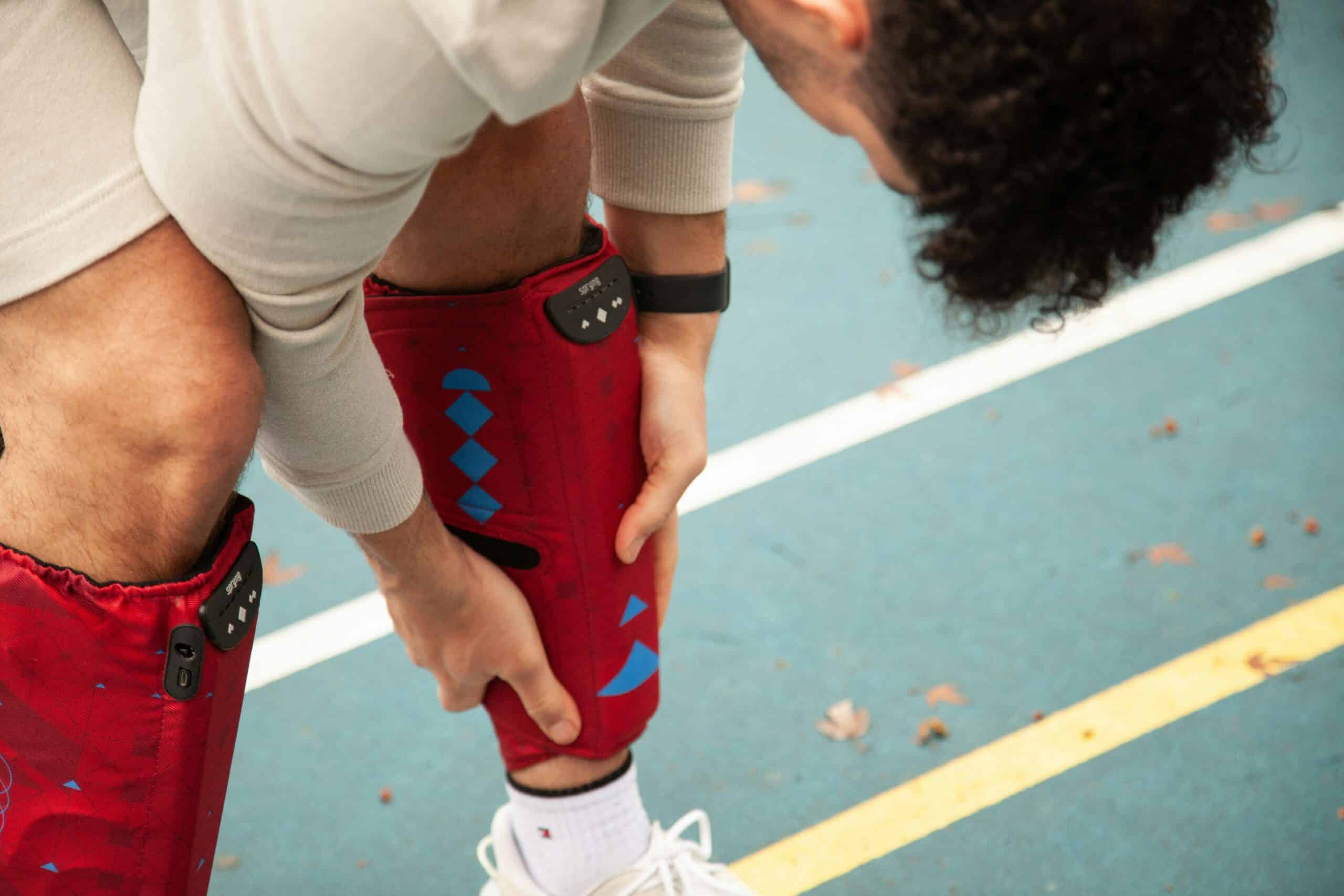
Why Knee Pain on the Trail Is a Structural Problem, Not Just Soreness
Knee pain during hiking is not random. In fact, it follows directly from the mechanical demands that trail terrain places on a joint that was not designed for sustained loaded descent. Downhill hiking specifically compresses the patellofemoral joint, the contact surface between the kneecap and the femur, with forces two to three times greater than flat walking. Moreover, uneven terrain creates lateral loading that the knee’s ligament system must resist with every off-camber step. The result is the anterior knee pain on descents, the medial aching on rocky terrain, and the post-hike swelling that hikers accept as normal but that actually indicates joint stress exceeding the tissue’s recovery capacity.
Understanding which type of knee stress causes your specific pain pattern determines whether a brace actually helps. A patellofemoral brace addresses kneecap tracking issues that cause pain during descents. A hinged brace addresses the instability that causes pain on uneven terrain. A compression sleeve addresses mild inflammatory pain that benefits from circulation support. Choosing the wrong type provides false security without addressing the actual problem.
Trekking poles reduce knee loading through a different mechanism entirely, offloading weight to the upper extremities during descent. Our guide to the best trekking poles covers the pole options that work alongside a brace for comprehensive knee protection on demanding trails.
What to Look for in Hiking Knee Braces
Support level is the first decision. Compression sleeves provide mild support for inflammatory conditions and preventive use. Hinged braces provide medial and lateral stability for ligament laxity. Patellofemoral braces use a patellar cutout and tracking strap specifically for anterior knee pain during descents. Matching support type to pain pattern produces results. Mismatching produces a false sense of security during the movement the brace fails to address.
Breathability determines wearability across a full hiking day. A brace that traps heat creates skin irritation that causes removal, which defeats the purpose entirely. Perforated neoprene and moisture-wicking knit constructions maintain acceptable skin comfort across eight-hour hiking sessions better than solid neoprene alternatives that become uncomfortably hot within the first two miles.
Secure fit under movement determines whether the brace stays in position on trail. A brace that slides down during steep descents provides inconsistent support at exactly the moment maximum support is needed. Anti-slip silicone strips, adjustable straps, and contoured designs maintain position across the full range of hiking movements where flat-knit alternatives slide consistently after the first hour.
Weight matters specifically for hiking. A brace that adds significant lower extremity weight increases fatigue and alters gait mechanics, a problem that compounds across long-distance days where gait efficiency directly determines sustainable mileage.
Best Hiking Knee Braces in 2026: Our Top 5 Picks
1. Bauerfeind GenuTrain Knee Brace, Best Overall
Best Overall | Price: ~$80
The Bauerfeind GenuTrain is the knee brace that orthopedic specialists and physical therapists most consistently recommend for active use. It is a German-engineered knit support that combines compression, patellar stabilization, and proprioceptive activation into a single lightweight design under 200 grams. The graduated compression supports without restricting circulation, the mechanism that distinguishes medical-grade compression from simple sleeve compression that applies uniform pressure regardless of anatomical variation.
GenuTrain, The Patellar Pad That Generic Sleeves Cannot Replicate
The patellar pad built into the GenuTrain’s kneecap region provides targeted stabilization that generic compression sleeves cannot replicate. It guides patellar tracking during the descent loading that causes most hiking knee pain. Furthermore, the anatomical knit design maintains position through the full range of hiking movement without the sliding that flat-knit alternatives produce after the first hour. The moisture-wicking knit manages perspiration across multi-hour sessions without the heat buildup that neoprene braces produce. At approximately $80, the GenuTrain represents a genuine investment, however, the performance and durability justify that investment for serious hikers with real knee issues.
Best for: Serious hikers with patellar tracking issues, mild instability, or inflammatory knee conditions who need medical-grade support that maintains position across full-day trail use.
PROS:
- Medical-grade knit compression with targeted patellar stabilization
- Graduated compression supports without restricting circulation
- Lightweight under 200 grams, minimal gait impact on long days
- Moisture-wicking knit for multi-hour trail comfort
- Maintains position across the full hiking movement range without sliding
CONS:
- High price at approximately $80
- Sizing requires accurate knee circumference measurement, estimate at your own risk
- Not suitable for significant ligament instability requiring hinged support
2. DonJoy Performance Bionic Knee Brace, Best for Instability
Best for Instability | Price: ~$65
Lateral instability on uneven trail terrain, the sensation of the knee giving way during side steps and rocky surface navigation, requires hinge control that compression sleeves cannot address. The DonJoy Bionic provides polycentric hinges that control the range of valgus and varus movement that ligament laxity allows. Moreover, the lightweight aircraft-grade aluminum frame keeps total brace weight at approximately 300 grams, significantly lighter than standard hinged braces that reach 600 grams or more.
DonJoy Bionic, Polycentric Hinges That Mirror Natural Knee Movement
Standard hinges restrict knee movement to a simple pivot. The polycentric hinges in the DonJoy Bionic mirror the natural knee joint movement pattern instead, allowing the full hiking movement range while controlling the excessive lateral motion that produces instability symptoms on technical terrain. At approximately $65, the DonJoy Bionic provides hinged stability support at a price that significantly undercuts premium hinged alternatives while delivering the core stability function that instability-prone hikers specifically need.
Best for: Hikers with previous ACL, MCL, or LCL injuries, anyone whose knee gives way or feels unstable during lateral movement on uneven trail terrain.
PROS:
- Polycentric hinges control lateral instability on technical terrain
- Lightweight aircraft-grade aluminum frame at approximately 300 grams
- Full hiking movement range while controlling excessive lateral motion
- Adjustable straps for a secure fit across different leg shapes
- Mid-range price for hinged support at approximately $65
CONS:
- Heavier than compression alternatives, noticeable on long mileage days
- Hinges require periodic adjustment for optimal positioning
- Bulkier profile under hiking pants than sleeve alternatives
3. McDavid 429X Knee Brace, Best for Patellar Pain
Best for Patellar Pain | Price: ~$35
Anterior knee pain, the aching under or around the kneecap during descents, stair climbing, and prolonged knee flexion, is the most common hiking knee complaint and the one that most hikers manage incorrectly with generic compression. The McDavid 429X uses a patellar buttress and lateral tracking strap specifically engineered for patellofemoral pain syndrome. The patellar cutout eliminates direct pressure on the kneecap during flexion, while the surrounding buttress guides the patella into the proper tracking position during descent loading.
McDavid 429X, Lateral Tracking Strap That Addresses the Root Cause
The lateral tracking strap prevents the lateral patellar tilt that is the primary biomechanical driver of patellofemoral pain in most hikers. Consequently, it addresses the specific tracking issue that causes anterior knee pain rather than simply compressing the joint and hoping for improvement. At approximately $35, the McDavid 429X delivers patellofemoral-specific support at an accessible price that makes it the right choice for hikers whose pain pattern specifically matches the anterior knee description.
Best for: Hikers with diagnosed or suspected patellofemoral pain syndrome, anyone whose knee pain is specifically under or around the kneecap during descents and prolonged flexion.
PROS:
- Patellar buttress and lateral tracking strap address the specific patellofemoral mechanism
- Patellar cutout eliminates direct kneecap pressure during flexion
- Lighter than hinged alternatives, minimal gait impact
- Accessible price at approximately $35
- Addresses root cause rather than simply compressing the joint
CONS:
- Specific to patellofemoral pain, less effective for instability or general conditions
- Neoprene construction retains heat on warm hiking days
- Sizing less forgiving than knit alternatives for atypical leg shapes
4. Shock Doctor Ultra Knee Brace, Best Budget Hinged Option
Best Budget Hinged | Price: ~$40
Hinged knee support does not have to cost $65. The Shock Doctor Ultra delivers bilateral hinges, adjustable straps, and a perforated neoprene body at approximately $40, the lowest price for a functional hinged brace on this list. The perforated neoprene manages heat better than solid neoprene alternatives. The bilateral hinges provide medial and lateral stability support for mild to moderate instability, appropriate for hikers who need more support than a compression sleeve provides without the premium investment that DonJoy commands.
Shock Doctor Ultra, Bilateral Hinges at Budget Price for Mild Instability
The honest comparison to the DonJoy is straightforward. The Shock Doctor’s hinge quality is adequate for mild instability during recreational hiking. However, under sustained heavy-use trail conditions, daily backpacking, technical terrain, high-mileage days, the hardware shows wear faster than DonJoy’s aircraft-grade aluminum construction. For weekend hikers testing whether hinged support improves their knee experience before committing to a premium alternative, the Shock Doctor is the right entry point.
Best for: Budget-conscious hikers with mild instability testing whether hinged support improves their hiking experience before investing in premium alternatives.
PROS:
- Bilateral hinges for medial and lateral stability at budget price
- Perforated neoprene for better heat management than solid alternatives
- Adjustable straps for secure fit
- Adequate for mild to moderate instability during recreational hiking
- Lower price at approximately $40
CONS:
- Hinge quality below DonJoy under sustained daily trail use
- Neoprene retains more heat than knit alternatives on warm hiking days
- Less precise anatomical fit than premium alternatives
5. Physix Gear Sport Compression Knee Sleeve, Best for Mild Pain
Best for Mild Pain | Price: ~$20
Not every hiking knee problem requires a structural brace. For hikers with mild inflammatory knee pain, early-stage patellofemoral discomfort, or general trail soreness, a quality compression sleeve provides meaningful support at a fraction of structural brace cost. The Physix Gear graduated compression sleeve reduces inflammatory knee symptoms during and after hiking through circulation support and mild proprioceptive enhancement. At approximately $20, it is the right starting point for hikers whose knee history warrants preventive support on longer days without the weight and bulk of structural alternatives.
Best for: Hikers with mild inflammatory pain or general trail soreness, preventive use for hikers with knee histories who want support on longer days without committing to structural bracing.
PROS:
- Lowest price on this list is approximately $20
- Lightweight and low-profile under hiking pants
- Graduated compression for circulation support
- Moisture-wicking fabric for trail comfort
- Pairs naturally with trekking poles for comprehensive mild knee support
CONS:
- No structural support for instability or ligament laxity
- Compression only, does not address patellar tracking issues
- Less effective than structural braces for moderate to significant knee conditions
Quick Comparison: Best Hiking Knee Braces 2026
| Brace | Price | Type | Best For | Score |
|---|---|---|---|---|
| Bauerfeind GenuTrain | ~$80 | Knit compression | Best overall | 9.3 |
| DonJoy Performance Bionic | ~$65 | Hinged | Instability | 9.0 |
| McDavid 429X | ~$35 | Patellar buttress | Anterior/patellar pain | 8.9 |
| Shock Doctor Ultra | ~$40 | Budget hinged | Budget instability | 8.8 |
| Physix Gear Compression | ~$20 | Compression sleeve | Mild pain | 8.7 |
Our Verdict on the Best Hiking Knee Braces
The right hiking knee brace depends entirely on your specific pain pattern, and that decision matters more than brand or price.
Choose the Bauerfeind GenuTrain at $80 if your knee pain is general inflammation or patellar tracking-related and you want the most complete medical-grade support available for full-day trail use. Choose the DonJoy Performance Bionic at $65 if your knee gives way or feels unstable on uneven terrain, the polycentric hinges address lateral instability that compression alternatives cannot control. Choose the McDavid 429X at $35 if your pain is specifically anterior, under, or around the kneecap during descents. Choose the Shock Doctor Ultra at $40 if you need hinged support on a budget and your instability is mild. And choose the Physix Gear sleeve at $20 if your knee history warrants preventive support, but you have no structural instability or patellar tracking issues.
Frequently Asked Questions: Best Hiking Knee Braces
Should I wear a knee brace for hiking?
If you experience knee pain during or after hiking, yes, provided you match the brace type to your specific pain pattern. A compression sleeve for mild inflammatory pain, a patellar buttress for anterior kneecap pain, and a hinged brace for instability. If you have no knee pain or injury history, a brace is not necessary. However, for hikers returning from a knee injury, a brace during the transition period provides valuable support while joint strength and confidence rebuild.
Does wearing a knee brace weaken the knee over time?
The research does not support this concern for short and medium-term use. Sustained brace use without progressive strengthening exercise may reduce the proprioceptive challenge that builds joint stability, which is why physical therapists typically pair brace use with strengthening rather than relying on the brace alone indefinitely. Use the brace as a tool during the recovery or high-demand period, not as a permanent substitute for joint strength.
How tight should a hiking knee brace be?
Firm enough to maintain position during hiking movement without sliding, loose enough to allow full range of motion without creating numbness, tingling, or skin marks after removal. If the brace produces any circulation restriction symptoms, it is too tight and requires adjustment or resizing. The two-finger test applies, you should be able to slide two fingers under the brace with moderate effort but not easily.
Can trekking poles replace a knee brace?
No, they address knee loading through different mechanisms that complement rather than substitute for each other. Trekking poles reduce compressive load during descents by offloading weight to the upper extremities. A knee brace addresses structural stability and patellar tracking that load reduction alone cannot resolve. For hikers with significant knee issues, using both simultaneously provides more protection than either alone. Our guide to the best trekking poles covers the pole options that work best alongside knee bracing for complete descent protection.
Do hiking knee braces work in wet conditions?
Most maintain their support function when wet. Knit braces like the Bauerfeind GenuTrain drain and dry significantly faster than neoprene alternatives, a meaningful practical advantage for wet-weather hiking and multi-day trips where drying time between uses is limited. Neoprene braces retain water and take longer to dry, the heavier wet weight and extended drying time are genuine considerations for backpacking in wet climates.
More Hiking Guides
Support helps at the margins and technique does more. Reducing knee load on descents covers what actually changes the force.
