
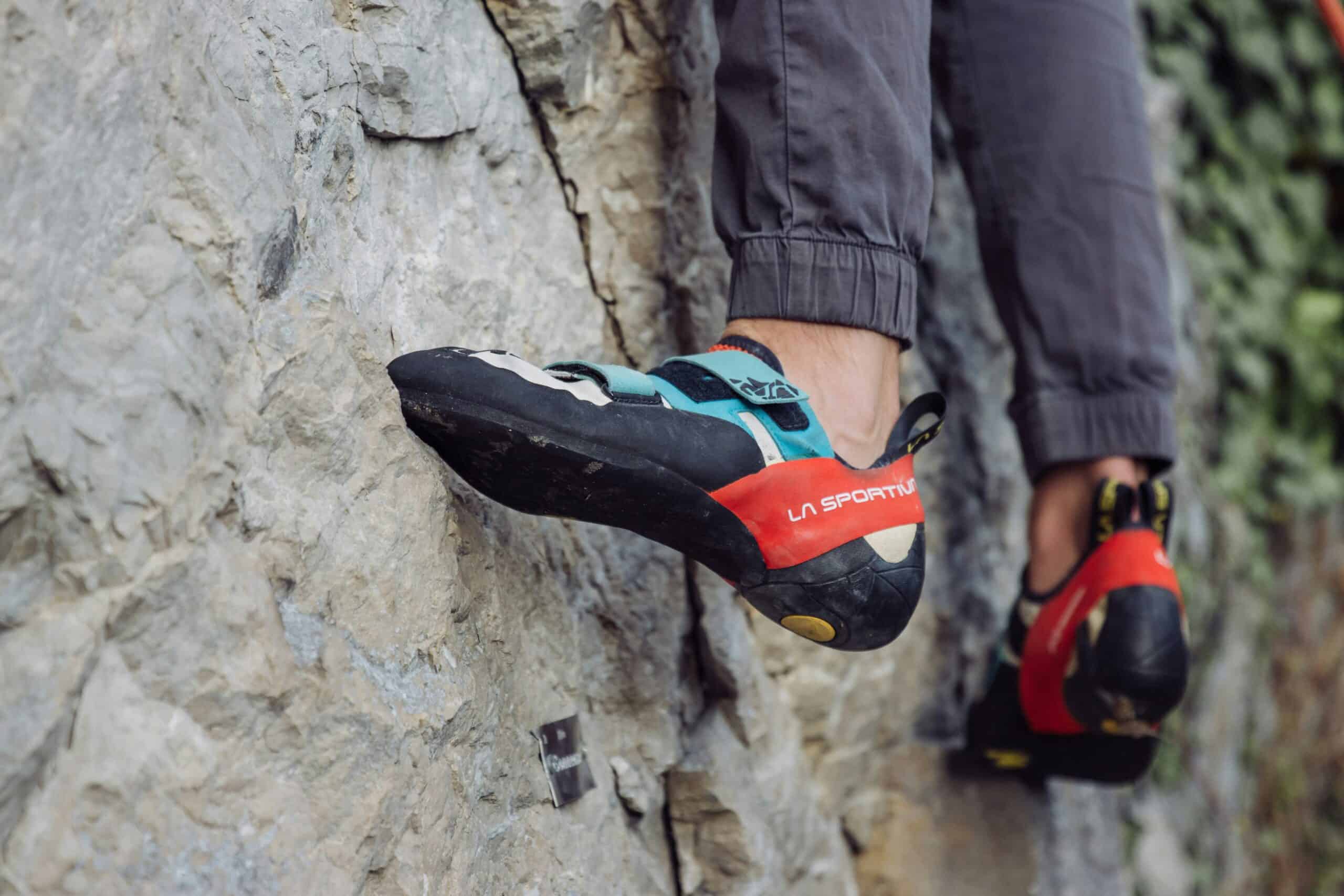
An approach shoe exists to solve one problem: getting to a climb over ground that is too technical for a running shoe and too long for climbing shoes. Sticky climbing rubber on a hiking-shaped sole is the whole idea, and it makes scrambling over slabs, boulder fields, and low-angle rock feel secure in a way a standard trail shoe does not.
The category confuses buyers because it sits between two things they already own. It is not a climbing shoe, since it will not perform on anything steep or technical. It is not a hiking shoe either, since the rubber wears faster and the fit runs closer. What it is good at is the in-between terrain that surrounds most climbing areas, and its usefulness depends on how much of that terrain you actually cross.
Quick Verdict
Buy an approach shoe if your climbing involves real scrambling to reach the base. Choose a flat, aggressive-rubber model for slab and friction, or a stiffer edging model for rocky trails under a heavy pack. If your crag has a flat five-minute walk in, a trail shoe is fine and cheaper.
Key Takeaways
- Sticky rubber compounds grip rock far better than standard trail outsoles
- A flat smooth toe area lets you edge on small features and jam in cracks
- Softer sticky rubber wears noticeably faster on pavement and hardpack
- Fit runs closer than hiking shoes but nowhere near as tight as climbing shoes
- A lace-to-toe design tightens the forefoot for precision on rock
- Approach shoes are not a substitute for climbing shoes on anything steep
How We Picked
Outsole rubber came first, since it defines the category. Climbing-grade compounds grip dry rock substantially better than general hiking rubber, and the tradeoff in durability is the price of admission. Shoes without a genuine sticky compound are trail shoes with climbing marketing.
Toe design was second. A smooth flat area at the front, sometimes called a climbing zone, is what allows precise edging and lets the shoe hold in a crack. Shoes with lugs running all the way forward lose that ability entirely.
Stiffness was treated as a fit-to-use question rather than a ranking one. Softer soles feel better on friction slab and worse under a loaded pack on rocky ground. Stiffer soles are the opposite. Neither is superior, and the guidance below sorts them by terrain instead.
1. The Classic Sticky Rubber Approach Shoe
Why It Stands Out
The archetype: a low-cut shoe with a flat smooth toe, a moderate lug pattern behind it, and climbing rubber throughout. It scrambles confidently, walks acceptably, and covers the great majority of approach terrain without specializing in any part of it.
Worth Knowing
Sticky rubber is soft, and soft rubber disappears on pavement and gravel road walks. Approaches with long hard-surface sections will wear these considerably faster than the same mileage on rock.
Right for mixed approaches with real scrambling. Skip it if your walk-in is mostly road or smooth trail.
2. The Stiff Edging Approach Shoe
Why It Stands Out
A firmer midsole transfers weight onto small edges without the shoe folding, which matters when you are moving over rocky ground under a rope and a rack. The same stiffness reduces foot fatigue on long rough approaches.
Worth Knowing
Stiffness costs sensitivity. On low-angle friction slab you feel less of what the shoe is doing, and smearing is less confident. These also need a more careful fit, since a stiff shoe that does not match your foot causes hot spots quickly.
Right for rocky approaches, heavy loads, and multi-pitch days. Skip it for pure friction terrain.
3. The Lightweight Minimal Approach Shoe
Why It Stands Out
Stripped-down models weigh very little and pack small, which matters when the shoes are going up the route clipped to a harness. For a climb finishing at a walk-off descent, carrying something light is worth more than carrying something supportive.
Worth Knowing
Minimal construction means minimal protection. Rocky ground is felt directly, and the thin uppers are not built for repeated abuse. These are a second pair for a specific job rather than a general approach shoe.
Right for carrying up a route and for walk-off descents. Skip it as your only pair.
4. The Mid-Height Approach Shoe
Why It Stands Out
A mid cut adds ankle coverage for scree, talus, and loose ground where a rolled ankle is the realistic risk. In alpine terrain where the approach is genuinely the hard part, the extra support and debris protection change how the day feels.
Worth Knowing
Height restricts ankle flex, which makes technical scrambling feel less precise. It is also warmer and heavier. For crag approaches these tradeoffs buy nothing, and pairing a low-cut shoe with gaiters handles debris more cheaply.
Right for alpine approaches over loose ground. Skip it for roadside crags.
5. The Waterproof Approach Shoe
Why It Stands Out
A membrane keeps feet dry through wet grass, snow patches, and stream crossings on early-season alpine approaches, where a soaked foot at dawn stays cold all morning.
Worth Knowing
Membranes reduce breathability substantially, and in warm dry conditions feet sweat enough to end up damp anyway. Once water comes over the collar, a waterproof shoe holds it in and dries far slower than a non-membrane shoe.
Right for wet, cold, early-season approaches. Skip it for dry desert climbing, where breathability matters more.
6. The Crossover Trail and Approach Shoe
Why It Stands Out
Hybrids use a harder-wearing rubber and a more trail-oriented last while keeping a usable climbing zone at the toe. For someone who hikes considerably more than they scramble, this lasts far longer than a soft-compound shoe while retaining most of the useful grip.
Worth Knowing
Harder rubber grips rock less confidently, and on genuine friction terrain the difference is noticeable. This is a compromise shoe and performs like one at both ends.
Right for hikers who scramble occasionally. Skip it if precision on rock is the reason you are buying.
Approach Shoes at a Glance
| Type | Sole stiffness | Rubber wear | Best terrain |
|---|---|---|---|
| Classic sticky | Moderate | Fast on hardpack | Mixed scrambling |
| Stiff edging | High | Moderate | Rocky, loaded |
| Lightweight minimal | Low | Fast | Carried on route |
| Mid height | Moderate to high | Moderate | Scree and talus |
| Waterproof | Moderate | Moderate | Wet, cold approach |
| Crossover | Moderate | Slow | Mostly hiking |
What to Look For in Approach Shoes
Is there a genuine climbing zone at the toe?
Look for a smooth flat rubber area at the front rather than lugs running to the tip. That area is what edges on small features and holds inside a crack, and its absence means the shoe cannot do the thing that defines the category.
How much scrambling does your approach really involve?
Be honest about it. If the walk to the base is a flat trail, a trail shoe costs less and lasts longer. Approach shoes earn their premium on terrain where you use your hands.
How does it lace?
Lace-to-toe designs let you tighten the forefoot for precision on rock. Standard lacing is more comfortable for walking and less precise when you are edging. Which you want follows from the balance of walking and scrambling on your approaches.
Will they be carried on the route?
If the shoes go up with you clipped to a harness, weight and packability matter more than support. If they stay at the base, comfort over the walk in and out is what counts.
Getting the Most From a Pair
Keep the toe rubber clean
Dust and grit on the climbing zone kill friction immediately. Wiping the toe against a trouser leg before committing weight to a smear is a habit worth building, and it costs nothing.
Resole rather than replace
Most quality approach shoes can be resoled once the rubber is gone but the upper is sound. Pricing that before writing a pair off changes the long-term cost substantially against a shoe that must be replaced whole.
Save them for the terrain that needs them
Wearing approach shoes as everyday footwear burns through soft rubber on pavement for no benefit. Keeping them for approaches extends their life considerably.
Clip them thoughtfully on the route
Shoes carried up a climb should hang tight to the harness rather than swinging, where they snag and unbalance you. A dedicated clip point beats threading a lace through a gear loop.
Approach Shoes vs Climbing Shoes
What each one is for
Climbing shoes have downturned toes, tight fit, and no cushioning, built for standing on features on steep terrain for short periods. Approach shoes are flat, comfortable enough to walk miles in, and grip well on low-angle rock. Neither substitutes for the other. Options for the technical end are covered in the beginner climbing shoe comparison.
Where the confusion comes from
Both use sticky rubber, which makes them look interchangeable in listings. The difference is geometry and fit rather than the compound. An approach shoe on anything vertical will feel imprecise almost immediately.
What Trips People Up
Buying them for flat approaches
Soft rubber on smooth trail wears fast and buys nothing. If you never use your hands on the way in, the money is better spent elsewhere.
Sizing them like climbing shoes
Approach shoes are walked in for miles and should fit closer than a hiking shoe but nowhere near as tight as a climbing shoe. Downsizing aggressively produces a painful walk out.
Expecting them to climb
They handle low-angle rock and easy scrambling well. On steep or technical ground they are out of their depth, and treating them otherwise is a safety question rather than a performance one.
Ignoring how fast the rubber goes
Soft compounds are consumable. A season of gravel road walk-ins can remove a noticeable amount of tread, and resoling is worth pricing before deciding a pair is expensive.
Recommended Reading
- harness options for getting started
- packs sized for a rack and a rope
- socks that manage sweat on close-fitting shoes
- how hiking shoe selection differs
- breaking in a close-fitting shoe
- first aid for scrambling terrain
- the gear you need to start climbing
Frequently Asked Questions
What is the difference between approach shoes and hiking shoes?
Approach shoes use climbing rubber and have a smooth flat toe area for edging and crack work. Hiking shoes use harder-wearing rubber with lugs running to the tip, which grips soil better and rock worse. Approach shoes exist precisely because of why hiking shoes slip on rock.
Can I climb in approach shoes?
On easy low-angle rock and scrambling terrain, yes, and that is what they are designed for. On anything steep or technical they lack the fit and toe shape to be precise, and climbing shoes are the correct tool.
How should approach shoes fit?
Snug enough that your foot does not slide forward when edging, loose enough to walk several miles comfortably. Closer than a hiking shoe, nowhere near as tight as a climbing shoe.
Do approach shoes wear out quickly?
The soft rubber wears faster than hiking outsoles, particularly on pavement and gravel. Many models can be resoled, which changes the long-term cost considerably compared with replacing them.
Are approach shoes good for hiking?
They work fine for hiking, especially on rocky terrain, but you pay for grip you may not need with faster wear. For trails without scrambling, a hiking shoe is the more sensible choice.
Should I size up or down from my hiking shoe?
Most people land a half size below their hiking shoe and well above their climbing shoe. The goal is no forward slide when edging and no pressure on the toes over a long walk out, which usually means trying both and walking a descent before deciding.
How long should a pair last?
It depends almost entirely on surface. Mileage over rock and dirt wears soft rubber slowly; the same mileage on pavement and gravel road walk-ins removes it fast. Hunters of long approaches often get a season or two before the toe needs resoling.
Do I need waterproof approach shoes?
Only for wet or early-season alpine approaches. In dry climates the membrane costs breathability and offers little, and non-waterproof shoes dry considerably faster once they do get wet.
