
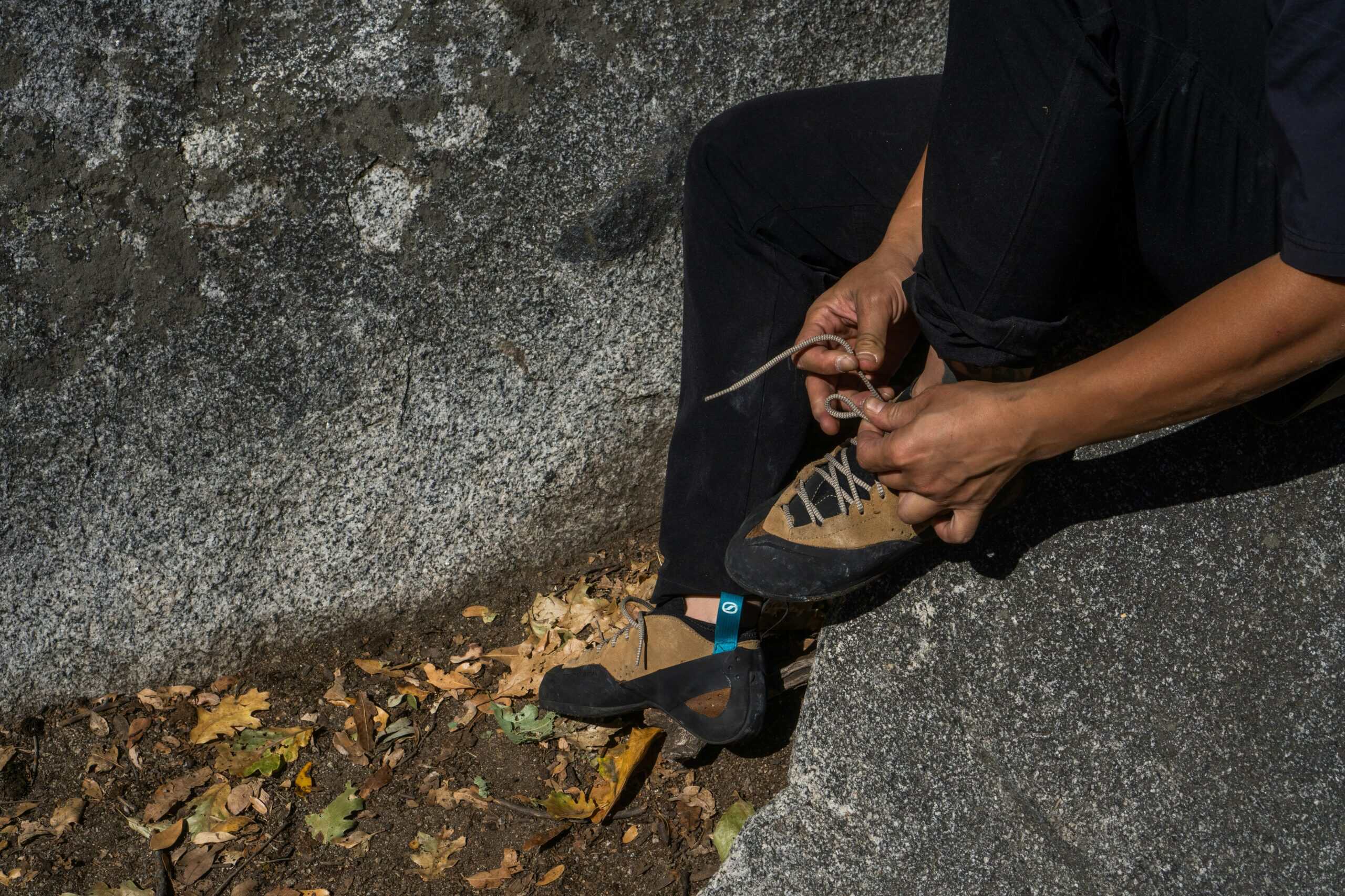
The honest starting list is shorter than any gear guide suggests, because climbing gyms rent everything a beginner needs. Shoes, harness, and a belay device come with the day pass, which means the first several sessions cost nothing beyond entry.
That matters more than it sounds. Buying a full kit before you know whether you enjoy climbing, what style you prefer, or how your feet fit in climbing shoes produces a cupboard of things that suit somebody else. Our roundup of climbing shoes for beginners covers the first real purchase. See also our guide to climbing slings and runners.
A Safety Note
Climbing equipment is life-safety gear and using it correctly is a skill taught in person, not from an article. Take instruction from a qualified instructor or a gym course before climbing on a rope. Never buy used soft goods such as ropes, harnesses, or slings, since their history is unknowable and internal damage is invisible. Moving off bolted routes means carrying your own gear, and nuts, cams and the rest of a trad rack is where that starts.
Quick Answer
Rent for the first few sessions. Buy shoes first, then a chalk bag, then a harness. Ropes and hardware come much later and only alongside instruction on how to use them.
What the Gym Provides
Almost every climbing gym rents shoes, a harness, and a belay device, and most include them in an introductory session or a first-visit package.
That covers everything needed for top roping and bouldering, which is where beginners start. Rental gear is inspected and retired on a schedule, so it is safe even though it is worn.
Rental shoes are easily the least pleasant part of the arrangement, since they are shared between hundreds of climbers and sized generously rather than snugly. That discomfort is the usual reason people buy their own shoes first, rather than any performance argument.
Our roundup of climbing chalk and chalk bags covers the other early purchase.
The Order Worth Buying In
Climbing shoes
The first purchase for most people, driven by hygiene and fit rather than by performance. Beginner shoes should be comfortable enough to wear for a full session rather than aggressively downturned.
Chalk and a chalk bag
Inexpensive, entirely personal, and used every single session. Some gyms restrict loose chalk because of the dust it creates, so a chalk ball or liquid chalk may be required instead.
A harness
Worth buying once you are climbing regularly on a rope rather than occasionally. Fit genuinely matters here and should be checked in person rather than ordered from a measurement chart alone.
A belay device and locking carabiner
Only alongside learning to belay properly. Which device suits depends on what your gym uses and what you were taught on. Our roundup of belay devices covers the types.
Shoes Are the Purchase That Matters
Climbing shoes fit differently from every other shoe, and sizing varies enormously between manufacturers. A beginner buying online without trying several models is likely to get it wrong.
The common mistake by a wide margin is buying too small. Aggressive downsizing suits experienced climbers working hard routes, and for a beginner it simply produces pain that ends sessions early and teaches nothing useful.
Flat, neutral shoes suit beginners better than downturned ones. They are more comfortable for long sessions, better for the slabby and vertical terrain beginners climb, and considerably cheaper.
Try several pairs on at the end of the day when your feet are slightly swollen, and expect a snug fit without any actual pain or badly curled toes. Our roundup of approach shoes covers getting to outdoor crags.
What You Do Not Need Yet
A rope is a substantial purchase and useless without a partner, a location, and the skills to use it. Gyms provide ropes on top-rope walls, and outdoor climbing generally happens with someone who already owns one.
Quickdraws, cams, nuts, and slings are lead climbing and trad equipment. Buying them before you can lead is buying equipment for a version of yourself that does not exist yet.
A helmet is essential outdoors and unnecessary in most gyms, which is why it belongs with the transition outside rather than with the first purchases.
Our roundup of quickdraws covers what comes later.
Never Buy Used Soft Goods
Ropes, harnesses, slings, and anything made of webbing or fabric should be bought new, without exception.
The reason is that damage to these is frequently invisible. A rope subjected to a severe fall, exposed to chemicals, or stored badly can look fine and have compromised internal fibers. A harness with UV degradation shows nothing externally.
You cannot know a used item’s history, and the person selling it may not either. The saving is small against equipment that holds your weight.
Metal hardware such as carabiners and belay devices is somewhat different in this respect, and even there a piece that has been dropped a long way onto rock may carry internal cracks you cannot see. Buying everything new is the simple rule that avoids the whole question. Our note on climbing harnesses for beginners covers the lifespan question.
Instruction Comes Before Equipment
Belaying is the skill that keeps another person alive, and it is learned in person with supervision and assessment rather than from reading.
Most gyms run a belay course and a check before allowing rope climbing, which is the standard route in. That course also teaches tying in, communication commands, and how to check a partner before they leave the ground.
Moving outdoors adds anchors, rappelling, rock assessment, and route finding, none of which transfer from gym experience. Outdoor instruction is a separate step rather than an extension.
The gear follows the skills. Someone who has been taught to lead knows what to buy; someone who bought quickdraws first has expensive equipment and no way to use it. Our note on rock climbing ropes for beginners covers the transition.
Bouldering Needs Even Less
Bouldering is climbing at relatively low height over padded flooring without any rope at all, which removes the harness, the belay device, and the need for a partner in one go.
Indoors that means shoes and chalk, and that is genuinely the whole list. It is the cheapest way to find out whether you enjoy climbing.
Outdoors it adds crash pads and spotters to the list, which turns it into a considerably more involved and more expensive proposition than the indoor version ever is.
Many people start with indoor bouldering precisely because the barrier is so low, then move onto ropes once they know they want to. Our roundup of climbing carabiners covers hardware for when you do.
Starting Climbing FAQ
What do I need for my first session?
Comfortable clothes you can move in, and nothing else. Gyms rent shoes, harness, and a belay device, and most include them in an introductory package for a first visit.
What should I buy first?
Shoes, once you know you are going back. That is driven by hygiene and fit rather than performance, since rental shoes are shared and sized generously.
Should I buy aggressive shoes?
No. Flat, neutral shoes suit beginners better, are more comfortable for long sessions, work well on the terrain beginners climb, and cost considerably less than downturned models.
Can I buy used gear?
Never soft goods. Ropes, harnesses, and slings can have invisible internal damage from falls, chemicals, or bad storage, and you cannot know a used item’s history. Buy those new.
When do I need a rope?
Later than most people think. Gyms provide ropes on top-rope walls, and outdoor climbing usually happens alongside someone who already has one. A rope without a partner and the skills is an expensive coil.
Do I need a helmet?
Outdoors, yes. In most gyms it is not required, which is why a helmet belongs with the transition to outdoor climbing rather than with your first purchases.
Is bouldering cheaper to start?
Considerably. Indoor bouldering needs shoes and chalk and nothing else, since there is no rope, harness, or partner involved. It is the lowest-barrier way to find out whether you enjoy climbing.
Do I need lessons?
For anything involving a rope, yes. Belaying keeps another person alive and is taught and assessed in person. Most gyms require a belay course and a check before allowing rope climbing.
Sources
- American Alpine Club. Climbing education and safety resources. https://americanalpineclub.org/
- UIAA International Climbing and Mountaineering Federation. Safety standards and equipment guidance. https://www.theuiaa.org/safety-standards/
- Climbing Wall Association. Industry practices for climbing gyms. https://www.climbingwallindustry.org/
Recommended Reading
See our note on when to retire climbing gear, and climbing helmets for beginners, and hardtail vs full suspension, and reading climbing grades, and indoor vs outdoor climbing, and top rope vs lead climbing.
