
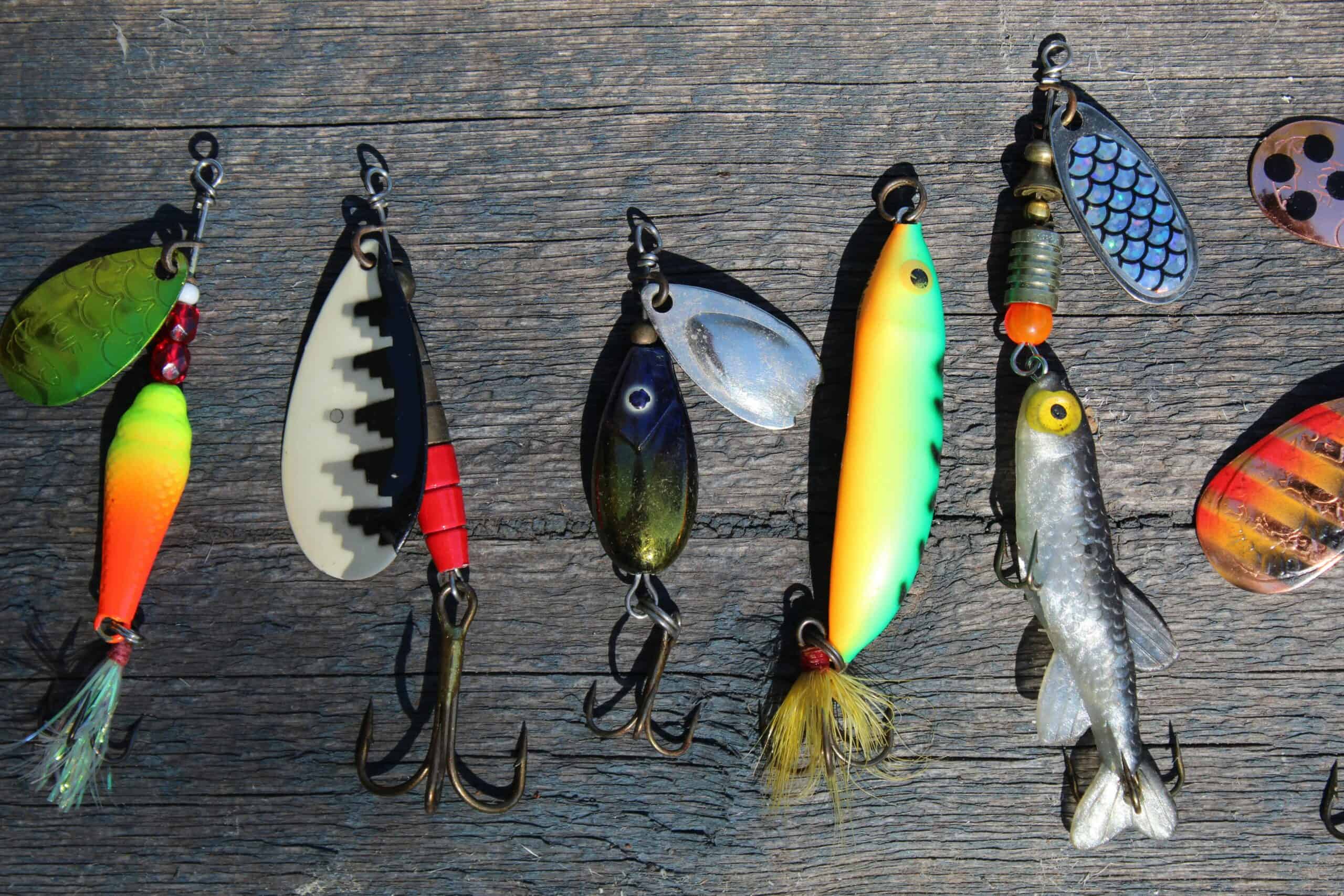
The bass fishing lure decision overwhelms beginners, specifically because the category is massive. Walk into any tackle shop, and you’ll see thousands of lures across dozens of subcategories, crankbaits, jerkbaits, soft plastics, topwaters, spinnerbaits, jigs, swimbaits. Most beginners buy lure assortments that produce minimal results because the assortments include lures that don’t match their fishing conditions, seasons, or water types. The reality is that bass fishing success comes from a small number of proven lure categories used correctly across appropriate conditions. Five quality lures fished with proper technique outperform 50 mediocre lures used randomly. The goal is to identify which categories produce reliable results and start with the proven options that experienced anglers use. See also our guide on how to catch bass.
This guide covers the five best fishing lures for bass in 2026, evaluated on consistent fish-catching across varied conditions, durability through hooks and bass jaws, versatility across water types, and the practical question of whether the lure actually catches bass for beginners rather than only experienced anglers who know the specific technique tricks.
How Bass Strike Lures
Understanding how bass actually attack lures explains why specific lure categories work consistently while others don’t.
Bass strike out of three primary motivations: hunger, reaction, and aggression. Hunger strikes occur when bass actively feed, and lures imitate prey species accurately. Reaction strikes occur when lures produce vibration, flash, or movement that triggers instinctive predatory response regardless of hunger state. Aggression strikes occur when lures invade territorial space or trigger defensive responses, particularly during spawning seasons.
Different lure categories target different strike motivations. Soft plastics in natural colors target hungry feeding bass through realistic imitation. Crankbaits and spinnerbaits target reaction strikes through vibration and flash. Topwater lures combine reaction and aggression triggers through surface disturbance. Jerkbaits exploit the suspended fish that hover without actively feeding, triggering reaction strikes through erratic movement.
Bass cognition affects lure selection. Bass aren’t smart in the cognitive sense, but they do learn from negative experiences. Heavily pressured waters where bass have been caught multiple times require different presentations than less-fished waters. Subtle natural-color lures often outperform flashy alternatives in pressured waters; flashy aggressive lures work better in less-pressured situations.
Water temperature affects bass behavior dramatically. Cold water (below 50°F) slows bass metabolism, favoring slow-moving lures fished deliberately. Warm water (65-85°F) produces aggressive feeding, favoring fast-moving reaction baits. Hot water (above 85°F) drives bass deep, favoring deep-diving lures and bottom-bouncing techniques.
For a broader fishing setup, our guides on the best spinning reels for beginners and the best fishing tackle boxes for beginners cover the reel and storage equipment that pair with lures for complete bass fishing kits.
What to Look For in Bass Lures
Match the Lure to Bass Behavior
Different lures target different bass behaviors. Successful bass fishing matches lure category to current conditions rather than relying on single favorite lures regardless of context.
Active feeding bass respond to varied lures, including crankbaits, spinnerbaits, and natural-color soft plastics. Inactive bass require slower presentations, including soft plastics fished deliberately or finesse techniques. Spawning bass strike aggressively at lures invading nesting territory. Post-spawn bass recover slowly and prefer subtle presentations.
Build a small collection of lures targeting each major scenario rather than buying many lures for one scenario. Five quality lures covering different conditions outperform 20 lures all targeting the same scenario.
Hook Quality
Lure hooks determine whether strikes convert to landed fish. Quality hooks penetrate quickly with hookset pressure, hold securely during fights, and resist bending under sustained load. Cheap hooks lose fish through poor penetration, hook bend-out, or pull-out during fights.
Look for lures using sticky-sharp, chemically sharpened hooks from reputable manufacturers (VMC, Owner, Gamakatsu). Avoid lures with generic hooks that bend visibly under modest pressure or appear dull on the package. Many serious anglers replace stock hooks on quality lures with premium aftermarket alternatives for maximum hookset reliability.
Color Selection
Bass color preferences vary by water clarity and conditions, but some patterns produce reliable results across scenarios.
Natural colors (green pumpkin, watermelon, baitfish patterns) work well in clear water and pressured conditions. The realistic appearance triggers a feeding response from bass that have learned to avoid obvious lures.
Bright colors (chartreuse, hot pink, white) work well in stained water and active feeding conditions. The visibility helps bass locate lures in conditions where natural colors disappear.
Dark colors (black, dark purple, dark blue) work surprisingly well in clear water and bright conditions. The silhouette against the sky produces a strong visual contrast that bass can see clearly.
Start with one of each color category rather than buying multiple variants of single colors. The variety covers different conditions better than depth in any single color.
Versatility Across Conditions
Lures that work across varied conditions provide better value than specialized lures that work only in specific situations. A soft plastic worm can be fished as a Texas rig, Carolina rig, wacky rig, or shaky head, four distinct techniques from one lure category. A specialized topwater frog works only in specific surface conditions.
For beginners, prioritize versatile lure categories that handle multiple scenarios. Soft plastic worms, plastic crawfish, and basic crankbaits provide breadth of use that specialized alternatives can’t match.
Durability Through Bass Jaws
Bass jaws are abrasive and damage lures over multiple strikes. Quality lures survive dozens of strikes; cheap alternatives may damage after 2-3 hookups. Look for lures with reinforced construction at hook points and durable paint or plastic that resists scratching.
Soft plastics specifically need to balance softness (for action) with durability (for hookup tolerance). Quality soft plastics survive 3-5 fish per lure; cheap alternatives may tear after the first fish. The cost-per-fish math favors quality investment for serious bass anglers.
Best Fishing Lures for Bass in 2026: Our Top 5 Picks
1. Yamamoto Senko 5-Inch, Best Overall
Best Overall Bass Lure | Price: ~$8 (10-pack)
Best for: Most bass fishing scenarios across varied conditions, beginners wanting reliable confidence bait, and anglers building a first-quality lure collection.
The Yamamoto Senko represents the practical default for bass fishing lures. The 5-inch soft plastic stick bait is widely considered the most consistently effective bass lure ever made, professional tournament anglers, fishing guides, and casual weekend anglers all use Senkos with high success rates. The lure works through multiple rigging methods, varied retrieval techniques, and across nearly all bass fishing conditions.
The salt-impregnated plastic provides specific properties that explain the consistent success. The salt adds weight for casting and bottom feel. The salt also produces a specific sinking action that bass find irresistible. Cheap “Senko knock-offs” use different plastic without salt impregnation, producing different action and significantly reduced catch rates despite similar appearance.
Rigging versatility matters dramatically. The Senko fishes effectively as a Texas rig (weedless for cover fishing), wacky rig (hook through middle for fluttering action), Carolina rig (with leader and weight for deep water), or shaky head (with jighead for finesse fishing). The single lure handles 90% of bass fishing scenarios through technique adjustments.
The 10-pack pricing provides reasonable value. At $8 for 10 lures, the per-lure cost is $0.80, moderate for the category but justified through reliable performance. For serious bass fishing, the Senko consistently produces results that cheaper alternatives can’t match.
PROS:
- Most consistently effective bass lure available
- Salt-impregnated plastic for specific action
- Multiple rigging methods for versatility
- Works across varied conditions
- Strong tournament-proven performance
CONS:
- Soft plastic damages after 2-4 fish per lure
- Salt content limits shelf life over years
- Higher per-lure cost than cheap alternatives
- Requires hooks and weights for full rigging
For a comprehensive bass fishing setup, our guide on the best spinning reels for beginners covers the reel selection that pairs with quality lures.
2. Strike King KVD Square Bill Crankbait, Best Crankbait Pick
Best Bass Crankbait | Price: ~$8 (single lure)
Best for: Reaction strikes on active feeding bass, shallow water fishing, and beginners wanting fast-moving lures.
The Strike King KVD Square Bill Crankbait targets the reaction strike category through vibration and visual action. The square bill design deflects off cover (rocks, logs, brush) without snagging, allowing fishing in scenarios where round-bill crankbaits get stuck immediately. The deflection often triggers strikes from bass holding near cover.
The design uses Kevin VanDam’s tournament expertise, VanDam is the most successful professional bass fisherman of all time, and the KVD signature line reflects his specific lure preferences. The square bill profile, color patterns, and action characteristics match what produces tournament-winning results.
For beginners wanting fast-paced fishing with immediate visual feedback, crankbaits produce more action than soft plastic fishing. The retrieval involves consistent reeling rather than the patient’s bottom-feel that soft plastics require. The faster pace matches beginner attention spans while still producing fish.
The trade-off is the more specialized application. Crankbaits work best in active feeding conditions in shallow water. For deep water, inactive bass, or pressured conditions, soft plastics or finesse techniques outperform crankbaits significantly. Match the lure to current conditions rather than relying on crankbaits universally.
PROS:
- Excellent deflection off the cover
- Reaction strikes on active bass
- Fast-paced fishing pace
- Kevin VanDam tournament endorsement
- Varied color patterns for conditions
CONS:
- Specialized to shallow water
- Less effective on inactive bass
- Single lure cost compounds across colors
- Limited use in deep water applications
3. Booyah Spinnerbait, Best Spinnerbait
Best Bass Spinnerbait | Price: ~$7 (single lure)
Best for: Stained water conditions, low-light fishing, and beginners wanting versatile reaction baits.
The Booyah Spinnerbait targets bass reaction strikes through metallic flash and vibration. The dual willow leaf blades produce maximum flash for visual triggers; tandem Colorado/willow combinations produce both vibration and flash. The bait fishes through varied depths and conditions, providing versatility that specialized lures lack.
Spinnerbaits excel in stained or muddy water where natural-color soft plastics disappear. The metallic flash provides visual contrast that bass can locate in poor visibility conditions. Low-light scenarios (early morning, evening, overcast days) also favor spinnerbaits over more subtle alternatives.
The single-hook design produces better hookup ratios than treble-hook crankbaits in heavy cover. The bait fishes through grass, brush, and rocks without snagging as frequently as treble-hooked alternatives. For cover-heavy fishing scenarios, spinnerbaits provide practical advantages that crankbaits can’t match.
Build quality matches the Booyah brand’s mid-tier positioning. The construction handles regular use without significant degradation. Replacement skirts extend the useful life beyond what hard-bait lures provide, the lure body lasts indefinitely; only the rubber skirts need periodic replacement.
PROS:
- Excellent for stained water visibility
- Flash and vibration combination
- Single-hook design reduces snagging
- Replaceable skirts extend the useful life
- Versatile depth fishing
CONS:
- Less effective in clear water
- Heavier than ultralight applications
- A wire frame can bend during heavy use
- Limited use in extremely shallow water
4. Strike King Rage Tail Craw, Best Soft Plastic Crawfish
Best Crawfish Imitator | Price: ~$6 (7-pack)
Best for: Bass fishing in rocky areas, pre-spawn and post-spawn periods, Texas rig applications.
The Strike King Rage Tail Craw imitates crawfish, a major bass food source across most US waters. The molded body shape and animated claws produce a realistic crawfish appearance, while the soft plastic construction allows aggressive action through rod movements that hard-body lures can’t match.
Crawfish are particularly important during pre-spawn and post-spawn periods when bass actively feed to build energy reserves or recover from spawning. Crawfish lures produce excellent results during these specific seasonal windows, often outperforming alternatives that work better at other times.
The Rage Tail design produces aggressive flutter action when fished with quick rod movements. The active claws move independently from the body, creating the distressed crawfish appearance that triggers a bass strike response. The combination of realism and action exceeds simpler soft plastic crawfish alternatives.
Rigging works best as a Texas rig (weedless through cover) or jighead with weight. For rocky areas specifically, the Texas rig allows bouncing through rocks without snagging while keeping the lure in optimal strike zones. The application matches typical bass habitat preferences during seasonal periods.
PROS:
- Excellent crawfish imitation
- Aggressive claw action
- Multiple rigging methods
- Strong pre-spawn and post-spawn performance
- Effective in rocky areas
CONS:
- Specialized to specific seasons
- Less effective during summer/winter
- Plastic damage after 3-4 fish
- Requires a hook and weight investment
5. Berkley PowerBait MaxScent The General, Best Budget Pick
Best Budget Bass Lure | Price: ~$6 (8-pack)
Best for: Budget-conscious bass anglers, beginners testing soft plastic techniques, and varied conditions where scent matters.
The Berkley PowerBait MaxScent The General provides Senko-style stick bait functionality at lower per-lure cost than Yamamoto alternatives. The PowerBait formulation includes MaxScent, Berkley’s scent technology that releases over 8 hours of fish-attracting scent during fishing. The added scent factor compensates for some of the action advantages that Yamamoto Senkos provide through salt impregnation.
The lure handles varied rigging methods similarly to Senkos, Texas rig, wacky rig, Carolina rig, and shaky head all work effectively. For beginners learning soft plastic techniques, the General provides genuine bass-catching capability at a moderate cost while building skills before potentially upgrading to Senkos.
The trade-offs match the budget positioning. The plastic action isn’t quite as refined as Yamamoto’s salt-impregnated plastic. Scent advantages help compensate but don’t fully match the tactile feedback that Senko bass strikes produce. Long-term durability is comparable but less consistent than Senko alternatives.
For beginners genuinely uncertain whether soft plastic bass fishing will become a regular hobby, the General provides genuine functionality at a minimum financial commitment. If soft plastic fishing proves productive, transitioning to Yamamoto Senkos produces better long-term results meaningfully. If soft plastic fishing remains occasional, the General handles the use case adequately.
PROS:
- Lowest price for quality stick bait
- MaxScent technology adds attraction
- Multiple rigging methods
- Useful for testing soft plastics
- Wide retail availability
CONS:
- Action less refined than Yamamoto Senko
- Scent eventually fades with extended use
- Less proven tournament track record
- Plastic damages similarly to alternatives
How to Build a Beginner Bass Lure Collection
The right starting collection depends on your typical fishing conditions and water types.
For most beginners across varied conditions, the Yamamoto Senko provides the foundational lure that handles 60-70% of bass fishing scenarios. Buy this first regardless of other selections.
Add Strike King KVD Square Bill Crankbait for reaction strike fishing during active feeding periods. The crankbait handles fast-paced fishing that soft plastics don’t address well.
Include Booyah Spinnerbait for stained water and low-light conditions where soft plastics and crankbaits perform poorly. The spinnerbait fills the gap in visibility-challenged scenarios.
Add Strike King Rage Tail Craw for pre-spawn and post-spawn seasonal periods when crawfish imitation produces dramatic results. The seasonal application matches specific high-productivity windows.
Berkley PowerBait The General provides backup stick bait functionality at a lower cost when premium options become expensive across regular use. Useful as supplementary stock for high-use scenarios.
Quick Comparison Table
| Lure | Best For | Price | Type | Primary Use |
|---|---|---|---|---|
| Yamamoto Senko 5-Inch | Most scenarios | ~$8 (10) | Soft plastic stick bait | Versatile foundation |
| Strike King KVD Square Bill | Reaction strikes | ~$8 each | Crankbait | Active feeding bass |
| Booyah Spinnerbait | Stained water | ~$7 each | Spinnerbait | Low visibility conditions |
| Strike King Rage Tail Craw | Crawfish imitation | ~$6 (7) | Soft plastic crawfish | Pre/post-spawn periods |
| Berkley PowerBait The General | Budget pick | ~$6 (8) | Soft plastic stick bait | Budget stick bait |
Our Verdict
Most beginners do best with the Yamamoto Senko 5-Inch as the foundation of their bass lure collection. The combination of versatile rigging methods, salt-impregnated plastic action, tournament-proven results, and reasonable per-lure pricing makes it the single most important bass lure to own. Buy this first regardless of other selections.
For reaction strikes on active feeding bass, add Strike King KVD Square Bill Crankbait. The square bill deflection and Kevin VanDam endorsement justify the price for shallow water and reaction fishing scenarios.
Stained water and low-light conditions warrant Booyah Spinnerbait. The flash and vibration combination handles visibility-challenged scenarios that other lures don’t address well.
Pre-spawn and post-spawn seasonal periods benefit from Strike King Rage Tail Craw for crawfish imitation during high-productivity feeding windows.
Budget-conscious beginners can start with Berkley PowerBait MaxScent The General for affordable stick bait functionality before upgrading to premium alternatives.
Pair the right lures with a quality spinning reel for proper casting, a fishing tackle box for lure organization, polarized fishing sunglasses for spotting bass in cover, and a fishing vest for organized gear access. The combined bass fishing kit handles real on-water scenarios across varied conditions and seasons.
Frequently Asked Questions
What color lures work best for bass?
Color selection depends on water clarity and conditions. Clear water favors natural colors (green pumpkin, watermelon, baitfish patterns). Stained water favors bright colors (chartreuse, hot pink, white) for visibility. Dark colors (black, dark purple) work in clear water for silhouette visibility. Start with one of each color category rather than buying multiple variants of single colors.
How many lures do I need for bass fishing?
A small, focused collection works better than large random assortments. Start with 5-7 lures covering different scenarios: 1-2 stick baits (Senko style), 1 crankbait, 1 spinnerbait, 1 crawfish imitator, and 1-2 specialty lures for your typical conditions. Quality over quantity produces better results than buying many cheap alternatives.
Do I need different lures for largemouth vs smallmouth bass?
Largemouth and smallmouth bass respond to similar lure categories but with some preference differences. Smallmouth often prefer slightly smaller lures and more natural colors. Largemouth tolerate larger lures and brighter colors. Most bass lures work effectively for both species, the major selection variables are water type and conditions rather than species specifically.
How long do bass lures last?
Soft plastic lures typically catch 2-5 fish per lure before becoming too damaged for further use. Hard plastic lures (crankbaits, jerkbaits) last for dozens of fish but may eventually require hook replacement. Spinnerbaits last indefinitely with periodic skirt replacement. The cost-per-fish math favors quality lures over budget alternatives for committed anglers.
What’s the best lure for beginners just starting bass fishing?
The Yamamoto Senko 5-inch is universally recommended as the best beginner bass lure. The versatile rigging methods, consistent fish-catching across varied conditions, and forgiving technique requirements match beginner skill development. Most experienced anglers consider the Senko the most consistently effective bass lure available across all skill levels.
When should I use topwater lures vs subsurface?
Topwater lures work best during low-light periods (early morning, evening, overcast days) and warm-water seasons. Subsurface lures work across more conditions and seasons. For beginners, start with subsurface lures (soft plastics, crankbaits) that produce results in varied conditions before learning the topwater technique that requires specific conditions.
How do I know if my lure technique is working?
Strikes are the obvious indicator. Less obvious indicators include followers (bass following lures without striking), fish moving away from disturbance, or sudden silence in previously active areas. Adjust technique based on these signals, slower retrieves for inactive bass, faster for active fish, different colors for visibility issues. The mental adjustment matters more than equipment changes for many situations.
Should I use scented lures?
Scent helps in specific scenarios, cold water, stained water, post-front conditions where bass are less aggressive. Scent products (PowerBait formulation, scent attractants applied to lures) provide modest improvement in productive fishing conditions but won’t compensate for fundamentally wrong lure selection or location choice. Quality lure selection and presentation matter more than scent application for most scenarios.
