
Getting caught out past sunset turns a familiar trail into a guessing game, and a phone light does not reach far enough to show you the next cairn. The best hiking flashlights put a bright, focused beam far down the trail while staying light enough that you forget it is in your pack. A good one balances real output with throw, runs for hours on a charge, shrugs off a drop on rock, and offers a few brightness modes so you can save battery on easy stretches and open it up when the route gets vague.
I hike often here in Arizona, where an early start or a longer-than-planned loop means finishing in the dark more than I would like, so a dependable light rides in my pack on every trip. This guide pairs that habit with product research and the lighting standards cited at the end. If you would rather keep your hands free, our guide to the best headlamps for hiking covers that route, and many hikers carry both.
Quick Verdict
The Fenix PD36R Pro is the pick most hikers should start with: a high, regulated output, a beam that reaches well down the trail, USB-C charging, and a build that takes abuse. Want lighter and cheaper? The ThruNite TC15 covers the basics. Want the toughest tactical-grade body? The Streamlight ProTac HL.
Why Trust This Guide
Independent picks, reader-supported through affiliate links at no cost to you. Selections draw on product research, manufacturer specs, and the lighting standards cited in Sources. First-person notes appear only where the gear was genuinely used, and the flashlight I hike with runs in my own words below with no brand claimed.
Key Takeaways
- Lumens measure brightness at the source, but beam distance and beam type decide how useful that light is on a trail.
- Multiple brightness modes let you stretch runtime on easy ground and open up the beam when you need to find the route.
- A hiking flashlight earns its place by being light, sturdy, and water resistant, since it lives in your pack in all weather.
- A flashlight throws a longer, hand-aimable beam; a headlamp keeps your hands free. Many hikers carry both.
How We Picked the Best Hiking Flashlights
We weighted the specs that actually matter on a trail. Lumens tell you the light intensity on the highest setting, while beam distance tells you how far that light reaches before it fades to the brightness of a full moon, which outdoor guides treat as the floor for safe travel. A light that balances both beats one that only chases a big lumen number. We looked for a regulated output that holds steady brightness instead of dimming steadily, several modes including a genuine high, and runtime long enough to cover a night descent. Durability counted too: reputable makers publish impact and water resistance under the ANSI FL1 standard, so a light rated for drops onto concrete and rated at least IPX7 for water gives you real numbers rather than marketing. Finally, weight and grip, since a light you dread carrying stays home. We spread the picks from budget to premium so there is a fit for any pack.
1. Fenix PD36R Pro
Why It Stands Out
The Fenix PD36R Pro is the flashlight most hikers should buy first. It pushes a high, regulated output through a beam that reaches far down a trail, charges over USB-C so you can top it off from a power bank in camp, and packs several modes plus a quick tactical high. The aircraft-grade aluminum body and high water resistance mean it handles rain, dust, and the odd drop on granite without complaint.
Worth Knowing
Running it wide open drains the battery fast and warms the head, which is normal for a bright light and why the lower modes exist. It costs more than a basic light, though the build and output justify it for anyone out often.
Buy it if you want one do-everything trail light that will last for years. Skip it if you only need occasional backup and want to spend less.
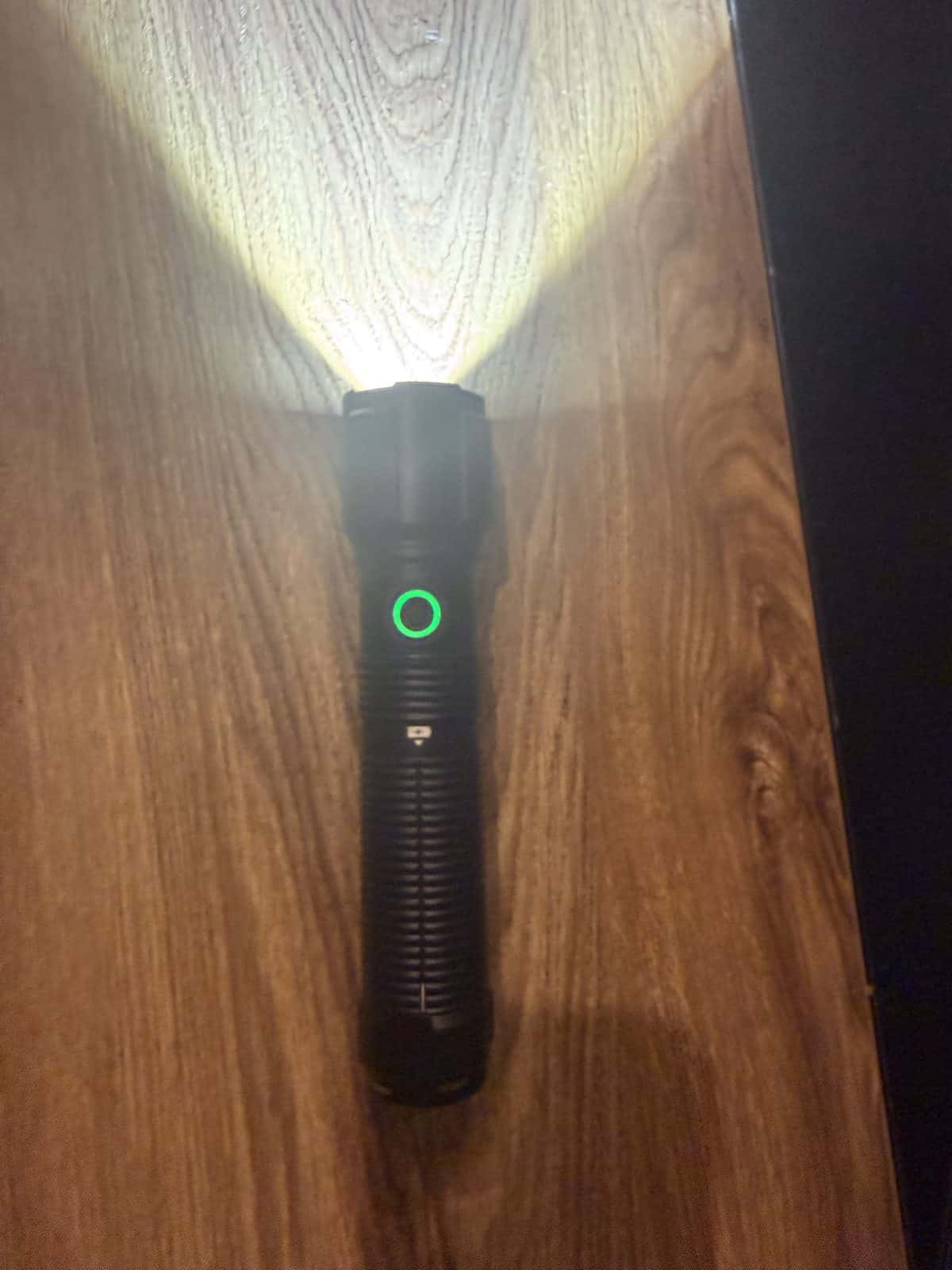
2. The Hiking Flashlight I Carry
Why It Stands Out
This is the light I actually hike with, so I will speak plainly about it. It is a compact, high-powered flashlight with several modes, and the thing that sold me is the mix of a genuinely bright high beam and a body light enough that I forget it is in the pack until I need it. On the days a loop runs long and I finish in the dark, the high beam reaches far enough to pick out the trail and the next marker, and I drop to a lower mode to save battery on easy stretches. It has stayed sturdy through plenty of trips and holds a charge well enough that I am not nursing it on a long day.
Worth Knowing
I treat it as one piece of my dark-hiking kit rather than my only light, and I keep it in an easy pocket of my daypack so I am not digging for it at dusk. If yours is an unbranded light like mine, look for the same things I lean on: a real high mode, a solid feeling body, and a battery that lasts a full outing. Any well-built light with that combination will do the job.
Buy a light like this if you want a bright, packable everyday trail flashlight. Skip it if you need published lab numbers and a warranty, which is where a name-brand pick earns its price.
3. Olight Warrior 3S
Why It Stands Out
The Olight Warrior 3S is the premium pick for people who want a refined interface. It charges magnetically, so there is no port flap to fail, and a proximity sensor drops the output when the beam is too close to a surface to protect the head from overheating. A tail switch and side switch make one-handed mode changes easy with gloves on.
Worth Knowing
The proprietary magnetic charger is one more cable to keep track of, and the price sits at the high end. The tail switch layout takes a day to learn if you are used to a single button.
Buy it if you want a polished, feature-rich light and do not mind paying for it. Skip it if you prefer standard USB-C charging you can replace anywhere.
4. ThruNite TC15
Why It Stands Out
The ThruNite TC15 is the value pick that punches above its price. It delivers a strong high beam, charges over USB-C, and keeps a compact, pocketable body, which makes it an easy first serious flashlight or a light backup to keep in the pack. For the money it covers everything a day hiker needs.
Worth Knowing
The highest mode steps down after a stretch to manage heat, so the peak number is a burst rather than a sustained level. The clip is fine but not the toughest on the list.
Buy it if you want a bright, rechargeable light without the premium price. Skip it if you want the most rugged body for hard use.
5. Streamlight ProTac HL
Why It Stands Out
The Streamlight ProTac HL is the toughness pick. Built for duty use, it runs on common batteries or a dual-fuel setup, so you are never stranded waiting for a charge on a multi-day trip. The anodized aluminum body and simple, programmable single-button interface hold up to rough handling season after season.
Worth Knowing
The base model runs on disposable lithium cells rather than a built-in rechargeable, which some hikers prefer for backcountry reliability and others find less convenient. The interface is deep, with programmable mode sets that take a minute to learn.
Buy it if you want a rugged body built for hard use and the option to swap in fresh batteries anywhere. Skip it if you want the simplicity of a built-in rechargeable.
6. Anker Bolder LED Flashlight
Why It Stands Out
The Anker Bolder is the budget pick for hikers who want a capable light without spending much. It offers a zoomable head that shifts from flood to spot, several modes, USB rechargeability, and a water-resistant body, which is a lot of function for the price. It makes a solid car or pack backup.
Worth Knowing
The output and build do not match the premium lights, and the zoom mechanism is one more moving part than a fixed reflector. Treat it as a dependable budget option rather than a lifetime tool.
Buy it if you want the most light for the least money or a cheap backup. Skip it if you want top-tier output and durability.
Hiking Flashlights at a Glance
| If you want this | Reach for | Why |
|---|---|---|
| One do-everything trail light | Fenix PD36R Pro | High regulated output, long throw, USB-C, tough body |
| A bright, packable everyday carry | A light like the one I hike with | Genuine high beam, light in the pack, holds a charge |
| A polished, feature-rich light | Olight Warrior 3S | Magnetic charging, proximity sensor, dual switches |
| The best value | ThruNite TC15 | Strong beam, USB-C, compact, low price |
| Maximum toughness | Streamlight ProTac HL | Duty-grade body, swappable batteries, programmable |
| A budget backup | Anker Bolder | Zoomable, rechargeable, water resistant, cheap |
How to Choose a Hiking Flashlight
Lumens and Beam Distance
Lumens measure how bright the light is at the source, but beam distance measures how far it reaches before fading to full-moon brightness, and that reach is what helps you find the trail. A tightly focused beam throws farther than a wide flood at the same lumen count, so read both numbers together. For trail use, a light that balances a strong high with a beam that reaches a couple hundred feet covers most situations.
Runtime and Battery
Runtime tells you how long the light holds output before it drops off, and it falls fast on the brightest mode. A regulated light holds steady brightness through most of the charge, then fades quickly at the end, so know your light and carry a backup. Rechargeable USB-C models are convenient for most hikers, while lights that also take common batteries shine on multi-day trips where you cannot charge.
Weight and Size
A hiking flashlight lives in your pack, so weight matters. Compact lights that fit a pocket get carried; heavy ones get left behind. Match the size to the trip: a small everyday light for day hikes, a larger high-output light when you expect real dark or long night miles.
Durability and Water Resistance
Reputable makers publish impact and water resistance under the ANSI FL1 standard, where lights are dropped onto concrete and rated for water intrusion. Look for an aluminum body and at least an IPX7 water rating so a river crossing or a downpour does not end your light. A sturdy build is the difference between a light that survives one season and one that survives many.
Flashlight vs Headlamp for Hiking
Reach and Control
A handheld flashlight aims where you point it and usually throws a longer, tighter beam, which helps you scan for a marker across a wash or read terrain far ahead. A headlamp keeps both hands free for poles, scrambling, or setting up camp, but its beam follows your head and tends to be shorter range. The flashlight wins for reach and aiming; the headlamp wins for hands-free tasks.
Which One Fits Your Hike
Carry a flashlight when you want power and throw for route-finding, and a headlamp when you need your hands. Many hikers carry both, using the headlamp for camp chores and the flashlight to reach out and confirm the trail. Our guide to the best headlamps for hiking covers the hands-free side, and a camping lantern handles soft, wide light around camp.
Common Hiking Flashlight Mistakes to Avoid
Chasing Lumens Alone
A giant lumen number on the box means little if the beam floods wide and reaches nowhere. Two lights with the same lumens can perform very differently depending on the reflector and optics, so weigh beam distance and beam type alongside the lumen rating.
Ignoring Runtime
The brightest mode drains the battery fastest, and a light that is dead at the trailhead is useless. Check the runtime at the mode you will actually hike on, charge before every trip, and carry a backup light or spare cells for anything after dark.
Leaving It on High the Whole Time
Blasting full output on an easy stretch wastes battery and can wash out your night vision. Use a lower mode for general walking and save the high beam for when you genuinely need to reach out and find the route.
Skipping Water and Impact Ratings
A light that is not rated for water or drops will fail exactly when the weather turns. Buy one with a published IP rating and a durable body, and you will not be left in the dark by a rainstorm or a fumble on rock.
Recommended Reading
Frequently Asked Questions
How many lumens do I need for a hiking flashlight?
For trail use, a light with a strong high mode and a beam that reaches a couple hundred feet covers most situations. Beam distance and beam type matter as much as the raw lumen number, since a focused beam reaches farther than a wide flood at the same lumens.
Is a flashlight or a headlamp better for hiking?
They do different jobs. A flashlight throws a longer beam you can aim by hand, which helps with route-finding, while a headlamp keeps your hands free for poles and camp tasks. Many hikers carry both.
What does beam distance mean?
Beam distance is how far the light reaches before it fades to the brightness of a full moon, which is treated as the minimum for safe outdoor travel. It is measured in meters and depends on how well the light focuses its output, not just on lumens.
Should I get a rechargeable or battery-powered flashlight?
Rechargeable USB-C lights are convenient for most hikers and easy to top off from a power bank. Lights that run on common batteries have an edge on multi-day trips where you cannot charge, since you can swap in fresh cells. Some lights do both.
How water resistant does a hiking flashlight need to be?
Look for at least an IPX7 rating, which means the light survives brief submersion, so a downpour or a dropped light in a stream does not kill it. Reputable brands publish this under the ANSI FL1 standard.
Why does my flashlight get dimmer after a few minutes on high?
Bright lights produce heat, so many step down from the peak level to protect the electronics, which is normal. A regulated light then holds a steady lower brightness for most of the charge before fading near the end.
Do I need multiple brightness modes?
They help a lot on the trail. A lower mode saves battery and protects your night vision on easy ground, while a high mode lets you reach out and find the route when the trail gets vague. A red mode, if included, preserves night vision around camp.
Can I just use my phone flashlight instead?
In a pinch, but a phone beam is weak, floods wide, and drains the battery you need for navigation and emergencies. A dedicated flashlight reaches far enough to find the trail and leaves your phone charged for maps and calls.
