
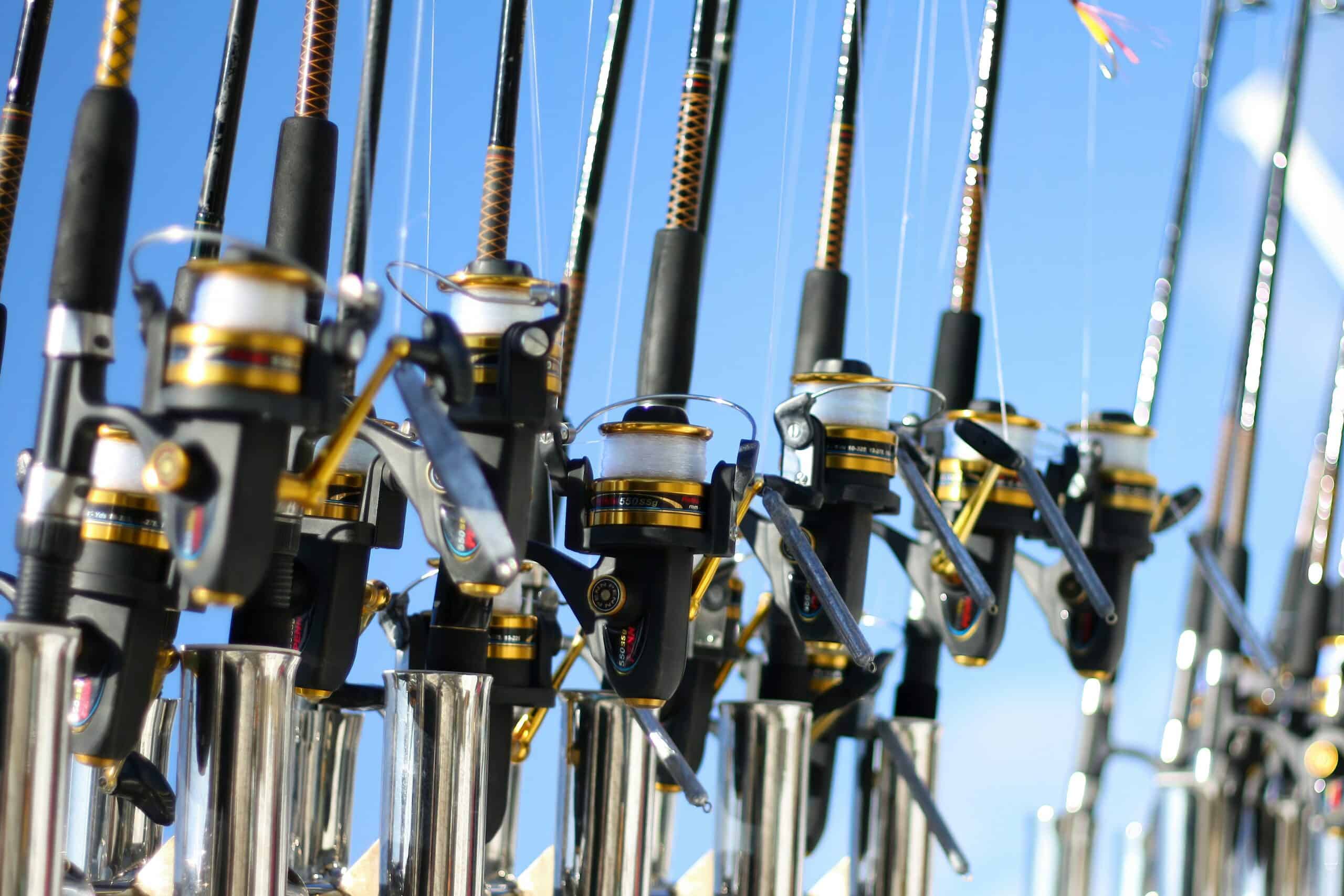
Trolling for walleye is the opposite of jigging. The rod sits in a holder, the bait runs 40 to 100 feet behind the boat, and the strike comes as a soft load you might miss if the rod is too stiff to bend at all. The best trolling rods for walleye blend a soft glass or composite tip that telegraphs the take with enough backbone to set a treble hook at trolling speed. Five Amazon picks below across price tiers, with the rod actions that actually work for crankbaits, lead core, and inline boards.
Quick Verdict:
- Best for anglers running crankbaits and inline boards in the 1.5-2.5 mph range: a 7’6″ medium-power rod with a glass or composite tip absorbs the strike without ripping the bait from a soft walleye mouth.
- Who should skip this: jigging-focused anglers who don’t troll; a sensitive graphite jigging rod serves you better than any trolling-specific stick.
Why Walleye Trolling Rods Are Different From Other Rods
Walleye have soft mouths. A treble hook on a crankbait can rip free during the hookset if the rod transmits the strike too aggressively.
The trolling rod’s job is to absorb the strike, load up against the fish, and let the boat’s forward motion drive the hook. A graphite jigging rod fights against that mechanic; a true trolling rod works with it.
Length matters too. Trolling rods run 7 to 9 feet because the extra length sweeps the bait wider from the boat and reduces line-tangling when running multiple rods off boards.
Power and action need to match the technique. Crankbait trolling wants medium power with a moderate or slow action; lead core trolling wants heavier power to handle the weight of the line itself.
The five picks below cover the categories that work for walleye trolling specifically. Budget specialty, entry-tier value, mid-tier graphite, premium composite, and walleye-targeted premium.
What to Look for in a Walleye Trolling Rod
Length Matched to Your Trolling Setup
7 feet to 7’6″ is the sweet spot for most walleye trolling. Long enough to sweep wide off the boat, short enough to stow easily in rod lockers.
8’6″ to 9′ rods come in when you’re running planer boards and need maximum line separation. Going longer than that mostly creates rod-handling problems without measurable benefit.
Soft Tip With Real Backbone
The tip needs to bend visibly under a 2-3 ounce crankbait at trolling speed. Stiff graphite tips don’t telegraph strikes well and rip trebles loose on the hookset.
The backbone (the bottom two-thirds of the rod) needs enough power to hook and land a fish without bending into a U-shape. Medium power with moderate or moderate-fast action hits this balance for most walleye work.
Glass, Composite, or Specialty Graphite
Fiberglass rods have the softest tip and best telegraphing properties. Composite (glass + graphite) blends balance softness with sensitivity.
Pure graphite trolling rods exist but require specialty taper designs to work for walleye. Most general-purpose graphite is too stiff at the tip.
Guide Quality and Spacing
Trolling rods spend hours under sustained load. Aluminum oxide guide rings are the minimum; SiC or titanium-framed guides are the upgrade that matters on longer days.
Guide count matters less than ring quality. A 7’6″ rod with 8 well-built guides outperforms one with 10 cheap guides.
Handle and Reel Seat for Holder Compatibility
Trolling rods sit in rod holders. The reel seat needs to clear the holder design without binding, and the foregrip needs enough length for the holder to grab without crushing the blank.
Cork handles are traditional and grip well when wet; EVA foam is more durable for boat use and easier to clean. Either works; pick what feels right in your hand.
1. Berkley Cherrywood HD Trolling Rod, Best Budget Pick
Best budget trolling rod | Price: ~$50
The Berkley Cherrywood HD is the cheapest legitimate walleye trolling rod that holds up to a season of real use. A 7’6″ medium-power blank with a composite construction that gives you most of the strike-absorption benefit of pure glass at half the price of mid-tier rods.
The cork handle and stainless guide frames keep the spec list honest at this price. Owners running 3 to 4 rods off boards can outfit a setup for under $200 instead of $500+ with premium picks.
The trade-off is between finish quality and long-term durability. Cheap reel seats can loosen over a season; cheap guides can crack if hit against gunwales.
Key Features
- 7’6″ length, medium power, moderate action
- Composite (glass and graphite) construction
- Stainless steel guide frames with aluminum oxide rings
- Cork handle with stainless steel reel seat
- Two-piece design for storage
PROS:
- Cheapest legitimate walleye trolling rod
- Composite construction handles strikes well
- Outfits multi-rod setups at low cost
- Berkley’s brand backing for warranty issues
CONS:
- The reel seat can loosen over a heavy season
- Guides less durable than mid-tier alternatives
- Cosmetic finish wears faster
- Not designed for lead core or downrigger use
Best for: beginning walleye anglers outfitting their first trolling setup, or experienced anglers needing budget spares.
2. Daiwa Wilderness Trolling Rod, Best Entry-Tier Value
Best entry-tier trolling rod | Price: ~$60
The Daiwa Wilderness sits a step above the Cherrywood in build quality with a small price premium. Same 7’6″ length and medium power, but with better guide hardware and a more refined blank taper.
The Fuji-style aluminum oxide guides hold up better against repeated braid-line abrasion. The EVA foregrip is easier to clean than cork after a season of fish slime and bait residue.
For anglers planning to use the same rod for multiple seasons, the small price step up pays back in durability. Daiwa’s manufacturing consistency is also more reliable than budget-tier brands.
Key Features
- 7’6″ length, medium power, moderate action
- Composite blank construction
- Aluminum oxide guides with Fuji-style frames
- EVA foregrip with cork rear handle
- Single-piece blank for sensitivity
PROS:
- Better guides than budget alternatives
- EVA foregrip resists slime and bait residue
- Daiwa manufacturing consistency
- Multi-season durability at entry pricing
CONS:
- Single-piece blank harder to transport
- Action still slightly fast for pure crankbait specialists
- The reel seat is functional but not premium
- Color options limited
Best for: anglers planning to use the same rod for 3+ seasons who want a step up from the absolute budget tier.
3. Okuma SST Trolling Rod, Best Mid-Tier Graphite
Best mid-tier walleye trolling rod | Price: ~$80
The Okuma SST switches from pure composite to a specialty graphite blank with a glass-tip insert, which produces the soft-tip-with-backbone profile walleye trolling demands. 24-ton carbon construction in the bottom two-thirds, glass tip section, and a deeper modulus blend than entry-tier rods.
For anglers serious about technique-specific gear, this is the right starting point. The blank loads differently than composite alternatives, with more progressive bend through the strike and a sharper hookset at the end.
Okuma’s manufacturing has improved meaningfully in recent years. The SST line specifically is built for trolling applications, with guide spacing optimized for rod-holder use.
Key Features
- 7’6″ or 8’6″ length options
- Medium-light to medium power
- Specialty graphite blank with glass tip insert
- Stainless guides with Zirconium inserts
- Custom Okuma reel seat designed for holder use
PROS:
- Specialty taper designed for trolling
- Progressive bend telegraphs strikes well
- Better guides handle braid line
- Length options for different setups
CONS:
- Premium pricing vs entry tier
- The glass tip insert can fail at the joint with hard knocks
- Heavier than pure graphite alternatives
- Custom reel seat limits aftermarket reel compatibility
Best for: dedicated walleye anglers ready to step up from generic rods to technique-specific gear.
4. Fenwick HMG Trolling Rod, Best Premium Composite
Best premium composite walleye trolling rod | Price: ~$130
Fenwick’s HMG line carries the brand’s reputation for premium blanks, and the trolling-specific variant balances graphite sensitivity with the soft-tip behavior trolling demands. The blank uses Fenwick’s proprietary HMG carbon construction with a composite tip section that handles crankbait loading without losing strike detection.
The Fuji guides and reel seat are noticeably better than mid-tier alternatives. Build quality shows in the wraps, the finish, and the long-term durability that justifies the price step up.
For multi-rod setups where you’re outfitting 4 to 6 rods, the cost adds up fast. For single-rod buyers or dedicated trolling anglers running 1-2 premium sticks alongside budget spares, this is the right tier.
Key Features
- 7’6″ or 8’6″ length options
- HMG carbon blank with composite tip section
- Fuji aluminum oxide guides
- Fuji reel seat with cork accents
- One-piece blank construction
PROS:
- Premium blank with refined taper
- Fuji guides and reel seat
- Multi-season durability
- Better cosmetic finish than mid-tier alternatives
CONS:
- Premium pricing limits multi-rod outfitting
- One-piece blank harder to store
- Cork accents wear in heavy use
- Fenwick’s customer service reputation is mixed
Best for: anglers running one or two premium trolling sticks alongside budget spares for the full rod count.
5. St. Croix Eyecon Trolling Rod, Best Walleye-Specific Premium
Best walleye-specific premium rod | Price: ~$160
St. Croix designed the Eyecon series specifically for walleye applications, with separate models for jigging, casting, and trolling. The trolling variant uses a SCII graphite blank with a custom taper that loads progressively from tip to butt.
For anglers who specialize in walleye and want the most technique-specific rod available, this is the right tier. The blank action is genuinely different from general-purpose trolling rods, and the difference shows up in hookup-to-landed-fish ratios over a season.
The lifetime warranty from St. Croix backs the premium pricing. American manufacturing (Park Falls, Wisconsin) and the brand’s reputation in the walleye fishing community justify the price step up for serious anglers.
Key Features
- 7’6″ to 9′ length options
- SCII graphite blank with walleye-specific taper
- Premium Fuji or Sea Guide hardware
- Cork handle with St. Croix reel seat
- Lifetime original-owner warranty
PROS:
- Designed specifically for walleye trolling
- Lifetime warranty backing
- American manufacturing
- Strong reputation in the walleye fishing community
CONS:
- Premium pricing, especially for multi-rod outfitting
- SCII blank is the entry St. Croix grade (not their top-tier)
- Cork handle wears in heavy use
- Specialty taper less versatile for non-walleye species
Best for: dedicated walleye anglers who want the most technique-specific gear available with a strong warranty.
Which Walleye Trolling Rod Fits Your Setup
| Your situation | Berkley Cherrywood | Daiwa Wilderness | Okuma SST | Fenwick HMG | St. Croix Eyecon |
|---|---|---|---|---|---|
| New angler outfitting first walleye trolling setup | Best fit, lowest entry cost | Best fit, small step up | Skip, premium not needed yet | Skip, premium not needed yet | Skip, premium not needed yet |
| Running 4+ rods off boards (multi-rod outfitting) | Best fit, cost scales | Best fit, cost scales with quality | Workable, premium starts to hurt | Skip, too expensive across 4 rods | Skip, too expensive across 4 rods |
| Single dedicated trolling stick for a serious angler | Skip, under-built for daily use | Workable, durable enough | Best fit, right balance of price and quality | Best fit, premium without specialty cost | Best fit, walleye-specific design |
| Crankbait trolling at 1.5-2.5 mph | Workable, adequate tip | Best fit, better action match | Best fit, designed for it | Best fit, composite tip handles it well | Best fit, taper designed for this |
| Lead core or downrigger applications | Skip, too light | Workable, depends on the length variant | Workable, depends on length variant | Best fit, premium blank handles weight | Best fit, specialty heavy-power available |
| Lifetime warranty / long-term ownership | Skip, limited warranty | Workable, standard warranty | Workable, limited warranty | Workable, standard warranty | Best fit, lifetime warranty |
| Workable, needs a heavier power version | Best fit, generic enough | Best fit, generic enough | Workable, leans walleye | Workable, premium walleye specialist | Skip, too walleye-specific |
| Tight budget, single-rod purchase | Best fit, cheapest legitimate option | Best fit, small premium for durability | Workable, moderate price step | Skip, premium tier | Skip, premium tier |
Prices above are estimates and shift with sales and seasonal promotions.
How to Match the Right Walleye Trolling Rod to Your Technique
Start with the technique you’re actually using. Crankbait trolling at 1.5-2.5 mph wants medium power with moderate action; lead core or downrigger work wants heavier power.
If you’re running a single rod, length 7’6″ to 8′ is the most versatile starting point. It handles most boards and most crankbait sizes without limiting future technique expansion.
For multi-rod setups, vary the rod lengths across your spread. The longer rods (8’6″ to 9′) run off the outside boards; the shorter rods (7′ to 7’6″) run closer to the boat or as flat lines off the stern.
Budget priorities matter. Outfitting 4 rods at $50 each is a $200 commitment; outfitting them at $160 each is a $640 commitment.
For anglers building a serious setup over time, the workable approach is a mix: 2-3 premium rods for the boards that fish hottest, plus 2-3 budget spares for the rest of the spread. Don’t try to outfit everything at the top tier on day one.
The order I’d recommend for most anglers: Berkley Cherrywood HD for budget outfitting and spares, Daiwa Wilderness for the entry step up, Okuma SST as the mid-tier daily driver, Fenwick HMG for premium, without specialty buyers, St. Croix Eyecon for dedicated walleye anglers who want the most technique-specific gear available.
For matching the right reel to your trolling rod, see our roundup of the best baitcasting reels for beginners and the best fishing rod holders for boats for the rest of the setup.
Frequently Asked Questions
What length is best for a walleye trolling rod?
7’6″ to 8′ is the most versatile starting point for most walleye trolling. Longer rods (8’6″ to 9′) work well for the outside positions on a board spread; shorter rods (7′ to 7’6″) work for closer-to-boat positions.
For a single all-purpose rod, 7’6″ is the right default. It handles most techniques without limiting future expansion.
Should I use a casting or spinning rod for walleye trolling?
Casting rods are the standard for walleye trolling. Line management is easier with a casting reel for trolling applications, and the rod-holder compatibility is better.
Spinning rods work for shallow trolling at slower speeds but become awkward with heavier lures or lead core. Most dedicated walleye trollers use casting setups.
What power and action do I need for crankbait trolling?
Medium power with moderate or moderate-fast action. The medium power handles 1/2 to 1 oz crankbaits without overloading; the moderate action provides the soft tip walleye fishing demands.
Avoid fast-action graphite rods designed for jigging. They transmit strikes too aggressively and rip trebles loose at the hookset.
Do I need different rods for lead core trolling?
Yes, lead core wants heavier power than standard crankbait trolling. The weight of the line itself loads the rod before the lure does, so you need more backbone to feel strikes.
Medium-heavy power with moderate action handles most lead core applications. Some manufacturers make rods specifically labeled for lead core; these are the right choice for dedicated lead core trolling.
How many rods should I outfit for serious walleye trolling?
Most state regulations allow 2-3 rods per angler. For a two-angler boat, that means 4-6 rods total.
Check your state’s specific regulations before buying. Some states require additional lines-attendant licenses for multi-rod setups; others limit you to one rod regardless.
Are expensive trolling rods worth it for walleye fishing?
For dedicated walleye anglers running technique-specific setups, yes. The blank quality and taper differences show up in hookup ratios and landed-fish percentages over a season.
For casual or occasional anglers, no. Budget rods like the Berkley Cherrywood handle most walleye situations adequately, and the cost difference can be spent on better baits, electronics, or boat upgrades.
What’s the difference between a trolling rod and a downrigger rod?
Downrigger rods are typically longer (8’6″ to 10′) with heavier power because they’re rigged with the line attached to a weighted ball that pulls the rod into a deep bend (the “load”) before the strike releases it.
General trolling rods work for board trolling and inline weight applications, but lack the heavy power downriggers require. For dedicated downrigger fishing, buy purpose-built downrigger rods.
How long do walleye trolling rods last?
Budget rods like the Cherrywood last 1-2 seasons of heavy use before guides or reel seats start failing. Mid-tier rods last 3-5 seasons; premium rods like the St. Croix Eyecon last 10+ years with normal care.
Storage matters as much as build quality. Rods stored in horizontal racks last longer than rods leaned against walls; rods rinsed after saltwater or weed-heavy use last longer than rods left dirty.
