
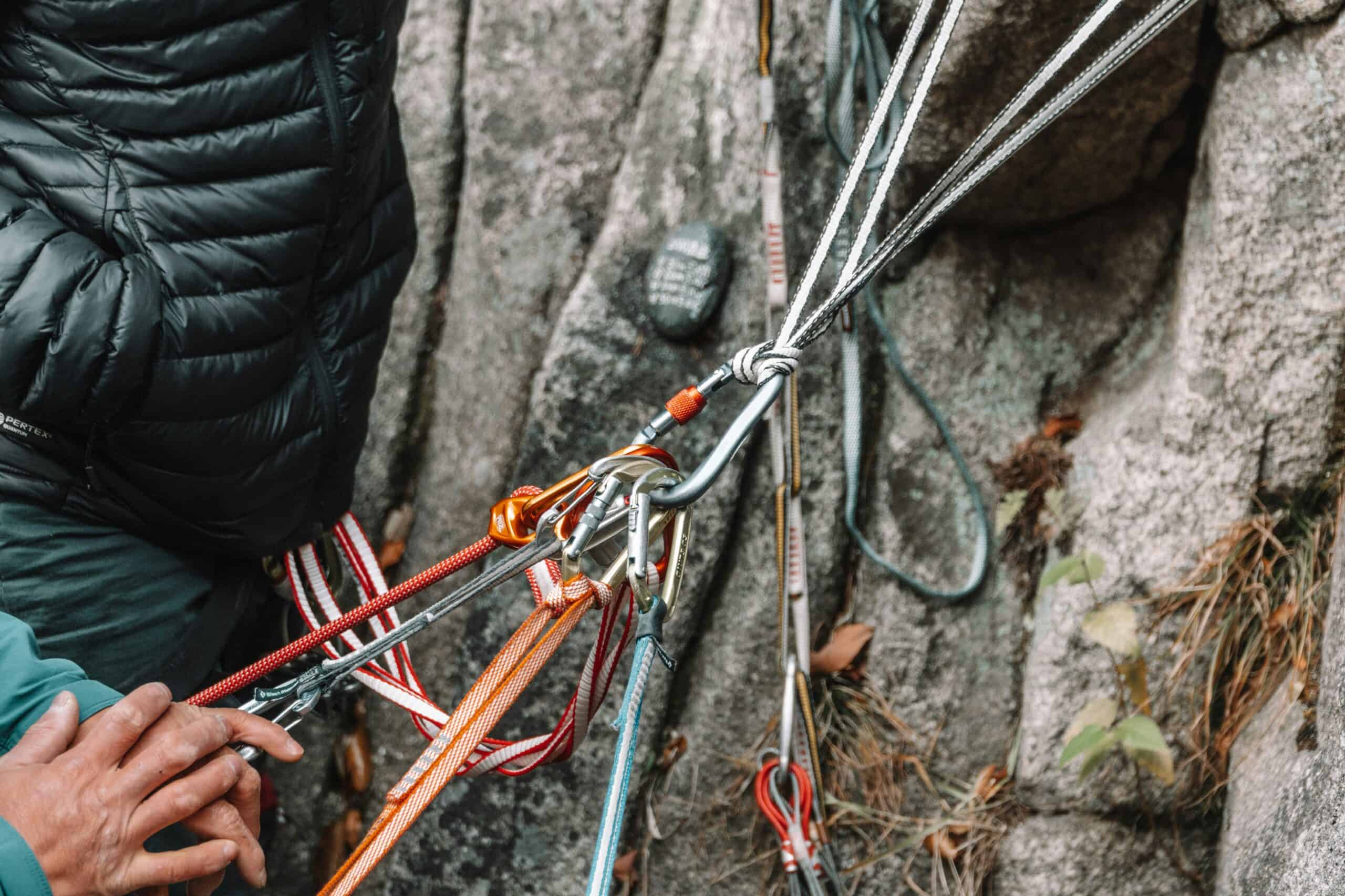
A carabiner is the small metal link that ties a climbing system together, and choosing one is less about a single “best” and more about matching the type to the job. Locking carabiners secure belay devices and anchors where an accidental gate opening would be dangerous, while lighter non-locking carabiners handle quickdraws and racking gear. The best climbing carabiners come down to gate type, shape, and where they sit in your system, so the picks below are sorted that way. For the wider climbing kit, see our guides to belay devices and climbing harnesses.
Climbing Carabiners at a Glance
| Carabiner | Type | Gate | Best use |
|---|---|---|---|
| Black Diamond RockLock | Locking | Screwgate | Belay, anchors |
| Petzl Attache | Locking | Screwgate | Lightweight belay |
| Black Diamond GridLock | Locking | Auto-lock | Belay device keeper |
| DMM Phantom | Non-locking | Straight/bent | Quickdraws, racking |
| Petzl Spirit | Non-locking | Straight/bent | Sport quickdraws |
| Black Diamond Positron | Non-locking | Straight/bent | Value quickdraws |
If you are assembling a first rack, prioritize one or two quality locking carabiners for belaying and anchors, then a set of non-locking carabiners for quickdraws. A pear-shaped screwgate locker like the Black Diamond RockLock or Petzl Attache is the versatile belay-and-anchor default, an auto-locking keeper carabiner helps prevent cross-loading a belay device, and lightweight non-lockers like the DMM Phantom keep a rack manageable. Match each carabiner to its role rather than buying one type for everything.
Key Takeaways
- Locking carabiners secure belays and anchors; non-locking handle quickdraws and racking.
- Screwgate lockers are simple and light; auto-locking gates close themselves for extra security.
- Pear-shaped lockers suit belaying; D-shaped are strong and efficient for other uses.
- Always choose carabiners rated for climbing and inspect them for wear.
- Match each carabiner to its role rather than using one type everywhere.
How We Picked the Best Climbing Carabiners
We sorted by type, gate, and shape, since the right carabiner depends entirely on where it sits in the system. We looked for climbing-rated hardware from established brands, smooth gate action, and shapes suited to each job.
We covered locking carabiners for belays and anchors and non-locking for quickdraws and racking. Every pick is a widely available climbing-rated line so you can match hardware to your rack. Always follow proper training and inspect gear before use.
Black Diamond RockLock Screwgate
Why It Stands Out
The Black Diamond RockLock is a large pear-shaped screwgate locker that suits belaying and building anchors, with plenty of room for a belay device and knots. Its size and shape make it the versatile locking default. It handles the jobs where security matters most.
Worth Knowing
A larger locker is heavier than minimalist models. A screwgate must be checked to confirm it is locked. It is the pick for a versatile belay-and-anchor locker.
Best for belaying and anchor building. Skip it if you want the lightest possible locker.
Petzl Attache Screwgate
Why It Stands Out
The Petzl Attache is a lightweight pear-shaped screwgate locker that balances low weight with enough room for belaying, making it a favorite for climbers counting grams. It suits belaying and anchors where weight matters. The light build is its main draw.
Worth Knowing
A lighter locker is smaller, so it has less room than a big pear locker. A screwgate needs a visual lock check. It is the pick for a lightweight belay locker.
Best for weight-conscious belaying and anchors. Skip it if you want maximum room for gear and knots.
Black Diamond GridLock Auto-Lock
Why It Stands Out
The Black Diamond GridLock is an auto-locking belay carabiner designed to keep the belay device oriented and help prevent cross-loading, adding security at the belay. Its shape isolates the belay loop connection. The anti-cross-loading design is its purpose.
Worth Knowing
Auto-locking gates take a moment to learn to open one-handed. It is purpose-built for belaying rather than general use. It is the pick for a dedicated belay keeper.
Best for belayers who want anti-cross-loading security. Skip it if you want a general-purpose locker.
DMM Phantom Non-Locking
Why It Stands Out
The DMM Phantom is a light, compact non-locking carabiner well suited to quickdraws and racking gear, keeping a full rack manageable. Its low weight and smooth gate make it a rack workhorse. Efficiency is its strength.
Worth Knowing
Non-locking carabiners are for quickdraws and racking, not belaying or anchors. Buy them in the quantity your rack needs. It is the pick for lightweight quickdraws.
Best for building quickdraws and racking gear. Skip it if you need a locking carabiner for belay or anchors.
Petzl Spirit Non-Locking
Why It Stands Out
The Petzl Spirit is a well-regarded non-locking carabiner favored for sport quickdraws, with a smooth gate and clean nose that clips and unclips easily. It suits sport climbers building or refreshing quickdraws. The smooth action is its main appeal.
Worth Knowing
Like all non-lockers, it is for quickdraws and racking, not securing belays. Straight-gate and bent-gate versions pair on a quickdraw. It is the pick for quality sport quickdraws.
Best for sport climbers building quickdraws. Skip it if you need a locking carabiner.
Black Diamond Positron Non-Locking
Why It Stands Out
The Black Diamond Positron is a value non-locking carabiner that keeps quickdraw-building affordable without giving up a usable keylock-style nose and smooth gate. It suits climbers assembling a rack on a budget. Value is its draw.
Worth Knowing
Value carabiners may be slightly heavier than premium models. They are for quickdraws and racking, not belaying. It is the pick for budget quickdraws.
Best for budget-minded quickdraw building. Skip it if you want the lightest premium carabiner.
How to Choose a Climbing Carabiner
Locking or Non-Locking
Use locking carabiners wherever an accidental gate opening would be dangerous, like belaying and anchors, and non-locking carabiners for quickdraws and racking gear. This split is the most important decision. Match the lock type to the role.
Gate Type
Screwgate lockers are simple and light but must be manually locked and checked, while auto-locking gates close themselves for extra security at the cost of some fiddliness. Choose screwgate for simplicity and auto-lock for hands-off security. Both are valid for belaying.
Shape
Pear-shaped carabiners give room for belay devices and knots, D-shaped carabiners are strong and efficient for general use, and specialized shapes suit specific jobs. Match the shape to the task. A pear locker is the versatile belay choice.
Rating and Inspection
Only use carabiners rated and certified for climbing, and inspect them for wear, sharp edges, or gate problems before each use. Our guides to climbing ropes and chalk and chalk bags cover more of the kit.
Building Your First Carabiner Set
Start With Lockers
A first set usually starts with one or two quality locking carabiners for belaying and anchors, since those are the highest-consequence uses. A pear-shaped screwgate is a versatile place to start. Get the security-critical pieces right first.
Add Non-Lockers for Draws
Once your lockers are covered, add a set of non-locking carabiners for quickdraws and racking, buying the quantity your climbing needs. Straight-gate and bent-gate carabiners pair on quickdraws. Our climbing shoes guide covers the rest of a beginner setup.
Common Carabiner Mistakes
Using a Non-Locker for Belaying
Belaying and anchors need a locking carabiner so the gate cannot open accidentally. Never belay off a non-locking carabiner.
Cross-Loading the Gate
A carabiner loaded across its minor axis is far weaker than along its spine. Keep loads on the spine, and consider an anti-cross-load belay carabiner.
Skipping Inspection
A worn gate, sharp groove, or damaged carabiner is a safety risk. Inspect carabiners before use and retire any that fail a check.
Recommended Reading
- Belay devices for climbing
- Climbing harnesses for beginners
- Climbing ropes for beginners
- Climbing shoes for beginners
- quickdraws for sport routes
- pads for bouldering falls
- the gear you need to start climbing
Frequently Asked Questions
What is the difference between locking and non-locking carabiners?
Locking carabiners have a gate that locks shut to prevent accidental opening, used for belaying and anchors, while non-locking carabiners have a simple spring gate for quickdraws and racking. The locking type is for high-consequence connections where a gate opening would be dangerous. Match the type to the job rather than using one everywhere.
What carabiner should I use for belaying?
Belaying calls for a locking carabiner, commonly a pear-shaped screwgate or an auto-locking belay carabiner, since the gate must not open accidentally under load. Some belay carabiners are shaped to help prevent cross-loading the belay device. Always use a locking carabiner rated for climbing and proper technique.
Are screwgate or auto-locking carabiners better?
Screwgate lockers are simpler and lighter but must be manually locked and checked, while auto-locking gates close themselves for extra security at the cost of being fiddlier to open. Both are used for belaying and anchors. The better choice depends on whether you prioritize simplicity or hands-off security.
How many carabiners do I need for climbing?
It depends on your discipline: a first setup often starts with one or two lockers for belaying and anchors, plus a set of non-lockers for quickdraws, with the quantity growing for longer or trad routes. Building from lockers first covers the security-critical uses. Your climbing style sets how many quickdraws and racking carabiners you need.
When should I retire a carabiner?
Retire a carabiner if it is dropped a significant distance onto a hard surface, shows sharp grooves or deep wear, has a gate that does not close or lock properly, or is damaged in any way. Regular inspection before use catches problems. When in doubt about a carabiner’s integrity, retire it.
Can I use any carabiner for climbing?
No. Only carabiners specifically rated and certified for climbing should be used in a climbing system, never keychain or accessory carabiners, which are not strength-rated. Climbing-rated carabiners carry markings indicating their strength ratings. Using an unrated carabiner in a climbing system is dangerous.
