
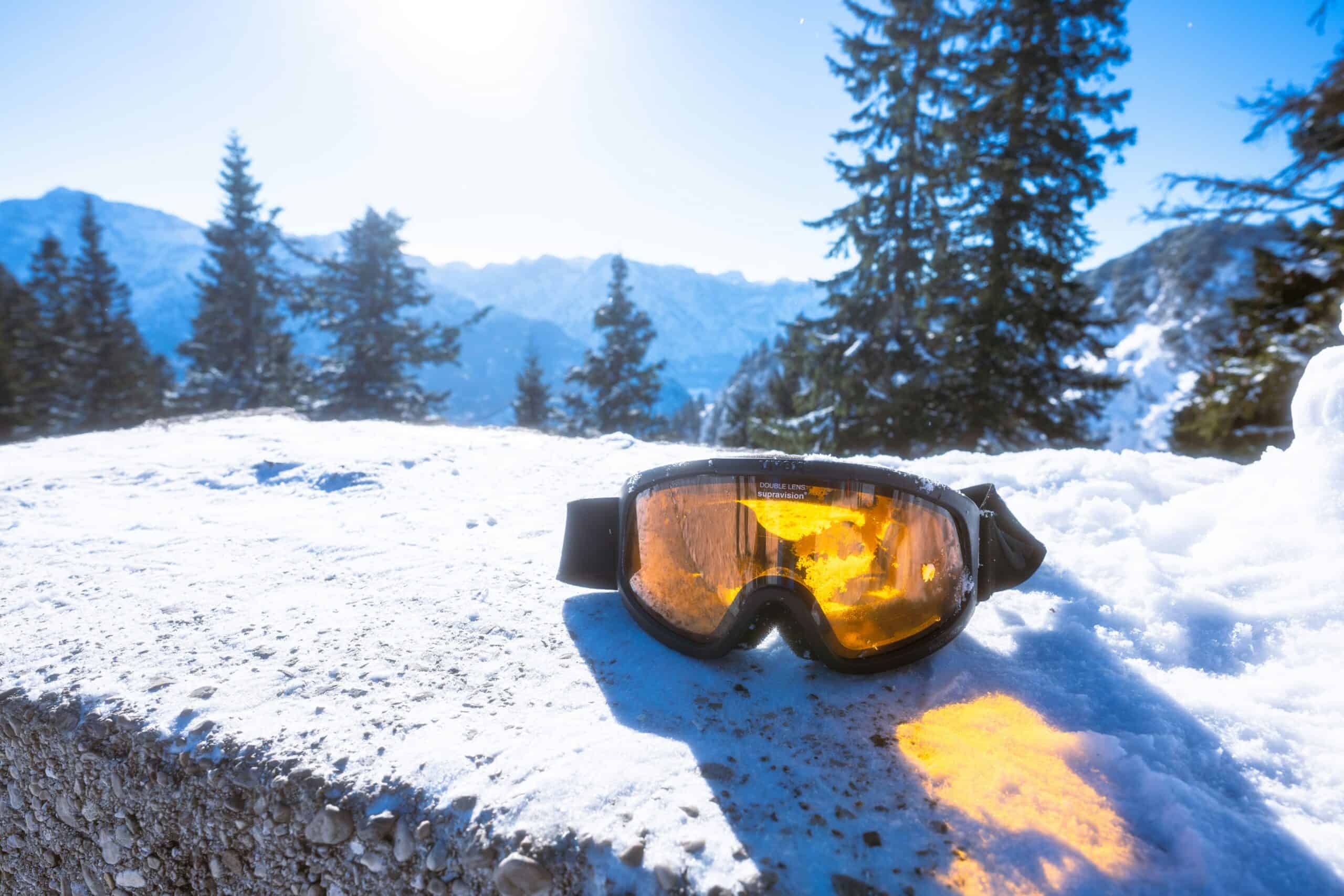
Snow reflects a large share of the light hitting it, which means winter eye protection deals with light arriving from below as well as above. That is why regular sunglasses underperform on snow and why wraparound coverage matters more than lens darkness.
| Condition | Lens tint | VLT range |
|---|---|---|
| Bright sun on snow | Dark gray or brown | 5 to 20% |
| Partly cloudy | Rose, amber | 20 to 40% |
| Overcast or falling snow | Yellow, rose | 40 to 70% |
| Low light or dusk | Clear or pale yellow | Above 70% |
| Variable through the day | Photochromic | Adjusts |
| Wind without bright sun | Clear | Above 80% |
Key Points
- Snow reflects light upward, so coverage matters as much as tint
- VLT describes how much light a lens transmits
- Fogging comes from moisture with nowhere to go
- Goggles seal against wind, sunglasses do not
- Snow blindness is a real injury from prolonged exposure
- Cheap lenses can darken without blocking ultraviolet
How We Picked
Ultraviolet blocking came first, since a dark lens without it opens your pupils while letting damaging light through. That is worse than no protection.
Coverage ranked next, because reflected light from snow arrives from angles that regular frames leave open.
Fog resistance mattered for anything worn during effort, where the difference between a working lens and a useless one is ventilation design.
Compatibility counted. Goggles have to work with a hat or helmet and a face covering rather than fighting both.
Low-VLT Goggles for Bright Snow
Why It Stands Out
Goggles seal around the eye socket, blocking reflected light from below and wind from all directions, which is what sunglasses cannot do.
Dark lenses in the 5 to 20 percent VLT range suit bright days on open snow, where reflected glare is the dominant problem.
The seal also keeps eyes from watering in wind, which is a comfort issue that becomes a visibility issue quickly.
Spherical lenses reduce distortion at the edges compared with flat ones, which matters for judging terrain.
Worth Knowing
Dark goggles in flat light or falling snow leave you unable to read terrain, which is genuinely dangerous on uneven ground.
A single dark lens covers one condition. Days that start bright and end overcast need either a second lens or a different approach.
Good for open snow in strong sun. Skip as a single-lens solution for variable days, and winter traction sits in snowshoes for winter hiking.
Interchangeable-Lens Goggle Systems
Why It Stands Out
Swappable lenses cover the range from bright sun to falling snow with one frame, which is the practical answer to conditions changing through a day.
Magnetic systems change lenses in seconds with gloves on, which matters when the alternative is doing it barefingered in cold.
Most ship with a bright-condition lens and a low-light one, covering the two ends people actually encounter.
Worth Knowing
Carrying a spare lens means carrying a case, and a scratched spare rattling loose in a pack is a wasted purchase.
Changing lenses on a windy ridge exposes the inside surface to snow, which then fogs.
Good for full days with changing light. Skip if you will not carry the spare, and pack organization sits in packing a hiking backpack.
Photochromic Lenses
Why It Stands Out
Photochromic lenses darken and lighten with light levels, which handles a day moving between sun, cloud, and trees without carrying anything extra.
For hiking specifically, where you pass in and out of shade repeatedly, that suits the activity better than it suits open-slope skiing.
One lens means nothing to lose, nothing to swap, and no decision at the trailhead.
Worth Knowing
The transition takes time, typically under a minute to darken and longer to clear, so sudden changes leave you briefly wrong.
Cold slows the reaction, which is a genuine limitation in the conditions you bought them for.
Their range is narrower than a two-lens system, so they never reach as dark or as clear as dedicated lenses.
Good for mixed terrain and variable light. Skip for consistently extreme brightness.
Wraparound Glacier Sunglasses
Why It Stands Out
Glacier glasses use side shields and a close fit to block reflected light while staying far more ventilated than goggles.
They breathe well enough for sustained climbing where goggles fog, which is the main argument for them on foot.
They also pack smaller and weigh less, and they work fine at lower elevations where wind is not the issue.
Worth Knowing
They do not seal, so strong wind still reaches your eyes and snow can blow in around the shields.
Removable side shields get lost, and a pair without them is just sunglasses on snow.
Good for high-output days and high-altitude sun. Skip in strong wind or falling snow, and sun protection generally sits in hiking hats for sun protection.
Anti-Fog Treatments and Accessories
Why It Stands Out
Fogging is the most common complaint about winter eyewear, and it happens when warm moist air meets a cold lens with nowhere to escape.
Anti-fog sprays and wipes reduce condensation on the inner surface, and they work well enough to matter on a long day.
Goggle vents and fan-equipped models address the same problem mechanically rather than chemically.
Worth Knowing
Wiping the inside of a fogged lens with a glove removes the factory anti-fog coating permanently, which is how most goggles get ruined.
Treatments wear off and need reapplying, so one bottle is not a permanent fix.
Good on any lens worn during effort. Skip wiping the inner surface with anything but the supplied cloth.
Cases and Lens Protection
Why It Stands Out
Goggle lenses scratch easily, and a scratch in your field of view is permanent. A hard case in a pack prevents the damage that ends a lens.
Microfiber bags protect the inner surface specifically, which is the one you cannot clean aggressively.
Cases also keep a spare lens usable rather than scratched before its first use.
Worth Knowing
Storing goggles damp inside a sealed case grows mold on the foam, which is unpleasant and hard to remove.
Hard cases take real pack space, which competes with everything else on a winter day.
Good for pack-carried goggles and spare lenses. Skip sealing them away wet, and pack space sits in hiking daypacks.
What to Look For
Confirm ultraviolet blocking separately from tint
Darkness and protection are different specifications. A dark lens without ultraviolet blocking opens your pupils and lets damaging light in.
Match VLT to your usual conditions
Very dark lenses are useless in flat light and falling snow, which is when reading terrain matters most.
Check the fit with your headwear
Goggles have to work over a hat or helmet and above a face covering. Buying without testing that combination produces gaps and fogging.
Prioritize ventilation for effort
Anything worn while climbing needs airflow. Sealed goggles suit descents and standing still far better than sustained uphill work.
Why Fogging Happens and What Stops It
Moisture with nowhere to go
Warm air from your face meets a cold lens and condenses. Vents at the top and bottom of a goggle frame let that air move through rather than settle.
Breath routed upward
A face covering pulled up under the goggle channels every breath onto the lens. Sitting it lower or using a covering with a nose bridge redirects it.
Stopping while sweating
Fogging usually starts the moment you stop after a climb. Lifting goggles onto your forehead during a break lets both surfaces clear.
A damaged inner coating
Once the factory anti-fog layer is wiped away, the lens fogs permanently. That damage is the reason most goggles get replaced.
Wearing Prescription Glasses Underneath
Anyone who wears glasses hits a specific version of this problem, and there are three workable approaches.
Over-the-glasses goggles are built with extra depth and channels in the foam for temple arms. They work and they fog more readily, since your lenses add another cold surface inside a sealed space.
Prescription inserts clip inside the goggle frame, sitting closer to your eyes than glasses would. That reduces the fogging problem and costs an optician visit.
Contact lenses avoid the issue entirely and dry out faster in cold wind, which some people find worse than the alternative.
Whichever you choose, the fogging management matters more than usual. Lifting goggles during breaks, keeping a face covering below the nose bridge, and treating both lens surfaces all help.
Carrying a backup pair of glasses in a hard case is worth the space on a full winter day, since losing your only pair on a snowy descent is a serious problem rather than an inconvenience.
Goggles Against Glacier Glasses
Goggles
Seal against wind and blowing snow, block reflected light completely, and fog more readily during effort. They suit exposed terrain and bad weather.
Glacier glasses
Ventilate far better, weigh and pack less, and leave gaps that wind and snow get through. They suit sustained climbing and clear high-altitude days.
Common Misconceptions
That darker means safer
Tint controls comfort and ultraviolet blocking controls protection. A dark lens without it is worse than nothing, since your pupils open wider.
That sunglasses are enough on snow
Reflected light arrives from below and the sides, which standard frames leave open. Coverage matters as much as the lens itself.
That fogged goggles should be wiped inside
Wiping removes the anti-fog coating permanently. Shaking out moisture and letting airflow clear them preserves the lens.
That snow blindness needs extreme conditions
Prolonged exposure to reflected light on an ordinary bright snow day can cause it, and symptoms appear hours afterward, and first aid sits in hiking first aid kits.
Worth reading next: cold weather gear covers the wider winter kit, face protection covers what sits below the goggles, and base layers covers the clothing system. For traction, ice cleats is the relevant guide, and planning a hiking route.
Frequently Asked Questions
Do I need goggles for winter hiking?
On open snow in wind or bright sun, they outperform sunglasses because they seal and block reflected light from below. In sheltered terrain, glacier glasses often work better.
What VLT should I choose?
Around 5 to 20 percent for bright sun on snow, 40 to 70 percent for overcast or falling snow. Very dark lenses leave you unable to read terrain in flat light.
Why do my goggles keep fogging?
Warm moist air meeting a cold lens with nowhere to escape. Breath routed upward by a face covering is the usual cause, and stopping after a climb is when it starts.
Can I wipe the inside of a fogged lens?
Not with a glove or sleeve, which removes the factory anti-fog coating permanently. Shake out moisture and let airflow clear it instead.
Are photochromic lenses worth it?
For hiking through mixed light and shade, often. They transition slowly, cold slows them further, and their range is narrower than a two-lens system.
What is snow blindness?
Damage to the cornea from prolonged exposure to reflected ultraviolet light. Symptoms typically appear hours after exposure, and an ordinary bright snow day is enough.
Do dark lenses always block ultraviolet?
No. Tint and ultraviolet blocking are separate specifications, and a dark lens without protection opens your pupils while letting damaging light through.
