
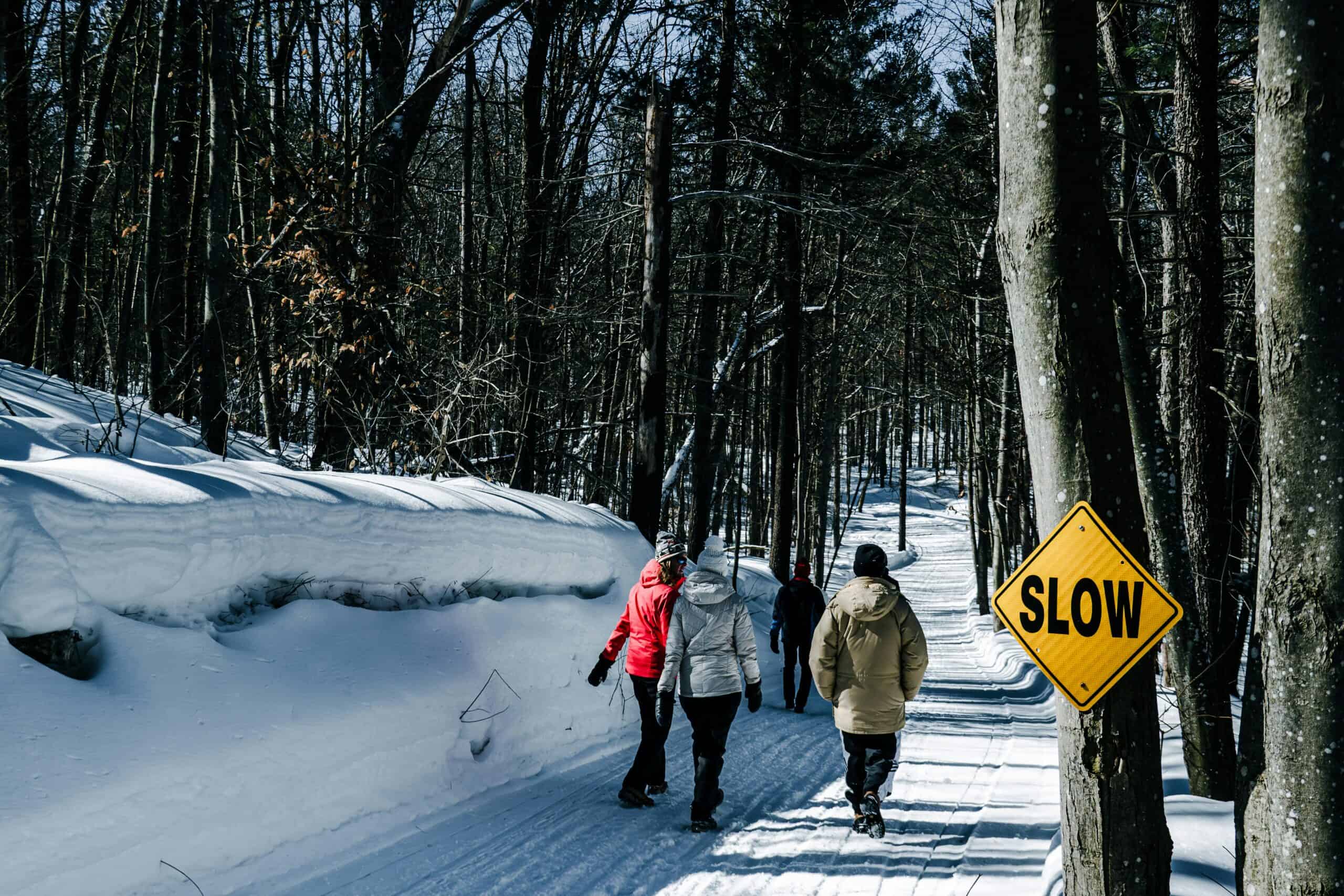
Dress for the climb rather than the trailhead. If you feel comfortable standing at the car, you are wearing too much and will be soaked within twenty minutes, which is what makes people cold later in the day.
Quick Answer
Start slightly cold in a base layer and a shell. Carry an insulating midlayer and put it on the moment you stop. The goal all day is staying dry rather than staying warm, because damp clothing is what makes winter hiking uncomfortable and occasionally dangerous.
Key Takeaways
- Start cold, since you warm up within ten minutes
- Sweat is the main enemy, not air temperature
- Add layers when you stop, not when you feel cold
- Cotton holds moisture and loses insulating value when wet
- Extremities need dedicated attention
- A dry spare layer belongs in every winter pack
Why Layering Works
Each layer does one job. The base moves moisture off your skin, the midlayer traps warm air, and the shell blocks wind and precipitation.
Separating those jobs is what lets you adjust. A single thick jacket is warm or not warm, where three thin layers give you four combinations.
The system fails when any layer does the wrong job. A cotton base holds sweat instead of moving it, and a non-breathable shell traps moisture that should be escaping.
The underlying principle sits in layering clothing for hiking, which applies year-round with winter being the case where getting it wrong costs most.
The Base Layer
This is the layer against skin, and its only job is moving sweat outward. Merino or synthetic, never cotton.
Midweight suits most winter hiking. Lightweight suits steep climbs where you generate real heat, and heavyweight suits standing still in genuine cold.
Fit has to be snug. Wicking depends on fabric contact, so a loose base layer traps a pocket of damp air and moves nothing.
Bottoms matter too and get skipped. A midweight bottom under hiking pants adds real warmth for little bulk, though it is hard to remove mid-hike so choose conservatively. Selection sits in base layers for winter hiking.
The Midlayer
This traps warm air, and it is the layer you take on and off most through a day.
Fleece breathes well and handles moisture, which suits it to wearing while moving in cold conditions. Grid fleece adds warmth without much weight.
Down and synthetic insulated jackets are warmer for their weight and less breathable, which makes them better as a stop layer than a hiking layer.
Down loses insulating value when wet and synthetic keeps more, which matters in damp cold. Options sit in packable down jackets.
The Shell
The outer layer blocks wind and precipitation while letting moisture out, and those two demands pull against each other.
A hardshell handles rain and wet snow. A softshell breathes better and handles wind and dry snow, which suits cold clear days.
Pit zips and a properly adjustable hood both matter more than they sound, since venting is how you manage heat without stopping to change layers.
The hood should fit over a hat and still turn with your head. Shell choice sits in rain jackets for hiking.
Hands, Head, and Feet
Head
A hat is your fastest temperature control, off in seconds and back on just as quickly. Midweight merino covers most conditions, and coverage over the ears matters more than crown thickness. Options sit in winter hats and beanies.
Hands
A liner glove under a windproof outer beats one thick glove, since it gives you dexterity without removing everything. Carry a dry spare, because damp gloves are the most common cause of cold hands.
Feet
One pair of properly fitted wool socks, not two pairs crammed into boots. Compression from doubling up restricts circulation, which makes feet colder rather than warmer.
Face and neck
A neck gaiter adapts through the day and covers the gap between hat and collar. On exposed ground, face coverage matters, covered in balaclavas and face protection.
How to Manage Layers on the Trail
Start cold
Being slightly uncomfortable in the first five minutes is correct. Comfortable at the trailhead means dressed for standing still, and you will not be standing still.
Vent before you sweat
Open a jacket, push up sleeves, remove the hat. Dumping heat early keeps the base layer dry, which is easier than drying it afterward.
Layer up the moment you stop
Not when you feel cold. Sweat that felt fine while moving goes cold within a minute of standing still, and adding the layer first prevents it.
Stop to adjust properly
People avoid stopping because it takes two minutes, then hike for an hour uncomfortable. Two minutes is cheaper than the hour.
What to Carry Rather Than Wear
An insulating layer that stays in the pack until you stop. This is the single most useful thing in a winter pack, and it only works if it stays dry.
A dry hat and gloves in a sealed bag, since these are what get sweat-soaked and they are small enough that carrying spares costs nothing.
A shell even on clear days, because wind on an exposed section changes conditions faster than the forecast suggests.
Something to sit on. A foam pad the size of a book stops the ground pulling heat out of you during a stop, which is where a lot of winter cold happens.
Adjusting for the Day You Have
The same three layers cover a wide range once you adjust which ones you wear and when.
A cold clear day with no wind is the easiest case. A base layer and a light midlayer while moving, with the shell staying in the pack until you stop, usually covers it.
Wind changes everything. The shell goes on regardless of temperature, since moving air strips heat far faster than still air and knit or fleece passes it almost completely.
Wet cold is the hardest. Damp air, sleet, and snow that melts on contact all soak layers from outside while you sweat from within, which argues for synthetic insulation over down and a hardshell over a softshell.
Short steep routes generate more heat than long flat ones at the same temperature. A route that climbs continuously usually means hiking in the base layer alone with everything else carried.
Group pace matters too. Hiking with someone slower means generating less heat than you would alone, and dressing for your own pace leaves you cold.
Stops are where the day gets decided. A twenty-minute lunch in genuine cold needs the insulating layer, something to sit on, and often a dry hat, and skipping those is where a good day turns unpleasant.
Common Mistakes to Avoid
Wearing cotton
It absorbs sweat, holds it against your skin, and loses insulating value when wet. In winter that turns every rest stop into a problem.
Overdressing at the trailhead
The most common error. Feeling warm before you start means you will sweat through everything within twenty minutes.
Doubling up socks
Compression restricts circulation and makes feet colder. One properly fitted wool sock in a boot with room beats two crammed in.
Waiting until you feel cold
By then your core has dropped and clothing is damp. Adding layers as you stop, before you notice, is the version that works. Cold hands specifically sit in why hands get cold even with gloves.
Related Reading
Frequently Asked Questions
How should I dress for a winter hike?
A moisture-moving base layer, an insulating midlayer carried rather than worn, and a wind and weather shell. Start slightly cold and add the midlayer when you stop.
Why should I start cold?
You warm up within about ten minutes of walking. Dressing to feel comfortable while standing still means sweating through everything on the first climb.
Can I wear a cotton shirt under my jacket?
Not for winter hiking. Cotton absorbs sweat, holds it against your skin, and loses insulating value when wet, which is genuinely risky in cold conditions.
Should I wear two pairs of socks?
Generally not. Compression from doubling up restricts circulation and makes feet colder, and one properly fitted wool sock with room in the boot works better.
What should I carry rather than wear?
An insulating layer for stops, spare dry hat and gloves, a shell even on clear days, and a small foam pad to sit on.
When should I add a layer?
The moment you stop, before you feel cold. Sweat that felt fine while moving goes cold within a minute, and reacting after that is slower than preventing it.
Down or synthetic for the midlayer?
Down is warmer for its weight and loses insulating value when wet. Synthetic keeps more when damp, which suits wet cold better than dry cold.
Recommended Reading
See our note on preventing and treating blisters, and planning a hiking route.
