
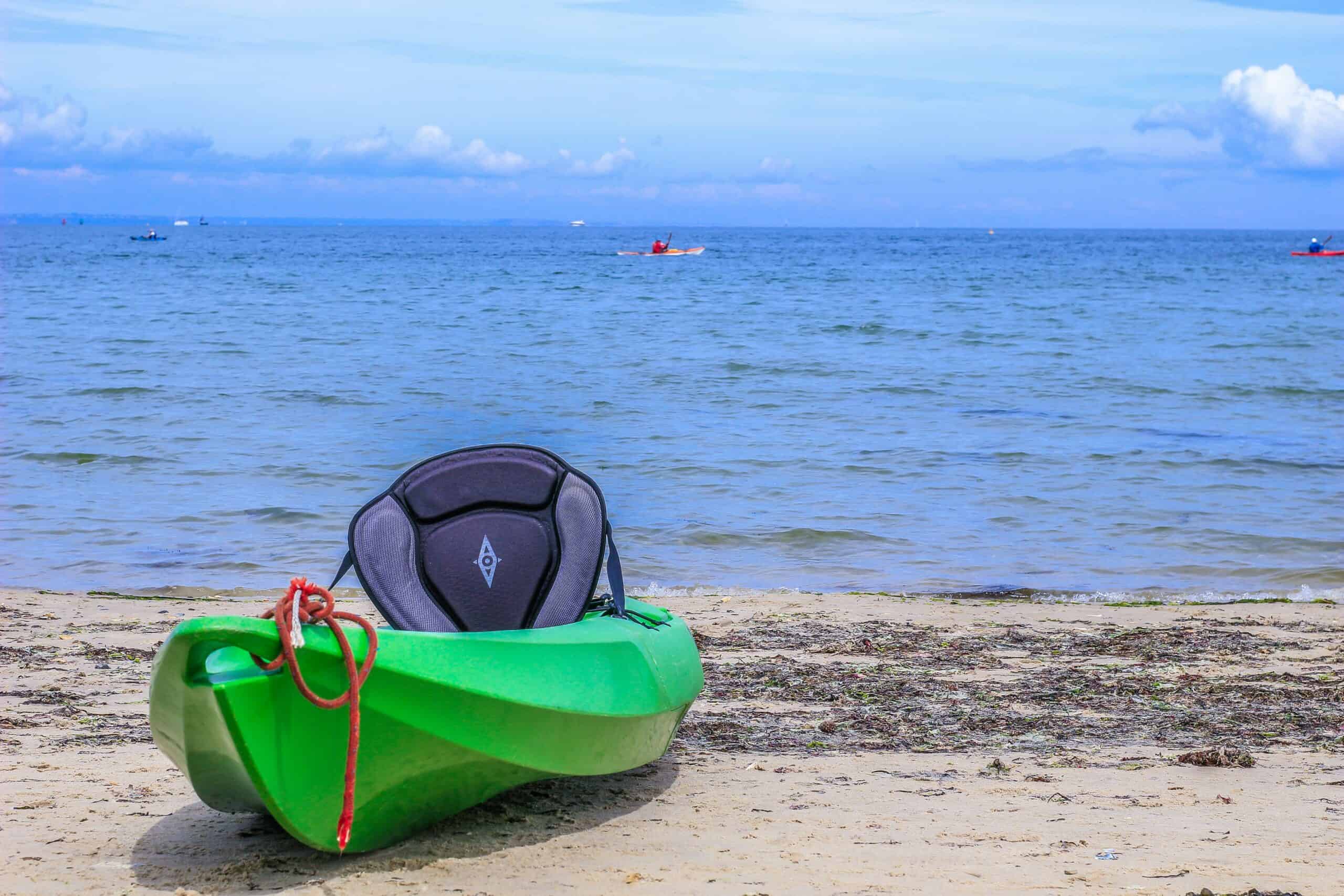
Most kayaks ship with a seat that is adequate for an hour and punishing for four, which is why an aftermarket seat is the most common first upgrade anglers and touring paddlers make. The limiting factor on a long day is usually lower back fatigue rather than arm strength, and a backrest with real lumbar support changes how long you can stay comfortable. Our roundup of fishing kayaks covers the boats these fit into.
The Short Version
A high-back padded seat suits most sit-on-top kayaks and fixes the majority of comfort complaints. Choose an inflatable or frame seat for elevation if you fish standing, a low-profile seat if stability matters more than support, and check the attachment points on your specific hull before ordering anything.
Key Points
- Seat height raises your center of gravity and reduces stability.
- Attachment points vary by hull, and universal fit is a claim rather than a guarantee.
- Lumbar support matters more than padding thickness on long days.
- Mesh and open-cell foam drain and dry; closed foam holds water.
- A seat that shifts under load is worse than a thin one that stays put.
How We Picked
Seats are grouped by construction and by how high they place you, since seat height drives both comfort and stability and those pull against each other. Attachment compatibility is treated as a primary constraint rather than a detail, because a seat that will not mount is not a seat.
Selection criteria reflect how each design handles support, drainage, and mounting. Descriptions come from product research rather than from days paddled with a particular seat.
1. A High-Back Padded Seat, Best Overall
Why It Stands Out
A tall padded backrest supports the lower back and the shoulder blades, which is what stops the slouch that develops after a couple of hours. For most paddlers this single change is the difference between finishing a day comfortable and finishing it sore.
Padded seats usually attach with four adjustable straps, which lets you tune the backrest angle rather than accepting whatever the hull dictates.
Worth Knowing
A tall back interferes with rear tank-well access and can catch a paddle stroke on narrow boats. Check the height against your paddle length and your usual stroke before assuming taller is better.
Thick foam padding holds water unless the seat uses open-cell foam or a mesh panel, and a seat that stays wet gets unpleasant over a season. Our note on dry bags covers keeping the rest of your gear out of the same water.
This suits most sit-on-top kayaks. Skip it on a narrow boat where paddle clearance is tight.
2. An Elevated Frame Seat, Best for Fishing
Why It Stands Out
Frame seats lift you several inches above the deck, which improves sightlines into the water and makes casting and standing considerably easier. Anglers who sight-fish get the most from this.
Most also have two height positions, so you can drop down for paddling and raise up for fishing.
Worth Knowing
Height costs stability. Raising your center of gravity makes a boat feel tippier, and on a narrow hull the difference is noticeable rather than theoretical. Wide fishing platforms handle it; touring boats generally do not.
Frame seats also need rail or track mounting on most hulls, so confirm your boat has the fittings. Our roundup of kayak fishing crates covers the other deck hardware competing for the same space.
This suits wide fishing kayaks. Skip it on a narrow or touring hull.
3. An Inflatable Seat Cushion, Best Adjustable Support
Why It Stands Out
Air cushions let you set firmness precisely, which suits anyone whose comfort problem is pressure rather than back angle. They also add a little height without the stability cost of a full frame seat.
Deflated, they pack away completely, which matters if the kayak is stored on a rack or transported inside a vehicle.
Worth Knowing
Air firmness changes with temperature, so a cushion set on a cold morning feels firmer by midday. That is normal and worth adjusting for rather than a fault.
Puncture risk is real on a deck with hooks, pliers, and fish spines around. Keep sharp tackle contained rather than loose.
This suits pressure-point discomfort and easy storage. Skip it if you fish with a lot of loose sharp gear.
4. A Low-Profile Seat, Best for Stability
Why It Stands Out
Sitting lower keeps your weight near the waterline, which makes a boat feel considerably more secure in chop or wind. For rough water, or for anyone still building confidence, that matters more than comfort does.
Low seats also stay clear of the paddle stroke entirely, which is a real benefit on narrow hulls.
Worth Knowing
Less padding and a lower back mean less support on long days. This is a trade rather than a compromise, and it is the right trade in conditions where stability is the concern.
Some low-profile seats provide almost no lumbar support at all, so check the back height rather than assuming any seat includes it. Our guide to kayaks and canoes covers how hull choice affects the same stability question.
This suits rough water and narrow boats. Skip it for long flat-water days.
5. A Backrest-Only Support, Best Cheap Fix
Why It Stands Out
If the seat pad is fine and the back support is the problem, a backrest alone solves it for a fraction of the cost of a full seat. Many strap to existing D-rings without any hull modification.
These also add almost no weight and store flat, which suits an inflatable or folding kayak.
Worth Knowing
A backrest relies on the strap anchors staying tight, and one that loosens through the day slowly stops supporting anything. Retension it when you stop rather than at the end.
It does nothing about seat pad comfort, so if the problem is pressure underneath rather than back angle, this is the wrong purchase.
This suits boats with a decent pad and poor back support. Skip it if the seat base is the issue.
6. A Gel or Memory Foam Pad, Best for Pressure Points
Why It Stands Out
Gel and foam pads sit on top of an existing seat and spread load, which addresses numbness and hot spots rather than back angle. For anyone whose problem is a dead leg after two hours, this is the targeted fix.
They are also the cheapest option here and need no mounting at all.
Worth Knowing
A loose pad slides, and a pad that moves under you every stroke is an irritation. Look for a non-slip underside or a strap.
Gel gets cold and stays cold, which is unwelcome on an early spring morning. Foam is the better choice in cool conditions. Our roundup of kayak life vests covers the other piece of gear worn against the body all day.
This suits numbness and pressure points. Skip it if your complaint is lower back fatigue.
Kayak Seats at a Glance
| Type | Height | Support | Best for |
|---|---|---|---|
| High-back padded | Standard | Full back and lumbar | Most kayaks |
| Elevated frame | Raised | Full back | Fishing, sightlines |
| Inflatable cushion | Slightly raised | Adjustable firmness | Pressure discomfort |
| Low profile | Lowest | Limited | Rough water, stability |
| Backrest only | No change | Back only | Cheap targeted fix |
| Gel or foam pad | Minimal | Cushioning only | Numbness and hot spots |
How to Choose a Kayak Seat
Will it mount to your hull?
This is the question that decides everything else. D-rings, tracks, and molded seat wells all differ between boats, and universal fit is a marketing claim rather than a guarantee. Check your attachment points first.
What actually hurts?
Lower back fatigue means you need back support and lumbar shape. Numbness or a dead leg means pressure distribution. Those are different problems and different products.
How stable is your boat?
A wide fishing platform absorbs a raised seat without complaint. A narrow touring hull does not, and the extra height will be felt immediately in chop.
Does it drain?
Water gets into a kayak seat constantly. Mesh panels and open-cell foam shed it; closed-cell padding holds it, and a seat that stays wet gets unpleasant fast.
Higher or Lower?
The case for a raised seat
Better sightlines, easier casting, and a considerably easier stand-up transition. For fishing from a wide platform, elevation is the point rather than a side effect.
The case for staying low
Stability. Keeping your weight near the waterline makes the boat feel secure in wind and chop, which matters more on open water than any comfort feature. Our roundup of kayak paddles covers the other equipment choice that changes how a boat handles.
Common Kayak Seat Mistakes to Avoid
Assuming universal fit
Attachment points vary between hulls, and a seat that will not mount securely is worse than the one that came with the boat. Measure and check before ordering.
Buying height without considering stability
Raising the seat raises your center of gravity. On a narrow boat that changes how the kayak feels immediately, and not for the better.
Overtightening the straps
Cranking the straps down flattens the padding and pulls the backrest out of its intended angle. Snug rather than tight is what holds position without deforming the seat.
Ignoring drainage
A seat that holds water stays damp between trips and eventually smells. Check for drainage channels or mesh before buying, and store the seat off the boat where it can dry. Our note on anchor trolleys covers other rigging that lives in the same wet environment.
Related Reading
See our roundup of kayak coolers, notes on trolling motors, our roof rack picks, and a guide to canoe paddles.
Kayak Seat FAQ
Is an aftermarket kayak seat worth it?
For anyone paddling more than an hour or two at a time, usually yes. Factory seats on most kayaks are basic, and lower back fatigue is what ends a long day sooner than arm strength does. It is the most common first upgrade for a reason.
Will any seat fit my kayak?
No, and universal fit claims are worth checking carefully. D-rings, mounting tracks, and molded seat wells differ between hulls. Look at what your boat actually has before ordering, since a seat that cannot be anchored properly will shift under load.
Does a higher seat make a kayak less stable?
Yes. Raising the seat raises your center of gravity, and the effect is noticeable rather than theoretical. Wide fishing platforms are designed to absorb it; narrow touring hulls are not, and the boat will feel tippier in chop.
What is better for back pain, a seat or a backrest?
If the seat pad is comfortable and only the back support is lacking, a backrest alone is the cheaper fix. If you also get numbness or pressure discomfort underneath, a full seat addresses both. Match the purchase to what actually hurts.
How do I stop my kayak seat sliding?
Check the strap anchors and retension them during the day, since straps loosen with movement and a seat that shifts stops supporting you properly. Non-slip undersides help on pad-style seats. If it still moves, the mounting points are probably wrong for that seat.
Do kayak seats get waterlogged?
Closed-cell padding can hold water and stay damp, while mesh panels and open-cell foam drain and dry. Check for drainage before buying, and store the seat off the boat between trips so both sides can dry.
Can I use a stadium seat in a kayak?
Some people do, and the problems are attachment and drainage. Stadium seats are not designed to anchor to a hull or to get wet repeatedly. A seat built for kayaks mounts securely and handles water, which matters more than the price difference.
How much does a seat upgrade cost?
A gel pad or a simple backrest is inexpensive. Full padded seats cost more, and elevated frame seats for fishing are the most expensive category here. Start with the cheapest option that addresses your actual complaint rather than buying the most featured seat available.
