
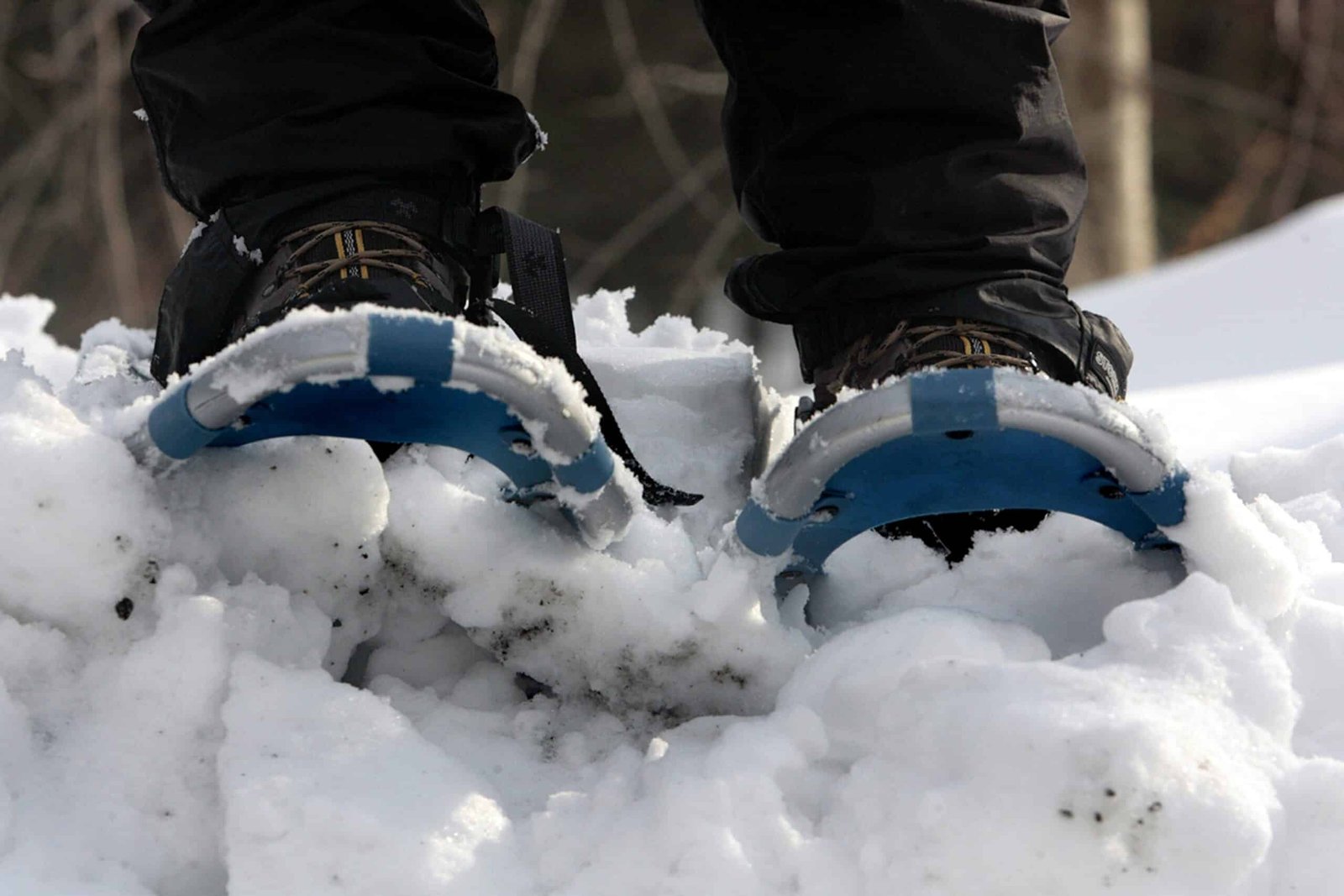
Snowshoe sizing works on total loaded weight, which means your body, your clothing and everything in your pack. A snowshoe size and flotation calculator adds those up and returns the surface area the snow actually requires.
Snow condition then moves the answer considerably. The same weight needs far more area in fresh powder than on a packed trail, which is part of why the models in snowshoes for winter hiking are built around different conditions.
Quick Answer
Add body weight, winter clothing and full pack weight into one figure. Packed trails need the least area, settled snow more, and fresh deep powder the most. Snowshoe size bands are published against loaded weight ranges, so size on the total rather than on your body weight.
Key Points
- Loaded weight is the input, not body weight.
- Snow condition changes the required area more than weight does.
- Bigger is not automatically better, because large shoes are clumsy and heavy.
- Tail extensions add flotation for powder days without a second pair.
- Steep terrain favours smaller shoes with better traction.
- Manufacturer weight ranges overlap, so check the chart on the product.
| Loaded weight | Packed trail | Settled snow | Deep powder |
|---|---|---|---|
| Up to 150 lb | 20 in | 22 in | 25 in |
| 150 to 180 lb | 22 in | 25 in | 30 in |
| 180 to 220 lb | 25 in | 30 in | Tails or 36 in |
| 220 to 260 lb | 25 to 30 in | 30 in | 36 in |
| Over 260 lb | 30 in | 36 in | 36 in plus tails |
Lengths are the common retail bands rather than exact surface areas. Two 25 inch shoes can differ in width and therefore in real flotation.
Why Loaded Weight Is the Only Input That Works
Flotation is a pressure problem. What the snow feels is your total weight spread over the area of the shoes, so anything you carry counts exactly as much as you do.
Winter clothing alone is several pounds more than summer kit. Boots, insulated layers, gaiters and gloves add up before the pack goes on.
An overnight winter pack is heavier than its summer equivalent, because the sleeping system and the extra layers both grow. That pushes many people a full size band up.
Hauling gear on a sled changes the picture again, since the sled carries its own weight rather than yours. Those are compared in sleds and pulks for winter gear hauling.
Snow Condition Does the Rest
Packed trail needs the least
On a trail already broken by other walkers, flotation barely matters and traction does. Small shoes are easier and faster here.
Settled snow is the middle case
Older snow that has consolidated under its own weight supports more than fresh snow. This is what most sizing charts quietly assume.
Fresh powder needs the most
Light, dry, new snow offers the least resistance, and this is where undersized shoes disappear. Breaking trail in powder is also the hardest work there is.
Wet spring snow is its own problem
Heavy wet snow supports weight reasonably well and sticks to the decking, adding pounds to each foot. Area helps less here than expected.
Where Bigger Stops Helping
A large snowshoe floats better and walks worse. The wider stance it forces is tiring over distance and awkward on anything narrow.
On steep ground the trade reverses entirely. A smaller shoe with aggressive crampons and a heel lift grips better and is easier to kick into a slope.
Side-hilling on big shoes is genuinely unpleasant, because the uphill edge catches and the downhill edge slides. Mountain-oriented designs run deliberately smaller for this reason.
Where the ground is firm and icy rather than deep, snowshoes may be the wrong tool altogether. That choice is examined in snowshoes against microspikes.
Tail Extensions and Carrying Two Sizes
Many manufacturers sell clip-on tails that add several inches of length to a shoe. They turn a trail-sized shoe into a powder-capable one for the days that need it.
That is usually a better answer than buying for the worst day of the season. You carry the extra area only when the forecast calls for it.
Tails do add weight on each foot and they change how the shoe handles on a traverse. Fitting them is a decision for the trailhead rather than the car park at home.
Keeping snow out of your boots matters more once you are postholing at all, which is where hiking gaiters earn their place in a winter kit.
What Trips People Up
Sizing on body weight
Clothing and a pack can add 30 pounds or more in winter. That is often an entire size band.
Buying for the deepest possible day
Oversized shoes are tiring on the ninety percent of days that are not powder. Tails handle the exception better.
Comparing length and ignoring width
Flotation comes from area, so a long narrow shoe and a short wide one can match. Length alone is a rough proxy at best.
Ignoring the traction side
Flotation gets you across flat deep snow, and crampons get you up a slope. Terrain decides which matters more that day, as ice traction cleats cover from the other direction.
Forgetting the rest of the kit
Snowshoes are one item in a winter system that has to work as a whole, and the rest of it is laid out in cold weather hiking gear.
Bindings and Boots Decide Whether It Works
A correctly sized snowshoe with a binding that will not hold your boot is still a failure. Binding fit is the part people discover at the trailhead.
Check the binding against the boots you will actually wear, in the gloves you will actually wear. Ratchets and straps behave differently with cold fingers.
Pivot style changes how the shoe walks. A rotating binding sheds snow and climbs well, while a fixed one keeps the tail up and suits flatter ground.
Heel lifts matter more than their size suggests on sustained climbs. Flipping one up changes the calf angle and saves real effort over a long ascent.
How Conditions Change Through a Day
Morning snow is often firm enough to walk without snowshoes at all. The same slope by afternoon can be soft enough to sink to the knee.
That is the argument for carrying rather than committing. Snowshoes strapped to a pack cost weight and solve the afternoon.
Aspect matters too. A north-facing slope holds powder while a south-facing one has already consolidated, and the two can sit on the same route.
Breaking trail is far harder than following one, so a group should rotate the lead. The person in front is doing substantially more work than anyone behind.
Recommended Reading
Flotation, traction and the rest of a winter kit are a single decision, and conditions on the day usually override the chart.
What This Calculator Cannot Tell Anyone
It cannot read the snow for you. Depth, temperature history and whether a trail is broken all change what a given area will do, and a trail report beats any chart.
It also says nothing about avalanche terrain. Flotation is a comfort and efficiency question, while slope angle and snowpack stability are a different subject with far higher stakes.
Snowshoe Size FAQ
How does a snowshoe size and flotation calculator work?
It adds body weight, clothing and pack weight into a loaded total, applies a factor for the snow condition you expect, and returns the surface area and the retail size band that match. It also flags when a tail extension is the better answer than a larger shoe.
What size snowshoes do I need?
It depends on loaded weight and snow condition rather than on height or shoe size. A 180 pound loaded total runs about 22 inches on packed trail and nearer 30 in powder.
Should I include my pack weight?
Yes, along with winter clothing and boots. The snow responds to the total pressure, so everything you carry counts.
Are bigger snowshoes always better?
No. Larger shoes float better and walk worse, forcing a wide tiring stance and handling poorly on steep or narrow ground.
Do tail extensions work?
They do, and they are usually a better purchase than a second larger pair. You add the area only on the days that need it.
What about steep terrain?
Size down and prioritize crampons and a heel lift. On steep ground grip matters more than flotation, and big shoes make traversing harder.
