
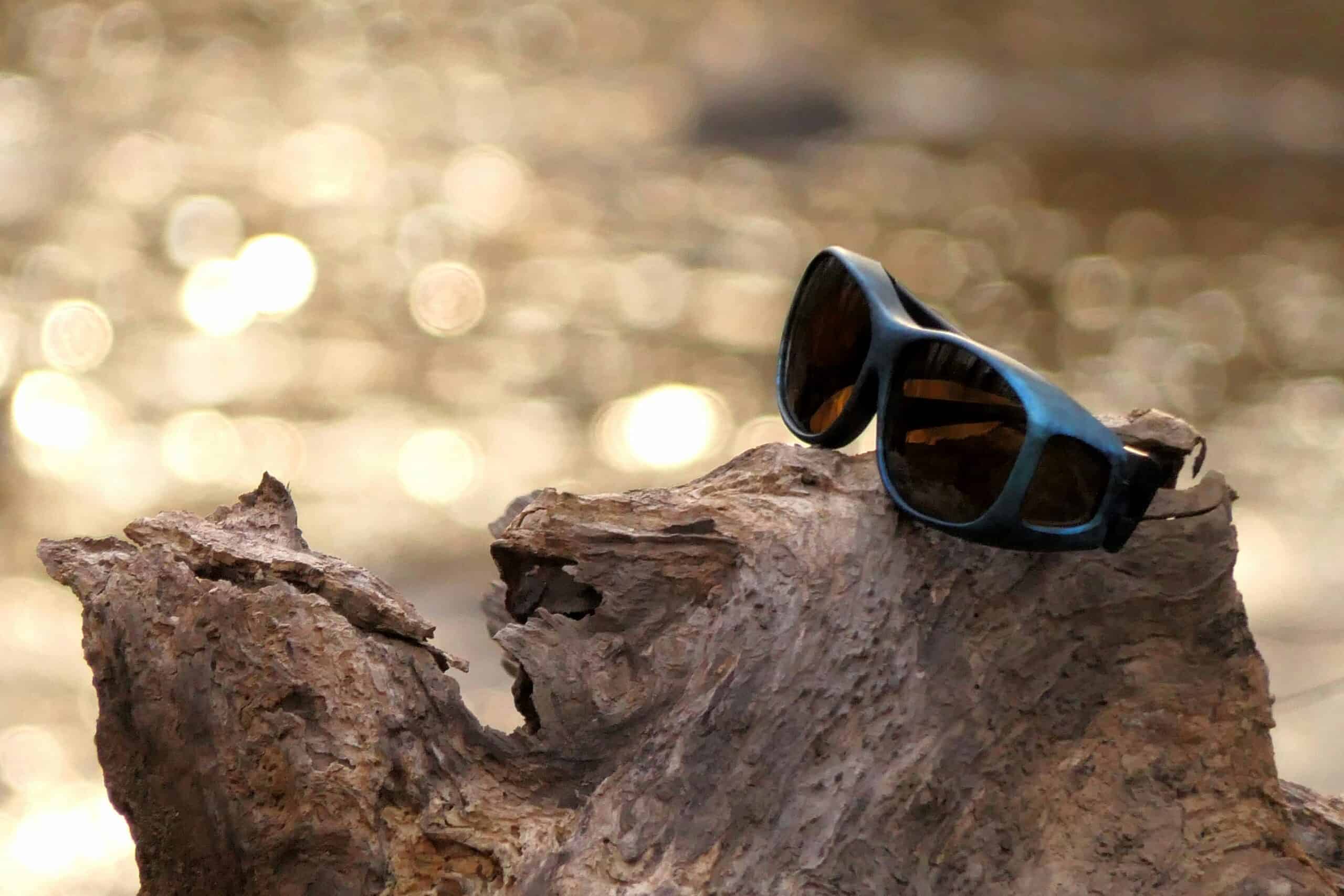
Polarized sunglasses for fishing aren’t a luxury upgrade. They’re functional equipment that determines whether you can see fish in the water or whether you spend the day staring at a wall of glare. The right pair lets you spot bass holding under structure, watch trout rise to your fly, and read water depth changes that hide fish in plain sight. Cheap polarized sunglasses, by contrast, look fine in a parking lot but fail the moment you step onto water, too dark for cloudy conditions, too light for direct sun, with polarizing filters that block surface glare unevenly.
This guide covers the five best polarized fishing sunglasses in 2026, evaluated on lens quality, frame durability, comfort during all-day wear, and the practical question of whether they actually let you see fish that unprotected eyes would miss.
Why Polarization Matters for Fishing
Polarized lenses use a vertical filter that blocks horizontal light waves, the kind reflected off flat surfaces like water. The result is that surface glare gets eliminated while light reflecting off objects below the surface still passes through to your eyes. You see into the water rather than seeing the water’s surface.
For fishing, this changes what you can actually do. Sight fishing, where you target visible fish rather than blind-casting to likely water, becomes possible. Reading underwater structure, drop-offs, weed beds, rock piles, sunken timber, becomes intuitive rather than a guessing game. Spotting fish before you cast lets you choose your approach instead of disturbing fish you didn’t know were there.
Beyond the fishing performance, polarized lenses reduce eye strain dramatically across a full day on the water. Surface glare forces your pupils to constrict aggressively, producing fatigue, headaches, and the kind of squinting that ages your face faster than ten years of sun exposure. A polarized pair extends your comfortable fishing time from a few hours to a full day.
The lens technology is genuine, but execution varies. Cheap polarized lenses use thin films laminated to the lens surface that peel, distort, or fail after months of use. Premium polarized lenses build the polarizing filter into the lens material itself, producing optically pure performance that lasts for years.
What to Look For in Polarized Fishing Sunglasses
Lens Material, Glass vs Polycarbonate vs Trivex
Glass lenses provide the sharpest optical clarity and the best scratch resistance, but weigh more and shatter on hard impact. Polycarbonate lenses weigh dramatically less and resist impact well, but scratch more easily and produce slightly less optical clarity. Trivex offers the best balance, almost as light as polycarbonate, almost as clear as glass, and impact-resistant.
For boat fishing, where weight matters less and clarity matters most, glass is the gold standard. For wading, hiking to remote water, or general use, polycarbonate or Trivex delivers better practical performance. Costa Del Mar, Smith Optics, and similar premium brands offer all three options across their lineups.
Lens Tint Matched to Your Water
Lens tint affects how well you see in different conditions. Copper and amber tints enhance contrast and work best in low-light conditions, freshwater, and inshore fishing. Gray tints provide neutral color rendering and work best for offshore saltwater and bright direct-sun conditions. Yellow lenses work for very low light (dawn, dusk, overcast) but feel too bright in normal sun.
For most freshwater fishermen, amber or copper is the practical default. For most saltwater fishermen, gray or blue mirror is the practical default. Multi-tint households cover both cases by buying separate pairs rather than compromising on a single tint.
Frame Wraparound Coverage
Side glare ruins polarization benefits. The lenses block glare in front of you, but light leaks around the frame defeat the purpose. Look for wraparound frames that hug your face and minimize side gaps. The frame doesn’t need to be sport-style, many lifestyle frames now offer adequate wrap.
Frame Material and Hinges
Saltwater destroys cheap metal frames within a season. Look for stainless steel or titanium for metal frames, or quality nylon polymers for plastic frames. Hinge quality matters specifically, cheap hinges loosen, develop play, and eventually break. Premium hinges use spring-loaded designs that maintain tension for years.
Floating or Retainer Compatibility
If you fish near water, your sunglasses will eventually go in the water. Frames designed to float (specifically marketed feature) or retainer straps that keep them around your neck prevent the painful experience of watching $200 sunglasses sink to the bottom of the lake.
Best Polarized Fishing Sunglasses in 2026: Our Top 5 Picks
1. Costa Del Mar Tuna Alley, Best Overall
Best Overall Polarized Fishing Sunglasses | Price: ~$260
Best for: Most fishermen across freshwater and saltwater applications, buyers wanting flagship optical performance without compromise, and anglers willing to invest in gear that lasts a decade.
Costa Del Mar built its reputation specifically on fishing sunglasses, and the Tuna Alley represents the practical sweet spot of the lineup. The 580G glass lenses deliver optical clarity that polycarbonate alternatives cannot match, you see edges, depth, and color rendering that makes fish-spotting genuinely easier. The polarization is built into the lens material, not laminated, so it doesn’t degrade across years of use.
The wraparound frame design hugs the face and eliminates side glare. The integrated hydrolite rubber on the nose pads and temple tips grips your skin even when wet, preventing the slippage that affects standard sunglasses during sweaty summer days on the water.
Costa offers the lenses in multiple tints calibrated for specific fishing conditions. Copper for inshore freshwater, blue mirror for offshore, green mirror for inshore saltwater. The choice matters, pick the tint that matches your most common water conditions rather than trying to compromise across uses.
PROS:
- 580G glass lenses with class-leading optical clarity
- Polarization is built into the lens material, not laminated
- Wraparound frame design eliminates side glare
- Hydrolite grip prevents slippage when wet
- Multiple tint options for specific water conditions
CONS:
- Glass lenses heavier than polycarbonate alternatives
- Premium price point excludes budget buyers
- Glass shatters on hard impact, unlike polycarbonate
- Specific tints require committing to one water type
For a broader fishing setup, our guides on the best fishing tackle boxes and the best fly fishing rods for beginners cover the broader fishing gear ecosystem.
2. Smith Guide’s Choice ChromaPop+, Best Premium Pick
Best Premium Pick | Price: ~$240
Best for: Anglers prioritizing color enhancement over pure clarity, guides and serious fishermen wanting maximum visual information on the water, buyers willing to spend for refinement over basic performance.
Smith’s ChromaPop technology takes a different approach than Costa’s pure-clarity philosophy. By selectively filtering specific light wavelengths, ChromaPop enhances color contrast and definition, making subtle differences in water depth, weed structure, and fish coloration more visible. For anglers who fish primarily by reading water rather than spotting individual fish, this contrast enhancement matters more than absolute optical clarity.
Build quality matches Costa across hinges, frame durability, and lens longevity. The Megol nose pads and temple tips grip well in wet conditions. The frame design wraps adequately for side glare control while remaining wearable for non-fishing situations.
Where Smith earns the premium price is in the lens technology specifically. ChromaPop’s wavelength filtering produces a noticeable difference for anglers who switch back and forth between Costa and Smith, the depth and structure visibility through Smith lenses is qualitatively different, not just slightly better.
PROS:
- ChromaPop wavelength filtering enhances structure visibility
- Premium build quality matching Costa standards
- Strong wet-weather grip and stability
- Excellent for reading water and structure
- Versatile across freshwater and saltwater
CONS:
- Premium pricing matches but doesn’t undercut Costa
- ChromaPop preference is subjective
- Less brand association with fishing specifically
- Wraparound less aggressive than the Costa flagship designs
3. Maui Jim Banzai, Best for All-Day Comfort
Best for All-Day Comfort | Price: ~$220
Best for: Anglers who fish 8+ hour days, buyers prioritizing comfort over absolute fishing optimization, and owners who want sunglasses that work for both fishing and lifestyle wear.
Maui Jim’s flagship technology is its PolarizedPlus2 lens system, which combines polarization with multi-coat anti-reflective treatments and color enhancement. The optical performance approaches Costa and Smith for fishing applications while delivering noticeably better all-day comfort.
The frame design matters more than people realize for long fishing sessions. Maui Jim’s design philosophy prioritizes comfort across hours of wear, with lighter materials, better weight distribution, and frame profiles that work for normal-life situations as well as on the water. After 10 hours, the comfort difference between Maui Jim and a more aggressive sport-frame design becomes meaningful.
The lifestyle versatility is the trade-off that Costa users sometimes regret. Costa frames look unmistakably like fishing sunglasses, appropriate for the boat ramp and the river but conspicuous at dinner. Maui Jim frames pass for normal sunglasses in non-fishing contexts, which matters for anglers who don’t want to switch glasses between activities.
PROS:
- Excellent all-day comfort for long fishing sessions
- PolarizedPlus2 lens technology balances clarity and color
- Frame designs work for fishing and lifestyle wear
- Lighter weight than glass alternatives
- Strong anti-reflective coatings
CONS:
- Less wraparound than dedicated fishing frames
- Polycarbonate scratches more easily than glass
- Less specific tint optimization than Costa
- Premium pricing without fishing-specific features
4. Bajio Boneville, Best Mid-Tier Fishing-Specific
Best Mid-Tier Fishing-Specific | Price: ~$160
Best for: Anglers wanting fishing-specific performance without flagship pricing, saltwater flats fishermen, and buyers who care about optical performance more than brand recognition.
Bajio is a newer entrant to the polarized fishing sunglasses market, founded by industry veterans who spent years at Costa and Smith. The Boneville model targets serious anglers who want fishing-specific design without paying flagship prices, and the result is genuinely impressive optical performance at meaningfully lower cost than the established premium brands.
The LAPIS lens technology blocks high-energy blue light specifically, the wavelength most responsible for surface glare on water. The result is genuine fishing performance without the price tag of Costa’s 580G or Smith’s ChromaPop. Anglers who switch from premium brands to Bajio typically report comparable on-water performance.
The trade-off is brand maturity. Bajio’s warranty service, retail availability, and replacement lens options are less developed than those of the established competitors. For anglers who buy sunglasses and use them until they break, this matters less. For anglers who expect long-term service support, the established brands have an edge.
PROS:
- Fishing-specific lens technology at mid-tier pricing
- LAPIS blue-light blocking is specific to water glare
- Founded by industry veterans with genuine expertise
- Comparable on-water performance to flagship brands
- Strong frame quality at the price point
CONS:
- Less mature warranty and service support
- Limited retail presence compared to established brands
- Smaller selection of frame and tint options
- Less brand recognition for resale value
5. Knockaround Premiums Sport, Best Budget Pick
Best Budget Polarized Fishing Sunglasses | Price: ~$30
Best for: First-time polarized sunglasses buyers, occasional anglers, owners who lose or break sunglasses frequently, backup pairs for keeping in tackle boxes.
Knockaround’s Premium Sport line delivers genuine polarized performance at a price point that historically didn’t produce usable fishing sunglasses. The polarization works correctly, blocks surface glare effectively, and provides the basic functionality that lets you see into water rather than at it.
The trade-offs are predictable but acceptable for the use case. Optical clarity is meaningfully lower than glass premium options. Lens scratch resistance is poor, expect visible scratches within a season of regular use. The polarizing filter is laminated rather than built into the lens material, which produces less optical purity and shorter useful life.
For anglers who lose sunglasses regularly (the marine environment is unforgiving), keeping a Knockaround pair as backup makes more economic sense than buying a single premium pair and losing it. For occasional anglers fishing a few times per year, the Knockaround delivers adequate performance at minimum cost.
PROS:
- Lowest price point with genuine polarized function
- Adequate for occasional fishing use
- Acceptable as a backup pair when losing premium sunglasses
- Wide variety of frame styles and tints
- Replaceable without financial pain
CONS:
- Significantly lower optical clarity than premium options
- Poor scratch resistance
- Laminated polarization with shorter lifespan
- Frame durability is poor under heavy use
How to Match Sunglasses to Your Fishing Style
Different anglers benefit from different approaches across these picks.
Hardcore boat fishermen targeting offshore species or large bodies of water benefit from the Costa Tuna Alley with blue mirror lenses. The glass clarity matters most when you’re trying to spot fish in deep water, and the heavier weight is acceptable when you’re not hiking.
Wading anglers and fly fishermen who walk to remote water benefit from lighter polycarbonate alternatives. Smith Guide’s Choice ChromaPop+ or Maui Jim Banzai saves weight without significantly compromising fishing performance.
All-day boat anglers prioritize comfort across long sessions. Maui Jim’s comfort focus pays dividends after hour 8 when other frames produce headaches and pressure points.
Saltwater flats fishermen targeting bonefish, permit, or redfish need the specialized blue-light filtering that Bajio’s LAPIS technology delivers. The mid-tier pricing makes this accessible without a flagship investment.
Occasional or first-time polarized sunglasses buyers can start with Knockaround Premium Sport. If polarized fishing sunglasses become essential gear, you can upgrade later. If they remain occasional accessories, the lower investment matches the use case.
Quick Comparison Table
| Sunglasses | Best For | Price | Lens Material | Polarization Type |
|---|---|---|---|---|
| Costa Tuna Alley | Most fishermen | ~$260 | 580G Glass | Built into the lens |
| Smith Guide’s Choice | Premium pick | ~$240 | ChromaPop polycarbonate | Built into the lens |
| Maui Jim Banzai | All-day comfort | ~$220 | PolarizedPlus2 polycarbonate | Built into the lens |
| Bajio Boneville | Mid-tier fishing | ~$160 | LAPIS polycarbonate | Built into lens |
| Knockaround Premiums Sport | Budget pick | ~$30 | Polycarbonate | Laminated film |
Our Verdict
Most fishermen do best with the Costa Del Mar Tuna Alley. The 580G glass clarity, built-in polarization, and fishing-specific frame design deliver flagship performance that pays back across years of use. The price is real, but the cost-per-fishing-day across a 5-10 year lifespan justifies the investment.
Anglers who prefer color enhancement over pure clarity, or who fish primarily by reading water rather than spotting individual fish, should look at Smith Guide’s Choice ChromaPop+. The ChromaPop technology produces genuinely different on-water performance.
For long days on the boat where comfort matters as much as optics, Maui Jim Banzai balances fishing performance with the wearability that lets you keep them on for 12-hour days without pressure points.
Saltwater flats fishermen and serious anglers who want fishing-specific performance at mid-tier pricing should investigate Bajio Boneville. The LAPIS blue-light blocking is genuinely innovative, and the price difference versus established brands is real.
For backup pairs, occasional fishing, or first-time polarized buyers, the Knockaround Premium Sport delivers adequate function at a price that lets you replace them when they inevitably get scratched, lost, or sat on.
Pair the right sunglasses with a quality fishing tackle box for organizing terminal tackle, the right rod for your target species, and a retainer strap to keep your sunglasses out of the water, and you have the foundation of an on-water setup that supports actual fishing rather than fighting it.
Frequently Asked Questions
Are polarized sunglasses worth it for fishing?
Yes, decisively. Polarized lenses block the surface glare that prevents you from seeing into the water, transforming sight fishing from impossible to practical. The performance difference between polarized and non-polarized sunglasses on the water is dramatic, anglers who switch from regular sunglasses to polarized typically report it as the most impactful gear upgrade they’ve made.
What lens color is best for fishing?
Copper and amber lenses excel in low-light conditions, freshwater, and inshore fishing, they enhance contrast and definition. Gray lenses work best for offshore saltwater and bright direct-sun conditions because they preserve neutral color rendering. Yellow lenses work for very low light (dawn, dusk, heavy overcast). Most freshwater fishermen do best with amber or copper; most saltwater fishermen with gray or blue mirror.
How do polarized fishing sunglasses actually work?
Polarized lenses contain a vertical filter that blocks horizontal light waves. Light reflecting off flat water surfaces is mostly horizontal, so the filter eliminates that surface glare. Light reflecting off objects below the water surface (fish, structure, bottom features) passes through to your eyes. The result is that you see into the water rather than seeing the water’s surface.
Why are quality fishing sunglasses so expensive?
Premium polarized fishing sunglasses use glass or high-grade polycarbonate lenses with the polarizing filter built into the lens material rather than laminated as a film. The materials cost more, manufacturing complexity is higher, and the optical performance is genuinely better. Cheap polarized sunglasses use laminated films that degrade quickly and produce optically inferior performance.
Should I buy glass or polycarbonate fishing sunglasses?
Glass delivers the sharpest optical clarity and best scratch resistance, but it weighs more and shatters on hard impact. Polycarbonate is dramatically lighter and more impact-resistant, but scratches more easily and produces slightly less clarity. For most anglers, polycarbonate from premium brands (Smith ChromaPop, Maui Jim PolarizedPlus2) provides the practical sweet spot.
How do I know if my sunglasses are actually polarized?
Hold the sunglasses at a 90-degree angle to a polarized surface (LCD computer screen, second pair of polarized sunglasses) and look through them. If polarized, the screen or other lenses will appear black or significantly darkened. If non-polarized, you’ll see the screen normally. Some manufacturers include a polarization test card with new sunglasses for this exact verification.
How long do quality polarized fishing sunglasses last?
Premium polarized sunglasses with built-in polarization (not laminated film) last 5-10 years of regular fishing use. Glass lenses last longer than polycarbonate before scratch accumulation affects performance. Frames typically outlast lenses, most quality manufacturers offer replacement lens services to extend the useful life of frames you’ve broken in.
Can I use fishing sunglasses for non-fishing activities?
Yes, polarized sunglasses work for any activity where surface glare is a problem, driving, skiing, hiking, beach activities, and water sports. The fishing-specific frame designs (Costa Tuna Alley, Smith Guide’s Choice) look distinctly like fishing gear in non-fishing contexts. More versatile frame designs (Maui Jim Banzai, Bajio Boneville) work better for double-duty use across fishing and lifestyle wear.
