
Water temperature is one of the most important variables in fishing and one of the least understood by beginners. Fish are cold-blooded, which means their body temperature matches the water around them. Their metabolism, activity level, feeding pattern, and even their location in the water column all shift with temperature changes that humans wouldn’t even notice.
Understanding how water temperature affects fish lets you predict where to find them, when they’ll be active, and what they’ll be willing to eat. Two anglers fishing the same spot can have very different days based on whether they’re paying attention to temperature or not.
This guide explains why temperature matters, what ranges each major species prefers, how seasonal temperature changes drive fish movement, and how to use this information to catch more fish.
Key Takeaways
- Fish are cold-blooded; their metabolism and activity track water temperature directly.
- Each species has a preferred temperature range; outside that range, feeding drops sharply.
- Spring (warming) and fall (cooling) trigger major movement and feeding patterns; summer and winter often push fish into deeper, more stable water
- A basic surface temperature reading from a fish finder or handheld thermometer is enough to make better decisions about depth and location.
Why Temperature Matters So Much for Fish
Cold-blooded animals don’t generate their own body heat. The water temperature is their body temperature, and their entire metabolism runs at the pace the water dictates. Warm water means faster metabolism, more energy needs, and more active feeding. Cold water means slower metabolism, less energy needs, and less active feeding.
This relationship is direct and strong. A bass at 70°F is a different animal than the same bass at 45°F. The cold version is sluggish, conserving energy, eating much less, and unwilling to chase fast-moving lures. The warm version is active, feeding aggressively, and willing to strike at almost anything that looks like food.
Above the species’ preferred range, temperature stress takes over. Fish above their thermal limit become stressed, move to deeper or shaded water, and reduce feeding. Trout in particular suffer in warm water and can die from the stress of being caught and released in temperatures above their tolerance.
Preferred Temperature Ranges for Major Species
Each species has a range where it’s most active. These are general benchmarks; local conditions and individual fish vary.
Largemouth bass: Most active in the middle of the warm range. Below the cool end of their range, they become sluggish. Above the warm end, they move to deeper water and feed mainly during dawn and dusk.
Smallmouth bass: Slightly cooler preference than largemouth. They tolerate cold water better and stay active later into the fall.
Trout (rainbow, brown, brook): Cold-water species. They thrive in cool to cold water and become stressed in warm conditions. Many trout streams become marginal or unfishable for trout when summer water temperatures rise.
Walleye: Cool-water species. They prefer moderate temperatures and move to deep water in summer to find cooler conditions.
Catfish: Warm-water species. They become active as water warms in spring and feed aggressively through summer. Many species feed actively at night, even in summer’s hottest periods.
Crappie: Cool to moderate water preference. Best fishing is typically in the spring during the spawn and fall as the water cools.
Northern pike and muskellunge: Cool-water species. Most active in spring and fall; move to deeper, cooler water in summer.
Spring: The Warming Phase
Spring is often the best fishing of the year because warming water triggers major movement and feeding. As water warms from winter cold toward the spawning range, fish move from deep wintering areas toward shallows to feed and prepare to spawn.
This pre-spawn period is famously productive. Bass move into shallow flats, walleye stage near river mouths, and trout become more active in streams. Fish need to feed aggressively to prepare for spawning, and they’re often willing to strike at presentations they’d ignore in summer.
The actual spawn period varies by species and latitude. During spawning, female fish often stop feeding, but males remain aggressive, defending nests. Post-spawn, fish are tired and slightly off-feed for a week or two before returning to strong feeding patterns.
Spring strategy: Target shallow flats, river mouths, and areas with warmer water (south-facing banks, dark-bottom shallows). Move with the temperature; as water continues to warm, fish move with it.
Summer: Stratification and Depth
In summer, lakes stratify into temperature layers. The top layer (epilimnion) is the warmest and is mixed by wind. The middle layer (thermocline) is a narrow band of rapid temperature change. The bottom layer (hypolimnion) is the coolest and often has lower oxygen.
Cool-water and cold-water species position themselves at or just above the thermocline, where they find tolerable temperatures and oxygen. Warm-water species like bass may stay shallow but seek shade or deeper holes during the hottest parts of the day.
This is why fishing the same lake in summer requires different tactics than in spring. The fish are still there, but they’ve moved to where the water temperature works for them. Surface temperatures in mid-day might be 80°F, while fish are holding at 20 feet deep, where it’s 65°F.
Summer strategy: Fish early morning and evening when surface waters cool slightly. Use a fish finder to locate the thermocline and target fish just above it. Move to deeper water during the heat of the day.
Fall: The Cooling Phase
As surface waters cool, the temperature gradient that drove summer stratification breaks down. The lake “turns over,” mixing warm and cool layers and redistributing oxygen and nutrients. Fish move from their summer holding areas back into the shallows and into more active feeding patterns.
Fall fishing is often excellent because fish are feeding aggressively to build fat reserves for winter. Bass become active for longer windows during the day. Trout in cooling streams resume strong feeding. Walleye come up from deep water.
Fall strategy: Watch for the turnover period (which can briefly slow fishing as the lake mixes). After turnover, target the main-lake structure and points. Fish are often willing to chase moving baits as they bulk up.
Winter: Slow Metabolism
In winter, water temperature drops below most species’ active range. Fish move to deep water with stable temperatures, slow their metabolism dramatically, and feed minimally. They still feed sometimes, but the windows are short, and the strikes are subtle.
Ice fishing exploits this pattern with light tackle and presentations that match the fish’s reduced activity. The fish that bite hard summer lures often need a slow vertical presentation in winter, with hours of patience between bites.
Winter strategy: Fish deep, fish slowly, fish patiently. Live bait or scented soft plastics often outperform aggressive moving lures. Light line is essential because the strikes are gentle.
Reading the Water Temperature on the Water
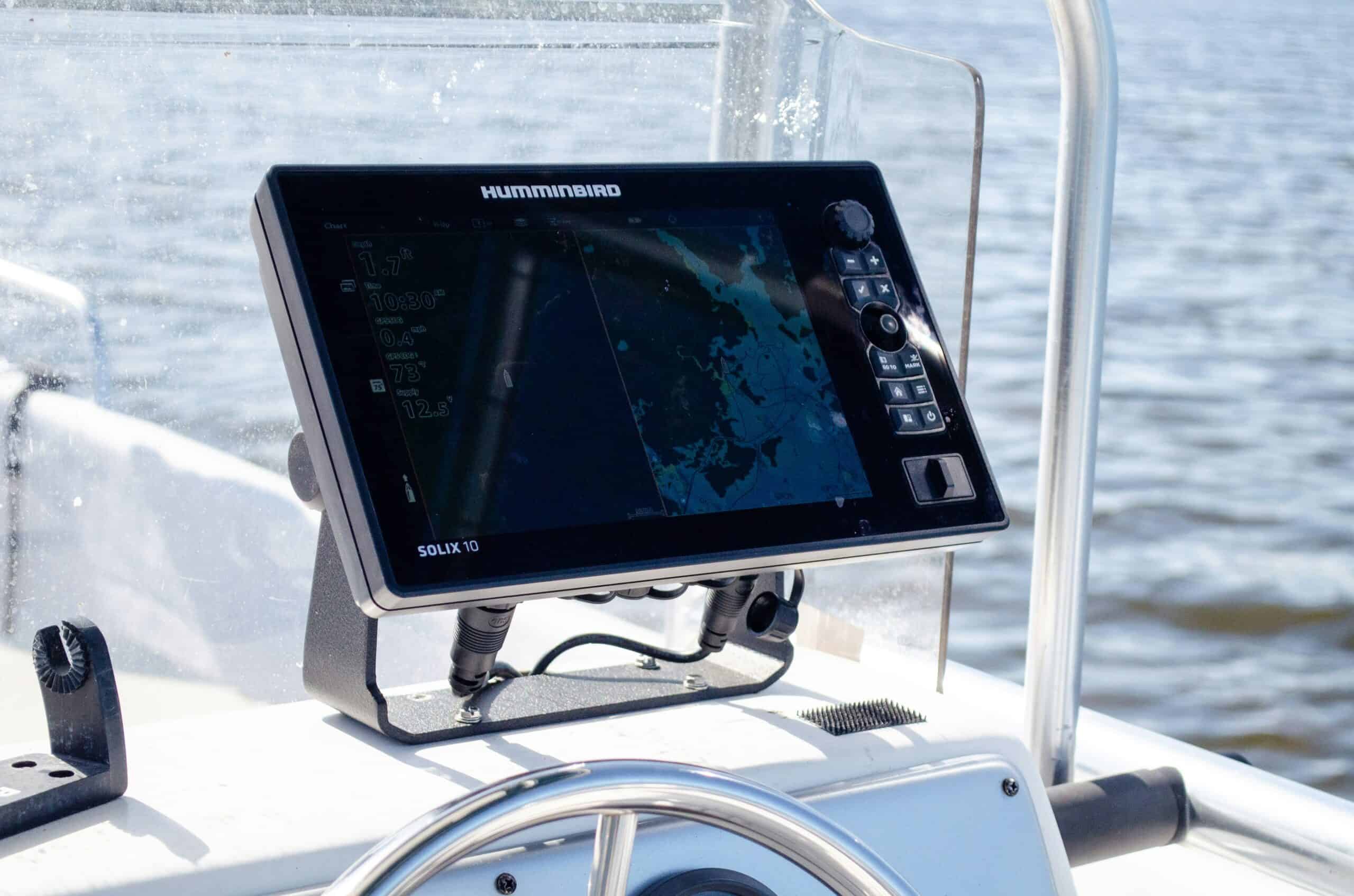
The cheapest way to check water temperature is a basic surface thermometer dropped into the water for a minute. Better is a fish finder with a temperature gauge that gives continuous readings as you move. Some species-specific anglers carry a separate temperature probe to check at depth.
Surface temperature alone tells you a lot. If surface temps are 80°F and you’re fishing for trout, you need to either move to deeper, cooler water or change species. If surface temps are 50°F and you’re throwing fast-moving topwater lures for bass, you’re probably going to get refused all day.
Pay attention to temperature changes across a lake. The wind-blown side of a lake (windward) often has slightly warmer surface water in spring as solar-heated surface water gets pushed there. Inlets carrying cooler stream water can hold trout even in lakes that are otherwise too warm.
How Temperature Interacts With Other Factors
Temperature doesn’t operate alone. It interacts with light levels, oxygen, food availability, and structure.
Oxygen. Cold water holds more dissolved oxygen than warm water. Hot summer water can become low in oxygen, particularly in lower layers of stratified lakes, further pushing fish to specific zones.
Light. Bright midday sun in summer combines with warm water to drive fish deep. Cloudy days extend fishing windows because fish stay shallower longer.
Food. Baitfish position themselves based on temperature, too. Where the bait is, predators tend to follow. A school of shad in the thermocline often has bass nearby.
Structure. Fish find structure (drop-offs, weed beds, points, ledges) that gives them access to the temperature they prefer, plus cover, ambush positions, or food.
📑 Recommended Read: Once you know the temperature is right, line selection becomes the next variable that often makes the difference. Check out our tested breakdown of the Best Fishing Lines for Different Techniques to match line type and weight to your target species and conditions.
What to Do When the Temperature Is Wrong
Sometimes the water temperature isn’t going to work for your target species that day. You have a few options.
Change depth. Surface temperature isn’t the only water temperature. Going deeper can find cooler water in summer or slightly warmer water in winter (deeper water stays around 39°F all winter, which is warmer than the just-below-ice surface).
Change location. Spring-fed inlets, shaded coves, deep holes, and areas near current. All of these can provide microhabitats with different temperatures than the main body of water.
Change species. If the trout aren’t biting because it’s 80°F, try bass. If the bass aren’t biting because it’s 45°F, try crappie. Adapting to what the conditions favor catches more fish than insisting on a species that’s wrong for the day.
Change time. The early morning hours in summer can be cool enough for trout even when midday is too warm. Plan around the temperature windows. Our diagnostic explainer on why fish aren’t biting covers how temperature interacts with other timing factors.
Common Mistakes and How to Avoid Them
Ignoring temperature entirely. Without knowing the temperature, you’re guessing about where fish should be.
Fishing surface temperature for deep fish. The temperature 20 feet down can be 15°F cooler than the surface. The surface reading is only directly useful for surface-feeding patterns.
Sticking to one species when temperatures don’t favor it. If conditions are wrong for your target species, switch species rather than catching nothing.
Catching and releasing trout in warm water. Trout are particularly stressed by warm temperatures. Released trout in marginal-temperature water often die from the stress. If the water is too warm, switch species rather than continuing to fish.
Assuming the lake is uniform. Different parts of the same lake can have different temperatures, especially in spring and fall. Move around if your first spot has the wrong temperature.
Frequently Asked Questions
What temperature do bass bite best at? Mid-range warm-water temperatures are generally most active in the middle of their preferred range. Specific peak varies by region, but the broad pattern is consistent.
Can fish die from water that’s too warm? Yes, especially trout and other cold-water species. Released trout in marginal-temperature water frequently die from the stress combined with the fight.
Does water temperature change quickly? Surface temperature can change several degrees in a day depending on the sun and wind. Deeper water temperatures change much more slowly, often over days or weeks.
What’s the thermocline? The narrow band of rapid temperature transition between the warmer surface layer and the cooler bottom layer in summer-stratified lakes. Fish often hold just above it because it offers both a tolerable temperature and adequate oxygen.
Is morning or evening better for fishing in summer? Both work because surface water has cooled overnight (morning) or is starting to cool (evening). Midday in summer is often the worst window because surface water is warmest and brightest.
Do I need a fish finder to check water temperature? No, but it helps. A basic surface thermometer on a string works fine for surface readings. Fish finders give continuous readings as you move, and many show depth-specific temperatures.
