
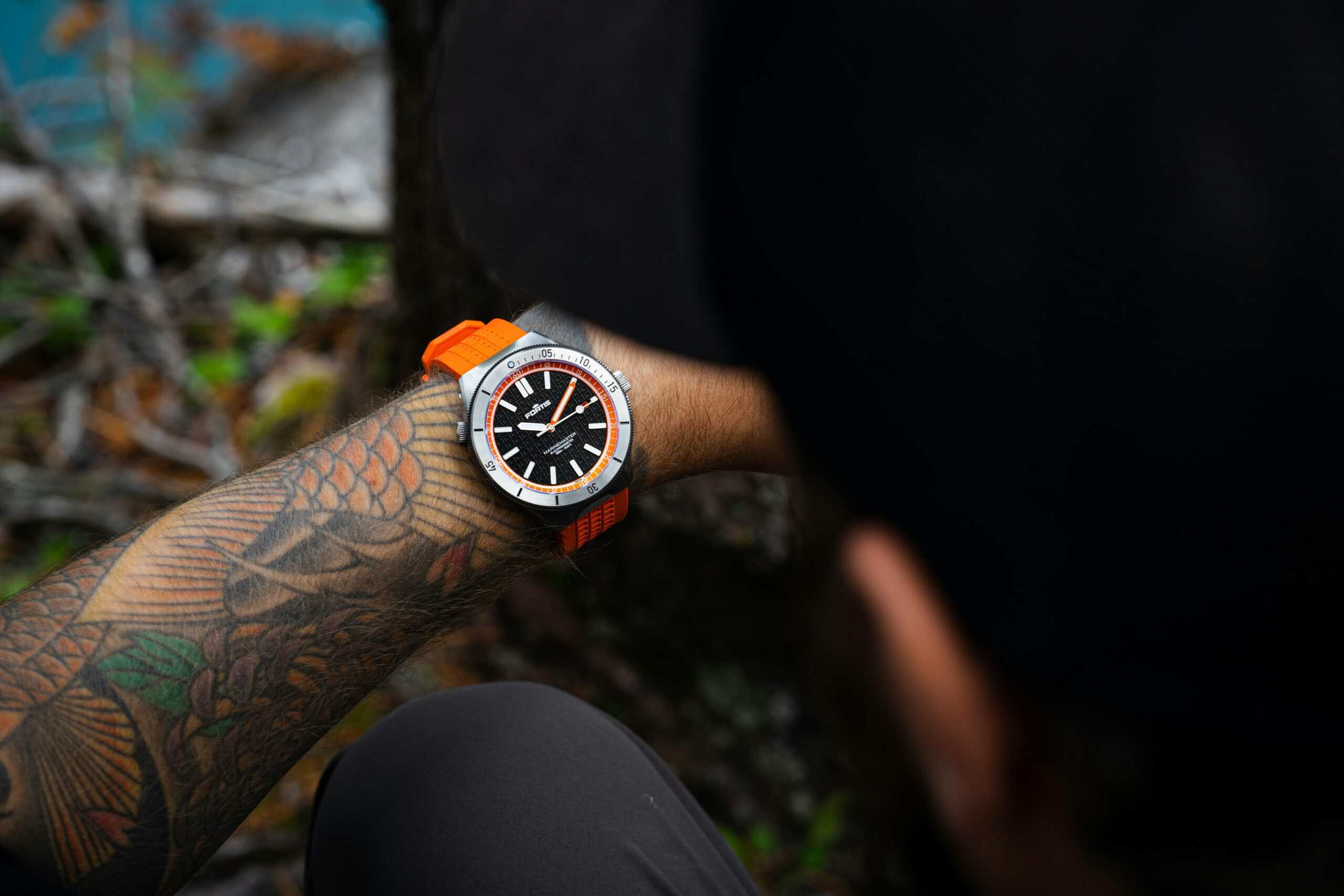
What Separates a Hiking Watch From a Smartwatch
The distinction matters more than the marketing suggests. A smartwatch optimized for daily wear and fitness tracking runs out of battery in 18 to 36 hours of active GPS use. In the backcountry, that timeline is dangerous rather than merely inconvenient. A hiking watch built for outdoor use runs GPS actively for 24 to 100+ hours, covering multi-day trips without battery anxiety, and provides the specific navigation, weather, and physiological data that trail use requires rather than the social media notifications and music controls that smartwatch features prioritize.
The feature set that matters on trail is different from what urban smartwatch use values. Topographic map display and breadcrumb navigation tell you where you are and how you got there. Barometric altimeter readings track elevation gain accurately and provide weather change warnings through pressure trend monitoring. Storm alerts from barometric pressure drops can provide meaningful warning before conditions deteriorate. Digital compass and bearing functions work without a cellular connection in areas where GPS satellites are the only signal available.
None of these features is unique to expensive hiking watches, quality options exist across price ranges from $150 to $700. The right choice depends on the type of hiking, the technical navigation requirements, and how heavily you want to invest in a watch you will wear for five to ten years. Our guide to the best trekking poles covers the trail equipment that pairs with a hiking watch for complete navigation and safety coverage on demanding routes.
What to Look for in Hiking Watches
GPS battery life is the specification that most directly separates hiking watches from general outdoor watches. Active GPS mode drains batteries significantly faster than standard timekeeping. A watch that advertises 7 days of battery life in watch mode may offer only 20 hours of active GPS, the relevant metric for day hiking and backpacking use. Always check the GPS-active battery specification rather than the overall battery life figure.
Navigation features determine how useful the watch is for route-finding. Breadcrumb trail recording, saving your path as you walk it, allows backtracking to the trailhead without a map. Pre-loaded topographic maps show terrain, elevation contours, and trail routes without a cellular connection. Turn-by-turn navigation works from pre-loaded routes on the most capable models. Decide which navigation tier you need before filtering by price, basic breadcrumb and GPS coordinates cost far less than full topographic mapping.
Barometric altimeter versus GPS altimeter matters for elevation accuracy. GPS elevation is derived from satellite triangulation and has a vertical accuracy of plus or minus 30 to 50 feet, adequate for general use. Barometric altimeters calculate elevation from atmospheric pressure and are accurate to plus or minus 10 feet when calibrated, significantly more precise for elevation gain tracking on detailed route analysis. Barometric altimeters also provide the weather monitoring function that GPS-only elevation cannot.
Durability ratings determine whether the watch survives trail conditions. MIL-STD-810G certification indicates that the watch has been tested against military standards for temperature, shock, vibration, and humidity, the most commonly cited durability standard in the hiking watch category. Water resistance of 100 meters or above covers stream crossings and heavy rain without concern.
Best Hiking Watches in 2026: Our Top 5 Picks
1. Garmin Instinct 2, Best Overall
Best Overall | Price: ~$300
The Garmin Instinct 2 is the hiking watch that most outdoor equipment specialists recommend as the starting point for serious trail use, combining 30-hour GPS battery life, multi-GNSS satellite support for signal reliability in dense forest and canyon terrain, a barometric altimeter for accurate elevation and weather monitoring, and MIL-STD-810G durability in a design that weighs under 53 grams. The breadcrumb navigation, TracBack routing, and GPS coordinates provide the navigation foundation that most day hikers and backpackers specifically need without the map display complexity of premium Garmin models.
Garmin Instinct 2, Multi-GNSS Support That Maintains Signal Where Single-GPS Watches Lose It
Multi-GNSS support is the specification that most distinguishes the Instinct 2 from lower-priced GPS watches. Standard GPS uses US satellite networks only. Multi-GNSS combines US GPS, Russian GLONASS, European Galileo, and Japanese QZSS satellite networks, producing faster signal acquisition and more reliable positioning in conditions where single-network GPS loses signal. Dense forest canopy, canyon walls, and steep mountain terrain all degrade single-network GPS accuracy that multi-network alternatives maintain. For hikers in technical terrain, this capability difference produces real-world navigation reliability improvement.
Best for: Serious day hikers and backpackers who want reliable multi-GNSS navigation, barometric weather monitoring, and MIL-STD durability without full topographic map display.
PROS:
- 30-hour active GPS battery life for multi-day use with recharging
- Multi-GNSS support for signal reliability in difficult terrain
- Barometric altimeter for accurate elevation and weather trend monitoring
- MIL-STD-810G durability rating
- TracBack navigation for return route guidance
CONS:
- Price at approximately $300 is significant for casual hikers
- No full topographic map display, breadcrumb navigation only
- Older interface design compared to newer Garmin models
2. Garmin Fenix 7, Best Premium Option
Best Premium | Price: ~$600
The Garmin Fenix 7 represents the top tier of hiking watch capability, full topographic map display, 57-hour GPS battery life, solar charging that extends battery life indefinitely in high-sunlight environments, multi-band GPS for the most accurate positioning available in consumer devices, and the complete physiological monitoring suite, including pulse oximetry for altitude acclimatization assessment. The price reflects genuine capability rather than brand premium, the Fenix 7 does things that no cheaper watch in the category can replicate.
Garmin Fenix 7, Full Topographic Mapping That Changes Trail Navigation Fundamentally
The distinction between breadcrumb navigation and full topographic map display is significant for technical trail use. Breadcrumb navigation shows where you have been and your current GPS position. Topographic map display shows the terrain around you, elevation contours, trail routes, water sources, campsites, and road access, in a visual format that allows route planning and navigation decisions without a separate paper or phone map. For backpackers navigating routes without established trails, this capability difference is genuinely consequential. At approximately $600, the Fenix 7 is a five to ten-year investment in trail navigation capability rather than a disposable gadget.
Best for: Multi-day backpackers and technical trail navigators who need full topographic map display, maximum GPS battery life, and the complete physiological monitoring suite for altitude and performance tracking.
PROS:
- Full topographic map display for complete trail navigation
- 57-hour GPS battery life extended by solar charging
- Multi-band GPS for maximum positioning accuracy
- Complete physiological monitoring, including pulse oximetry
- Premium build quality for a 5 to 10-year lifespan
CONS:
- Premium price at approximately $600
- Feature complexity beyond the needs of casual and moderate hikers
- Heavier than simpler alternatives at 79 grams
3. Suunto 9 Peak, Best for Ultramarathon and Multi-Day Use
Best for Extended Use | Price: ~$400
The Suunto 9 Peak’s defining specification is battery life, up to 170 hours in low-power GPS mode, 25 hours in best GPS accuracy mode, and the FusedTrack algorithm that intelligently switches between GPS accuracy levels based on activity intensity to extend battery life without sacrificing tracking quality on the sections where position accuracy matters most. For ultramarathon runners and multi-day backpackers where a dead watch is a genuine safety concern, the Suunto 9 Peak’s battery architecture provides confidence that no other watch at the price delivers.
Suunto 9 Peak, FusedTrack Algorithm That Extends Battery Without Sacrificing Critical Accuracy
The FusedTrack intelligence is what makes a 170-hour GPS life genuinely useful rather than a specification achieved by sacrificing all position accuracy. The algorithm identifies when the activity is moving in a straight line at a consistent pace, long flat trail sections, road approaches, and reduces GPS polling frequency, then increases it again when direction changes, and technical terrain indicates that position accuracy matters more. The result is meaningful battery extension on the sections where it is safe to extend, and full accuracy on the sections where it is not.
Best for: Ultramarathon runners, multi-day backpackers, and anyone whose trail use extends beyond 30 hours of GPS recording per session without reliable charging access.
PROS:
- Up to 170 hours of GPS battery life in performance mode
- FusedTrack intelligent battery management
- Slim titanium case at 29 grams, lightest quality hiking watch on this list
- Barometric altimeter and storm alarm
- Scratch-resistant sapphire crystal lens
CONS:
- Higher price at approximately $400
- Interface less intuitive than Garmin alternatives for new users
- No full topographic map display, route navigation only
4. Coros Vertix 2, Best Battery and Features Combination
Best Battery + Features | Price: ~$500
Coros has emerged as the strongest challenger to Garmin’s hiking watch dominance, the Vertix 2 delivers full topographic map display, dual-frequency GPS for high-accuracy positioning, and 140-hour GPS battery life in a single package that costs approximately $100 less than the Garmin Fenix 7 with comparable features. The battery life advantage over the Fenix 7 is the specification that multi-day users specifically notice, five to six days of GPS tracking on a single charge versus the Fenix 7’s two to three days at comparable GPS accuracy settings.
Best for: Technical hikers and backpackers who want Garmin Fenix-level capability at a lower price, anyone whose multi-day routes require full map display and maximum battery life simultaneously.
PROS:
- 140-hour GPS battery life, significantly longer than Garmin Fenix 7
- Full topographic map display at a lower price than Fenix 7
- Dual-frequency GPS for high-accuracy positioning
- Strong build quality and MIL-STD-810H rating
- Growing route and map ecosystem
CONS:
- Price at approximately $500 is still premium
- Smaller user community and ecosystem than Garmin
- Interface is less refined than Garmin’s established software
5. Garmin Instinct Solar, Best Budget With Solar
Best Budget Solar | Price: ~$200
The Garmin Instinct Solar adds solar charging to the Instinct platform, extending GPS battery life from 24 hours to 48+ hours in active outdoor conditions. At approximately $200, it is the most accessible entry point to solar-assisted GPS hiking watch capability on this list. The navigation features match the standard Instinct 2, breadcrumb, TracBack, multi-GNSS, with the solar addition providing meaningful battery extension for day hikers and moderate backpackers who hike in sunlit environments.
Best for: Day hikers and moderate backpackers who want solar-extended battery life without the premium pricing of the Instinct 2 or Fenix 7, anyone who hikes primarily in open, sunlit terrain where solar charging produces meaningful real-world benefit.
PROS:
- Solar charging extends the GPS battery beyond the standard Instinct 2 at a lower price
- Full Instinct navigation feature set, including multi-GNSS
- MIL-STD-810G durability
- Lower price than Instinct 2 at approximately $200
- Garmin ecosystem and Connect app support
CONS:
- Solar charging requires direct sunlight, less effective in forests or overcast hiking
- No topographic map display
- Older design platform than the Fenix 7
Quick Comparison: Best Hiking Watches 2026
| Watch | Price | GPS Battery | Maps | Best For | Score |
|---|---|---|---|---|---|
| Garmin Instinct 2 | ~$300 | 30 hrs | Breadcrumb | Best overall | 9.3 |
| Garmin Fenix 7 | ~$600 | 57 hrs | Full topo | Premium | 9.2 |
| Suunto 9 Peak | ~$400 | 170 hrs | Route only | Extended use | 9.0 |
| Coros Vertix 2 | ~$500 | 140 hrs | Full topo | Best value premium | 8.9 |
| Garmin Instinct Solar | ~$200 | 48+ hrs | Breadcrumb | Budget solar | 8.8 |
Our Verdict on the Best Hiking Watches
The Garmin Instinct 2 at $300 is the right watch for most serious day hikers and moderate backpackers, the multi-GNSS reliability, barometric weather monitoring, and 30-hour GPS life cover the navigation and safety requirements of trails up to three days without requiring the full topographic map complexity that technical navigation demands.
Multi-day backpackers and technical route finders face a different decision. The Garmin Fenix 7 at $600 and the Coros Vertix 2 at $500 both deliver full topographic maps, the Coros at a lower price with longer battery life, the Fenix with a more mature ecosystem and software. For routes that extend beyond 50 hours of GPS recording without charging access, the Suunto 9 Peak at $400 and its 170-hour battery life is the specific answer that no other watch on this list provides.
Day hikers who want solar-assisted battery extension at an accessible price should look at the Garmin Instinct Solar at $200, it delivers the Instinct platform’s core navigation capability with the solar addition that meaningfully extends battery life for open-terrain trail use.
Frequently Asked Questions: Best Hiking Watches
Do I need a GPS watch for hiking?
Not for well-marked trail systems where getting lost is unlikely and a cellular signal is available for navigation apps. A GPS hiking watch becomes meaningful for off-trail navigation, remote backcountry routes without cellular coverage, multi-day trips where phone battery life is a concern, and any hiking situation where accurate position knowledge without cellular dependency is a safety consideration. The barometric weather monitoring and storm alerts are useful on any trail regardless of navigation complexity.
What is the difference between GPS and multi-GNSS?
Standard GPS uses only the US satellite network, 31 satellites providing worldwide coverage with variable signal quality depending on terrain. Multi-GNSS combines GPS with additional networks, GLONASS (Russian), Galileo (European), and QZSS (Japanese), for a total satellite pool of 100+ satellites. More satellites mean faster signal acquisition, better accuracy in difficult terrain like dense forest and canyon walls, and maintained positioning in conditions where single-network GPS loses a reliable signal.
How accurate are hiking watch GPS readings?
Standard GPS is accurate to within 10 to 30 feet in open terrain with a clear satellite view. Multi-GNSS improves this to 10 to 20 feet. Dual-frequency GPS, available in premium models like the Coros Vertix 2 and newer Garmin models, improves accuracy further to 5 to 10 feet by using two frequency bands that correct each other’s atmospheric errors. Barometric altimeter elevation readings are accurate to plus or minus 10 feet when calibrated, significantly more precise than GPS elevation, plus or minus 30 to 50 feet.
Can hiking watches work without a cellular signal?
Yes, GPS satellite positioning works independently of cellular networks. A hiking watch with pre-loaded topographic maps, multi-GNSS support, and barometric sensors operates fully in areas without cellular coverage. This is the specific advantage hiking watches provide over navigation apps on smartphones, phone GPS works without cellular but requires cellular for map downloads, and phone batteries drain faster under active GPS use than purpose-built hiking watches.
How long should a hiking watch last?
Quality hiking watches last five to ten years with normal use and proper care. Battery degradation is the primary long-term concern, lithium batteries lose capacity over charge cycles and years of use. Garmin and Suunto both offer battery replacement services for their watches. MIL-STD-rated cases handle the physical demands of regular trail use for the full lifespan. Screen scratches on watches without a sapphire crystal are the most visible wear indicator, but do not affect function.
More Hiking Guides
Some devices combine navigation and messaging. messengers with built-in navigation covers the overlap.
