
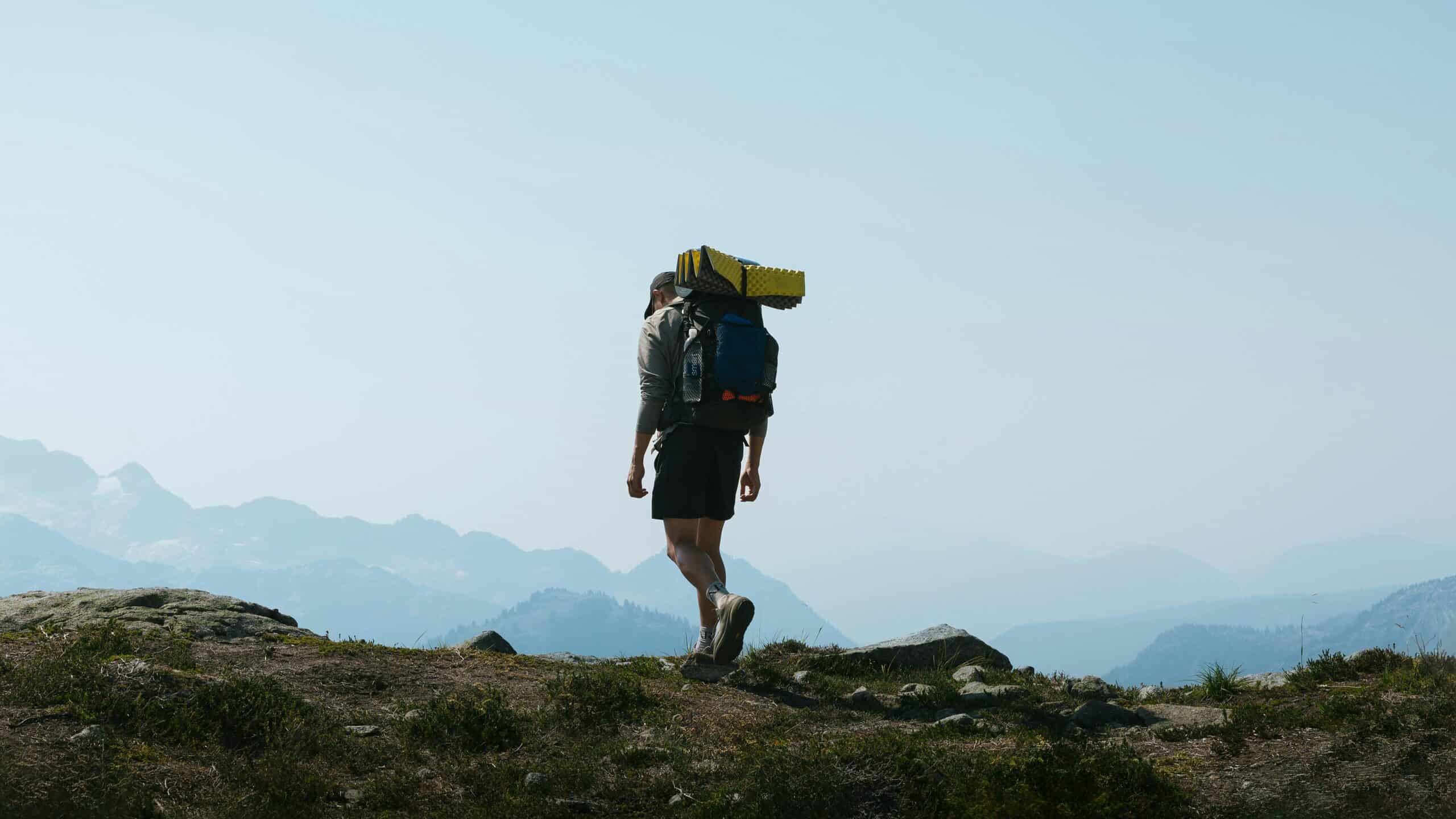
Base weight is the total weight of everything in a backpack except food, water, and fuel, measured before a trip starts. Understanding base weight in backpacking gives hikers a single stable number they can compare across trips, seasons, and gear setups. Total pack weight changes every hour on trail, while base weight does not.
That stability is the whole point. A hiker who drinks two liters of water gets lighter without changing a single piece of gear. Backpackers who want to know whether a kit is actually improving use base weight, then check the total separately with a simple weight calculator before heading out.
Quick Answer
Base weight is the combined weight of all gear carried for an entire trip, excluding consumables like food, water, and fuel. It typically includes the pack, shelter, sleeping bag, sleeping pad, cook system, and spare clothing. Because consumables burn off during a hike, base weight stays constant and works as a fair comparison number.
Key Takeaways
- Base weight counts gear that stays in the pack from trailhead to finish.
- Consumables such as food, water, and fuel are excluded because they shrink daily.
- Worn and handheld items usually sit outside base weight by convention.
- The shelter, sleeping bag, and pack dominate most kits and drive the biggest savings.
- Tier labels like ultralight are informal conventions, not fixed rules.
| Item | Category | Why it lands there |
|---|---|---|
| Tent or tarp | Base weight | Carried the whole trip and never consumed. |
| Sleeping bag and pad | Base weight | Stays in the pack every single day. |
| Stove and pot | Base weight | The hardware remains, even after fuel runs out. |
| Food and stove fuel | Consumable | Eaten or burned, so the load drops each day. |
| Water in bottles | Consumable | Drunk and refilled, changing hour by hour. |
| Boots and hiking shirt | Worn weight | On the body rather than inside the pack. |
| Trekking poles | Carried weight | Held in the hands for most of the day. |
Why Base Weight Matters More Than Total Pack Weight
Base weight matters more because it is the only part of the load a hiker fully controls through gear choices. Food and water quantities shift with trip length, resupply spacing, and how dry the route runs. Those variables say little about the kit itself.
Consider two hikers with identical gear. One carries five days of food, the other carries one. Their total pack weights look wildly different, yet their kits are the same.
Base weight removes that noise. It answers a narrower question: how heavy is the system a hiker owns? That framing makes gear upgrades easy to judge, since swapping a shelter changes the number immediately.
The number also travels well between hikers. Two people can compare base weights across different regions and trip lengths and still learn something.
The Big Three and Why They Dominate the Total
The big three are the shelter, the sleep system, and the backpack itself, and together they usually account for most of a kit’s base weight. Everything else tends to be small by comparison. A headlamp weighs ounces, while a tent can weigh pounds.
Shelters vary enormously. A heavy freestanding tent and a minimal tarp can differ by several pounds for the same night of rain protection. Hikers looking at that category often start with lighter shelter options before touching anything else.
Sleep systems follow the same logic. Bag or quilt warmth ratings, insulation type, and pad construction all move the number. Comparing pad choices side by side shows how much variation exists at similar comfort levels.
The pack itself is the third piece, and it is often overlooked. A large, heavily featured pack can weigh more than a shelter. Choosing capacity carefully prevents buying more pack than a kit actually needs.
How to Weigh a Backpacking Kit Accurately
Weighing a kit accurately means measuring individual items on a scale rather than estimating from manufacturer specs. Listed weights often exclude stakes, stuff sacks, or guy lines. Those omissions add up fast across a full setup.
A basic digital kitchen scale handles most small items well. A luggage scale or bathroom scale works for the loaded pack.
Start by laying every item out on a table. Weigh each piece separately and record it in a spreadsheet or notes app. Grouping items by category keeps the list readable later.
Then sort each entry into base weight, consumable, or worn. That sorting step is where most of the insight appears. Capacity choices become clearer once the list exists, especially alongside a volume estimate.
Common Base Weight Tiers and What the Labels Mean
Weight tiers are informal community labels, and backpackers disagree about where the lines fall. Traditional generally describes heavier, more featured kits with durable materials and roomier shelters. Lightweight sits below that, and ultralight sits below lightweight.
Rough conventions place ultralight somewhere near ten pounds and lightweight somewhere near twenty. Treat those figures as loose reference points only. Plenty of experienced hikers use different cutoffs or reject the labels entirely.
Conditions matter more than any label. Winter trips, bear canister requirements, and long water carries all push base weight up for good reasons. A heavier winter kit is not a worse kit.
Route rules can also change the math. Areas requiring hard-sided food storage add real weight, which is why canister comparisons come up so often in planning discussions.
Where Cutting Weight Stops Being Worth It
Cutting weight stops being worth it when the savings get tiny, the cost gets steep, or safety margins start shrinking. The first few pounds usually come cheap. The last few rarely do.
Early wins come from the big three and from removing duplicate items. Those changes often cost nothing at all. Later gains require expensive materials for fractions of an ounce.
There is also a comfort floor. A pad too thin to sleep on trades rest for a lighter number. Poor sleep affects the next day more than a few ounces ever will.
Safety items deserve the same caution. Rain protection, insulation, navigation, and first aid supplies stay regardless of the target. Load carried badly also causes discomfort, which is worth checking against proper pack fit before blaming weight alone.
How Backpackers Fool Themselves About Base Weight
Base weight is easy to misreport, usually without any intent to mislead. A few habits show up repeatedly in gear lists. Each one makes the number look better than the reality on trail.
Shifting Items Into Pockets
Moving a heavy power bank from the pack body to a hip belt pocket does not make it disappear. The weight still rides on the same shoulders and hips. Pocket contents belong in base weight unless they genuinely stay on the body.
Worn weight has a reasonable definition, and it excludes storage tricks. Clothing actually worn while hiking counts, while a jacket stuffed in a lid pocket does not.
Counting the Pack Incorrectly
The backpack itself is base weight, and leaving it out understates a kit badly. Some lists quietly omit it because the pack holds everything else. That reasoning does not hold up.
Removable components create similar confusion. A detachable lid, frame stay, or hip belt counts whenever it comes along. Only parts left at home get subtracted.
Chasing Grams on Cheap Items
Trimming toothbrush handles and cutting map margins saves very little. Those efforts feel productive because they are visible and immediate. The scale barely registers them.
Meanwhile a heavy shelter or oversized pack sits untouched. Working the big three first delivers far larger returns. Small trims make sense afterward, not before.
Ignoring How the Load Is Packed
Two packs with identical base weights can feel completely different on trail. Load placement changes how weight transfers to the hips. Poor organization also causes repeated digging and repacking.
Learning sensible packing order costs nothing and improves comfort quickly. Heavy items generally ride close to the back, with bulky soft goods filling the gaps.
Related Reading
Hikers building a first kit often start with budget-friendly pack picks before upgrading anything else. Cook setups deserve attention too, since stove and pot combinations vary widely in weight. Anyone dealing with persistent discomfort should also read about shoulder pressure causes.
Frequently Asked Questions
What counts as base weight in backpacking?
Base weight in backpacking includes every item carried for the full trip that does not get used up. That means the pack, shelter, sleeping bag, sleeping pad, cook hardware, spare clothing, electronics, and first aid supplies. Food, water, and fuel are excluded, and worn clothing or handheld poles usually sit outside the number too.
Does the backpack itself count toward base weight?
Yes, the backpack counts, and it is one of the three heaviest items in most kits. Include the pack body plus any lid, frame, hip belt, or accessory pockets that travel along. Only components deliberately left at home get subtracted, since omitting the pack produces a number nobody can compare fairly.
Why are food and water excluded from base weight?
Food and water get consumed during a trip, so their weight falls continuously from the first mile onward. A five day food carry and a one day food carry describe trip length, not gear quality. Excluding them keeps the number stable, and that stability is what makes base weight useful for comparing kits.
What is a good base weight for a beginner?
There is no single correct target, and beginners generally do better focusing on comfort and safety first. Many new backpackers land well above common lightweight conventions, which is normal. Weigh the current kit, identify the heaviest three items, and improve those gradually rather than rushing toward a specific number.
How is base weight different from total pack weight?
Total pack weight is base weight plus all consumables loaded at the trailhead. It represents the heaviest the pack will ever feel, and it drops daily as supplies run down. Base weight stays fixed, which makes it the better number for comparing gear setups between hikers.
Do trekking poles count toward base weight?
Trekking poles normally count as carried weight rather than base weight, since they stay in the hands while hiking. The exception comes when poles get strapped to the pack for long stretches, or when they double as tent supports. Listing them separately and stating the choice keeps a gear list honest.
How often should a gear list be reweighed?
Reweighing once or twice per season catches gradual drift as small items accumulate. Also reweigh after replacing any of the big three, since those swaps move the number most. Spot checks help after long trips when repacking habits change, and a spreadsheet makes each update fast.
