
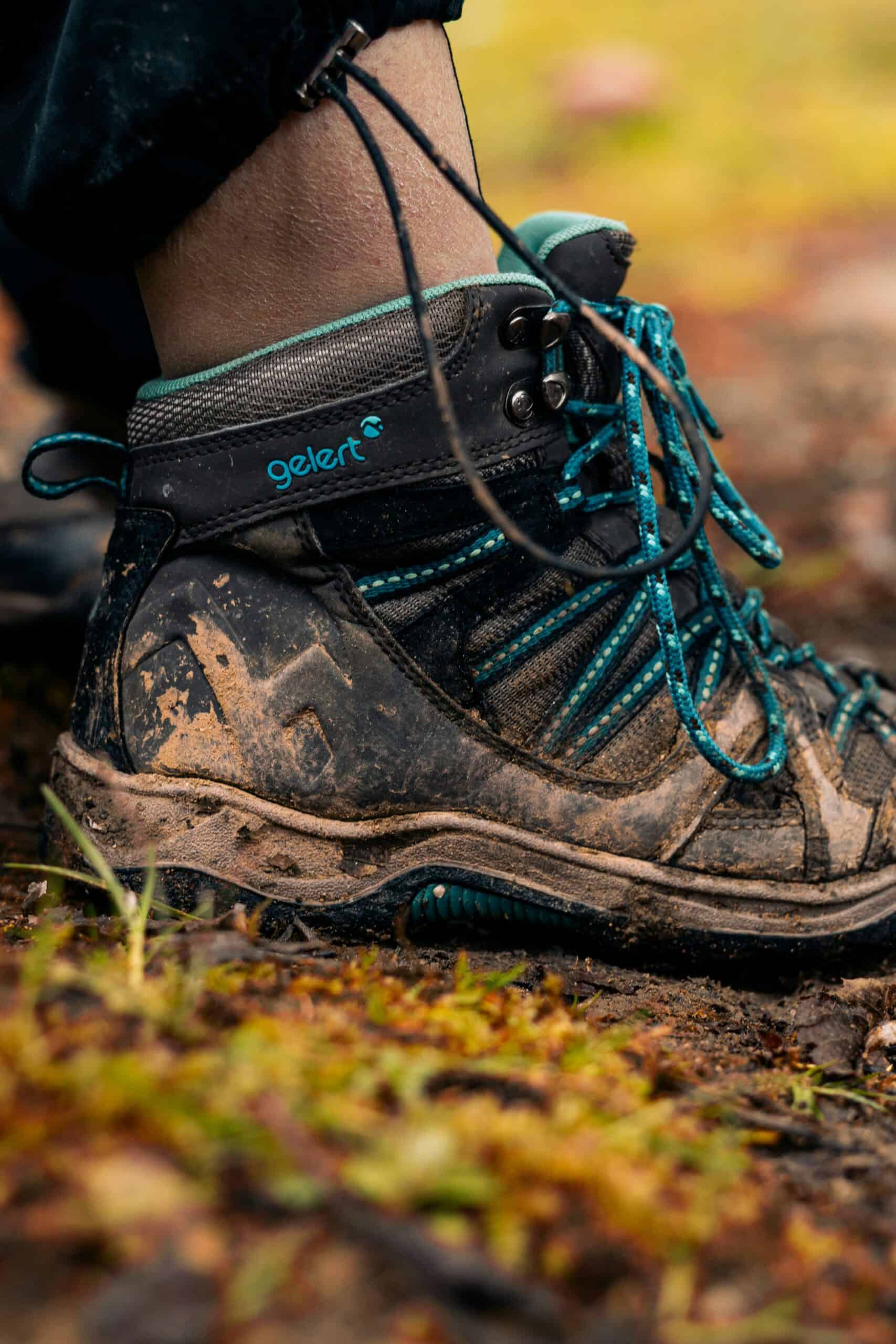
Dry feet are not a luxury on a wet trail, they are the difference between a hike you finish strong and one you cut short at mile four because the cold, wet misery has become the only thing you can think about.
Most hikers learn this the hard way. A trail that looked manageable on the map turns into a series of unavoidable puddles, stream crossings, and rain-soaked brush that saturates standard hiking boots within the first hour. From that point forward, every step is a cold, squelching reminder that waterproofing was the feature worth prioritizing and was not. A genuinely waterproof hiking boot, Gore-Tex membrane, fully sealed construction, grippy wet-surface outsole, changes wet trail hiking from an endurance test into a normal hiking day where the weather is simply part of the environment rather than the enemy.
More Information
The honest caveat on waterproof hiking boots is breathability. A Gore-Tex membrane prevents water from entering from outside but also slows moisture vapor from escaping inside, which means feet sweat more in waterproof boots than in non-waterproof alternatives during high-output hiking in warm conditions. The trade-off is worth accepting in wet conditions where external water entry is the primary problem. In dry, warm conditions where sweating is the primary comfort issue, a non-waterproof boot with maximum breathability is often the more comfortable choice. Knowing which condition you hike in most determines which boot specification serves you best.
For hikers just getting started with trail footwear decisions, our guide to the best hiking boots for beginners covers the full range of options across waterproof and non-waterproof categories. Hikers tackling wet trails who also want lower leg protection from water and mud should check our best hiking gaiters guide, gaiters and waterproof boots together create a more complete wet weather footwear system than either alone. And for wet-weather hiking where rain pants complete the system from the waist down, our best waterproof hiking pants guide covers that side of the equation.
What to Look for in Waterproof Hiking Boots for Wet Trails
Waterproof membrane determines how long boots stay dry in sustained wet conditions.
Gore-Tex is the benchmark waterproof membrane for hiking boots, a thin expanded polytetrafluoroethylene layer bonded to the boot upper that blocks liquid water from entering while allowing moisture vapor to escape from inside. Gore-Tex Performance and Gore-Tex Surround are the two consumer variants most commonly found in hiking boots, Performance is the standard membrane for most three-season hiking; Surround adds 360-degree breathability through the outsole for warmer conditions. Proprietary waterproof membranes from brands like Salomon, Merrell, and Keen perform comparably to Gore-Tex in independent testing at lower price points, though the Gore-Tex name carries a tested performance guarantee that proprietary alternatives do not always match in long-term durability.
Outsole compound and lug pattern determine wet surface traction.
A waterproof boot that keeps feet dry but slips on wet rock is dangerous rather than useful. Vibram outsoles with rubber compounds specifically formulated for wet rock adhesion, Vibram Megagrip and Vibram XS Trek are the two wet-condition optimized compounds, deliver measurably better wet rock traction than standard EVA or generic rubber outsoles. Lug depth and spacing matter alongside compound, deeper, widely spaced lugs shed mud more effectively than shallow, close-set lugs that pack with mud and lose grip on soft terrain.
Ankle height determines the support and protection level for different trail types.
Low-cut waterproof hiking shoes provide ankle freedom and lighter weight, appropriate for established trails with moderate terrain where ankle twist risk is low and speed matters. Mid-cut waterproof boots provide partial ankle support and protection, the most versatile height for three-season trail hiking across varied terrain. High-cut waterproof boots provide maximum ankle support and protection, appropriate for heavily loaded backpacking, technical terrain, and conditions where ankle stability is the priority over weight and freedom of movement.
Midsole cushioning determines comfort over long distances on wet terrain.
Wet trail hiking often involves slower, more deliberate movement than dry trail hiking, more time on feet covering the same distance. A midsole with adequate cushioning depth for sustained slow movement on uneven terrain reduces the foot fatigue that wet trail conditions compound. EVA midsoles provide lightweight cushioning that degrades over time. Polyurethane midsoles provide denser, more durable cushioning that maintains its properties longer under sustained use but adds weight. Premium midsole compounds from brands like Salomon and Hoka provide cushioning performance that generic EVA cannot match at comparable weights.
The 5 Best Waterproof Hiking Boots for Wet Trails in 2026
1. Salomon X Ultra 4 GTX
Best Overall Waterproof Hiking Boot for Wet Trails | Price: ~$165
The Salomon X Ultra 4 GTX is the waterproof hiking boot that most serious trail hikers end up recommending to everyone who asks, Gore-Tex waterproofing, Contagrip MA outsole with genuine wet rock performance, a chassis system that guides the foot through efficient movement on uneven terrain, and a fit that works for a wide range of foot shapes right out of the box.
What Makes the X Ultra Different From Every Other Boot
Most waterproof hiking boots feel stiff and protective, the waterproof membrane and reinforced construction that keep water out also reduce the natural foot movement that makes trail hiking feel athletic rather than armored. The Salomon X Ultra 4 GTX solves this with a chassis system that provides structural support through the midsole without requiring a stiff upper to do the work, the boot moves with the foot rather than around it. The result is a waterproof hiking boot that feels closer to a trail runner than a traditional boot without sacrificing the stability and protection that wet trail hiking requires.
The Gore-Tex Performance membrane keeps feet dry in sustained rain, stream crossings, and wet brush contact. The Contagrip MA outsole handles wet rock, mud, and loose terrain with grip that holds on surfaces where softer rubber compounds lose traction. The quick-lace system secures the boot with a single pull and locks at any tightness level without pressure point concentration.
PROS:
- Gore-Tex Performance membrane delivers tested waterproof performance in sustained wet conditions
- Chassis system provides structural support without stiff upper, more natural foot movement than traditional boots
- Contagrip MA outsole handles wet rock, mud, and loose terrain reliably
- Quick-lace system secures the boot in seconds without pressure point concentration
- Wide fit compatibility across foot shapes without extended break-in
- Salomon brand reliability with consistent long-term durability reviews
CONS:
- Higher price at approximately $165
- Quick-lace system requires replacement over time, lace cables wear at contact points
- Low-to-mid cut height provides less ankle support than high-cut alternatives for heavy pack loads
Best for: Three-season trail hikers who want the most athletic-feeling waterproof hiking boot available, particularly those who have found traditional stiff waterproof boots uncomfortable for sustained trail movement and want Gore-Tex performance in a boot that moves naturally.
2. Merrell Moab 3 GTX
Best Value Waterproof Hiking Boot for Wet Trails | Price: ~$150
The Merrell Moab is the most popular waterproof hiking boot in North America by sales volume, a distinction that reflects genuine performance consistency rather than marketing, given that the Moab has maintained its position across three generations of hikers who recommend it to each other based on actual trail experience.
The Boot That Earns Its Reputation Every Generation
The Gore-Tex membrane in the Moab 3 GTX keeps feet dry in rain, stream crossings, and sustained wet brush contact that define wet trail hiking. The Vibram TC5+ outsole provides wet surface grip that outperforms the generic rubber compounds on lower-priced alternatives. The Kinetic Fit Base insole provides adequate arch support for most hikers without custom orthotics. The wide toe box accommodates foot swelling during long hiking days better than narrow European-last alternatives.
The honest comparison to the Salomon X Ultra 4 is feel, the Moab is a more traditional boot with more structure and less of the athletic chassis feel that makes the Salomon distinctive. For hikers who prefer a traditional protective boot feel over the athletic chassis approach, the Moab 3 GTX delivers that at $150 with Gore-Tex reliability and Vibram outsole performance.
PROS:
- Gore-Tex membrane delivers tested waterproof performance
- Vibram TC5+ outsole provides genuine wet surface grip
- Wide toe box accommodates foot swelling on long hiking days
- Most popular waterproof hiking boot in North America, proven by actual trail use
- $150 price below the Salomon for comparable Gore-Tex performance
- Available in wide widths for hikers who need extra toe box room
CONS:
- More traditional stiff boot feel than the Salomon X Ultra chassis system
- Heavier than athletic-chassis alternatives at comparable waterproofing specs
- Break-in period longer than the Salomon for hikers switching from trail runners
Best for: Hikers who want proven Gore-Tex waterproof performance in a traditional protective boot feel at a price slightly below the Salomon, particularly those who prefer structured boot support over athletic chassis flexibility.
3. Hoka Anacapa Mid GTX
Best Cushioned Waterproof Hiking Boot for Wet Trails | Price: ~$175
Hoka brought their maximal cushioning philosophy to waterproof hiking boots with the Anacapa Mid GTX, Gore-Tex waterproofing over a thick EVA midsole that delivers the most underfoot cushioning of any boot on this list, making it the right choice for hikers whose primary wet trail challenge is foot fatigue on long days rather than technical terrain demands.
Maximum Cushion for Long Wet Trail Days
The thick EVA midsole is the defining feature, it delivers the cushioning depth that makes Hoka trail runners the preference of hikers who prioritize fatigue reduction over minimal weight. On long wet trail days where slower terrain navigation extends time on feet significantly, the cushioning advantage compounds, more time on feet means more cushioning benefit from a deeper midsole. The Gore-Tex membrane keeps feet dry through sustained wet conditions. The Vibram Megagrip outsole provides the wet rock traction that makes the Anacapa appropriate for technical wet terrain alongside established wet trails.
At $175, it is the most expensive option on this list. Like the Hoka trail runners, the cushioning advantage justifies the premium for hikers whose primary discomfort source is foot fatigue rather than traction or waterproofing limitations.
PROS:
- Maximum cushioning midsole reduces foot fatigue on long wet trail days
- Gore-Tex membrane delivers tested waterproof performance
- Vibram Megagrip outsole provides exceptional wet rock traction
- Mid-cut height provides ankle support alongside cushioning
- Hoka brand durability for sustained mileage under wet conditions
- Most comfortable wet trail boot for hikers with fatigue as their primary concern
CONS:
- Most expensive option on this list is approximately $175
- Thick midsole height creates a slight stability reduction on very technical terrain
- Heavier than lower-stack alternatives at comparable waterproofing specs
Best for: Hikers who prioritize cushioning and fatigue reduction on long wet trail days, anyone whose primary hiking discomfort is foot soreness rather than traction or waterproofing limitations, and who wants Vibram Megagrip wet rock performance alongside maximum cushion.
4. Keen Targhee III Mid Waterproof
Best Wide-Fit Waterproof Hiking Boot for Wet Trails | Price: ~$155
Keen builds their boots around a wide toe box and rubber toe bumper that protects against the rock contact that wet trail scrambling produces more frequently than dry trail hiking, the Targhee III Mid delivers that toe protection alongside Keen’s proprietary waterproof membrane and KEEN.ALL-TERRAIN rubber outsole at $155.
Built Wide for the Feet That Most Boots Ignore
Hikers with wide feet spend most of the boot market choosing between adequate width and adequate waterproofing, narrow European lasts that fit most Gore-Tex boots uncomfortably for wider feet force a choice between proper fit and weather protection that the Keen Targhee eliminates. The Keen wide toe box fits naturally without the lateral compression that narrow-last alternatives produce during foot swelling on long wet days. The rubber toe bumper protects against the rock stub contact that wet trail scrambling produces. The KEEN.ALL-TERRAIN rubber outsole handles wet terrain adequately for three-season trail use.
The honest comparison to Gore-Tex alternatives is membrane longevity, Keen’s proprietary waterproof membrane performs comparably to Gore-Tex in initial waterproofing but shows delamination faster than Gore-Tex under sustained heavy use over multiple seasons. For hikers who replace boots every two to three years, the difference is less relevant than for hikers who buy once and wear for a decade.
PROS:
- Wide toe box fits naturally without lateral compression during foot swelling
- Rubber toe bumper protects against rock contact on wet scrambling terrain
- Keen proprietary waterproof membrane handles three-season wet trail conditions
- KEEN.ALL-TERRAIN rubber outsole provides adequate wet terrain grip
- $155 price is competitive with Gore-Tex alternatives
- Mid-cut height provides ankle support for varied wet trail terrain
CONS:
- Proprietary waterproof membrane is less durable than Gore-Tex under sustained heavy use
- KEEN.ALL-TERRAIN outsole is less grippy on wet rock than Vibram Megagrip alternatives
- Heavier than Salomon and Hoka alternatives at comparable specs
Best for: Wide-footed hikers who have found Gore-Tex boot options uncomfortably narrow and want proper fit alongside waterproof protection, the Keen wide toe box solves the narrow-last problem that most waterproof boot alternatives share.
5. Columbia Newton Ridge Plus II Waterproof
Best Budget Waterproof Hiking Boot for Wet Trails | Price: ~$90
At $90, the Columbia Newton Ridge Plus II is the entry point for waterproof hiking boot performance, Columbia’s proprietary Omni-Tech waterproof membrane, a high-traction rubber outsole, and a traditional mid-cut boot construction at a price that removes the financial hesitation from trying waterproof hiking boots for the first time.
The First Waterproof Boot Worth Buying
The Omni-Tech membrane handles light to moderate rain and wet brush contact adequately for most casual hiking in wet conditions. The high-traction rubber outsole provides grip on packed wet surfaces and light mud. The traditional construction provides the protective boot feel that hikers coming from trail runners find reassuring on their first boot purchase. At $90 it costs roughly half of the Gore-Tex alternatives on this list while delivering the core waterproof hiking boot experience that helps new hikers determine whether the category suits their hiking style.
The honest performance ceiling is sustained heavy rain and technical wet terrain, the Omni-Tech membrane begins to feel damp inside faster than Gore-Tex under sustained heavy rain, and the rubber outsole provides less wet rock grip than Vibram compounds. For casual wet trail hiking on established routes in moderate rain, it performs its role adequately. For serious wet-weather hiking in sustained heavy conditions, the Gore-Tex alternatives are worth the additional investment.
PROS:
- Best price on this list is approximately $90
- Omni-Tech membrane handles light to moderate rain and wet brush contact
- High-traction rubber outsole provides grip on packed wet surfaces
- Traditional mid-cut construction provides a familiar protective boot feel
- Columbia’s brand-wide availability for warranty service
- Practical entry point for first-time waterproof boot buyers
CONS:
- Omni-Tech membrane feels damp faster than Gore-Tex in sustained heavy rain
- Rubber outsole less grippy on wet rock than Vibram compounds
- Less durable construction than premium alternatives under sustained heavy use
Best for: First-time waterproof boot buyers who want to test the category at the lowest reasonable price before investing in a Gore-Tex alternative, and casual hikers in light to moderate wet conditions where Omni-Tech performance is adequate for the terrain they actually hike.
Quick Comparison: Best Waterproof Hiking Boots for Wet Trails 2026
| Boot | Price | Membrane | Outsole | Height | Score |
|---|---|---|---|---|---|
| Salomon X Ultra 4 GTX | ~$165 | Gore-Tex | Contagrip MA | Low-Mid | 9.4 |
| Hoka Anacapa Mid GTX | ~$175 | Gore-Tex | Vibram Megagrip | Mid | 9.2 |
| Merrell Moab 3 GTX | ~$150 | Gore-Tex | Vibram TC5+ | Mid | 9.1 |
| Keen Targhee III Mid | ~$155 | Proprietary | KEEN.ALL-TERRAIN | Mid | 9.0 |
| Columbia Newton Ridge | ~$90 | Omni-Tech | High-Traction Rubber | Mid | 8.8 |
Our Verdict
For most three-season wet trail hikers, the Salomon X Ultra 4 GTX at $165 is the boot worth investing in, the Gore-Tex membrane, Contagrip MA outsole, and chassis system that moves naturally with the foot deliver the most complete wet trail performance package on this list. Hikers who prioritize cushioning and fatigue reduction on long wet days should step up to the Hoka Anacapa Mid GTX at $175, the Vibram Megagrip outsole and maximal cushion midsole justify the premium for hikers whose primary challenge is foot fatigue rather than traction.
The Merrell Moab 3 GTX at $150 is the right choice for hikers who want proven Gore-Tex performance in a traditional boot feel at a price below the Salomon. The Keen Targhee III at $155 solves the wide-foot problem that most Gore-Tex alternatives ignore. And the Columbia Newton Ridge at $90 is the no-hesitation entry point for first-time waterproof boot buyers who want to test the category before committing to a premium alternative.
Frequently Asked Questions: Best Waterproof Hiking Boots for Wet Trails
What are the best waterproof hiking boots for wet trails in 2026?
The Salomon X Ultra 4 GTX is the best overall waterproof hiking boot for most three-season trail hikers, Gore-Tex membrane, Contagrip MA outsole, and a chassis system that moves naturally with the foot deliver the most complete wet trail package at $165. For the best value at a lower price, the Merrell Moab 3 GTX at $150 provides proven Gore-Tex performance and Vibram TC5+ outsole grip in the most popular waterproof hiking boot on the market.
Is Gore-Tex worth it in hiking boots?
For hikers who regularly hike in rain, cross streams, or hike through wet brush and snow, Gore-Tex is worth the price premium over proprietary membranes, the tested performance guarantee and long-term delamination resistance justify the additional cost for sustained wet condition use. For hikers who occasionally encounter wet conditions but primarily hike in dry weather, a quality DWR-treated non-waterproof boot that breathes better may serve them more comfortably overall. The waterproofing decision is about how often you hike in wet conditions rather than whether waterproofing is inherently better than breathability.
How do I care for waterproof hiking boots?
Clean waterproof hiking boots with a soft brush and warm water after each wet trail use, mud and trail debris accelerate membrane delamination and outsole wear when left to dry and harden on the boot surface. Allow boots to dry at room temperature rather than near direct heat sources, forced heat drying degrades the waterproof membrane and adhesives faster than air drying. Apply a DWR spray treatment to the boot upper periodically, the factory DWR on new boots degrades with use and washing, and reapplication maintains the water beading that keeps the waterproof membrane performing correctly. Store boots loosely rather than compressed, keeping waterproof boots permanently compressed degrades the membrane and cushioning faster than upright storage.
How long do waterproof hiking boots last?
Quality waterproof hiking boots with Gore-Tex membranes last 500 to 1,000 trail miles before the outsole wears to the point of replacement, the membrane typically outlasts the outsole under normal use. The outsole lug wear rather than membrane failure is the most common reason for boot replacement. Rotating between two pairs of boots extends the life of both by allowing full drying and cushioning recovery between uses. Applying DWR treatment regularly and cleaning after wet trail use extends membrane performance meaningfully beyond the lifespan of boots that receive no maintenance. For the best hiking socks to pair with your waterproof boots for complete wet trail comfort, our hiking socks guide covers moisture-wicking options that work with waterproof boot systems.
