
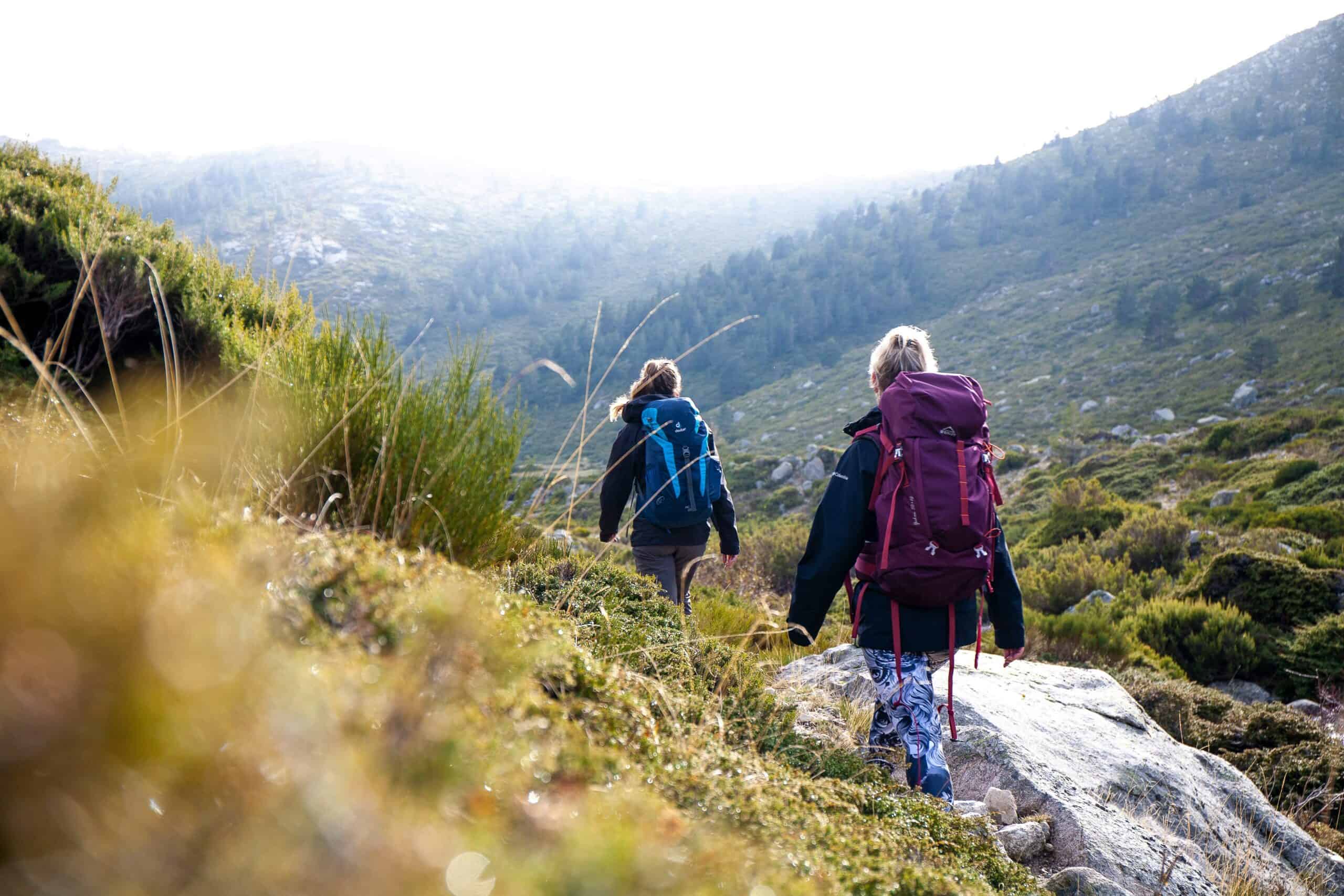
Going down hurts more than going up because your quadriceps work as brakes, lengthening under load with every step while your knee absorbs the impact of your body weight plus your pack. Long steep descents load the joint thousands of times, and the ache that arrives at the bottom is that repetition adding up.
Most of the fix is technique rather than equipment. Shorter steps, a softer landing, and poles taking part of the load change what your knees absorb. Boot fit and pack weight matter too, and they matter less than how you place your feet.
Quick Answer
Take shorter steps, land with a slightly bent knee rather than a locked one, keep your weight over your feet instead of leaning back, and use trekking poles planted ahead of you. Loosen the laces across the forefoot and tighten the ankle before a long descent so your toes stop hitting the front.
Key Points
- Descending loads knees far more than climbing does
- Shorter steps reduce impact more than any single change
- A slightly bent knee absorbs shock; a straight knee transmits it
- Poles take a meaningful share of the load off your legs
- Leaning back feels safer and increases the force through your knees
- Pack weight multiplies every step, so what you carry matters
Take Shorter Steps
A long stride downhill lands your foot far ahead of your body, which creates a braking force through a straight leg. Shortening the step keeps your foot closer underneath you and lets the muscles absorb the landing instead of the joint.
Aim for a quicker cadence with less distance covered per step. It feels inefficient and it is considerably kinder to the knees over a long descent. Runners use the same principle on steep ground.
On very steep sections, turning your feet slightly sideways and traversing rather than going straight down reduces the drop per step further. Switchbacks exist for this reason, and cutting them steepens the descent for everyone.
Land With a Bent Knee
A locked or straight leg at footfall sends the impact straight through the joint. A knee with a small bend lets the quadriceps and calf take the shock as they lengthen.
Think about landing softly rather than stepping down. The difference is audible, since heavy heel strikes make a noise and controlled landings stay quiet. Anyone who can hear their own footfalls on a descent is landing harder than they need to.
This tires the legs faster in the short term because the muscles are doing work the joint would otherwise absorb. That trade is the point, since muscles recover overnight and cartilage does not.
Keep Your Weight Over Your Feet
Leaning back on a descent feels safer and does the opposite. It shifts your center of gravity behind your feet, forces the leading leg to brake harder, and makes a slip more likely rather than less.
Stay upright, leaning forward a little from the ankles, letting your weight sit over the middle of your foot. Your legs work as suspension rather than as anchors, and your grip improves because more of the sole contacts the ground.
On loose surfaces this feels counterintuitive and it is still correct. Sliding happens when the heel skids under a backward-leaning body, and weight over the foot keeps the tread engaged.
Use Trekking Poles Properly
Poles take a real share of the load off your legs on descents, and the benefit is largest exactly where knees hurt most. They also give you two extra contact points on loose or uneven ground.
Lengthen the poles for descending, beyond your usual flat-ground setting, so you can plant them ahead without hunching. Plant the pole before you step down onto that foot rather than alongside it, so the pole is already taking weight as the foot lands. Knees are not the only thing descending punishes, and our note on toe pain going downhill covers the other end.
Both poles together on steep steps, alternating on gentler ground. Tip and basket choice affects grip on rock and soft ground, and options sit in pole tips and baskets.
Relace Before a Long Descent
Toes hitting the front of the boot on every step is a separate problem that arrives at the same time. It produces bruised nails and toe blisters, and it also makes people lean back to avoid the pain, which loads the knees further.
Loosen the laces across the forefoot to give the toes room, then tighten hard across the ankle using heel lock lacing to hold the foot back in the boot. That combination stops the foot sliding forward without squeezing the toes.
Do it at the top of the descent rather than the trailhead, since feet swell during a hike. Boot fit generally is covered in choosing hiking boots.
Reduce What You Are Carrying
Every pound in your pack goes through your knees on every downhill step. A pack that feels manageable on the flat becomes a multiplier on a long descent, and the effect compounds over thousands of steps.
Water is the heaviest item in most packs and the easiest to plan around. Carrying four liters when two would cover the route is eight extra pounds through your joints for no benefit.
Pack weight also has to sit correctly. A load riding low and away from your back pulls you backward, which is the posture that loads knees hardest, and the fix is in fitting a pack.
What Helps Before and After
Build up gradually
Descending strength comes from descending. Jumping from short flat walks to a long mountain day is where most knee complaints start, and adding distance and elevation over weeks avoids it.
Strengthen the quadriceps
Stronger legs absorb more before the joint takes the load. Step-downs and squats target the muscles that do the braking work on a descent.
Warm up before the descent
Cold muscles absorb less. If you have stopped for lunch at a summit, a few minutes of easy movement before starting down helps.
Consider a knee sleeve
Compression sleeves help some people with the sensation of stability, and they do not correct technique. Persistent pain is worth assessing rather than wrapping.
What Tends to Help
Shorten your steps and increase your cadence. Land soft with a bent knee. Stay upright with weight over your feet. Use poles planted ahead of you, lengthened for the descent. Relace before you start down. Carry less.
Those six cost nothing and address the mechanics directly. Equipment helps at the margins once the technique is right, and it cannot compensate for a long stride and a locked knee.
Ordinary Soreness Versus a Problem
Muscle soreness in the quadriceps for a day or two after a big descent is normal, and it means the muscles did the work they should. It eases with movement and improves as you build the habit.
Sharp pain in the joint itself, swelling, clicking or locking, pain that persists for days, or pain that appears on shorter and shorter descents is a different signal. None of those improve with technique alone, and a doctor or physiotherapist is the right next step.
Related Reading
- poles that take load off your legs
- carrying weight where it belongs
- boots that hold your foot back
- pack load and where it presses
- footwear and how it changes your stride
- keeping pack weight down
Frequently Asked Questions
Why does downhill hurt my knees more than uphill?
Going up, your muscles shorten to lift you. Going down, they lengthen under load to brake you, and your knee absorbs your body weight plus your pack on each landing. That eccentric loading is harder on the joint.
Do trekking poles really help on descents?
They take a meaningful share of the load off your legs and add two contact points on uneven ground. Lengthen them beyond your flat-ground setting and plant them ahead of your step rather than beside it.
Should I lean back going downhill?
No, though it feels natural. Leaning back forces the leading leg to brake harder and reduces tread contact, making slips more likely. Stay upright with your weight over your feet.
How do I stop my toes hitting the front of my boots?
Loosen the laces across the forefoot and tighten hard across the ankle with heel lock lacing. That holds your heel back in the boot so your foot stops sliding forward on every step.
Does pack weight affect knee pain?
Considerably. Every pound goes through your knees on each downhill step, and the effect compounds over a long descent. Water is usually the easiest weight to reduce by planning refills.
Are knee sleeves worth wearing?
Some people find compression helps the sensation of stability on descents. They do not correct technique or reduce joint load much, so treat them as an addition rather than a solution.
When should I see a doctor about knee pain?
If you have sharp pain in the joint, swelling, clicking or locking, pain lasting several days, or pain appearing on progressively shorter descents. Muscle soreness that eases in a day or two is different from joint pain that persists.
Recommended Reading
See our note on planning a hiking route.
