
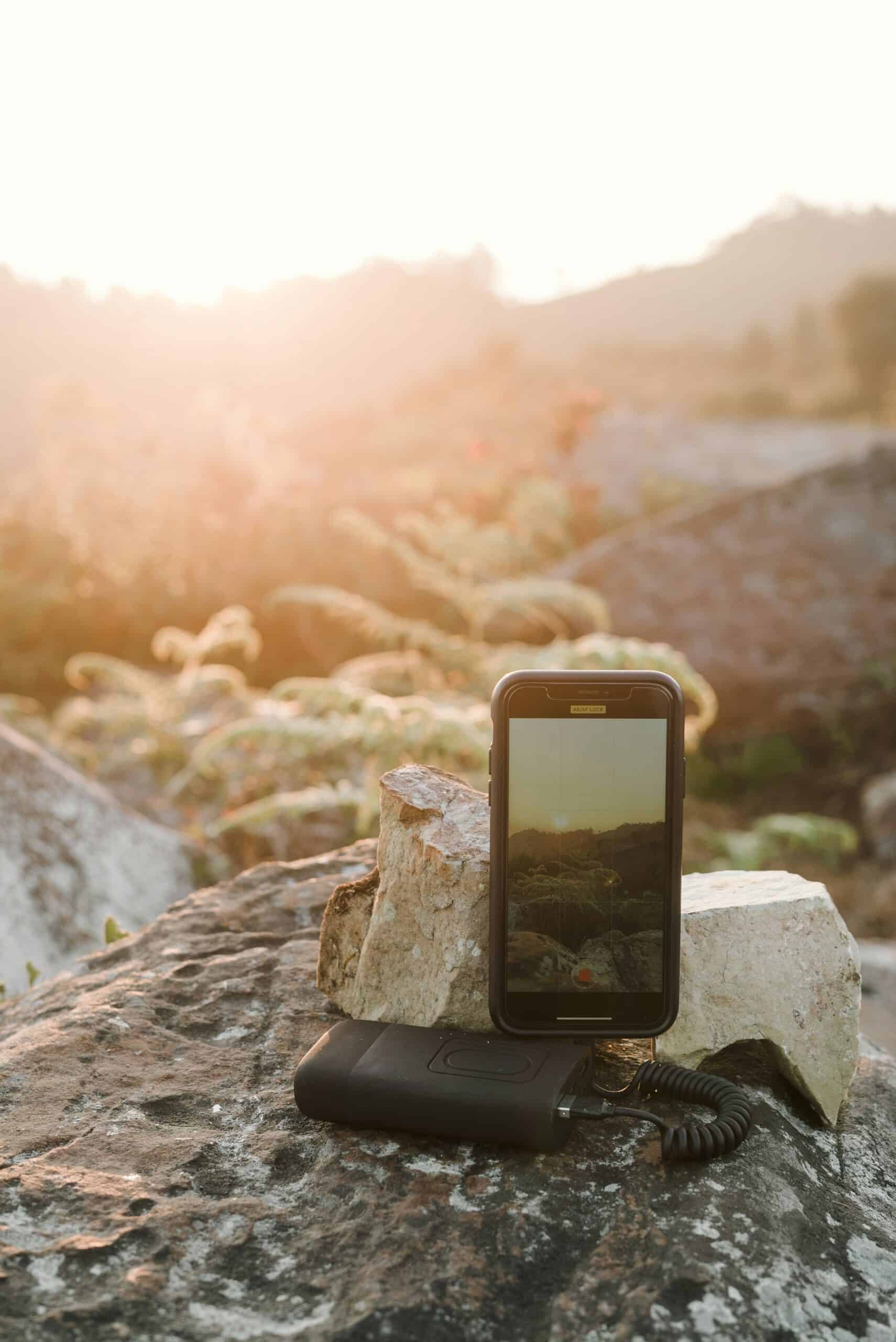
A power bank for hiking is a weight decision before it is a capacity decision. Every extra charge you carry is grams in a pack, and most day hikers are carrying capacity they will never use.
Matching capacity to trip length rather than buying the largest available is the whole exercise. Our note on whether offline maps drain your battery covers reducing what you need.
Types at a Glance
| Type | Best for | Limitation |
|---|---|---|
| Compact, one charge | Day hikes, insurance | Little margin |
| Mid-capacity | Overnight, two devices | Noticeable weight |
| High-capacity | Multi-day trips | Heavy, slow to refill |
| Solar-integrated | Extended trips | Slow charging, added bulk |
| Rugged and water-resistant | Wet conditions | Heavier for same capacity |
| With built-in cable | Fewer things to lose | Cable failure ends it |
How We Picked
Selections are grouped by capacity class and construction, since those determine whether a bank suits a day hike or a week out.
Descriptions come from documented specifications rather than hands-on testing of every option.
1. A Compact Single-Charge Bank, Best Overall
Why It Stands Out
Enough to refill a phone once, in something that disappears in a pocket. For a day hike that is the entire requirement.
Light enough that carrying it costs nothing meaningful, which is what makes it insurance rather than a decision.
Worth Knowing
One charge is one charge, so there is no margin if you also run a headlamp or a watch off it.
Rated capacity is not delivered capacity, since conversion losses reduce what actually reaches a device. Our roundup of hiking daypacks covers carrying it.
This suits day hikes. Skip it for overnight trips.
2. A Mid-Capacity Bank, Best for Overnights
Why It Stands Out
Two or three phone charges covers a night out plus margin, which is where most people’s actual needs sit.
Enough to share with someone else or run a second device without anxiety.
Worth Knowing
The weight is noticeable in a pack rather than negligible.
Takes several hours to refill at home, which matters between consecutive trips. Our roundup of headlamps covers other devices drawing from it.
This suits overnight and weekend trips. Skip it for short day hikes.
3. A Rugged Water-Resistant Bank, Best for Wet Conditions
Why It Stands Out
Sealed ports and a protective housing survive rain and drops, which ordinary banks handle poorly.
Useful for anyone hiking in genuinely wet climates rather than occasionally caught out.
Worth Knowing
Heavier than a standard bank of the same capacity, sometimes considerably.
Port covers are the part that fails, and once one tears the rating is gone. Our roundup of dry bags covers the cheaper protection route.
This suits wet climates. Skip it if a dry bag would do.
4. A Solar-Integrated Bank, Best for Extended Trips
Why It Stands Out
Recharges from sunlight over days, which is the only option on trips longer than the battery lasts.
Useful as a trickle top-up rather than as a primary charging method.
Worth Knowing
Built-in panels are small, so charging is slow enough that many people find it disappointing.
Adds bulk and weight for a capability day hikers never use. Our roundup of backpacking gear covers longer trips.
This suits multi-day trips away from power. Skip it for anything shorter.
5. A High-Capacity Bank, Best for Groups
Why It Stands Out
Enough to charge several devices across several days, which suits a group carrying one bank between them rather than each carrying a small one.
Spreading one heavy item across a group is lighter in total than several duplicated small ones.
Worth Knowing
Heavy enough that whoever carries it notices, so it needs agreeing in advance.
Some exceed airline carry-on limits for lithium batteries. Our note on planning a hiking route covers group logistics.
This suits groups and long trips. Skip it for solo day hiking.
6. A Bank With a Built-In Cable, Best for Simplicity
Why It Stands Out
Nothing separate to forget, lose, or tangle, which matters when everything lives in a pack pocket.
Removes the failure mode of arriving with a charged bank and no cable.
Worth Knowing
An integrated cable that breaks ends the bank’s usefulness for that connector.
Limits you to whichever connector is fitted. Our roundup of first aid kits covers other pack contents.
This suits anyone who has forgotten a cable before. Skip it if you carry multiple device types.
Working Out What You Need
Sizing is arithmetic rather than guesswork, and doing it once saves carrying weight forever.
Start with your phone’s battery capacity, which is published for every model, then decide how many full refills the trip requires.
Add anything else drawing from the same bank. Headlamps, watches, and cameras all take from the same pool and are easy to forget in the calculation.
Then add margin for conversion losses and for cold, which together mean the real figure is meaningfully above the arithmetic.
Most day hikers who do this discover they need far less than they are carrying, and the weight saving is felt on every hike rather than occasionally. Our roundup of hiking socks covers the other devices.
Rated Capacity Is Not What You Get
The number on a power bank describes the cells inside, and what reaches your phone is meaningfully less.
Conversion between the internal voltage and USB output loses energy as heat, and that loss is unavoidable rather than a sign of a poor product.
Real-world delivery is commonly a good deal below the rated figure, which is why a bank rated for three phone charges frequently manages two and a bit.
Comparing rated capacities between banks is still valid, since they all lose energy the same way. Treating the rating as delivered charge is what causes disappointment. Our note on keeping your phone charged covers reducing demand.
Airline and Storage Rules
Lithium batteries carry restrictions that catch people out on trips involving a flight.
Power banks must travel in carry-on rather than checked baggage, because lithium cells are a fire risk in a hold nobody can reach.
There are also capacity limits above which a bank either needs airline approval or cannot be carried at all, which affects the largest models specifically.
Storage matters between trips too, since lithium cells last longest held partway charged rather than full or empty.
A bank stored completely flat for months can drop below the voltage at which it will accept a charge, which ends it without anything having gone wrong. Our roundup of hiking flashlights covers packing.
Cold Reduces What You Have
Lithium cells deliver less in cold, both in the phone and in the bank charging it.
A bank left in an outer pack pocket overnight can be substantially down on capacity by morning without having been used.
Keeping it inside a sleeping bag on cold nights, or in an inside pocket during the day, holds it in a usable range.
Charging a very cold battery is also hard on it, so letting both devices warm before connecting them is worth the wait. Our roundup of winter hiking gear covers cold conditions.
Charging Speed on the Trail
How fast a bank refills a phone matters more than people expect, because charging usually happens during a break rather than overnight.
Output rating determines speed, and a low-output bank can take hours to do what a faster one does in under one.
Fast charging standards only work when the bank, the cable, and the phone all support the same one, and a mismatch quietly falls back to slow charging.
Cables are the overlooked part, since a thin charging cable limits current regardless of what the bank can deliver.
For a lunch stop, that difference decides whether you leave with a meaningfully fuller phone or barely more than you arrived with. Our note on trekking poles covers reducing the need.
What to Look For
Capacity matched to trip length
Most day hikers carry far more than they use, and that weight is carried every step.
Weight per charge
The number that matters, rather than capacity or weight alone.
Port type and count
Check it matches your devices, and that charging two at once does not halve the speed.
Pass-through charging
Charging the bank and a device simultaneously is convenient at home and absent on many models.
Weighing those four against your actual trips is what separates a bank you are glad to carry from one that lives in a drawer.
Common Mistakes to Avoid
Buying the largest available
Capacity you never use is weight carried for nothing on every hike.
Treating rated capacity as delivered
Conversion losses mean real charges are meaningfully fewer than the arithmetic suggests.
Leaving it cold
A bank in an outer pocket in winter delivers less than one kept warm, sometimes much less.
Forgetting to charge the bank
Sounds obvious and is the most common failure, since a bank sitting in a pack between trips slowly self-discharges. Our note on what to do if you get lost covers why it matters.
Recommended Reading
See our roundup of compasses for hiking, our roundup of offline map apps, our note on navigating without GPS, and a roundup of personal location beacons.
Avoiding those four covers nearly every case where a perfectly good power bank turns out to be useless on the day you needed it.
Hiking Power Bank FAQ
What size power bank do I need for hiking?
One phone charge covers most day hikes. Two or three suits overnights. Multi-day trips are where high capacity or solar starts earning its weight.
Why does mine deliver fewer charges than rated?
Conversion losses between the internal cells and USB output are unavoidable, so delivered capacity is meaningfully below the rated figure.
Do I need one for a day hike?
Not usually, if you start fully charged and use the phone sparingly. It is insurance rather than necessity at that length.
Are solar power banks worth it?
On multi-day trips away from power, yes. The built-in panels are small and charge slowly, so treat it as a trickle rather than a refill.
Does cold affect them?
Considerably. Lithium cells deliver less in cold, so keep the bank in an inside pocket or a sleeping bag rather than an outer pack pocket.
Should I get a waterproof one?
In genuinely wet climates. Otherwise a standard bank in a dry bag is lighter and cheaper for the same protection.
How many ports do I need?
Two covers most situations. Check whether charging two devices at once halves the speed, since many models do.
What is the most common mistake?
Arriving with an uncharged bank. They self-discharge slowly between trips, so a bank left in a pack for months is not full when you need it.
